



Efficient car maintenance is defined as a set of recurring, time-boxed tasks that protect your vehicle’s reliability without consuming your entire weekend. Gas-powered vehicle owners spend over $1,300 annually on maintenance. That number climbs sharply when routine care gets skipped. The good news: knowing how to maintain your car with a busy schedule comes down to three things. Prioritize the right tasks, bundle services together, and use simple tools to catch problems early before they become expensive.
What are the essential car maintenance tasks busy owners must prioritize?
Not every maintenance task carries equal weight. Focusing on the highest-impact items protects your car and your wallet without demanding hours of your time.
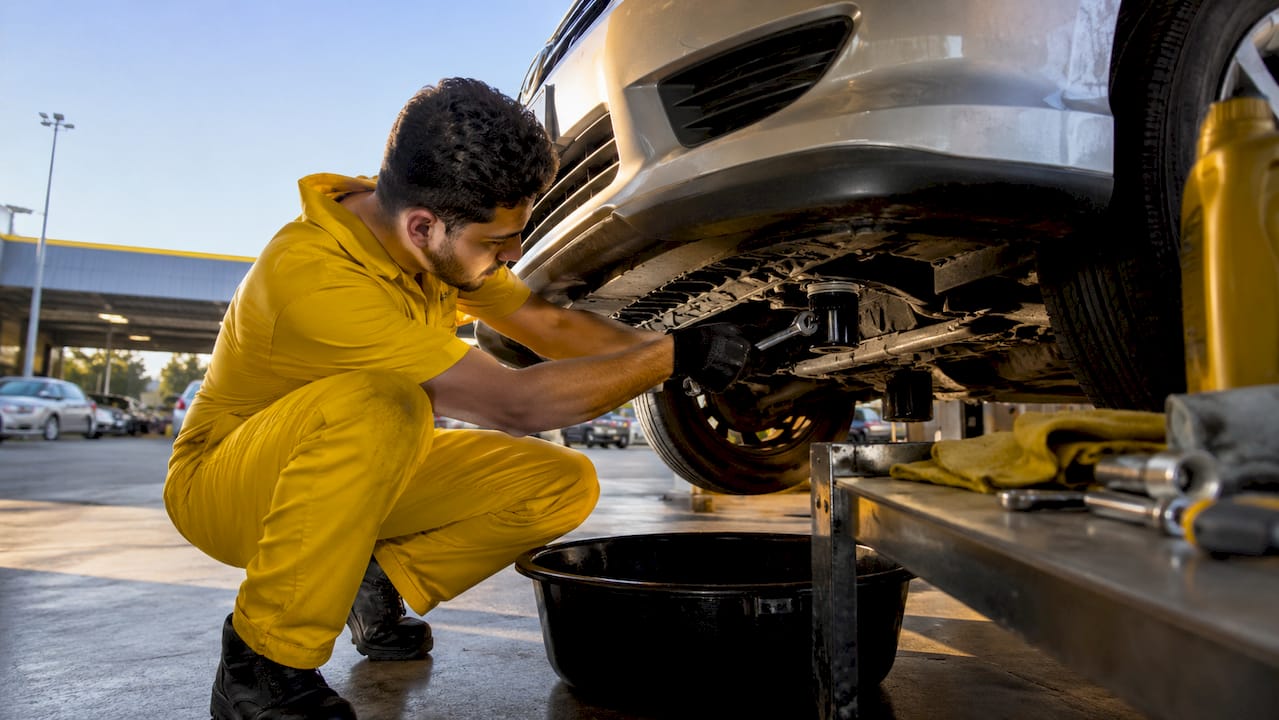
Oil and filter changes sit at the top of every list for good reason. Engine oil degrades over time and loses its ability to lubricate moving parts. Most vehicles need a change every 3,000–5,000 miles, though your owner’s manual gives the exact figure for your engine. Skipping this single task causes more engine damage than almost any other form of neglect.
Tire pressure and tread checks take less than three minutes and belong on your monthly calendar. Underinflated tires wear unevenly, reduce fuel economy, and increase blowout risk. A basic tire pressure gauge costs under $10 and removes all guesswork.
Fluid inspections cover coolant, brake fluid, power steering fluid, and windshield washer fluid. Low coolant causes overheating. Low brake fluid signals either normal pad wear or a leak, and either situation needs attention fast.
Brake inspections and tire rotations should happen every 6,000–8,000 miles. Bundling these services with your oil change cuts the number of shop visits in half. That single habit saves busy owners more time than any other scheduling trick.
Battery checks every six months prevent the worst kind of surprise: a car that will not start on a Monday morning. Most auto shops test batteries for free while you wait.
- Oil and filter change: every 3,000–5,000 miles
- Tire pressure check: monthly
- Fluid inspection (coolant, brake, power steering): monthly
- Brake inspection and tire rotation: every 6,000–8,000 miles
- Battery test: every six months
Pro Tip: Download a car maintenance checklist and tape it inside your glove box. A physical reminder beats a forgotten phone notification every time.
How can busy car owners schedule maintenance around demanding routines?
Scheduling is where most busy owners fail. They wait until a warning light appears, then scramble to fit an emergency appointment into an already packed week. A proactive approach flips that pattern entirely.
-
Bundle services into one appointment. Combining an oil change, tire rotation, and brake inspection into a single visit cuts your annual shop trips from six or more down to two or three. Service bundling keeps you on track and reduces the total time you spend waiting.
-
Set calendar reminders now, not later. Open your phone calendar and block two maintenance appointments for the next six months. Treat them like a dentist visit. Moving them is fine; deleting them is not.
-
Use quick-lube services for speed. Many no-appointment shops complete an oil change in under 30 minutes. If your schedule allows zero flexibility on weekdays, a Saturday morning drop-in takes less time than a grocery run. Check out vehicle maintenance without an appointment options near you to find what fits your routine.
-
Schedule during natural downtime. Early Saturday mornings, lunch breaks near a shop, or the first weekend of each month work well as recurring maintenance windows. Consistency matters more than the specific day you choose.
-
Keep a simple maintenance log. A notes app or a paper log in your glove box tracks your last oil change mileage, last tire rotation date, and next service due. You spend 30 seconds updating it after each visit and never wonder “when was my last oil change?” again.
Pro Tip: When you book your next oil change, ask the shop to perform a combined oil and tire rotation at the same time. One trip, two tasks done.
What tools and quick checks keep your car healthy with minimal time?
Only 19% of drivers consistently perform road-readiness checks, and 30% never check at all. That gap explains most preventable breakdowns. The fix requires no mechanical skill and almost no time.
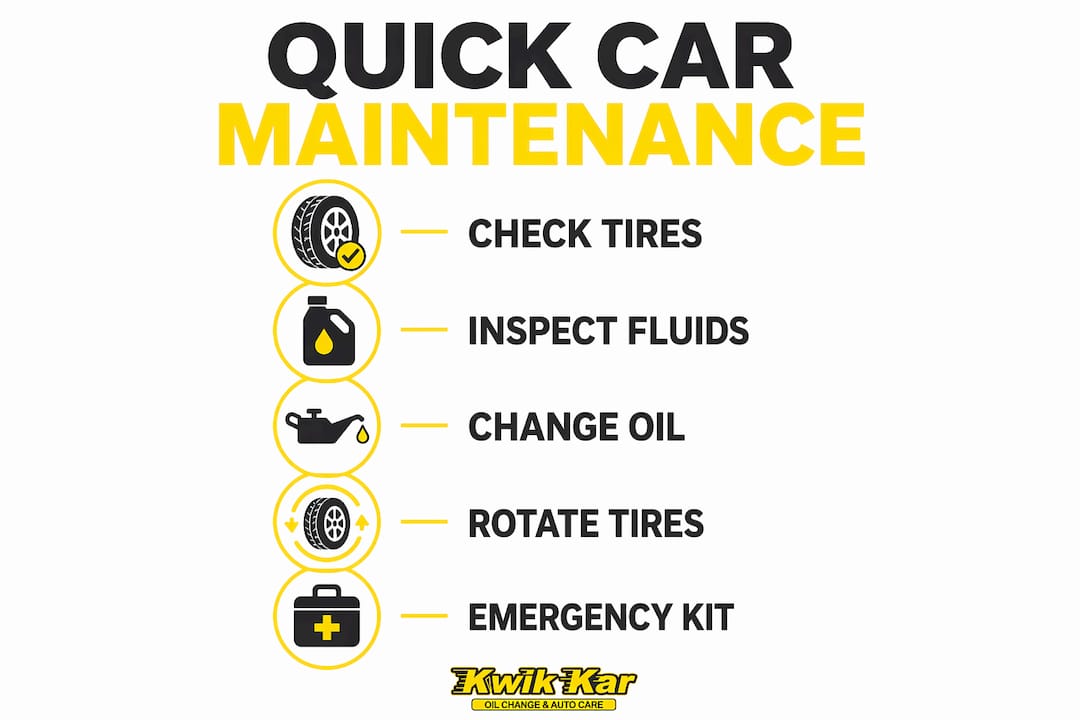
A monthly 5-minute inspection covers the basics that prevent the majority of roadside failures. Here is what that inspection looks like in practice.
| Check | What to look for | Time needed |
|---|---|---|
| Engine oil level | Between MIN and MAX on dipstick | 1 minute |
| Coolant level | At or above the MIN line in reservoir | 30 seconds |
| Tire pressure | Matches door placard PSI on all four tires | 2 minutes |
| Exterior lights | All headlights, taillights, and turn signals working | 1 minute |
Three tools make this routine possible without any mechanical background:
- Tire pressure gauge: Reads PSI in seconds. Digital models are easier to read in low light.
- Dipstick and clean rag: Already in your engine bay. Pull it, wipe it, reinsert, pull again, and read the level.
- Flashlight or phone light: Check under the hood and around tires for leaks, cracks, or debris.
Carrying a basic emergency kit rounds out your preparation. Jumper cables, a reflective triangle, a small first-aid kit, and a bottle of coolant cover the most common roadside situations. Emergency preparedness does not eliminate breakdowns, but it dramatically reduces how long you are stranded when one happens.
Pro Tip: Your owner’s manual lists vehicle-specific fluid types and service intervals. Reading just the maintenance section, which is usually 10–15 pages, gives you more useful information than most online guides.
What common mistakes should busy car owners avoid?
Busy schedules create predictable patterns of neglect. Knowing these mistakes in advance lets you sidestep them without spending extra time or money.
- Ignoring the owner’s manual. Your manual specifies the exact oil grade, coolant type, and service intervals your engine needs. Following manufacturer fluid specs prevents unnecessary upsells for premium synthetic fluids or expensive flushes your car does not actually require.
- Skipping tire rotations. Tires wear unevenly when they stay in one position too long. Skipping rotations shortens tire life and forces an early replacement that costs several hundred dollars.
- Waiting for a warning light. Dashboard lights are a last resort, not a first alert. By the time a check-engine or oil-pressure light appears, the problem has often been developing for weeks.
- Falling for unnecessary upsells. Shops sometimes recommend fuel injector flushes, transmission flushes, or coolant flushes on intervals far shorter than your manual requires. Always cross-reference recommendations with your owner’s manual before agreeing.
- Neglecting monthly visual checks. A quick walk-around before you leave for work catches flat tires, fluid puddles under the car, and cracked lights before they become safety issues.
“The biggest maintenance mistake busy owners make is treating their car like a problem to solve later. A five-minute monthly check prevents the two-hour emergency that derails an entire workday.”
How can technology and professional services help busy owners maintain their cars?
Technology removes the memory burden from car care. You do not need to remember service intervals if your tools do it for you.
Vehicle service reminder apps connect to your mileage and send alerts when a service is due. Many modern vehicles include built-in maintenance reminders on the dashboard display. If yours does not, a vehicle service reminder system through a third-party app fills the gap. Calendar integrations let you block time the moment a reminder fires, so the appointment gets scheduled before you forget.
Shops that offer bundled maintenance packages are worth seeking out specifically. A single appointment covering an oil change, tire rotation, fluid top-off, and brake inspection costs less in total time than three separate visits. Independent mechanics handle these basic services competently and affordably, often with shorter wait times than dealership service centers.
Maintaining a written or digital service record pays dividends over time. When you bring your car in, a complete history helps the technician spot patterns, like a brake pad wearing faster on one side, that a fresh set of eyes might miss. It also protects you if you sell the vehicle, since documented maintenance history increases resale value.
Pro Tip: Look for shops with neighborhood accessibility close to your home or office. A shop you can walk from removes the biggest logistical barrier to keeping appointments.
Key Takeaways
Consistent, bundled maintenance is the most time-efficient way to keep a vehicle reliable on a demanding schedule.
| Point | Details |
|---|---|
| Prioritize high-impact tasks | Oil changes, tire pressure, and brake inspections prevent the most costly failures. |
| Bundle services to save time | Combining oil changes with tire rotations cuts annual shop visits by half. |
| Run a 5-minute monthly check | Inspecting oil, coolant, tire pressure, and lights prevents most roadside breakdowns. |
| Use reminders and logs | Calendar alerts and a simple maintenance log eliminate the guesswork of “when was my last service?” |
| Follow your owner’s manual | Manufacturer specs protect you from unnecessary upsells and keep your car running correctly. |
What I have learned from watching busy owners maintain their cars
The owners who keep their cars in the best shape are rarely the most mechanically inclined. They are the most consistent. I have seen professionals with packed calendars drive vehicles well past 200,000 miles without a major repair, simply because they bundled services and set reminders. I have also seen first-time owners with newer cars face expensive engine repairs because they assumed “new” meant “maintenance-free.”
The misconception I encounter most often is that car care requires large blocks of time. It does not. The 5-minute monthly check, the bundled appointment every six months, and a glance at the owner’s manual take less total time per year than a single emergency repair visit. Perfection is not the goal. Consistency is.
One thing I tell every busy owner: pick the two or three tasks from this article that you are not currently doing and start there. You do not need to overhaul your entire routine. Adding a monthly tire pressure check and bundling your next oil change with a tire rotation already puts you ahead of the majority of drivers on the road.
— Kwik Kar
Kwik Kar Oil Change & Auto Care makes busy schedule car care simple
Fitting car maintenance into a packed calendar gets easier when you have a shop that works around your schedule, not the other way around.
Kwik Kar Oil Change & Auto Care serves Fort Worth drivers with bundled maintenance services that combine oil changes, tire rotations, brake inspections, and fluid checks into a single efficient visit. RepairPal-certified technicians handle every service with transparent pricing, so you know exactly what you are paying before work begins. No surprises, no unnecessary upsells. For drivers who cannot plan days in advance, the no-appointment maintenance guide explains how to get reliable service on your own timeline. If cost is a concern, auto repair financing options are available to keep your vehicle road-ready without straining your budget.
FAQ
How often should a busy person get an oil change?
Most vehicles need an oil change every 3,000–5,000 miles. Check your owner’s manual for the exact interval, since some modern engines extend to 7,500 miles or more.
What is the fastest way to maintain a car with limited time?
Bundle your oil change, tire rotation, and brake inspection into one appointment every 6,000–8,000 miles. That single habit covers the most critical maintenance in the fewest trips.
Can I skip tire rotations if my tires look fine?
Tires wear unevenly even when they look acceptable to the eye. Skipping rotations shortens tire life and leads to premature replacement, which costs far more than the rotation itself.
How do I remember when my car is due for service?
Set a recurring calendar reminder tied to your mileage or a fixed date every six months. A service reminder system or a simple notes-app log works just as well for most drivers.
Is it worth going to an independent shop instead of a dealership?
Independent mechanics perform basic maintenance competently and typically at lower cost, with shorter wait times than most dealership service centers.