

Neighborhood auto care accessibility is defined as the availability of local, affordable, and convenient vehicle repair and maintenance services within a reasonable distance of where you live or work. Independent repair shops handle more than 70% of all out-of-warranty vehicle repairs across the U.S., making them the true backbone of American auto maintenance. That statistic means the corner shop you drive past every morning is not a backup option. It is the primary system keeping most vehicles on the road. For car owners in Fort Worth and communities nationwide, the proximity of trusted local shops directly shapes how much you pay, how fast you get back on the road, and how well your neighborhood economy functions.
Why neighborhood auto care accessibility defines your repair costs and speed
The industry term for what most drivers rely on is the independent aftermarket, which covers every repair facility outside of franchised dealerships. The role of neighborhood auto care accessibility within this market is enormous. Dealership repairs average 36% more than independent shop repairs, and on labor-heavy jobs where aftermarket parts are used, savings can reach 80%. That is not a marginal difference. It is the difference between a repair you can afford this week and one you defer until your car breaks down on the highway.
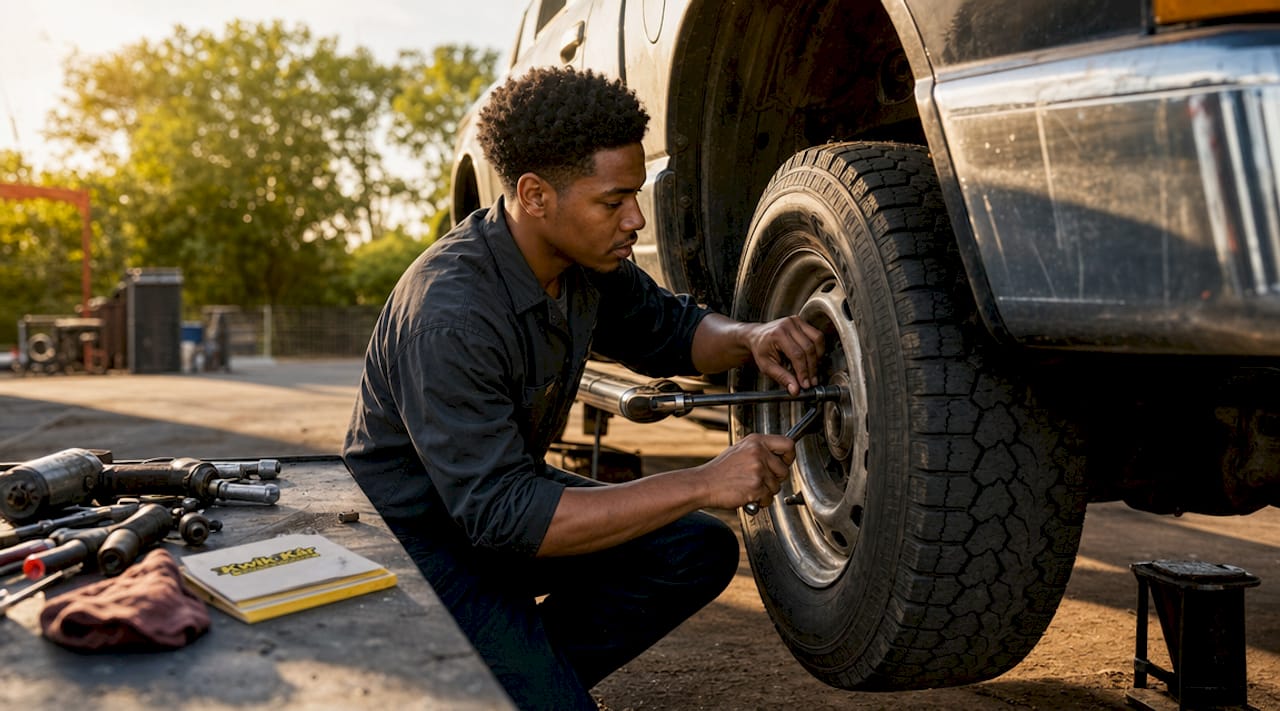
Speed is the other major advantage. 52% of tire replacement customers at aftermarket providers have their work completed the same day, compared to fewer than 17% of dealer service customers who finish within an hour. A neighborhood shop that knows your vehicle and your schedule can turn around a brake inspection, oil change, or tire rotation while you run errands. A dealership service department often books days out.
Here is a direct comparison of what you can expect from each option:
| Service type | Independent neighborhood shop | Franchised dealership |
|---|---|---|
| Average cost premium | Baseline (lower) | 36% higher on average |
| Same-day completion rate | 52% for tire work | Under 17% within one hour |
| Parts sourcing | Aftermarket and OEM options | Primarily OEM, higher markup |
| Scheduling flexibility | Walk-in and same-day common | Appointment-heavy, longer lead times |
| Personalized service | High, relationship-based | Variable, volume-driven |
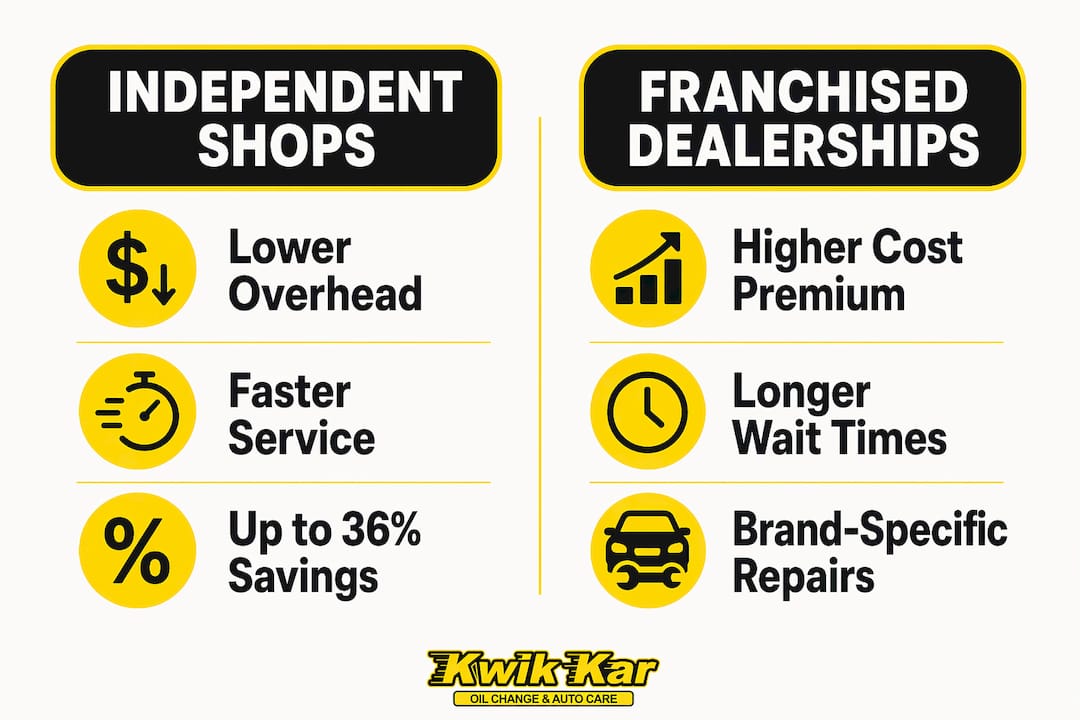
The cost gap comes from two structural realities. Independent shops carry less overhead than dealerships, which operate large facilities with manufacturer-mandated equipment and staffing requirements. They also have access to quality aftermarket parts that meet or exceed OEM specifications at a fraction of the price. When you cut car repair costs by choosing a local shop, you are not sacrificing quality. You are bypassing the dealership’s margin structure.
Pro Tip: Ask your neighborhood shop to show you the parts they plan to use before the repair begins. Reputable shops like Kwik Kar Oil Change & Auto Care use quality components and will explain your options between aftermarket and OEM parts without pressure.
Key advantages of choosing local auto repair services include:
- Transparent, itemized pricing before work begins
- Faster turnaround on routine maintenance and common repairs
- Mechanics who recognize your vehicle’s history over time
- Lower labor rates without sacrificing certified expertise
- Flexibility to work with your schedule, not a service queue
How do neighborhood auto shops support community well-being?
Independent auto shops are vital pillars of local communities, providing workforce development, supporting commercial fleets, and maintaining the mobility of working families. This is not abstract. When a single parent cannot afford a $900 repair at a dealership, a neighborhood shop charging $300 for the same job keeps that person employed. Transportation is not a luxury. It is the mechanism by which people get to work, take children to school, and access healthcare.
Some mission-driven community vehicle care options go further. Certain nonprofit and community-focused shops offer repairs at roughly one-third of market rates, specifically targeting low-income families who would otherwise face a financial crisis over a broken alternator or a failed water pump. These shops also create apprenticeship programs and second-chance employment for people re-entering the workforce. The repair bay becomes a training ground, not just a service center.
“Affordable neighborhood auto care prevents transportation inequality and supports job retention and economic mobility.” — Aftermarket Matters research on community impact
The community trust built through local shop relationships is also a practical asset. A mechanic who has serviced your vehicle for three years knows that your 2019 Honda CR-V runs slightly hot in summer and that you replaced the transmission last fall. That institutional knowledge prevents misdiagnosis and unnecessary repairs. It is the kind of context a dealership service writer, rotating through a queue of 40 vehicles a day, simply cannot provide.
The community impact of accessible auto care extends to:
- Local job creation and skilled trade training
- Support for small business ecosystems in the neighborhood
- Reduced transportation barriers for low-income households
- Apprenticeship and workforce re-entry programs
- Stronger relationships between residents and local service providers
What challenges do neighborhood shops face with vehicle data access?
Modern vehicles are computers on wheels, and that creates a serious problem for independent shops. Telematics data restrictions give manufacturers and dealerships preferential access to wireless vehicle data, steering repairs toward dealer service bays even when a neighborhood shop is closer, cheaper, and equally qualified. Telematics refers to the wireless systems embedded in newer vehicles that transmit diagnostic data directly to manufacturers. When that data is locked, your local shop cannot see what your car is telling it.
The practical consequence is significant. Independent shops may lack brand-specific diagnostic software, which forces them to turn away jobs they are technically capable of performing. A shop that has serviced your vehicle for years might have to send you to a dealership for a software-related reset that takes 20 minutes, simply because the manufacturer has not licensed the tool to independents. That is not a skills gap. It is a data access gap.
Here is how the data access challenge plays out for car owners:
- Your vehicle’s onboard system detects an issue and wirelessly transmits it to the manufacturer.
- The manufacturer’s app or notification system directs you to a franchised dealer for service.
- Your neighborhood shop cannot access the same diagnostic data to confirm or address the issue independently.
- You pay dealer rates for a repair your local shop could have handled at a lower cost.
- Over time, this pattern shifts repair revenue away from independent shops, threatening their viability.
The REPAIR Act is the legislative response to this problem. It is a bipartisan bill with 85 to 86% of American voters supporting legislation that would require manufacturers to share vehicle diagnostic data with independent shops and consumers. That level of public support is rare in any political context. It reflects how broadly car owners feel the impact of repair monopolies on their wallets and their choices.
Pro Tip: When buying a new or used vehicle, ask the dealer whether the manufacturer’s telematics system allows independent shop access to diagnostic data. This single question can save you hundreds of dollars in future repair costs by keeping your options open.
How to use neighborhood auto care for maintenance and real savings
Choosing the right local shop is a skill, and it starts with knowing what to look for. Certifications matter. ASE (Automotive Service Excellence) certification means a technician has passed standardized competency tests. RepairPal certification, which Kwik Kar Oil Change & Auto Care holds, indicates transparent pricing and verified customer satisfaction. You can find certified mechanics near you by checking RepairPal’s directory or the ASE website, both of which filter by location and specialty.
Transparent pricing is the second filter. A trustworthy neighborhood shop gives you a written estimate before touching your vehicle. If a shop is vague about costs or adds charges after the fact, that is a clear signal to look elsewhere. Understanding what shop certifications mean helps you evaluate whether a shop’s credentials match the service you need.
Timely maintenance is where the real savings accumulate. Skipping a $60 oil change to save money today can lead to a $4,000 engine repair in six months. The math is not complicated, but it requires access to affordable, convenient service to act on. Most drivers prefer independent shops for exactly this reason. When a shop is nearby, fairly priced, and staffed by people you trust, you are far more likely to stay current on maintenance.
For car owners working within a tight budget, financing options make larger repairs manageable without deferring them dangerously. Many neighborhood shops, including Kwik Kar Oil Change & Auto Care, offer payment plans that spread repair costs over time. You can also explore community programs that subsidize vehicle repairs for qualifying households, particularly in urban areas where transportation access directly affects employment.
| What to look for | Why it matters |
|---|---|
| ASE or RepairPal certification | Confirms technician competency and pricing transparency |
| Written estimate before work | Protects you from unexpected charges |
| Same-day availability | Reduces time off work and scheduling stress |
| Financing or payment plans | Makes larger repairs affordable without delay |
| Established local reputation | Signals consistent service quality over time |
Key takeaways
Neighborhood auto care accessibility is the single most important factor determining whether car owners get timely, affordable vehicle maintenance or face costly delays and dealer markups.
| Point | Details |
|---|---|
| Cost savings are substantial | Independent shops save drivers up to 36% on average compared to dealerships, with savings reaching 80% on complex repairs. |
| Speed favors local shops | 52% of tire replacement customers finish same-day at independent shops versus under 17% at dealerships within an hour. |
| Community impact is real | Local shops create jobs, support workforce development, and prevent transportation crises for low-income families. |
| Data access is a growing threat | Telematics restrictions steer repairs to dealers, raising costs and limiting consumer choice for independent shop customers. |
| Certifications guide smart choices | ASE and RepairPal certifications help car owners identify trustworthy, transparent neighborhood shops quickly. |
Why accessible local auto care is non-negotiable in 2026
At Kwik Kar Oil Change & Auto Care, we have watched the repair landscape shift considerably over the past decade. The vehicles coming into our bays are more digitized than ever, and the gap between what a certified independent shop can do and what a dealership can do is narrowing on the technical side. But the data access problem is real, and it is getting worse before it gets better.
What concerns us most is the quiet way telematics redirects car owners away from shops they already trust. You get a notification on your phone that says “schedule service,” and it links directly to a dealer. Most drivers follow that link without realizing they have a choice. You always have a choice. The REPAIR Act is moving in the right direction, but until data access is fully equalized, the best thing you can do is build a relationship with a certified local shop before you need one urgently.
The shops that survive the next decade will be the ones that earn trust through transparency, not just proximity. We have built our practice around written estimates, RepairPal certification, and technicians who explain what they found and why it matters. That is not a marketing position. It is the only way to run a shop that people come back to. Find a neighborhood shop that operates the same way, and stick with them.
— Kwik Kar
Affordable, certified auto care is closer than you think
Kwik Kar Oil Change & Auto Care serves Fort Worth drivers with RepairPal-certified technicians, transparent pricing, and a full range of services from routine oil changes to complex repairs. If you are not sure where to start, our guide to finding a trustworthy mechanic walks you through exactly what to look for in a neighborhood shop. For drivers managing a tighter budget, our repair financing options make it possible to address repairs now rather than defer them into larger problems. You can also browse our affordable maintenance services list to see what routine care costs at a shop that puts transparency first.
FAQ
What does neighborhood auto care accessibility mean?
Neighborhood auto care accessibility refers to having local, affordable, and convenient vehicle repair options within a practical distance of your home or workplace. Independent shops handle more than 70% of out-of-warranty repairs in the U.S., making them the primary source of accessible maintenance for most car owners.
How much can I save by using a local shop instead of a dealership?
Franchised dealership repairs average 36% more than independent shops, and savings can reach 80% on labor-heavy repairs when quality aftermarket parts are used. On common repairs, drivers can save up to $500 by choosing a neighborhood shop over a dealer.
Why do some neighborhood shops turn away certain repairs?
Some independent shops lack access to manufacturer-specific diagnostic software due to telematics data restrictions, which forces them to decline jobs they are otherwise qualified to perform. The REPAIR Act, supported by 85 to 86% of American voters, aims to fix this by requiring manufacturers to share diagnostic data with independent shops.
How do I find a reliable neighborhood auto shop?
Look for ASE-certified technicians and RepairPal-certified shops, which verify both technical competency and transparent pricing. You can search RepairPal’s online directory by location to find vetted local shops quickly.
Can I finance auto repairs at a neighborhood shop?
Many neighborhood shops, including Kwik Kar Oil Change & Auto Care, offer financing or payment plans that spread repair costs over time. This makes it possible to address necessary repairs immediately rather than deferring them and risking more expensive damage.