




The single most effective strategy for keeping a minivan reliably running is straightforward: follow your manufacturer’s maintenance schedule, add a 10-minute monthly visual check, and never skip the four services that prevent the most expensive failures — oil changes, transmission service, coolant flushes, and brake inspections. A well-maintained minivan commonly reaches 125,000–155,000 miles. Owners who stay disciplined with preventive care often push well beyond that.
Start this week with these five checks:
- Check your oil level and note the last change date and mileage
- Verify tire pressure against the door-jamb sticker (not the tire sidewall)
- Inspect tread depth visually — a quarter inserted head-down should show at least part of Washington’s head above the tread
- Look at battery terminals for white or blue corrosion buildup
- Scan the dashboard for any warning lights you have been ignoring
Pro Tip: Set a recurring phone reminder for the first Saturday of every month. Five minutes in the driveway beats a $2,000 repair bill at the worst possible moment.
RepairPal reports the average annual repair cost for minivans runs about $647 — lower than many vehicle segments — but that figure assumes owners stay current on scheduled maintenance. Skip the basics and that number climbs fast.
Key Takeaways
Following your OEM maintenance schedule, staying current on oil changes, and catching problems early with monthly visual checks are the three actions that most reliably extend a minivan’s life to 200,000 miles and beyond.
| Point | Details |
|---|---|
| Follow the OEM schedule | Toyota and other OEMs set 5,000–10,000 mile intervals; stick to them for every major system. |
| Oil changes protect the engine | Skipped oil changes cause sludge buildup, the leading driver of premature engine wear. |
| Monthly visual checks catch problems early | A 10-minute walk-around each month prevents most roadside failures and expensive surprises. |
| Transmission and coolant service prevent big repairs | Fluid flushes at 60k and 100k miles cost $150–$300 and prevent failures that cost thousands. |
| Kwik Kar Oil Change & Auto Care is the local partner | ASE-certified, RepairPal-recognized, and transparent on pricing for all services in this guide. |
Table of Contents
- What does a reliable minivan maintenance timeline look like?
- How to do a monthly visual check in 10 minutes
- Which preventive services most protect your minivan from costly failures?
- Are your tires and brakes safe enough for family driving?
- How do you keep the battery from failing on a school morning?
- What seasonal prep does your minivan actually need?
- Which maintenance tasks can you do yourself and which need a shop?
- What should you budget for minivan maintenance each year?
- Your printable minivan maintenance checklist
- What Kwik Kar sees most often — and what it costs families
- Kwik Kar Oil Change & Auto Care keeps Fort Worth families moving
- Sources
- FAQ
What does a reliable minivan maintenance timeline look like?
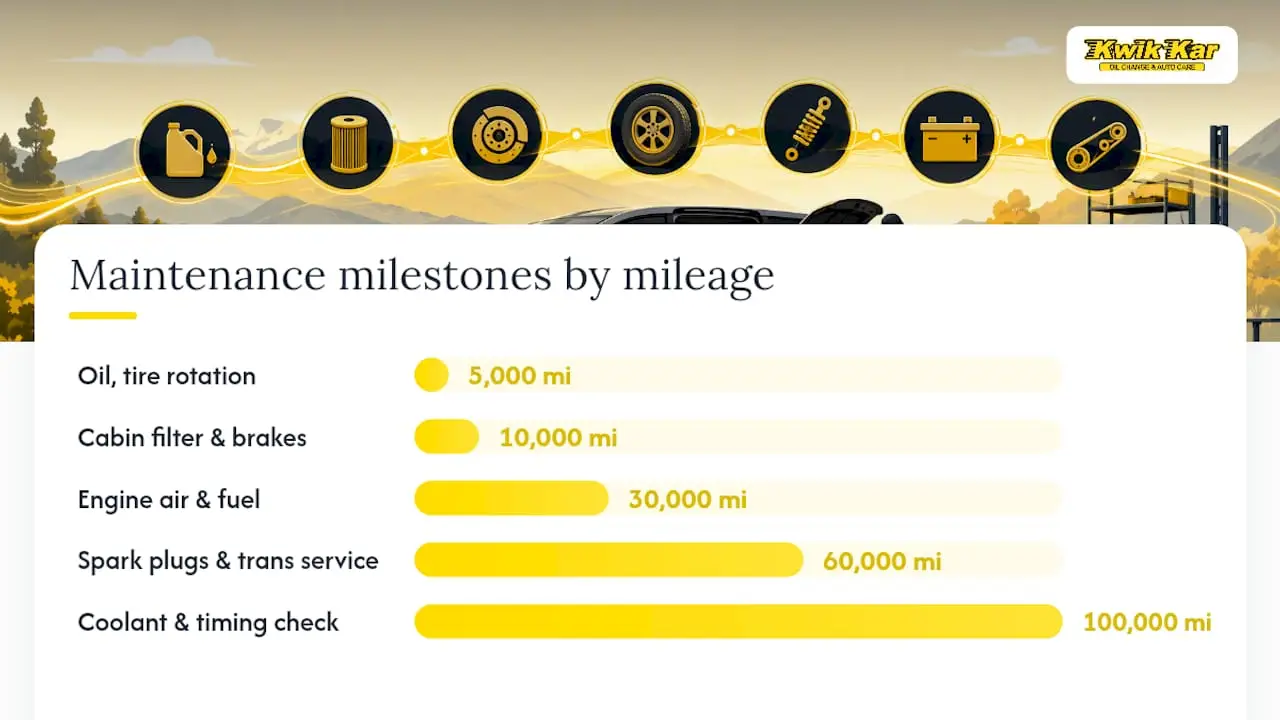
Following a mileage-based service schedule is the backbone of this keep minivan running reliably guide. The table below translates OEM guidance — drawn from Toyota Sienna owner documentation and practical service timelines — into a plan any owner can follow.
| Mileage / Time | Key Services |
|---|---|
| 5,000 mi / 6 mo | Oil & filter change, tire rotation, visual fluid check, inspect wipers and lights |
| 10,000 mi / 12 mo | All above + cabin air filter inspection, brake visual check, battery terminals |
| 30,000 mi | Engine air filter replacement, fuel system inspection, brake fluid test |
| 60,000 mi | Spark plugs, transmission fluid service, serpentine belt inspection, coolant test |
| 100,000 mi | Coolant flush, inverter coolant (hybrids), water pump inspection, timing belt/chain check |
A note on oil intervals: Toyota’s OEM documentation allows up to 10,000 miles with full synthetic oil, but many ASE-certified technicians recommend 5,000-mile intervals for minivans used in real-world conditions — frequent short trips, towing a trailer, or driving in dusty Texas summers. When in doubt, shorter intervals protect the engine. Hybrid owners have additional items: the HV battery cooling filter and inverter coolant service, typically flagged around 100,000 miles per OEM guidance.
Services you can defer briefly if budget is tight: cabin air filter, wiper blades, and engine air filter. Services you should never defer: oil changes, brake inspections, and transmission fluid service.
How to do a monthly visual check in 10 minutes
A quick walk-around before a busy week catches most problems before they strand you. This pre-trip inspection approach applies equally well to monthly checks.
- Oil level: Pull the dipstick, wipe it, reinsert, and read. Low or dark-black oil means it is time for a change.
- Coolant reservoir: Check the level against the MIN/MAX marks. Never open a hot radiator cap.
- Brake fluid reservoir: Should be between MIN and MAX. Cloudy or dark fluid signals it needs testing.
- Power steering fluid (non-electric systems): Check the reservoir cap dipstick for level and color.
- Tire pressure: Use a gauge — tires lose roughly 1 PSI per month naturally and more in cold weather.
- Tread depth: Look for wear indicators molded into the grooves. At 2/32″ the tire is legally worn out; replace at 4/32″ for family safety.
- Lights and wipers: Turn on headlights, walk around, and test wipers with washer fluid.
- Battery terminals: No corrosion, no loose cables.
Take the minivan to a shop immediately if you see colored fluid pooling under the vehicle, oil drops on the driveway, a persistent warning light, grinding or squealing from the brakes, or any new vibration at highway speed.
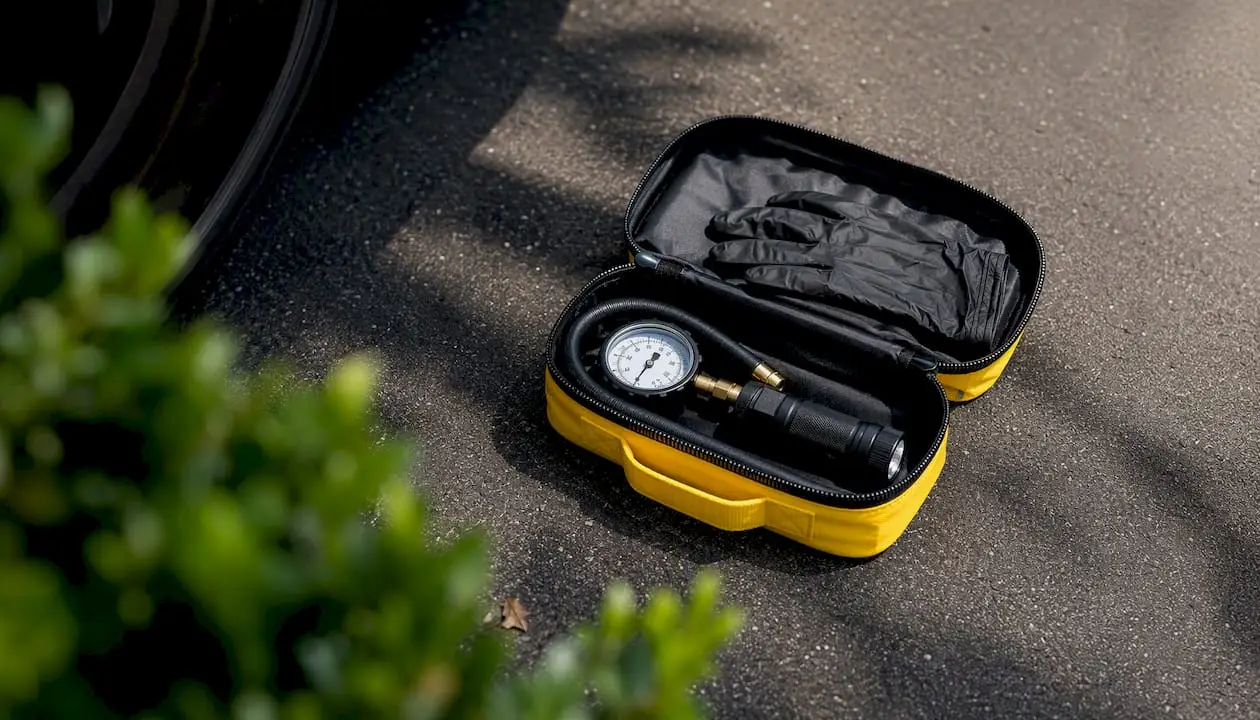
Pro Tip: Keep a small kit in the cargo area: a tire pressure gauge, a flashlight, and a pair of nitrile gloves. The whole kit costs under $15 and makes every check faster and cleaner.
Which preventive services most protect your minivan from costly failures?
Consistent preventive maintenance — especially fluid flushes and scheduled part replacements — is what separates a minivan that reaches 200,000 miles from one that needs a $4,000 transmission at 90,000. Here are the services ranked by their impact on long-term reliability:
- Oil and filter changes — the single highest-impact service. Sludge buildup from skipped changes is one of the leading causes of premature engine wear.
- Transmission fluid service — dirty or low fluid causes the transmission to slip, shudder, and eventually fail. Symptoms feel like driving over rumble strips or the engine working harder than the car is actually moving.
- Cooling system flush — old coolant becomes acidic and corrodes hoses, the water pump, and the radiator from the inside. A flush every 60,000–100,000 miles prevents overheating failures.
- Brake inspection and pad replacement — pads typically last 30,000–70,000 miles depending on driving style. Grinding means metal-on-metal contact; at that point, rotors need replacement too, doubling the cost.
- Tire rotation and alignment — uneven wear shortens tire life and masks suspension problems.
- Spark plugs — worn plugs reduce fuel economy and can cause misfires that stress the catalytic converter.
- Belt and hose inspection — a snapped serpentine belt leaves you stranded; a cracked coolant hose causes overheating within minutes.
Pro Tip: Ask your shop to bundle a transmission fluid check with every other oil change. It adds five minutes and catches low or degraded fluid before it causes damage.
Are your tires and brakes safe enough for family driving?
Tires and brakes are the two systems where deferred maintenance creates direct safety risk, not just repair cost. For tire tread depth guidance, the legal minimum is 2/32″ but 4/32″ is the practical replacement threshold for wet-road stopping distance.
Tire maintenance checklist:
- Rotate every 5,000–7,500 miles to even out wear patterns
- Maintain pressure within 2–3 PSI of the door-jamb spec
- Replace when tread reaches 4/32″ or when sidewall cracking is visible
- Cupping or scalloped wear usually signals a worn shock absorber, not just a tire problem
When to address alignment and suspension:
- The steering wheel pulls noticeably to one side on a flat road
- You feel vibration through the steering wheel above 55 mph
- Tires show wear only on the inner or outer edge
- The vehicle bounces excessively after hitting a bump
Alignment service typically runs $75–$150. Ignoring it costs you a set of tires prematurely — often $600–$900 for a minivan. Suspension components like struts and shocks generally last 50,000–100,000 miles but should be inspected at every brake service.
How do you keep the battery from failing on a school morning?
Battery failure is the most common cause of unexpected no-starts, and it is almost entirely preventable with a monthly two-minute check.
- Inspect terminals monthly for white or blue corrosion — clean with a baking soda and water solution and a wire brush
- Check that the battery is securely mounted; vibration accelerates internal plate wear
- Have the battery load-tested at every oil change after the battery turns three years old
- Ask your shop to record the test result so you have a trend to compare against
Most minivan batteries last 3–5 years. If the vehicle cranks slowly on a warm morning, that is a clear warning sign.
Hybrid owners: The 12V auxiliary battery still needs the same attention. The high-voltage battery cooling filter is a separate item — check your owner’s manual for the inspection interval, typically noted around 40,000–50,000 miles.
Pro Tip: Write the installation date on a piece of masking tape and stick it to the battery. When a shop tests it, you will know exactly how old it is without guessing.
When a battery keeps draining without explanation, the problem is often a parasitic draw (a module staying on) or a failing alternator — both require shop-level diagnosis with a multimeter and scan tool.
What seasonal prep does your minivan actually need?
Seasonal changes stress specific systems. A short checklist before each season prevents the most common weather-related failures.
Winter prep:
- Test the battery — cold temperatures reduce cranking power by up to 35%
- Check antifreeze concentration with an inexpensive tester (should protect to at least -20°F for most U.S. climates)
- Replace wiper blades with winter-rated blades before the first freeze
- Check seasonal tire condition and pressure — tires lose about 1 PSI for every 10°F drop in temperature
Summer prep:
- Inspect the cooling system: hoses, clamps, and coolant level
- Test the AC system — a refrigerant recharge is far cheaper than a compressor replacement
- Check tire pressure more frequently; heat expands air and can cause overexertion on long highway trips
Before any long family trip:
- Run through the full monthly visual checklist
- Check the spare tire pressure
- Confirm oil life and brake pad thickness are within acceptable range
- Pack the inspection kit and a roadside emergency kit
Driving habits matter as much as seasonal prep. Avoid frequent short trips under five miles when possible — the engine never fully warms up, which accelerates oil breakdown and fuel dilution. Smooth acceleration and gradual braking extend brake pad and transmission life significantly.
Which maintenance tasks can you do yourself and which need a shop?
Knowing where the line sits saves money and prevents costly DIY mistakes.
Safe to do at home:
- Check and top off fluids (oil, coolant reservoir, washer fluid, brake fluid level)
- Replace wiper blades
- Clean battery terminals
- Check tire pressure and inflate
- Replace cabin air filter (usually a 5-minute job with no tools)
- Replace engine air filter on most models
Always take to a shop:
- Transmission fluid drain and fill (requires specific fluid type and fill procedure)
- Coolant flush (involves pressurized system and proper disposal)
- Brake pad and rotor replacement (safety-critical; torque specs matter)
- Complex electrical diagnosis (parasitic drain, alternator testing)
- Hybrid inverter coolant service
- Timing belt replacement
When you bring the minivan in, write down the symptoms — when they happen, what they sound like, and how long they have been occurring. A shop that gives you a written estimate before starting work, uses ASE-certified technicians, and offers a parts warranty is operating at the standard you should expect. Red flags include verbal-only estimates, pressure to approve work immediately, and vague explanations of what was found.
Pro Tip: Keep a simple log in the glovebox: date, mileage, service performed, and shop name. It protects your warranty, helps the next technician, and adds real value at resale.
What should you budget for minivan maintenance each year?
RepairPal’s minivan data puts the average annual repair cost at approximately $647, but that covers unscheduled repairs only. Planned maintenance adds to that figure. A realistic annual budget for a well-maintained minivan looks like this:
Major services like transmission fluid service ($150–$300), coolant flush ($100–$200), and spark plug replacement ($150–$400) fall every few years, so spreading those costs across the years they cover keeps the per-year figure manageable.
A practical budgeting approach: set aside $75–$90 per month in a dedicated vehicle fund. That covers routine maintenance and builds a buffer for the larger scheduled services. For unexpected major repairs, auto repair financing options can prevent a single large bill from derailing the family budget.
Cost variability depends on your model (hybrid systems add unique service items), your region (labor rates in Fort Worth differ from coastal metros), and your driving habits. High-mileage drivers and those who tow regularly should budget toward the higher end.
Your printable minivan maintenance checklist
Use this checklist monthly and at each mileage milestone. Keep a copy in the glovebox and one in the garage.
Monthly (every 30 days or before a long trip):
- [ ] Oil level checked — Date: _______ Mileage: _______
- [ ] Coolant reservoir level OK
- [ ] Brake fluid level OK
- [ ] Tire pressure checked and adjusted
- [ ] Tread depth visually acceptable
- [ ] Lights and wipers functional
- [ ] Battery terminals clean and secure
- [ ] No warning lights active
Every 5,000–10,000 miles:
- [ ] Oil and filter changed — Date: _______ Mileage: _______ Shop: _______
- [ ] Tires rotated
- [ ] Cabin air filter inspected
- [ ] Brake visual check
Every 30,000 miles:
- [ ] Engine air filter replaced
- [ ] Brake fluid tested
- [ ] Fuel system inspection
Every 60,000 miles:
- [ ] Spark plugs replaced
- [ ] Transmission fluid service — Date: _______ Shop: _______
- [ ] Serpentine belt inspected
- [ ] Coolant tested
Every 100,000 miles:
- [ ] Full coolant flush
- [ ] Water pump inspection
- [ ] Inverter coolant (hybrids) — Date: _______ Shop: _______
- [ ] Timing belt/chain inspection
Keeping these records protects your factory warranty and gives any future buyer documented proof of care — a real advantage at resale. For a downloadable maintenance checklist PDF, you can print and customize one for your specific model.
Pro Tip: Note the oil type and viscosity used at each change. If you switch shops or move, the next technician will know exactly what is in the engine.
What Kwik Kar sees most often — and what it costs families
The pattern at Kwik Kar Oil Change & Auto Care is consistent: the minivans that come in with the most expensive problems are almost always the ones that skipped the inexpensive services. A transmission that needed a $200 fluid service at 60,000 miles arrives at 90,000 needing a $3,500 rebuild. Coolant that should have been flushed at 100,000 miles corrodes a water pump and a radiator hose simultaneously.
Busy families are the most common customers, and the most common gap is not ignorance — it is time. Parents juggling school schedules and work rarely think about the minivan until something goes wrong. That is why service reminders matter: a quick text or email that says “your oil is due” removes the mental load of tracking it yourself.
The Honda Odyssey’s record of strong multi-year reliability scores is not an accident of engineering alone. It reflects what happens when owners follow through on maintenance. The same outcome is available to any minivan owner who stays consistent.
Kwik Kar Oil Change & Auto Care keeps Fort Worth families moving
Skipping a $75 oil change to save time is how a $1,500 engine repair happens six months later. Kwik Kar Oil Change & Auto Care offers the full range of services this guide covers — oil changes, multi-point inspections, brake work, transmission service, and coolant flushes — performed by ASE-certified technicians with RepairPal recognition. Pricing is transparent and written before any work begins.
No appointment is needed for most services. Bring your minivan in, hand over the maintenance log if you have one, and the team will tell you exactly what it needs and what it does not. For larger repairs, flexible financing options are available so cost does not force you to defer something safety-critical. Schedule your next service or stop by — keeping your minivan reliable starts with one visit.
Sources
The guidance in this article draws from the following authoritative sources. OEM schedules set the timing benchmarks; RepairPal provides cost context and reliability methodology; trade reporting identifies reliability patterns across the minivan segment.
- Toyota Sienna owner maintenance booklet
- Minivan Reliability – 2026 Ratings | RepairPal
- Toyota Sienna Service Schedule: Complete Maintenance Timeline for Optimal Performance – Daily Car Tips
- Honda Odyssey: USA most reliable minivan for 15 years straight | CarBuzz
- Most reliable minivans you can count on | TopSpeed
Always cross-reference this guide with your specific vehicle’s owner’s manual, since intervals vary by model year, engine type, and whether the vehicle is a hybrid. Your owner’s manual is the final authority on your minivan’s service requirements.
FAQ
How often should a minivan get an oil change?
Most minivans need an oil change every 5,000–10,000 miles depending on oil type and driving conditions. Synthetic oil allows longer intervals, but ASE technicians generally recommend 5,000 miles for real-world use involving short trips, towing, or dusty conditions.
What is the most common cause of minivan transmission failure?
Deferred transmission fluid service is the leading cause. Dirty or low fluid causes heat buildup and friction that degrades internal components — symptoms include shuddering, slipping, or a feeling like driving over rumble strips. Service at 60,000 miles prevents most failures.
How do I know when my minivan’s tires need replacing?
Replace tires when tread depth reaches 4/32″ for family safety, or at the legal minimum of 2/32″. Visible wear indicator bars flush with the tread surface, sidewall cracking, or cupping are also replacement signals regardless of depth.
What does a minivan’s annual maintenance actually cost?
RepairPal data puts average annual unscheduled repair costs at approximately $647 for minivans. Adding planned maintenance (oil changes, rotations, filters) brings a realistic annual total to roughly $787–$1,047 for most owners.
Can Kwik Kar Oil Change & Auto Care handle hybrid minivan service?
Yes. Kwik Kar Oil Change & Auto Care’s ASE-certified technicians handle hybrid-specific services including the 12V auxiliary battery, HV battery cooling filter inspection, and inverter coolant service alongside standard maintenance for all minivan models.