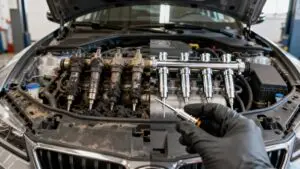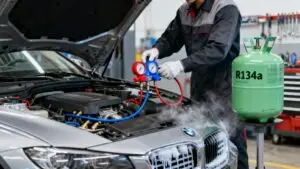





A brand-new car feels invincible. The engine hums smoothly, the tires grip perfectly, and nothing has had a chance to wear out yet. That feeling is real — but it can also be misleading. Understanding why new cars still need maintenance is one of the most practical things you can do as a car owner, because the physical processes that degrade fluids, wear rubber, and strain mechanical systems start the moment you pull out of the dealership lot. Neglecting them doesn’t become a problem immediately. It becomes a problem quietly, and then all at once.
Table of Contents
- Key takeaways
- Why new cars still need maintenance
- Maintenance needs for EVs and modern vehicles
- The real cost of skipping service on a new car
- Practical steps for maintaining your new car
- Our take on why this gets overlooked
- Keep your new car running at its best
- FAQ
Key takeaways
| Point | Details |
|---|---|
| Wear starts immediately | Fluids degrade and components wear from day one, regardless of how new the vehicle is. |
| EVs have unique service needs | Electric vehicles still require brake fluid flushes, tire rotations, and battery cooling system care. |
| Skipping service is costly | Deferred maintenance can increase total mechanical costs by up to 75% over five years. |
| Records protect resale value | Documented maintenance history can boost resale value by 10 to 15 percent. |
| Modern cars need specialist care | Advanced electronics and proprietary software require certified technicians for many service tasks. |
Why new cars still need maintenance
The term most professionals use for this ongoing process is preventive maintenance, sometimes called scheduled maintenance or a service interval program. The idea is straightforward: address wear before it becomes a failure. New cars come with factory-set service intervals outlined in the owner’s manual, and those intervals exist for good reason.
Here is what is actually happening inside your vehicle, even when everything feels fine:
- Engine oil breaks down chemically. Heat, friction, and combustion byproducts degrade oil regardless of how new the engine is. Most manufacturers now specify oil changes somewhere between 5,000 and 10,000 miles depending on the oil type, but that interval starts at mile one.
- Coolant becomes acidic over time. Even without heavy use, coolant loses its ability to inhibit corrosion and regulate temperature effectively. This is true for both gas-powered vehicles and electric ones.
- Rubber components harden and crack. Belts, hoses, and seals are exposed to heat cycles every time you drive. Age alone degrades them, independent of mileage.
- Air and cabin filters clog from normal use. Every drive pulls in outside air carrying dust, pollen, and particulates. A clogged cabin air filter forces the HVAC blower motor to work harder, shortening its life.
- Tires wear unevenly without rotation. Front tires carry more weight during braking and steering, so they wear faster. Regular rotation distributes that wear across all four tires.
The honest comparison between new and older cars comes down to this: older cars have already experienced more of these wear processes, so the failure points are more visible. New cars have not yet, which makes the degradation invisible and easy to ignore. That invisibility is exactly what makes early neglect so risky.
Pro Tip: Read the maintenance section of your owner’s manual before your first service visit. Manufacturers design those schedules around real engineering data, not arbitrary timelines. Knowing what your car actually needs prevents you from either overpaying for unnecessary services or skipping ones that genuinely matter.
Modern vehicle complexity has also added a layer that older cars never had. Many newer vehicles require proprietary diagnostic software just to read sensor data or reset service reminders. That means even a routine inspection at an uncertified shop may miss fault codes that a certified technician would catch immediately.
Maintenance needs for EVs and modern vehicles
One of the most persistent myths about electric vehicles is that they require almost no maintenance. Fewer moving parts does mean fewer failure points in the drivetrain, but that does not mean the service schedule disappears. The same applies to modern gas-powered vehicles loaded with advanced driver-assistance systems (ADAS).
Here is how maintenance requirements break down across powertrain types:
- Brake fluid (all vehicles). EVs still need brake fluid flushes roughly every three years, even though regenerative braking reduces how often the physical brake pads engage. Moisture absorption in brake fluid is a chemistry problem, not a usage problem.
- Tire rotation (EVs especially). Because electric vehicles carry heavier battery packs and deliver instant torque, EV tires wear faster than those on comparable gas-powered cars. Rotations every 5,000 to 7,500 miles are common recommendations.
- Cabin air filter replacement. This applies to every vehicle type, including EVs. Cabin air quality matters, and a clogged filter strains the climate control system regardless of what powers the car.
- Battery cooling system inspection. EVs use liquid-cooled battery packs in most configurations. The coolant in that system still degrades over time and requires periodic inspection and eventual replacement.
- ADAS calibration. Advanced driver-assistance features like lane-keeping assist, automatic emergency braking, and adaptive cruise control rely on precisely calibrated cameras and radar sensors. A minor fender impact or even a windshield replacement can throw calibration off.
| Service task | Gas vehicle | Electric vehicle |
|---|---|---|
| Oil changes | Required (every 5,000–10,000 miles) | Not applicable |
| Brake fluid flush | Every 2 to 3 years | Every 3 years |
| Tire rotation | Every 5,000 to 7,500 miles | Every 5,000 to 7,500 miles (more urgent) |
| Air filter replacement | Every 15,000 to 30,000 miles | Every 15,000 to 30,000 miles |
| Battery system inspection | Not applicable | Annually or per manufacturer guidance |
| ADAS calibration | As needed after sensor disruption | As needed after sensor disruption |
The takeaway here is not that EVs are high-maintenance. It is that different does not mean none. For more detail on EV-specific maintenance practices, the requirements vary more by model than most buyers expect.

The real cost of skipping service on a new car
Here is where the numbers become hard to ignore. Routine maintenance costs average between $600 and $1,200 per year for most vehicles. That feels like a real expense. But skipping those services can increase total mechanical ownership costs by up to 75% over five years, with individual repair incidents running between $1,500 and $4,000 once cascading failures set in.
The cascade effect is the part that catches most owners off guard. A neglected oil change leads to sludge buildup. Sludge buildup accelerates wear on bearings and cylinder walls. Worn bearings cause engine knock. By the time you hear that knock, the repair bill is not $80. Deferred maintenance can cascade into failures costing 10 to 50 times the original service fee within a single year.
“Short-term savings from skipping maintenance often lead to long-term catastrophic failures and serious safety risks.” — Automotive maintenance experts
There is also the resale question. Vehicles with complete maintenance records sell for 10 to 15 percent more than those without documentation. On a $35,000 vehicle, that gap can represent $3,500 to $5,250 in recovered value. Think of maintenance records as a receipt for every dollar you have protected.
| Scenario | 5-year cost estimate |
|---|---|
| Consistent preventive maintenance | $3,000 to $6,000 |
| Deferred maintenance with one major failure | $6,000 to $12,000+ |
| Deferred maintenance with cascading failures | $10,000 to $20,000+ |
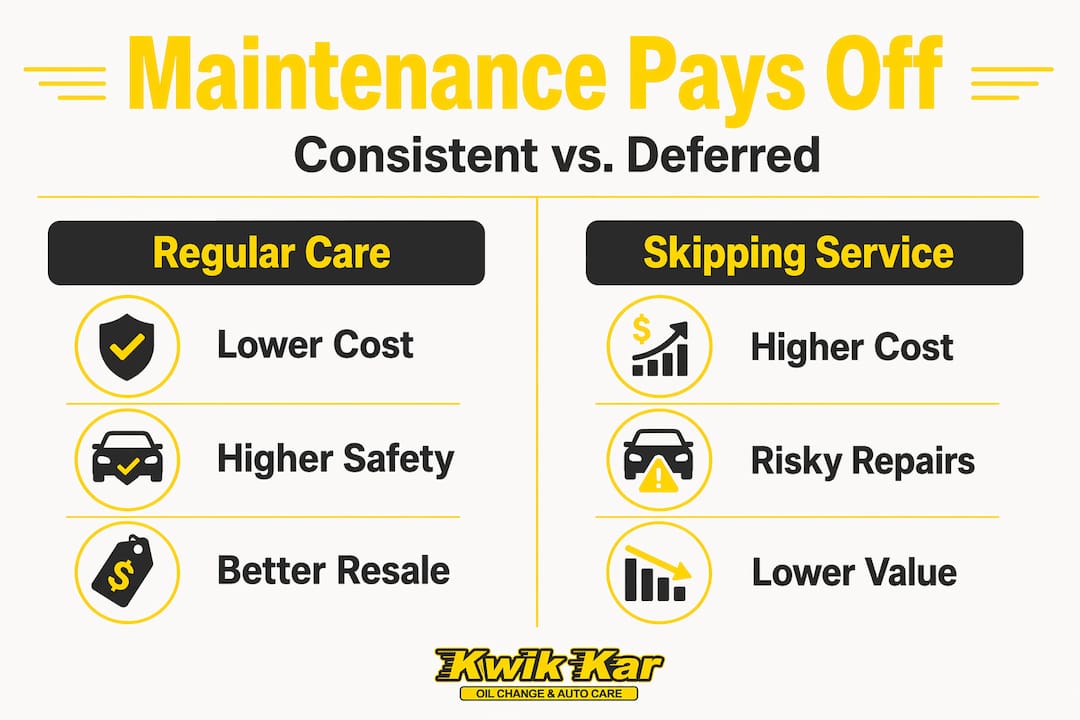
Safety is the other side of this conversation, and it is more serious than most people realize. Worn tires lose traction and increase stopping distance. Low brake fluid affects pedal firmness. A stretched timing belt that snaps takes the engine with it. None of these failures announce themselves with much warning. They happen because components that needed attention months ago were left alone.
Practical steps for maintaining your new car
Knowing that new car upkeep matters is one thing. Knowing exactly how to approach it is another. The good news is that you do not need to spend a fortune or become a mechanic to keep a new vehicle in excellent condition.
- Follow the factory schedule first. Your owner’s manual is the most specific, reliable resource you have. Manufacturers set service intervals based on engineering data specific to your engine, transmission, and drivetrain. Start there.
- Track every service in writing. A simple spreadsheet, a dedicated app, or a folder of receipts all work. What matters is that you have documentation of the date, mileage, and work performed for every visit.
- Know what you can do yourself. Simple tasks like oil and filter changes at home can cost around $100 versus significantly more at a shop. Replacing a cabin air filter takes about five minutes. Wiper blade replacement is even faster. These are reasonable DIY jobs.
- Know when to hand it over. Brake system work, ADAS calibration, transmission service, and anything that requires proprietary diagnostic tools should go to a certified technician. The cost of getting these wrong far exceeds any savings.
- Protect your warranty. Most new car warranties require that maintenance be performed at specified intervals. Skipping a scheduled service can void coverage on related components. A maintenance schedule aligned with warranty terms protects both your car and your coverage.
Pro Tip: Set a calendar reminder for your next service date the moment you leave the shop. Do not rely on memory. Between life getting busy and the fact that new cars rarely give obvious warning signs of neglect, a standing reminder is the simplest habit that prevents the most expensive problems.
If you are new to managing your own maintenance schedule, the car maintenance for beginners guide at Kwik Kar Oil Change & Auto Care breaks down the process in plain language without overwhelming you with technical detail.
Our take on why this gets overlooked
I have seen this pattern so many times it no longer surprises me. A customer drives in with a relatively new vehicle, maybe two or three years old, and the damage under the hood tells the story of a car that was trusted too completely. The owner assumed that new meant self-sufficient.
What I have come to understand is that the smoothness of a new car is not a signal that nothing needs attention. It is actually the worst time to become complacent, because the problems that are quietly developing have not yet shown themselves. By the time the car starts acting up, you are already on the back end of a process that started much earlier.
The other thing I have learned is that modern automotive technology, while genuinely impressive, makes maintenance more precise, not less. Sensors, software, and calibrated systems require accurate diagnostics. Manufacturers do not design parts to fail after warranty, but those parts do wear, and the newer the technology, the more exactly you need to manage that wear. Approaching maintenance proactively is not paranoia. It is just responsible ownership.
— Kwik Kar
Keep your new car running at its best
At Kwik Kar Oil Change & Auto Care in Fort Worth, we work with new car owners every day who want to protect their investment without overpaying or getting talked into unnecessary services. Our certified technicians understand both traditional and modern vehicle systems, including EVs and ADAS-equipped vehicles, and we provide transparent pricing so you always know what you are paying for and why.
If you are not sure where to start, our guide to finding a trustworthy mechanic walks you through exactly what to look for in a service provider. And if cost is a concern, our affordable repair options in Fort Worth make it easy to stay on schedule without breaking your budget. Preventive care is always less expensive than the alternative.
FAQ
Do new cars really need oil changes right away?
Yes. Engine oil begins to degrade from the first drive due to heat and friction, regardless of mileage. Most manufacturers recommend the first oil change between 5,000 and 10,000 miles depending on the oil type specified for your engine.
How often should a new car be serviced?
Most new vehicles follow a service schedule tied to mileage milestones, typically every 5,000 to 10,000 miles for oil changes and more comprehensive inspections at 15,000, 30,000, and 60,000 miles. Always confirm with your owner’s manual.
Do electric vehicles need maintenance?
Yes. EVs still require brake fluid flushes every three years, regular tire rotations, cabin air filter replacements, and battery cooling system inspections, even though they skip oil changes and have less drivetrain wear than gas-powered vehicles.
Can skipping one service really cause serious damage?
It can. A single skipped oil change that leads to sludge buildup can accelerate engine wear significantly. Cascading failures from deferred maintenance can cost 10 to 50 times the original service fee within a year.
Does maintenance history affect resale value?
Absolutely. Vehicles with complete, verified maintenance records sell for 10 to 15 percent more at resale. That documentation proves the car was cared for and that safety-critical components were serviced on schedule.