

Checking an auto repair shop’s reputation is the process of gathering and evaluating information from multiple reliable sources to determine a shop’s trustworthiness and service quality. Car owners who skip this step risk overpaying, receiving poor repairs, or falling victim to common scams. The good news is that a clear, repeatable process exists. By combining personal referrals, online reviews, ASE certification checks, and written estimates, you can verify any shop’s credibility before handing over your keys. Kwik Kar Oil Change & Auto Care, a RepairPal-certified shop in Fort Worth, uses this same standard of transparency to earn and keep customer trust.
How do you check auto repair shop reputation effectively?
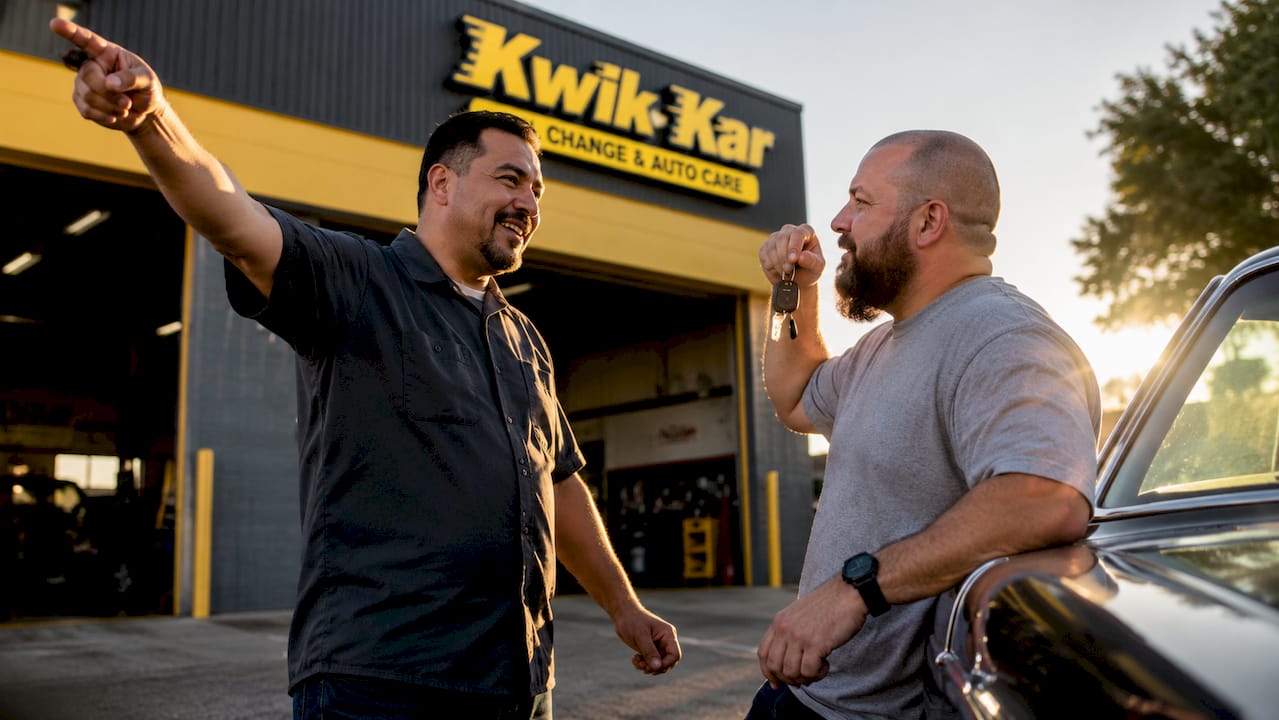
Personal referrals are the single most reliable starting point for evaluating any shop. Personal referrals from owners of the same vehicle make and model carry more weight than generic word-of-mouth because the experience is directly relevant to your situation. A neighbor who drives a Toyota Camry and raves about their mechanic gives you far more useful information than a coworker who drives a pickup truck.
When you ask for a referral, go beyond “do you like them?” Ask targeted questions:
- Did the shop fix the problem correctly on the first visit?
- Were the final charges close to the original estimate?
- Did the technician explain what was wrong in plain language?
- How did the shop handle any follow-up issues?
These questions surface the details that generic reviews often miss. A shop that consistently scores well on all four points has earned its reputation through repeated performance, not luck.
Cross-checking referrals with online data adds a second layer of confirmation. If three people recommend a shop and its Google rating sits above 4.0 with hundreds of reviews, you have strong, converging evidence. If the referrals are positive but online reviews tell a different story, that conflict is worth investigating before you commit.
Pro Tip: Ask your referral source specifically about their vehicle make and model. A shop that specializes in European imports may not be the best fit for your domestic truck, even if the referral is glowing.
Referrals do have limits. They reflect one person’s experience at one point in time. Staff turns over, ownership changes, and quality can shift. Use referrals as your starting point, not your final answer.
How do online reviews reveal a shop’s true track record?
Online reviews give you access to dozens or hundreds of customer experiences at once. The key is knowing how to read them critically rather than just scanning the star average.
A high volume of reviews with an average rating around 4.2–4.6 provides more reliable reputation data than a handful of perfect scores. A shop with 300 reviews at 4.3 stars is a far safer bet than one with 12 reviews at 5.0 stars. Volume reduces the impact of fake or biased reviews.
Mid-range 3-star reviews often contain the most balanced and specific information about a shop’s communication and problem handling. Reading only 5-star or 1-star reviews gives you a distorted picture. The 3-star reviews are where customers describe what went right and what went wrong, which is exactly what you need.
Cross-referencing multiple platforms like Google and Yelp provides a fuller picture because each platform attracts a different user base with different biases. Consistency across platforms is a strong indicator of reliability.
Here is a quick breakdown of what each platform tends to reveal:
| Platform | Strengths | What to watch for |
|---|---|---|
| Google Reviews | High volume, broad audience | Check how the shop responds to negative reviews |
| Yelp | Detailed narratives, photos | Filter for “not recommended” reviews for hidden data |
| Better Business Bureau | Complaint history and resolution records | Look at complaint resolution rate, not just rating |
| RepairPal | Verified repair data and fair pricing benchmarks | Certification status confirms shop meets quality standards |
Shops that engage professionally with complaints demonstrate a culture of accountability. A shop that responds to a 2-star review with a calm, solution-focused reply is showing you exactly how it handles problems in real life.
Pro Tip: Search the shop’s name plus the word “complaint” on Google. This surfaces results that standard review platforms may bury.
What certifications and warranties should a reputable shop have?
Certifications and warranties are the most objective evidence of a shop’s commitment to quality. They are either present or they are not.
ASE certification is the baseline standard for technician competency in the United States. The National Institute for Automotive Service Excellence issues ASE credentials after technicians pass rigorous exams and demonstrate hands-on experience. A shop staffed with ASE-certified technicians has cleared a meaningful professional bar. You can learn more about what this credential actually covers in this guide on ASE-certified mechanics.
AAA-approved facilities go one step further. They must pass facility inspections and customer satisfaction audits, not just employ certified technicians. This dual-layer vetting makes AAA approval a strong secondary signal.
Warranty terms are equally telling. Standard labor warranties for auto repairs are typically 12 months or 12,000 miles. A reputable shop states these terms clearly before work begins. The absence of any warranty offer is a red flag. Understanding typical warranty coverage helps you recognize when a shop’s offer falls short of industry norms.
| Credential or term | What it means | Red flag if absent |
|---|---|---|
| ASE certification | Technician passed national competency exams | Unverified skill level |
| AAA approval | Facility and customer satisfaction audited | No independent oversight |
| 12-month/12,000-mile warranty | Industry-standard labor coverage | Shop avoids accountability |
| Itemized written estimate | Labor hours and parts listed by name and specs | Price disputes likely |
Written estimates are not just good practice. Some states legally require them for repairs over $100–$200, and verbal quotes carry no legal standing. A trustworthy shop’s estimate itemizes labor hours and parts by name and specifications, which lets you verify pricing independently. Shops that separate OEM from aftermarket parts in their estimates give you the information needed to make a fair price-quality comparison. For a detailed breakdown of what a proper estimate should include, see this guide on car repair estimates.
Pro Tip: Ask the shop to mark which parts are OEM and which are aftermarket before you approve any work. This one question tells you a great deal about how transparent the shop is.
What communication habits signal an honest auto repair shop?
Transparency in communication is one of the clearest indicators of shop integrity. It costs nothing to explain a repair clearly, so shops that refuse to do so are usually hiding something.
Shops willing to show removed parts and provide diagnostic evidence are more transparent and trustworthy. Defensiveness or refusal when you ask to see a worn part is a major red flag. A confident technician welcomes the question.
Watch for these positive communication signals:
- The technician explains the problem in plain language without being asked.
- The shop provides fault codes, photos, or side-by-side part comparisons before recommending a repair.
- Staff answers your questions directly and without irritation.
- The shop calls you before adding work not included in the original estimate.
Pressure sales tactics are the opposite of transparency. If a service advisor insists a repair is urgent without showing you evidence, or quotes a price that jumps significantly from the estimate without explanation, treat both as warning signs. A trustworthy shop gives you the information and lets you decide.
How do you cross-verify findings and avoid common mistakes?
Synthesizing all your research into a final decision requires a structured approach. Here is a practical process:
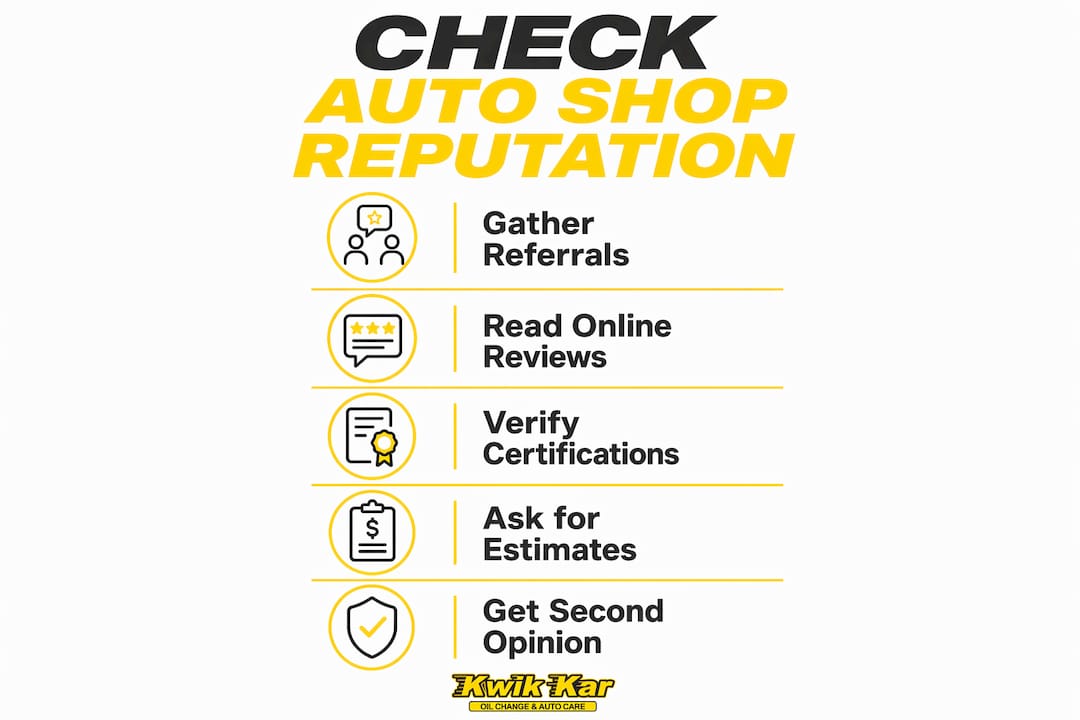
- Start with referrals. Collect at least two recommendations from people with the same vehicle type.
- Check online ratings. Look for 300 or more reviews with a 4.2–4.6 average across at least two platforms.
- Verify certifications. Confirm ASE certification and check for AAA approval or RepairPal listing.
- Request a written estimate. Confirm it itemizes parts by name, separates OEM from aftermarket, and includes warranty terms.
- Evaluate communication. Note whether the shop explains repairs clearly and offers to show evidence.
- Document everything. Save estimates, receipts, and any written communications for future reference.
When referrals and online reviews conflict, weight the online data more heavily if the volume is high. A single glowing referral cannot outweigh 400 reviews averaging 2.8 stars. Conversely, a shop with sparse online presence but strong referrals from trusted sources deserves a first visit.
For repairs exceeding $500 or complicated diagnoses, a second opinion is financially prudent. The cost of one extra diagnostic visit is small compared to the risk of approving unnecessary work.
Trusting your instincts and documenting all communications rounds out the process. Subtle signs, like a service advisor who avoids eye contact or a waiting room that feels chaotic, often reflect how the shop operates overall.
Pro Tip: Keep a simple notes file on your phone for each shop you visit. Record the date, service performed, final price, and your overall impression. This record becomes invaluable when you need to compare options later.
Key Takeaways
Checking an auto repair shop’s reputation requires combining personal referrals, verified certifications, critical review analysis, and written estimates to make a fully informed decision.
| Point | Details |
|---|---|
| Referrals come first | Ask people with the same vehicle make and model for targeted recommendations. |
| Volume matters in reviews | Look for 300 or more reviews averaging 4.2–4.6 stars across multiple platforms. |
| Certifications are verifiable | ASE certification and AAA approval provide objective, third-party quality confirmation. |
| Written estimates protect you | Itemized estimates with OEM vs. aftermarket parts listed prevent price disputes. |
| Communication reveals character | Shops that show evidence and explain repairs clearly are the ones worth trusting. |
What I have learned about trusting a shop over time
At Kwik Kar Oil Change & Auto Care, we have seen car owners make the same mistake repeatedly. They research a shop thoroughly before a major repair, then never think about reputation again until the next crisis. The shops that earn lasting trust do so through routine visits, not just big jobs.
A first oil change tells you more than any review. You see how the waiting area is kept, whether the advisor explains the multipoint inspection results without being asked, and whether the final charge matches the posted price. These small moments are the real reputation test.
The uncomfortable truth about certifications is that they confirm minimum competency, not ongoing excellence. A shop can hold ASE credentials and still cut corners on parts or communication. The certification opens the door. What happens inside is what matters. That is why we encourage car owners to find a trustworthy mechanic by building a relationship over time, not just checking a box.
One more thing worth saying directly: a shop with a few well-handled negative reviews is more trustworthy than one with a perfect, sanitized profile. No shop gets every job right. The ones that acknowledge mistakes and fix them are the ones you can count on for years.
— Kwik Kar
Kwik Kar Oil Change & Auto Care: built on the standards you just read about
Kwik Kar Oil Change & Auto Care in Fort Worth holds RepairPal certification, employs ASE-certified technicians, and provides itemized written estimates on every job. Every service includes transparent pricing and a clear explanation of what was done and why.
Car owners who want to protect themselves further can review our guide on auto repair scams to recognize the tactics dishonest shops use. If cost is a concern, our repair financing options make it easier to approve necessary work without financial pressure. Kwik Kar Oil Change & Auto Care is the shop that holds up under exactly the scrutiny this article describes.
FAQ
What does checking auto repair shop reputation involve?
Checking auto repair shop reputation means gathering information from personal referrals, online review platforms, certification databases, and written estimates to assess a shop’s trustworthiness before authorizing any work.
How many reviews should a shop have before I trust the rating?
A shop with 300 or more reviews averaging 4.2–4.6 stars provides reliable reputation data. Fewer reviews make the average easier to manipulate with fake or biased submissions.
What certifications should I look for in a reputable auto shop?
ASE certification confirms technician competency through national exams. AAA approval adds a facility inspection and customer satisfaction audit, making it a strong secondary credential.
Why are written estimates so important before repairs?
Some states require written estimates for repairs over $100–$200, and verbal quotes carry no legal standing. A written, itemized estimate protects you from unexpected charges and gives you a basis for comparison.
When should I get a second opinion on a repair?
Get a second opinion on any repair exceeding $500 or any diagnosis that feels vague or unsupported by evidence such as fault codes, photos, or worn parts shown to you directly.