


When you see the term ASE certified mechanic, you’re looking at a credential that signals true expertise. It means a technician has gone the extra mile to prove their skills through the National Institute for Automotive Service Excellence, a non-profit organization dedicated to raising the bar in the auto repair world. This certification isn’t handed out lightly; it’s a voluntary and rigorous process that confirms a mechanic has both deep knowledge and real-world, hands-on experience.
The Gold Standard in Automotive Expertise

Think about it this way: when you have a health concern, you seek a board-certified doctor. For financial matters, you’d want a Certified Public Accountant (CPA). The same logic applies to your vehicle. An ASE-certified mechanic is the board-certified expert of the auto repair industry. That blue and white seal is far more than a sticker—it’s your assurance of professionalism and proven skill.
Established in 1972, the ASE’s mission has always been to improve the quality of vehicle repair through independent, third-party testing. Of the estimated 887,000 auto technicians working in the United States, only around 250,000 hold current ASE certifications. This distinction separates the best from the rest. You can see what it takes to be considered among the elite by checking out the standards for World Class Technicians on autocare.org.
What Defines ASE Certification
At its heart, ASE certification is a commitment to excellence. It’s a clear sign that the technician working on your car has met incredibly high standards in specific repair areas. The entire process is intentionally challenging, designed to identify the most dedicated and knowledgeable professionals in the field.
The purpose of ASE is to certify the competence of individual technicians, not the repair shops themselves. This focus on individual skill ensures that the person working on your vehicle possesses a verified level of expertise.
So, what does it actually take to earn that certification? The process is built on two non-negotiable pillars:
- Rigorous Testing: Technicians must pass a difficult, computer-based exam covering the complex systems of a specific automotive specialty.
- Hands-On Experience: Before even sitting for the exam, a mechanic needs at least two years of documented, on-the-job experience. A combination of formal training and one year of experience can also meet this requirement.
This dual-pronged approach guarantees that a certified tech doesn’t just know the textbook answers—they know how to apply that knowledge in a real-world garage. It’s a system designed to give you peace of mind, knowing your vehicle is in truly capable hands.
To help you quickly grasp the key elements, here’s a brief overview of what goes into an ASE certification.
ASE Certification at a Glance
| Component | Description |
|---|---|
| Voluntary Credential | Technicians choose to pursue certification to prove their skills; it is not mandatory. |
| Specialized Exams | Tests are specific to areas like Brakes, Engine Repair, or Electrical Systems. |
| Experience Requirement | A minimum of 2 years of hands-on work experience is required to become certified. |
| Recertification | Technicians must re-test every 5 years to keep their credentials current. |
This structure ensures that an ASE-certified technician isn’t just qualified—they’re also up-to-date with the latest automotive technology and repair techniques.
The Rigorous Path to ASE Certification
Earning that ASE Blue Seal isn’t something that happens over a weekend or with a quick online quiz. It’s a tough, demanding process designed to separate the truly dedicated professionals from the crowd, and for good reason. The entire system is built to ensure only the most skilled and committed technicians earn the certification.
The first big hurdle is real-world experience. Before a technician can even think about taking an exam, they need to prove they have at least two years of full-time, hands-on work under their belt. This makes sure every certified mechanic has spent serious time in a garage, dealing with actual car problems day in and day out.
The Comprehensive Testing Process
Once they’ve met the experience requirement, the real challenge begins. ASE exams aren’t just about what you can memorize from a textbook. The questions are crafted by a panel of industry experts—think working technicians, manufacturer representatives, and educators—so they reflect the practical problems a mechanic faces every single day.
The road to certification is long, starting with years of hands-on work and leading to a series of over 50 specialized exams. Around 100,000 technicians sit for these tests each year, but passing isn’t easy. You might face 40 questions on manual drivetrains or 50 on engine performance alone. You can see the full range of tests on the official ASE website.
Passing these exams is notoriously difficult. This isn’t a system where everyone gets a participation trophy. In fact, only about two out of every three technicians who take an ASE test pass on their first try. This high bar is a big reason why asking what is an ASE certified mechanic has become shorthand for asking about quality. A technician with those credentials has proven they can clear it.
Staying Current with Recertification
The journey doesn’t stop after a technician passes their first exam. The automotive world moves fast, with new technologies, complex electronics, and advanced engines coming out every year. To make sure certified technicians stay on top of their game, ASE has a strict recertification policy.
- Five-Year Validity: ASE certifications are only good for five years.
- Mandatory Re-testing: To keep their credentials, technicians must retake and pass their specialty exams every five years.
- Continuous Learning: This system forces professionals to stay educated on the latest repair methods and vehicle systems.
This commitment to ongoing education is what keeps the certification meaningful. A credential earned a decade ago doesn’t mean much if the technician hasn’t kept up with modern cars. The five-year cycle guarantees that the ASE-certified mechanic you trust with your car today has current, relevant skills to handle even the newest vehicles on the road. It’s a true promise of continued excellence.
Understanding ASE Certification Specialties
When you hear a mechanic is ASE certified, it’s easy to think it’s a single, all-encompassing qualification. But that’s not quite how it works. It’s actually more like a college degree with different majors—a technician can specialize in very specific areas of car repair, from brakes to tricky electrical systems.
The National Institute for Automotive Service Excellence (ASE) groups these certifications into different series. For the car or light truck in your driveway, the most relevant is the A-Series. This covers all the core systems that keep your vehicle running.
The Different Areas of Expertise
This system of specialties is great for you as a car owner because it means you can find an expert perfectly suited for your car’s specific problem. If your air conditioning is blowing warm air, you’ll want a mechanic certified in Heating & Air Conditioning (A7). If a stubborn check engine light won’t go away, a technician with an Engine Performance (A8) certification is your best bet for a fast, accurate diagnosis.
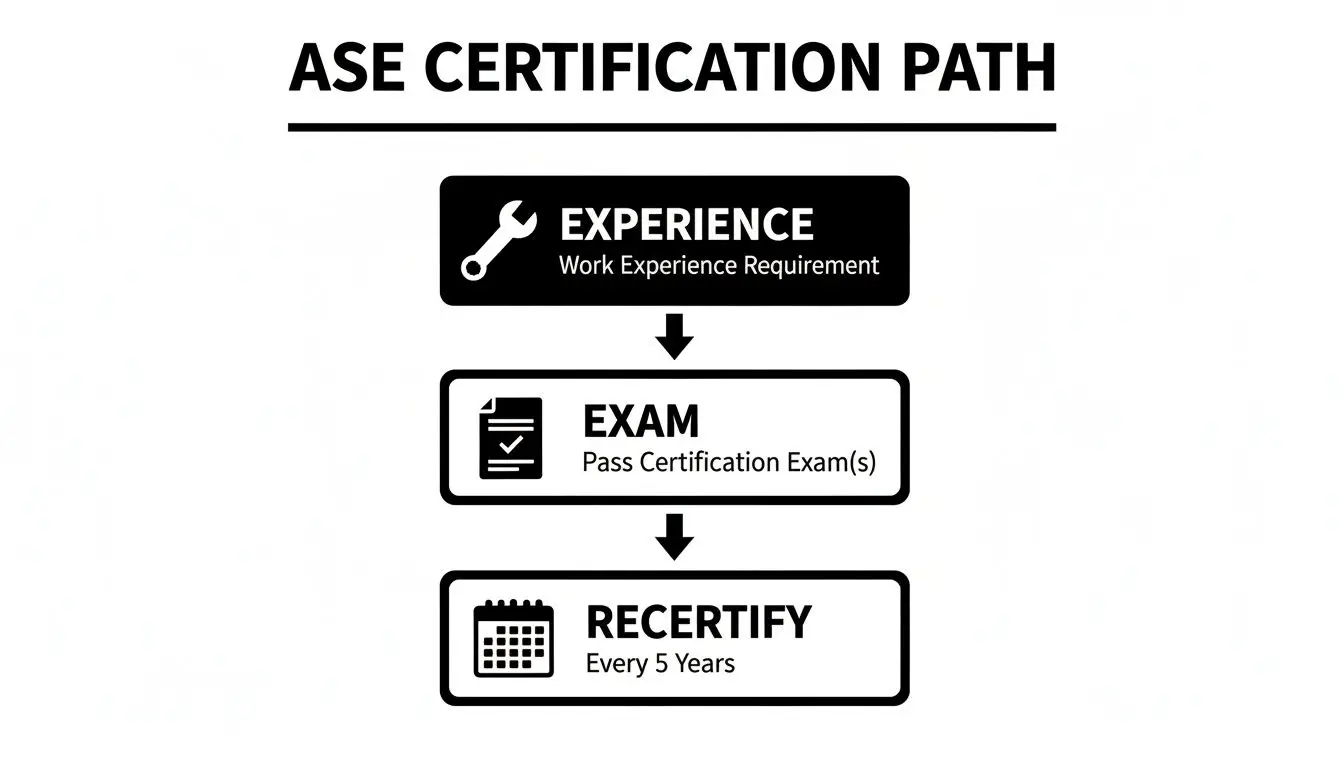
It ensures the person working on your vehicle has proven, tested knowledge directly related to the issue at hand. The path to earning and keeping these credentials isn’t easy, as this chart shows. It requires real-world experience, tough exams, and ongoing education.
To give you a better idea of what these certifications cover, here’s a look at the most common ones for passenger vehicles.
Common ASE Automobile Test Series (A-Series)
This table breaks down the A-Series tests, showing what each specialty area means for the maintenance and repair of your car.
| Test Code | Specialty Area | What It Means for Your Car |
|---|---|---|
| A1 | Engine Repair | Expertise in fixing major internal engine problems, like issues with pistons, cylinders, or the block itself. |
| A2 | Automatic Transmission/Transaxle | The go-to pro for shifting problems, fluid leaks, or any internal transmission failure. |
| A3 | Manual Drive Train & Axles | Certified to handle clutch repairs, gear-grinding issues, and problems with your axles or differential. |
| A4 | Suspension & Steering | Knowledge of shocks, struts, and steering components to fix alignment issues and ensure a smooth ride. |
| A5 | Brakes | Proven skill in servicing brake pads, rotors, hydraulic systems, and anti-lock brake (ABS) issues. |
| A6 | Electrical/Electronic Systems | The specialist for diagnosing and fixing complex wiring, shorts, or malfunctioning sensors. |
| A7 | Heating & Air Conditioning | Your expert for getting the A/C blowing cold again or fixing a heater that won’t work in the winter. |
| A8 | Engine Performance | The diagnostician who traces the root cause of check engine lights, poor fuel economy, or failed emissions. |
Having technicians certified in these specific areas means a shop is prepared for just about anything your car can throw at it.
The Pinnacle of Achievement: Master Technician Status
Beyond these individual specialties, there’s another level of recognition that truly sets a technician apart: the Master Technician status. This isn’t just another certificate; it’s the top tier of achievement for an auto repair professional.
To become a Master Automobile Technician, a mechanic must pass eight separate and demanding tests (A1 through A8). This accomplishment shows they have a deep and comprehensive understanding of virtually every system in your car, from the engine to the transmission and all the electronics in between.
Finding a Master Technician is a huge plus, especially when you’re facing a complicated or hard-to-diagnose problem. It’s a clear sign that you’re working with someone who has a well-rounded knowledge base and is one of the best in the field.
Knowing about these specialties helps you make a smarter choice for your vehicle. It lets you find a shop with the exact expertise your car needs, ensuring you get the right person for the right job, every single time.
Why an ASE Certified Mechanic Is Your Best Choice
When that dreaded check engine light flickers on, the difference between a quick, accurate fix and a long, expensive ordeal often comes down to one thing: the expertise of your mechanic. This is where choosing an **ASE certified mechanic** becomes your single greatest advantage. Their proven knowledge translates directly into real-world benefits for you and your car.
Think of it as the difference between guessing and knowing. An uncertified mechanic might have to try several solutions to figure out a complex problem, costing you time and money for parts you didn’t even need. A certified technician, on the other hand, relies on deep diagnostic training to pinpoint the exact cause of the issue the first time.
Accurate Diagnostics and Reliable Repairs
This ability to perform accurate diagnostics is a game-changer. Imagine finally getting a clear, definitive answer for that mysterious rattle or an intermittent electrical problem on the first visit. Certified technicians are trained to understand the complex dance between your car’s mechanical and electronic systems.
The real value of an ASE-certified mechanic isn’t just in fixing what’s broken; it’s in accurately identifying the problem from the start, which prevents unnecessary repairs and repeat visits to the shop.
This expertise is absolutely essential as vehicle technology gets more advanced every year. ASE certification demands ongoing education, requiring technicians to re-test every five years. This ensures they stay sharp on everything from modern hybrid engines to sophisticated onboard computers. You can learn more about how this keeps them at the top of their game by exploring the reasons consumers seek out ASE-certified pros.
Protecting Your Warranty and Your Wallet
Using an ASE-certified shop is also one of the smartest things you can do to protect your vehicle’s warranty. While most manufacturers don’t explicitly require it, having service records from a reputable, certified facility can be a lifesaver if a warranty claim ever comes up. Certified technicians follow manufacturer-approved procedures, ensuring the work is done right and won’t void your coverage.
Ultimately, choosing a certified professional delivers peace of mind and long-term value. Their efficiency and accuracy save you from the headache of repeat visits and inflated bills. This focus on doing the job right the first time aligns perfectly with a smart vehicle maintenance strategy. If you’re interested in the long-term benefits of this approach, check out our guide on preventive maintenance vs reactive maintenance. By investing in certified expertise, you’re not just paying for a single repair; you’re investing in your vehicle’s health, safety, and reliability for years to come.
How to Find and Verify an ASE Certified Mechanic
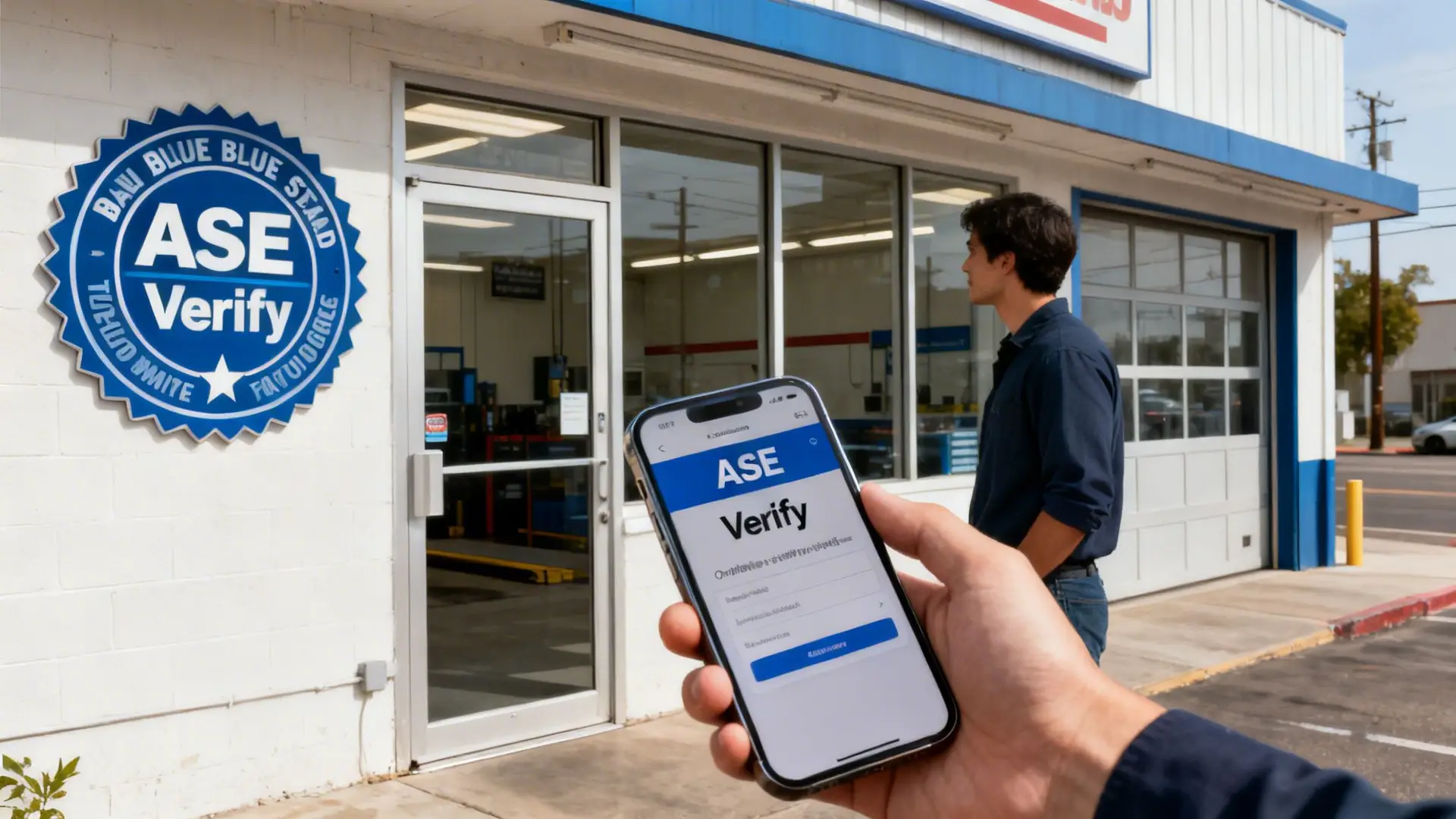
So, you’re sold on the value of an ASE-certified technician. The next step is actually finding one. Thankfully, shops that invest in certification are proud of it and make it easy for you to see. The first thing to look for is the classic blue and white ASE sign displayed right out front.
Once you’re inside, check the walls of the waiting room or service counter. Good shops will hang each technician’s individual ASE certificates for everyone to see. These documents show you exactly what specialties each person has mastered, which is a great sign of a shop’s commitment to transparency and skill.
Double-Checking Credentials Online
While a sign on the door is a great start, the best way to be absolutely sure is to verify a mechanic’s credentials yourself. ASE provides an official tool that takes all the guesswork out of the process, and it’s completely free to use.
The ASE Certified Professional & Blue Seal Shop Locator is your direct line to the source. It lets you confirm a technician’s status in real time, so you know you’re making a decision based on current, accurate information.
All you need is the technician’s name or their ASE certification number to use the tool. This simple step gives you total confidence that the person working on your car has up-to-date, legitimate qualifications. Taking the time to confirm expertise is a key part of how to find a trustworthy mechanic and ensures your vehicle is in skilled hands.
Here’s a quick rundown of what to do:
- Look for the Sign: Keep an eye out for the blue and white ASE logo at the shop.
- Ask to See Credentials: Don’t be shy about asking the service advisor about their team’s certifications. A good shop will be happy to show you.
- Verify It Online: Use the official ASE website or app to double-check a mechanic’s status and their specific certified skills.
Trust Your Vehicle to ASE Certified Experts
All the training, tests, and hands-on experience that go into an ASE certification really come down to one thing: what does it mean for you when you hand over your keys? It means you’re not just hoping for quality work—you’re getting it. Choosing a shop with ASE-certified technicians guarantees a higher standard of care, whether you’re in for a complex engine diagnostic or a simple oil change.
This level of expertise makes a huge difference in the real world. For instance, a check engine light can pop on for dozens of reasons. An inexperienced mechanic might start swapping out parts hoping to get lucky, which costs you time and money. An ASE-certified technician, on the other hand, knows how to read the diagnostic data, trace the problem to its source, and fix it right the first time.
The Real-World Value of Certification
Whether you’re trying to keep a high-mileage car running strong or protecting your investment in a newer vehicle, a certified team is your best bet for dependable work and honest pricing. It’s about more than just fixing what’s broken; it’s a professional mindset that values clear communication and attention to detail, making sure even the small jobs are done to exact standards.
To really see the value, it helps to understand the automotive industry itself. Cars are more complex than ever, and this certification is the clearest sign of a mechanic’s skill and commitment to keeping up.
Choosing an ASE-certified mechanic is an investment in certainty. You’re not just paying for a repair; you’re paying for the confidence that comes from knowing an accredited expert is ensuring your vehicle’s safety and reliability.
This dedication to quality is what sets a top-tier local auto shop like Kwik Kar in Fort Worth apart from the rest. Our focus on certified skill is a direct reflection of our commitment to you, our customer.
How Certification Builds Trust
At the end of the day, trust is earned through consistent, reliable results. When a shop makes it a priority to hire and train ASE-certified staff, it’s making a clear statement about its standards. This commitment shines through in every part of your experience:
- Complex Diagnostics: Solving tricky electrical or performance issues with precision, not guesswork.
- Routine Maintenance: Performing oil changes and brake services with an expert eye that can spot potential problems early.
- Fair Pricing: Avoiding unnecessary repairs by getting the diagnosis right from the start.
- Clear Communication: Taking the time to explain why a repair is needed, not just what needs to be done.
If you’re in the Fort Worth area, you can learn more about finding a certified mechanic near me and see this difference for yourself. It’s the best way to make sure your vehicle gets the dependable service it deserves.
Frequently Asked Questions About ASE Certification
Even when you have a good grasp of what ASE certification means, a few practical questions usually pop up. Let’s tackle the most common ones so you can feel completely confident when it comes to your vehicle’s care.
Is an ASE Certified Mechanic More Expensive?
It’s a common worry, but the answer is usually no. While an ASE certified mechanic’s proven skills justify a fair labor rate, they often end up saving you money. How? Their ability to diagnose a problem accurately the first time means you’re not paying for guesswork or replacing parts you didn’t need.
The true value is getting the job done right on the first visit. This helps you avoid the frustration and added costs of repeat repairs for the exact same issue.
Does My Car Warranty Require an ASE Certified Mechanic?
Most car warranties don’t specifically name ASE certification as a requirement. However, taking your vehicle to a shop with certified pros is one of the smartest things you can do to protect your warranty. A certified technician knows how to follow manufacturer-recommended procedures, which is absolutely critical for keeping your warranty valid.
If a warranty claim ever comes up, having a clear service history from a reputable, certified shop is your best defense. It shows the manufacturer that you’ve done your part to keep the vehicle properly maintained and can help prevent any disputes.
A common misconception is that dealership mechanics are automatically superior. While dealership technicians receive brand-specific training, an ASE certification proves a broader, more comprehensive knowledge base across all vehicle systems. Many top-tier dealership mechanics hold both.
How Long Does an ASE Certification Last?
ASE certifications are good for five years. This five-year limit is a huge part of what makes the credential so respected. To keep their status, technicians have to pass a recertification test before their time is up, proving they’ve kept pace with the latest in automotive technology.
This isn’t a one-and-done achievement. It’s a commitment to ongoing learning that ensures the mechanic working on your car has skills that are current and relevant today.
While ASE sets the standard for mechanical and technical skill, other areas of vehicle care have their own credentials. For example, an auto detailing certification signals a professional’s expertise in vehicle appearance and protection, showing a similar dedication to high standards in a different specialty.
At Kwik Kar Oil Change and Auto Care, our ASE-certified team embodies this commitment to excellence. We combine proven expertise with transparent service to give you confidence in every repair. Schedule your next service with us today.