


A car repair estimate is a detailed, written document that breaks down every repair, part, labor charge, fee, and timeline so you know exactly what you are paying for before work begins. Most car owners accept the first quote they receive without reading it carefully. That habit costs money. Understanding what car repair estimates should include puts you in control of the conversation and protects you from vague charges, inflated labor hours, and surprise invoices. At Kwik Kar Oil Change & Auto Care, transparency in pricing is not optional. It is the standard.
What must a complete car repair estimate include?
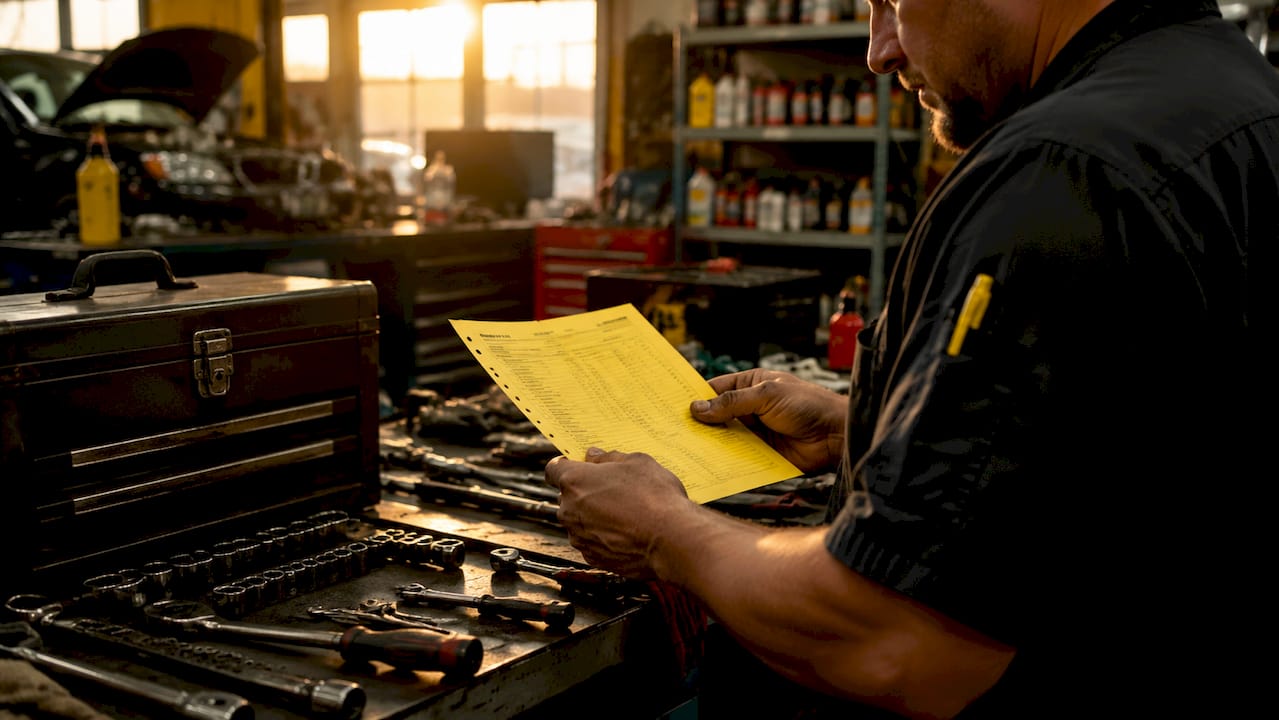
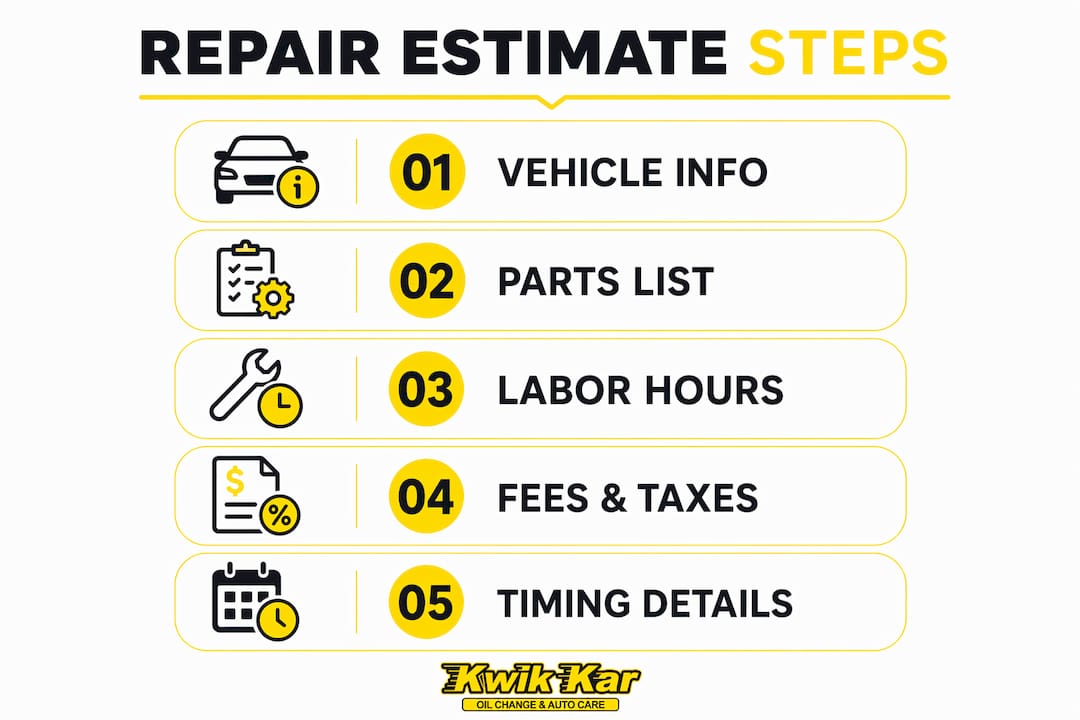
A trustworthy repair estimate, known in the industry as a written repair authorization or service estimate, covers six core areas. Written repair estimates are legally binding when signed, while verbal quotes have no legal standing. That distinction matters more than most car owners realize.
Vehicle identification
Every estimate starts with your vehicle’s make, model, year, VIN, and current mileage. This is not administrative filler. It confirms the shop is pricing parts and labor for your specific vehicle, not a generic match. A 2018 Ford F-150 and a 2018 Ford Explorer share almost no components, and their labor times differ significantly.
Itemized parts list
The parts section should list each component by name, part number, quantity, and unit price. The estimate must also specify whether each part is OEM (original equipment manufacturer) or aftermarket. OEM vs aftermarket is not just a quality question. It directly affects your warranty coverage and long-term reliability. A line that reads “brake pads” with no brand or part number tells you nothing useful.
Labor hours and rates
Labor is typically the largest cost on any estimate. The estimate should show the number of hours charged per job and the shop’s hourly labor rate. Shops price labor using flat-rate times from industry guides, not actual clock time. Replacing an alternator, for example, may be listed as 1.5 hours regardless of how long the technician actually takes. Knowing this helps you compare labor charges across shops accurately.
Fees, taxes, and timing
A complete estimate also includes diagnostic fees, shop supply fees, environmental or hazardous waste disposal fees, and applicable taxes. Extra fees like environmental charges and shop supplies should appear as separate line items, not buried in a total. The estimate should also state the expected completion time so you can plan accordingly.
Pro Tip: Ask the shop to separate diagnostic fees from repair labor. Some shops roll these together, making it harder to compare quotes from other providers.
How do you read the parts and labor sections of a repair quote?
Reading a repair quote line by line is the skill that separates car owners who get fair deals from those who overpay. The car repair cost breakdown on any estimate has two main sections: parts and labor. Each tells a different story.
OEM vs aftermarket parts
OEM parts come directly from the vehicle’s manufacturer or an authorized supplier. Aftermarket parts are made by third parties and are often less expensive. Neither is automatically better. For a routine brake job on a commuter car, quality aftermarket pads from brands like Bosch or Wagner perform well and cost less. For a complex engine or transmission component, OEM is usually the safer choice. The estimate should tell you which type is being used so you can make that call yourself.
How flat-rate labor works
| Labor Scenario | Flat-Rate Hours Charged | Actual Time Taken | Impact on Cost |
|---|---|---|---|
| Alternator replacement | 1.5 hours | 1.1 hours | You pay for 1.5 hours |
| Brake pad and rotor swap | 2.0 hours | 2.5 hours | You still pay for 2.0 hours |
| Timing belt replacement | 4.0 hours | 3.8 hours | You pay for 4.0 hours |
| Diagnostic scan | 1.0 hour | 0.5 hours | You pay for 1.0 hour |
Flat-rate pricing is standard across the industry. It is not inherently unfair. The issue arises when a shop inflates flat-rate hours beyond what published guides like Mitchell or AllData specify. Comparing labor hours across two or three estimates quickly reveals whether a shop is padding time.
Shop supply and miscellaneous fees
Shop supply fees cover consumables like rags, solvents, and lubricants used during your repair. These fees are legitimate, but they should be itemized. Vague “miscellaneous” charges without breakdowns hide unnecessary markups. If a line just says “shop supplies: $45,” ask for the specific items. A shop that cannot explain the charge should not be charging it.
Pro Tip: Use RepairPal or a similar cost benchmarking tool to check the fair price range for your specific repair before you walk into any shop. It takes two minutes and gives you a solid baseline.
What are the red flags to watch for in car repair estimates?
A vague or inflated estimate is not always obvious. These are the warning signs that tell you something is off.
- Lump-sum charges with no itemization. A line that reads “brake work: $350” with no breakdown of parts, labor, or fees is unacceptable. You have no way to verify what you are paying for. A fair estimate explains what failed, what parts are needed, and what labor is involved.
- Multiple diagnostic fees for related problems. One diagnostic session should cover a related set of symptoms. Charging separate diagnostic fees for issues found during the same inspection is a red flag.
- Percentage-based shop supply fees. Some shops calculate shop supply fees as a percentage of total labor. This means the more expensive your repair, the higher the fee, with no connection to actual consumables used. Ask for a flat, itemized amount instead.
- Pressure to use OEM parts when aftermarket is fine. If a shop insists on OEM parts for a standard maintenance item without explaining why, that is worth questioning. OEM parts carry a higher markup, and the shop profits from that difference.
- Unapproved repairs added to the invoice. Written approval is required before shops add any work beyond what was originally authorized. A “while we were in there” repair that you never approved should not appear on your final bill.
- No photos or documentation of the problem. A shop recommending a $600 repair should show you the evidence. Photos or videos tied to specific line items confirm the issue is real and prevent unnecessary upselling.
How to use repair estimates to negotiate and make smart decisions
Getting a written estimate is step one. Using it effectively is where car owners often fall short. These steps give you a clear process.
- Get at least two estimates for non-emergency repairs. For anything over $200, collecting two or three quotes is worth the time. Treating estimates as negotiable documents and comparing them side by side reveals pricing differences that are often significant.
- Compare part numbers and brands, not just totals. Two estimates for the same brake job may use different quality pads. A lower total price means nothing if the parts are inferior. Match part numbers where possible to compare apples to apples.
- Ask for proof before approving any repair. Request photos or measurements that justify the recommended work. Worn brake pads have a measurable thickness. A leaking seal leaves visible residue. If a shop cannot show you the evidence, ask why.
- Clarify the approval process for additional work. Before leaving your car, confirm in writing that the shop will contact you before performing any repair not listed on the original estimate. This one step prevents most surprise invoices.
- Know when deferring a repair is reasonable. Not every repair is urgent. A certified technician can tell you which issues affect safety and which can wait. Understanding the repair timeline helps you prioritize spending without putting yourself at risk.
- Understand your legal rights. Most states require written estimates for repairs above certain cost thresholds. Keep your signed estimate. If the final invoice exceeds the estimate by more than the legally allowed margin, you have grounds to dispute the difference.
Key Takeaways
A complete, itemized car repair estimate is the single most effective tool you have for controlling repair costs and avoiding unexpected charges.
| Point | Details |
|---|---|
| Require full itemization | Every part, labor hour, fee, and tax must appear as a separate line item on the estimate. |
| Know your part types | The estimate must specify OEM or aftermarket for each part so you can evaluate quality and cost. |
| Understand flat-rate labor | Shops charge flat-rate hours from industry guides, not actual time, so compare hours across estimates. |
| Watch for vague fees | “Miscellaneous” or percentage-based shop supply charges without itemization are a sign of hidden markups. |
| Get written approval always | Any repair added beyond the original estimate requires your written consent before work begins. |
What Kwik Kar Oil Change & Auto Care has learned about estimates
Car owners make one mistake more than any other: they read the total and skip the details. The total is the last thing you should look at. The line items are where the real story lives.
At Kwik Kar Oil Change & Auto Care, we have seen estimates come in from other shops that list labor hours well above what published flat-rate guides specify for the same job. We have also seen shop supply fees calculated as a percentage of labor, which means a $1,000 repair carries a $75 supply fee with no connection to actual materials used. These are not always intentional overcharges. Sometimes they reflect sloppy estimating. But the result is the same: you pay more than you should.
The car owners who get the best outcomes are the ones who ask direct questions. “Can you show me the worn part?” “What guide are you using for flat-rate hours?” “Why is this part OEM instead of aftermarket?” These are not confrontational questions. They are reasonable ones. A shop that cannot answer them calmly and clearly is telling you something important.
Our RepairPal certification exists precisely because we believe fair auto repair pricing should be the default, not the exception. Transparency is not a selling point. It is the minimum standard every car owner deserves.
— Kwik Kar
Repair costs you can manage with the right plan
Unexpected repair bills are stressful, especially when the estimate arrives and the total is higher than you budgeted for. Kwik Kar Oil Change & Auto Care offers clear, itemized estimates so you always know what you are paying for before work begins.
For repairs that require a larger investment, auto repair financing options can spread the cost over time without forcing you to delay necessary work. Spreading payments makes it easier to approve the right repair at the right time, rather than choosing the cheapest option under financial pressure. Talk to the team at Kwik Kar Oil Change & Auto Care about payment plans that fit your situation and keep your vehicle running safely.
FAQ
What should every car repair estimate include?
A complete estimate includes vehicle identification, an itemized parts list with OEM or aftermarket noted, labor hours and rates, diagnostic fees, shop supply fees, environmental fees, taxes, and an estimated completion time.
Are verbal repair estimates legally binding?
Verbal quotes have no legal standing. Written estimates are legally binding when signed, and most states require them for repairs above a certain dollar threshold.
How do shops calculate labor charges?
Shops use flat-rate hours from industry guides like Mitchell or AllData, then multiply by their hourly rate. The actual time a technician spends on the job does not change what you are charged.
How can I tell if a repair estimate is fair?
Use a free tool like RepairPal to check the standard price range for your repair by type and location. Then compare part numbers and labor hours across at least two estimates before approving any work.
Can a shop charge me for repairs I did not approve?
No. Any repair beyond the original written estimate requires your explicit written approval before work begins. Charges added without consent can be disputed under most state consumer protection laws.