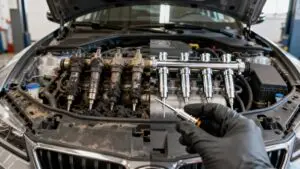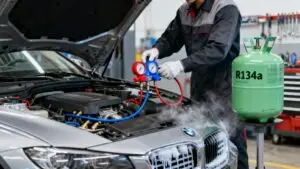





On-site auto diagnosis is defined as a professional service where a certified technician travels to your vehicle’s location and performs electronic and physical inspections using advanced diagnostic tools, without requiring a shop visit. The industry term for this practice is mobile vehicle diagnostics, and understanding what on-site auto diagnosis means can save you time, money, and unnecessary repairs. Tools like OBD-II scanners and professional-grade scan systems give technicians real-time access to your car’s onboard computer, right in your driveway or parking lot. This guide covers how the process works, what it can and cannot do, and how to use it wisely.
How does on-site auto diagnosis work with modern vehicles?
Every car sold in the United States since 1996 has an OBD-II port, a standardized connector that gives technicians direct access to the vehicle’s onboard computer. When a sensor detects a reading outside the normal range, the system stores a Diagnostic Trouble Code (DTC). A technician connects a professional scan tool to this port and retrieves those stored codes along with live sensor data in real time.
Reading a code is only the starting point. A code like P0300, which signals a random engine misfire, tells a technician which system is affected. It does not tell them whether the cause is a faulty ignition coil, a bad fuel injector, or a vacuum leak. That distinction requires live data analysis and hands-on physical inspection.
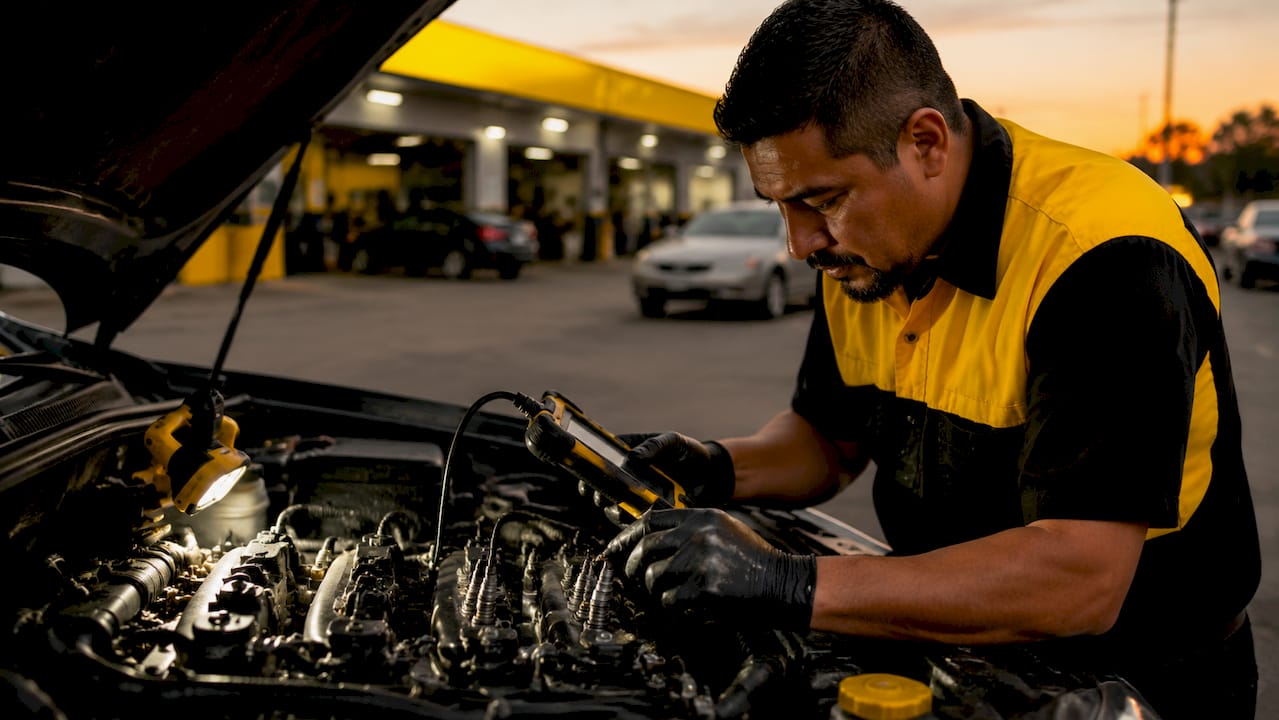
Professional-grade scan tools go far beyond what a consumer OBD-II reader can do. They offer data-logging and waveform analysis, plus access to manufacturer-specific parameters that generic readers cannot reach. This depth of information is what separates a real diagnosis from a code printout.
A thorough on-site diagnosis typically combines three steps:
- Electronic scan: Retrieve stored DTCs and review live sensor readings across engine, transmission, electrical, and emissions systems.
- Physical inspection: Check for visible damage, worn components, loose wiring, or fluid leaks that sensors may not catch.
- Symptom confirmation: Reproduce the issue through a test drive or component activation to verify the scan data matches real-world behavior.
The full diagnostic process generally takes 30–60 minutes. Fees for this mobile service typically range between $125 and $198 in the United States. That cost reflects the technician’s travel, equipment, and expertise, not just the time spent scanning.
Pro Tip: Ask your technician to show you the live data readout, not just the final code list. Seeing oxygen sensor voltage or fuel trim numbers in real time helps you understand what the car is actually doing, not just what the computer flagged.
What are the benefits of choosing on-site diagnosis over traditional shop diagnostics?
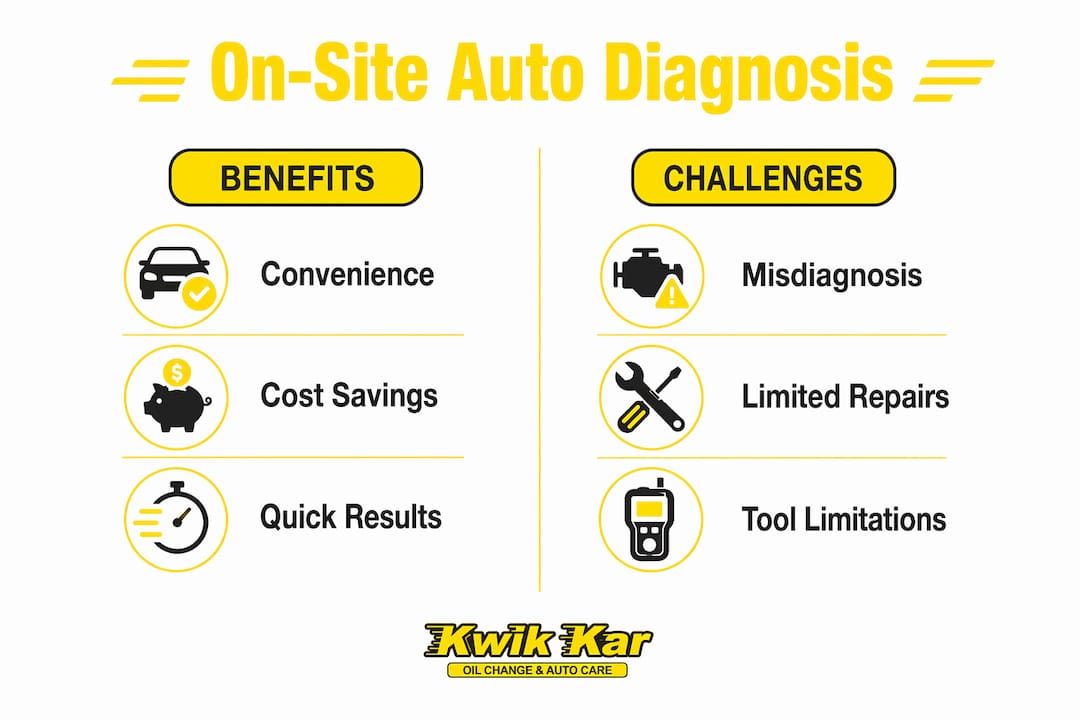
The most direct benefit of on-site auto diagnosis is that your car stays where it is. You skip the tow truck, the waiting room, and the scheduling delay. For a vehicle that is stalling, misfiring, or showing a warning light, getting a technician to come to you is often faster and less stressful than arranging a shop visit.
Beyond convenience, the bigger advantage is accuracy. Evidence-based repair guidance from a proper diagnosis prevents the “parts cannon” approach, where shops replace one part after another hoping something fixes the problem. Every unnecessary part replacement costs you money and time.
“Accurate diagnostics lead to less guesswork and better repair outcomes.” — AMJ Auto Repair
On-site diagnosis also supports proactive vehicle care. Connecting diagnostic tools to the OBD-II port helps owners plan repairs before a minor issue becomes an emergency breakdown. That kind of foresight is especially valuable for used car buyers who want to know a vehicle’s true condition before signing anything.
The practical benefits, ranked by impact for most car owners:
- No towing required. The technician comes to your location, eliminating transport costs and delays.
- Fewer unnecessary repairs. Scan data combined with physical inspection points to the actual fault, not a guess.
- Proactive planning. Early detection of developing issues lets you budget and schedule repairs on your terms.
- Faster resolution. Many minor faults can be addressed during the same visit once the diagnosis is confirmed.
- Extended vehicle lifespan. Routine diagnostics identify wear patterns early, improving safety and keeping the car on the road longer.
The advantages of mobile auto service models extend beyond individual convenience. They reduce the friction between noticing a symptom and getting a professional answer, which means car owners act sooner rather than waiting until a problem becomes serious.
What limitations and challenges exist with on-site auto diagnosis?
On-site diagnosis is thorough, but it is not unlimited. Some repairs and some diagnostic steps simply require a shop environment, and a trustworthy technician will tell you that upfront.
The most common limitations include:
- Lift-required repairs. Brake jobs, exhaust work, and suspension inspections often need the vehicle raised on a lift. A driveway does not provide that access.
- Factory-level programming. Replacing certain modules, like a transmission control unit or a body control module, requires manufacturer-specific software that most mobile setups do not carry.
- Disassembly diagnostics. Some faults only reveal themselves after removing components, which is impractical outside a shop.
- Environmental constraints. Extreme weather, poor lighting, or unsafe parking conditions can limit what a technician can safely inspect on-site.
The risk of misdiagnosis rises when a technician treats a DTC as a definitive answer rather than a starting point. Codes like P0300 point to a system with an abnormality. They do not name the failed part. Skipping live data analysis and physical testing leads directly to replacing parts that did not need replacing.
Mobile technicians should clarify these boundaries before starting work. If a provider promises to diagnose and fix everything on-site without exception, that is a red flag. Honest technicians know when a shop visit is the right next step, and they say so.
Pro Tip: Before booking an on-site diagnostic service, ask specifically whether the technician carries a professional-grade bidirectional scan tool. Bidirectional tools can command components to activate, which is critical for confirming faults rather than just reading codes.
How can car owners best use on-site auto diagnostic services?
The right time to call for an on-site car diagnostic service is before a small problem becomes a large one. A service engine light that has been on for two weeks, a stalling issue that happens occasionally, or an electrical glitch that comes and goes are all ideal candidates for on-site diagnosis. Waiting until the car will not start limits your options.
Used car buyers benefit especially from a pre-purchase on-site vehicle inspection. A technician can scan for stored codes, check for signs of recent code clearing, and flag developing issues that a test drive alone would not reveal. That information is worth far more than the diagnostic fee when you are about to spend thousands of dollars on a vehicle.
| Situation | On-site diagnosis recommended? | Why |
|---|---|---|
| Check engine light on | Yes | Scan retrieves DTCs and live data quickly |
| Pre-purchase inspection | Yes | Reveals hidden faults before buying |
| Stalling or rough idle | Yes | Live data identifies fuel or ignition issues |
| Brake noise or vibration | Partial | Visual check possible; lift may be needed |
| Transmission reprogramming | No | Requires factory tools and shop environment |
When you receive a diagnostic report, ask the technician to walk you through the findings in plain language. A good technician explains what each code means, what caused it, and what the repair involves. If the explanation is vague or the recommendation jumps straight to an expensive part, ask for the live data that supports that conclusion.
Finding a trustworthy provider matters as much as the technology. Look for RepairPal-certified shops or technicians with ASE certifications. Certification signals that the person interpreting your data has been tested on the knowledge required to do it correctly. Understanding why electronic diagnostics drive better repair outcomes helps you ask the right questions and evaluate the answers you receive.
For ongoing maintenance planning after a diagnosis, a car maintenance checklist helps you track what was found, what was fixed, and what needs attention next. Treating diagnostics as a one-time event misses the point. Regular checks, especially before winter and after high-mileage driving, keep you ahead of problems rather than reacting to them.
Key Takeaways
On-site auto diagnosis combines OBD-II scan data with physical inspection to deliver accurate, evidence-based repair guidance without requiring a shop visit.
| Point | Details |
|---|---|
| Core definition | A certified technician performs electronic and physical inspections at your vehicle’s location. |
| How it works | Technicians retrieve DTCs and live sensor data via the OBD-II port, then confirm findings with physical testing. |
| Primary benefit | Evidence-based diagnosis prevents unnecessary part replacements and reduces long-term repair costs. |
| Key limitation | Repairs requiring lifts, factory programming, or disassembly still need a shop environment. |
| Best use cases | Check engine lights, pre-purchase inspections, stalling, and electrical issues are ideal for on-site service. |
What we have learned from years of on-site diagnostics
At Kwik Kar Oil Change & Auto Care, the shift from code-reading to full diagnostic analysis changed how we approach every vehicle that comes through. Early on, we saw how often a single DTC led shops to replace a part that was not the root cause. The car would come back with the same symptom, and the owner had already spent money on a part they did not need.
What actually works is treating the scan as the beginning of the conversation, not the answer. Live data tells you what the engine is doing right now. Physical inspection tells you what the scan cannot see. Combining both is the only way to give a car owner a repair recommendation they can trust.
The trend toward remote diagnostics and predictive maintenance is real, and it will keep growing. Telematics systems already flag developing issues before they trigger a warning light. But technology does not replace the technician who can feel a worn motor mount or spot a cracked vacuum line. The best diagnostic outcomes come from pairing good tools with experienced hands.
Our advice to any car owner is simple. Do not wait for a breakdown to get a diagnosis. A 30-minute scan today can tell you exactly what your vehicle needs over the next six months. That kind of information puts you in control of your maintenance budget instead of reacting to emergencies.
— Kwik Kar Oil Change & Auto Care
Vehicle care resources from Kwik Kar Oil Change & Auto Care
Kwik Kar Oil Change & Auto Care serves Fort Worth drivers with certified technicians, transparent pricing, and a RepairPal certification that backs every service recommendation.
After a diagnostic visit, the next step is often a maintenance review. Whether your technician flagged an oil condition issue or you are planning ahead, resources like the guide to signs your car needs an oil change and the breakdown of auto repair financing options help you act on diagnostic findings without financial stress. If you want to diagnose problems with your car before your next appointment, that guide walks you through what to watch for between professional visits.
FAQ
What does on-site auto diagnosis mean?
On-site auto diagnosis means a certified technician comes to your vehicle’s location and performs electronic and physical inspections using professional scan tools, without requiring you to visit a shop. The process typically takes 30–60 minutes and covers engine, transmission, electrical, and emissions systems.
Is on-site diagnosis as accurate as a shop diagnostic?
On-site diagnosis using professional-grade scan tools is equally accurate for most faults, because it combines live OBD-II data with physical inspection. Accuracy drops only when the fault requires disassembly or lift access that a mobile setup cannot provide.
How much does an on-site car diagnostic service cost?
Mobile diagnostic fees in the United States typically range between $125 and $198, reflecting the technician’s travel, equipment, and expertise. That cost is often offset by avoiding unnecessary part replacements that a guesswork-based repair would have generated.
Can on-site diagnosis fix my car the same day?
Many minor faults identified during on-site diagnosis can be repaired during the same visit, particularly electrical issues, sensor replacements, and fluid-related problems. Repairs requiring a lift, factory programming, or major disassembly will need a follow-up shop appointment.
When should I get an on-site vehicle inspection?
The best times are when a warning light appears, before purchasing a used vehicle, or when you notice symptoms like stalling, rough idling, or electrical glitches. Ignoring early warning signs can lead to costly repairs that a timely diagnostic would have prevented.