



Most oil leak repairs in the U.S. fall somewhere between $100 and $2,000, with the majority of passenger car jobs landing in the $600–$1,000 range once parts and labor are combined. A simple drain plug fix can run as little as $20–$50. A rear main seal or head gasket job can push well past $1,500. Where your repair lands depends almost entirely on which seal or gasket has failed and how many hours a technician needs to reach it.
Right now, take these three steps:
- Check your oil level on the dipstick. If it’s more than a quart low, do not drive until you add oil.
- Avoid highway trips or long commutes if you see a fresh puddle under the car each morning.
- Schedule a professional diagnosis. Most shops charge roughly $75–$150 for a diagnostic inspection, and many credit that fee toward the repair if you authorize the work.
Before you budget for any fix, you need to know exactly which component is leaking. A professional diagnosis is the only reliable way to get there.
Key Takeaways
Most oil leak repairs cost between $100 and $2,000, with labor, not parts, driving the majority of the bill on any job beyond a drain plug or sensor swap.
| Point | Details |
|---|---|
| Typical cost range | Most passenger car oil leak repairs fall between $600–$1,000 for parts and labor combined. |
| Labor drives the price | A $15 gasket can still result in $300+ in labor when access requires disassembly. |
| Stop driving red flags | Oil pressure light, burning smell, or a puddle larger than your hand means stop immediately. |
| Get a diagnosis first | A $75–$150 diagnostic fee is the only reliable way to identify the exact leak source. |
| Kwik Kar Oil Change & Auto Care | ASE-certified technicians in Fort Worth provide written, itemized estimates after a dye-test diagnosis. |
Table of Contents
- What Does Oil Leak Repair Cost for Common Repairs?
- How Do Shops Find an Oil Leak?
- Why Labor Usually Drives the Bill
- When Can You Keep Driving, and When Should You Stop?
- What Causes an Oil Leak? Common Sources Explained
- How to Reduce Your Repair Cost and Avoid Unnecessary Work
- Additional Costs to Expect Beyond Parts and Labor
- Does Car Insurance Cover an Oil Leak Repair?
- Kwik Kar Oil Change & Auto Care Handles Oil Leaks the Right Way
- What the Technicians at Kwik Kar Actually See
- Sources
- FAQ
What Does Oil Leak Repair Cost for Common Repairs?
The engine oil leak cost varies widely because the part itself is rarely the expensive piece. Labor is. A $15 valve cover gasket can still result in a $300 repair bill once a technician accounts for removing intake components, cleaning mating surfaces, and torquing everything back to spec.
| Repair Type | Low | Typical | High |
|---|---|---|---|
| Drain plug / crush washer | $20 | $50 | $100 |
| Oil pressure sensor | $50 | $150 | $250 |
| Valve cover gasket | $100 | $250 | $500 |
| Oil pan gasket | $400 | $933–$1,037 | $1,200 |
| Rear main seal | $500 | $900 | $1,500 |
| Timing cover gasket | $600 | $1,000 | $1,800 |
| Head gasket | $1,200 | $1,800 | $2,500+ |
A few things to understand about these bands:
- Drain plug and sensor repairs are the least disruptive. A technician can usually complete them in under an hour.
- Valve cover gasket replacement cost sits in the low-to-mid range for most four-cylinder engines but climbs on V6 and V8 engines because there are two covers and tighter engine bay access.
- Oil pan gasket replacement cost jumps significantly because the pan must be dropped, which often requires lifting the engine slightly or removing crossmembers on some platforms.
- Rear main seal and timing cover jobs are labor-intensive by nature. The transmission or front accessories must come off first, which easily adds four to eight hours of shop time.
- Head gasket repairs sit at the top of the range. This is not a standard oil-leak repair; it signals a more serious internal failure.
Pro Tip: Ask the shop whether your vehicle has a transverse or longitudinal engine layout. A transversely mounted four-cylinder in a compact car often gives technicians better access to the valve cover than a longitudinally mounted V6 in a truck, where the firewall crowds the rear bank. That layout difference alone can shift the valve cover gasket replacement cost by $100–$200.
How Do Shops Find an Oil Leak?
The diagnostic process matters because oil travels. A leak at the valve cover can drip down onto the exhaust manifold and look like it’s coming from somewhere else entirely. Shops that skip the cleaning step often misdiagnose the source.
A thorough diagnostic typically follows this sequence:
- Engine degreasing. The technician cleans the engine block and surrounding components so fresh oil accumulation can be tracked to its true origin. This cleaning step is standard practice and is part of why the first diagnostic hour is billable.
- Visual inspection. With the engine clean, the technician runs it and watches for fresh seepage at gasket seams, sensor fittings, and drain plug threads.
- UV dye test. A fluorescent dye is added to the oil, the car is driven briefly, and a UV light reveals exactly where oil is escaping. This is the most reliable method for slow or intermittent leaks.
- Pressure test. Used less often for oil systems than for cooling systems, but helpful when a leak is suspected in a pressurized gallery or around a timing cover.
Most shops charge $75–$150 for a diagnostic inspection, and many will credit that fee toward the repair cost if you authorize the work. Ask about that policy before you drop the car off.
Heads up: If the technician suspects a rear main seal, timing cover, or head gasket leak, expect to hear that a teardown is required before a firm quote can be given. Those repairs cannot be fully assessed from the outside.
Why Labor Usually Drives the Bill
A $15 gasket can be overshadowed by several hundred dollars in labor when access requires disassembly or engine removal. That’s not a shop padding the invoice; it’s the reality of how engines are packaged.
Here’s how the math works in practice:
- Most independent shops in the U.S. charge $80–$150 per labor hour. Dealerships typically run $130–$200 per hour.
- A valve cover gasket on a compact four-cylinder takes 1.5–3 hours. At $100/hr, that’s $150–$300 in labor alone.
- An oil pan gasket on a front-wheel-drive sedan can take 3–5 hours because the subframe or exhaust often needs to be moved.
- A rear main seal on a rear-wheel-drive truck runs 6–12 hours because the transmission must be removed first.
Luxury and larger vehicles consistently require more labor hours for the same repair, since their engine bays are more tightly packaged and their components are heavier to handle.
Pro Tip: When you receive an estimate, ask the shop to break out the labor hours separately from parts. A written line item showing “3.5 hrs @ $110/hr” tells you far more than a single lump total. If a shop won’t itemize, that’s worth noting. You can learn more about what fair auto repair pricing looks like before you walk in.
When Can You Keep Driving, and When Should You Stop?
Not every oil leak is an emergency. A small seep around an aging valve cover gasket, with no drop in oil level between weekly checks, is a “monitor and schedule” situation. A fast drip that leaves a quarter-sized puddle overnight is a different story.
Stop driving immediately if you notice any of these:
- The oil pressure warning light comes on. This means oil pressure has already dropped to a dangerous level.
- You see smoke rising from the engine bay or smell burning oil near the exhaust.
- The puddle under the car is larger than your hand, or it appears after a short trip.
- The dipstick reads more than a quart low and you’ve driven fewer than 500 miles since your last check.
Running an engine low on oil is one of the fastest ways to cause catastrophic internal damage. Bearings and camshafts rely on a constant pressurized oil film; without it, metal-on-metal contact can destroy an engine in minutes rather than miles. A repair that costs $400 today can become a $4,000 engine replacement if ignored.
For a slow seep, check your oil level every week and keep a quart in the trunk. That buys you time to schedule a proper fix without risking the engine.
What Causes an Oil Leak? Common Sources Explained
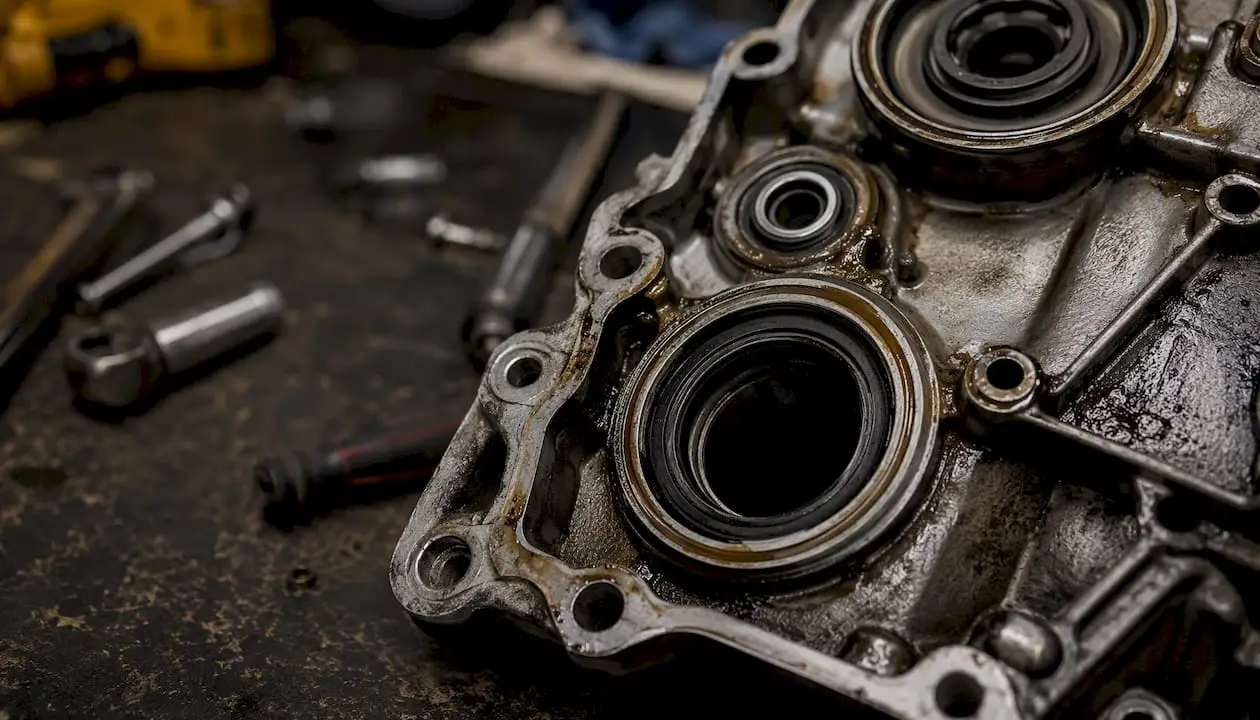
Understanding the source helps you gauge both urgency and fix oil leak cost before you talk to a technician. Common leak sources include degraded gaskets, worn crankshaft and camshaft seals, loose or damaged drain plugs, and failing oil pressure sending units. Heat cycles and missed oil changes accelerate seal breakdown over time.
Valve cover gasket (Easy to moderate)
Oil appears on top of the engine or drips onto the exhaust below. You may smell burning oil when the engine is hot. This is one of the most common leaks on vehicles with more than 80,000 miles. The gasket itself is inexpensive; labor varies by engine layout.
Oil pan gasket (Moderate)
Oil collects under the car, usually toward the front or center. The pan gasket seals the bottom of the engine block, and replacing it requires dropping the pan, which means lifting the car and sometimes moving other components out of the way.
Drain plug and crush washer (Easy)
A loose or over-tightened drain plug is a surprisingly common cause. Over-tightening can crush the gasket or strip the pan threads, turning a $10 fix into a pan replacement. If threads are stripped, the repair cost rises considerably.
Crankshaft and camshaft seals (Complex)
These seals sit at the front or rear of the engine. A rear main seal leak shows up as oil on the bottom of the bell housing or on the transmission. Front crankshaft seal leaks often appear near the harmonic balancer. Both require significant disassembly.
Oil pressure sensor (Easy)
A failing sensor can weep oil from its threaded fitting. It’s usually a quick swap, but the sensor’s location varies by engine, and some are buried under intake manifolds.
Warranty coverage note: If your vehicle is still under a powertrain warranty, check the language carefully before paying out of pocket. Warranty language often defines gaskets as internally lubricated components, and coverage varies by manufacturer and mileage. An extended warranty or service contract may also apply.
How to Reduce Your Repair Cost and Avoid Unnecessary Work
Getting a fair price on an oil leak repair is straightforward when you know what to ask for. Here’s a practical approach:
- Get an itemized written estimate before authorizing any work. The estimate should list parts, labor hours, and the hourly rate separately.
- Ask for a second quote if the first estimate exceeds $500. A 20–30 minute call to another shop can reveal whether the labor hours quoted are reasonable for your vehicle.
- Confirm which hours are actually required. Some shops quote flat-rate book times that assume worst-case access. Ask if your specific vehicle typically runs at the high or low end of that range.
- Check for common auto repair scams before you go in, especially upsells on parts you didn’t ask about.
On stop-leak additives: These products work by swelling rubber seals, which can temporarily slow a minor seep. They are not a permanent repair. Repeated use can accelerate seal failure or clog small oil passages, making the eventual repair more expensive. Use them only as a short-term emergency measure while you arrange a proper fix.
Signs of a rushed or low-quality repair to watch for:
- Oil residue reappears within a week of the repair
- The technician can’t tell you which specific gasket was replaced
- No written warranty is offered on the parts or labor
Pro Tip: Use a resource like how to compare auto repair prices to benchmark the estimate you receive against regional averages before you sign anything.
Additional Costs to Expect Beyond Parts and Labor
The line items on a repair invoice don’t always stop at parts and labor. A few additional charges are standard across most U.S. shops and worth budgeting for:
Environmental and disposal fees cover the proper disposal of used oil, old gaskets, and contaminated rags. These typically run $5–$25 per job and are legally required in most states. They’re not negotiable, and a shop that skips them may not be disposing of waste properly.
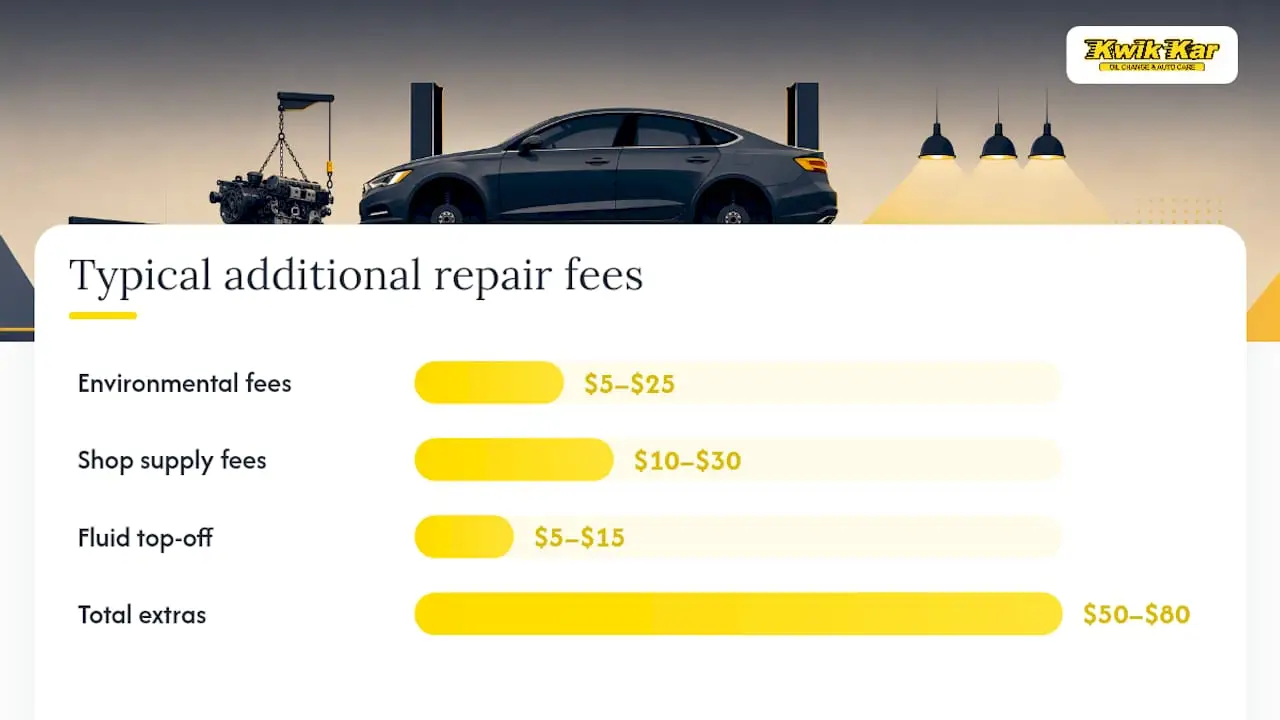
Shop supply fees cover consumables like cleaning solvents, rags, and thread sealant. Expect $10–$30 on most jobs.
Fluid top-off charges may appear if the technician needs to add oil after the repair to bring the engine back to the correct level. This is usually minor, $5–$15, but worth confirming upfront.
On a mid-range repair totaling $600 in parts and labor, these additional items can add $50–$80 to the final invoice. Not a surprise if you know to expect them.
Does Car Insurance Cover an Oil Leak Repair?
Standard auto insurance policies, including comprehensive and collision coverage, do not cover mechanical failures like oil leaks. Insurance is designed to cover sudden, accidental damage, not wear-and-tear deterioration of seals and gaskets.
There are a few exceptions worth knowing:
- Collision damage: If a crash caused a cracked oil pan or damaged a seal, the resulting leak repair may be covered under your collision policy, subject to your deductible.
- Manufacturer warranty: A new vehicle’s powertrain warranty may cover gasket and seal failures if the vehicle is within the mileage and time limits. Check your warranty booklet or call the dealer’s service department.
- Extended warranty or VSC: A vehicle service contract (sometimes called an extended warranty) may cover oil seals and gaskets depending on the plan tier. Read the exclusions section carefully; some plans exclude “seals and gaskets” explicitly.
- Mechanical breakdown insurance (MBI): Offered by a small number of insurers, MBI functions like an extended warranty and may cover internal engine components including seals.
If you’re unsure whether your situation qualifies, call your insurer and your warranty provider before authorizing the repair. Getting a written denial or approval takes one phone call and can save you hundreds of dollars.
Kwik Kar Oil Change & Auto Care Handles Oil Leaks the Right Way
Paying for a repair you don’t fully understand is frustrating. At Kwik Kar Oil Change & Auto Care in Fort Worth, the process starts with transparency: ASE-certified technicians and RepairPal certification mean you get a qualified diagnosis and a written estimate before any work begins.

When you bring your vehicle in for an oil leak inspection, the team cleans the engine, runs a dye or pressure test to pinpoint the exact source, and hands you a written estimate with itemized parts and labor. No guesswork, no pressure. If you’re watching your budget, ask about auto repair financing options that can spread the cost of a larger repair. Fort Worth drivers can also check current oil change and service coupons to reduce the cost of a same-day inspection. Call or stop by to schedule your oil leak diagnosis today.
What the Technicians at Kwik Kar Actually See
The most common misdiagnosis we see is a valve cover gasket leak that gets mistaken for a head gasket problem. Customers come in worried about a $1,800 repair when the actual fix is a $250 gasket job. The difference is a clean engine and a UV dye test, which takes maybe 45 minutes and removes all the guesswork.
The single best thing you can do between services is check your oil level every two weeks. Pull the dipstick, wipe it clean, reinsert it fully, and read the level. Catching a half-quart drop early tells you a small seep is developing before it becomes a fast leak. Pair that habit with preventive car maintenance on a regular schedule, and most gasket failures become a planned repair rather than a roadside emergency.
Sources
The following sources informed the cost bands, diagnostic guidance, and warranty notes in this article:
- Carparts
- Oil Leak Fix Cost Guide for U.S. Readers – Cost Insider
- Synchrony
- Is an oil leak covered under warranty? — ConsumerAffairs
- Why is my car leaking oil? — Family Handyman
- Oil pan gasket replacement costs — KBB Service & Repair Guide
FAQ
Is it worth fixing an oil leak?
Yes, in most cases. A repair costing $250–$600 today prevents engine damage that can cost thousands more if oil runs critically low. The only exception is when the repair cost approaches or exceeds the vehicle’s value.
Can I still drive with an oil leak?
A slow seep with a stable oil level is generally safe for short trips if you check the dipstick every few days. Stop driving immediately if the oil pressure light comes on, you smell burning oil, or the puddle under the car is larger than your hand.
What three things most commonly cause an oil leak?
The most frequent sources are a degraded valve cover gasket, a worn or damaged drain plug and crush washer, and a failing crankshaft or camshaft seal. Heat cycles and delayed oil changes accelerate all three.
Is there a cheap way to fix an oil leak?
A drain plug washer or oil pressure sensor replacement can cost as little as $20–$150. Stop-leak additives are cheaper still, but they only temporarily swell rubber seals and are not a permanent fix. For anything beyond a minor seep, a proper gasket or seal replacement is the only lasting solution.