



Fort Worth summer car care tips are the difference between a reliable vehicle and a roadside breakdown when temperatures climb past 100°F. Cooling system and battery failures cause 40% of summer breakdowns in Texas, which means most failures are preventable with the right preparation. This guide covers the specific maintenance steps Fort Worth drivers need before and during the hottest months, from tire pressure management to UV protection. Kwik Kar Oil Change & Auto Care sees these issues every summer, and the pattern is clear: drivers who prepare early stay on the road.
1. Why tire pressure is your first line of defense in Fort Worth summers
Heat is the single biggest threat to your tires in a Texas summer. Tire pressure rises about 1 PSI for every 10°F increase in temperature. That means a tire properly inflated at 7:00 AM can be dangerously overinflated by noon on a 105°F Fort Worth afternoon.
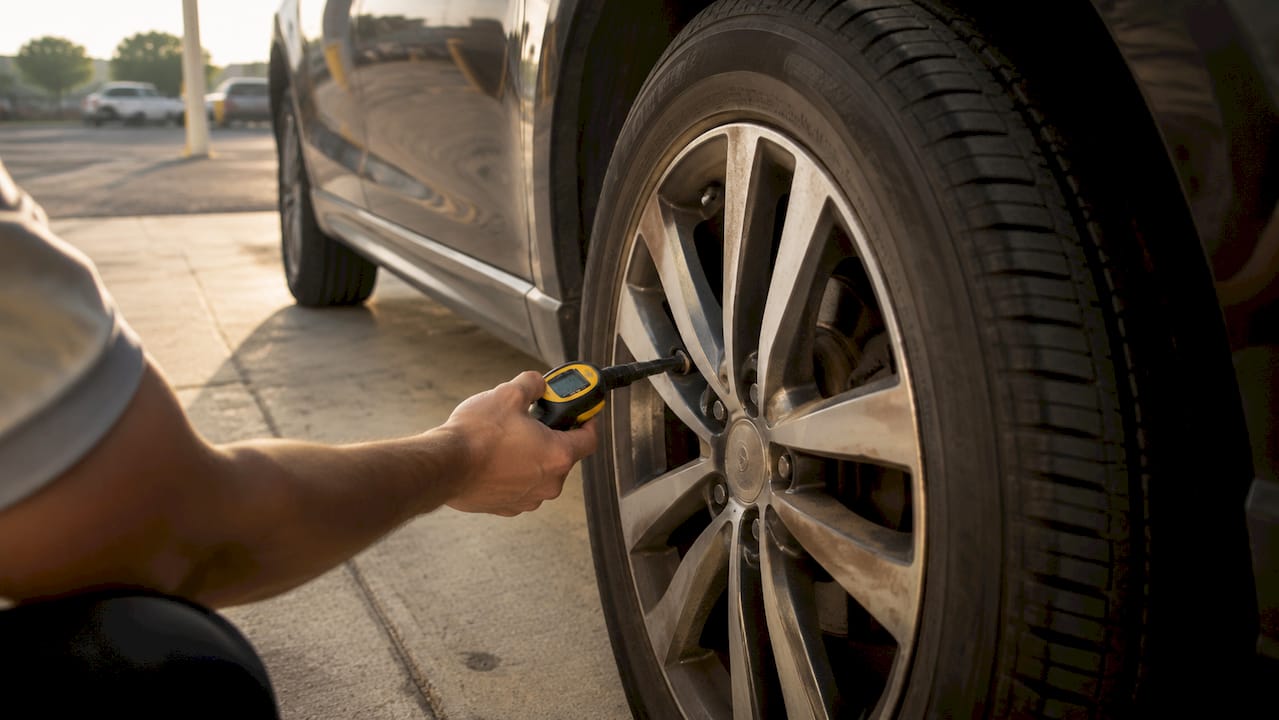
Overinflation reduces the tire’s contact patch with the road, making blowouts far more likely. Blowout risk increases by 25% across the southern United States during hot weather months. That statistic reflects real consequences for drivers on I-30 and Loop 820.
Follow these tire care steps every summer:
- Check pressure in the morning before driving, when tires are still cold
- Use the PSI listed on your door jamb sticker, not the maximum number on the tire sidewall
- Inspect tires visually for cracks, bulges, or uneven wear at least once a week
- Rotate tires every 5,000–7,500 miles to prevent uneven heat-related wear
Pro Tip: Set a phone reminder every two weeks to check tire pressure before your first drive of the day. Morning readings are the only accurate ones in summer.
2. How to protect your battery from Fort Worth’s summer heat
Most drivers think cold weather kills batteries. Heat actually does more damage. High temperatures accelerate the internal chemical corrosion that degrades battery cells, and battery risk rises sharply after three years of use in hot climates.
Watch for these warning signs before your battery fails completely:
- Slow or sluggish engine cranking when you start the car
- Dimming headlights or interior lights at idle
- A battery warning light on your dashboard
- Corrosion visible on the terminals as a white or blue powdery buildup
Clean terminal corrosion monthly using a baking soda and water solution with a wire brush. This simple step extends battery life and maintains a strong electrical connection. Get your battery load-tested each spring at a shop like Kwik Kar Oil Change & Auto Care before peak heat arrives. A load test tells you actual remaining capacity, not just whether the battery holds a surface charge.
3. Cooling system checks that prevent overheating on Fort Worth roads
Your cooling system works harder in a Texas summer than at any other time of year. Cooling systems operate near maximum capacity throughout the entire Texas summer, which means any weakness in the system will show up as a failure when you can least afford it.
Coolant loses its heat-absorbing ability over time. Flush and replace it every 30,000 miles, or sooner if the fluid looks brown or murky. Fresh coolant transfers heat efficiently; degraded coolant does not.
Inspect your radiator hoses before summer peaks. Here is the step most drivers skip: squeeze the hoses when the engine is cold. A hose that feels soft or spongy is degrading internally even if it looks fine on the outside. External firmness misleads owners every time. A hose in that condition can fail suddenly on a highway with no warning.
Also check these cooling system components before summer:
- Radiator cap condition and seal integrity
- Coolant reservoir level and fluid color
- Cooling fan operation at idle with AC running
- Thermostat function (a stuck thermostat causes rapid overheating)
Pro Tip: If your engine temperature light comes on, pull over immediately. Driving even a short distance on an overheating engine can warp the cylinder head and turn a $200 repair into a $2,000 one.
Running the air conditioning adds a significant thermal load to the cooling system. That is why a cooling system that handles normal driving fine may overheat once you turn on the AC in July. Address both systems together.
4. Protecting your car’s interior and exterior from intense Texas sun
Texas UV exposure degrades your vehicle faster than most drivers realize. Wax melts or degrades within 4–8 weeks in Texas heat. That means a wax job you got in april offers almost no protection by june.
Ceramic coatings and high-end paint sealants solve this problem. They bond to the clear coat and provide UV protection that lasts months to years, not weeks. The upfront cost is higher, but the protection against oxidation and clear coat failure is far superior to standard wax.
For your interior, the risks are just as real:
- Dashboard and seat surface temperatures can exceed 150°F in direct sun
- Non-silicone UV-protectant leather conditioners applied every 6–8 weeks prevent irreversible cracking
- Silicone-based dressings add shine but provide no UV protection at all
- Reflective sunshades cut interior cabin temperatures by up to 40 degrees
- Ceramic window tint blocks 99% of UV rays, reducing both cabin heat and upholstery fading
| Protection Method | Best For | Durability in Texas Heat |
|---|---|---|
| Standard wax | Paint shine | 4–8 weeks |
| Ceramic coating | Paint and UV protection | Months to years |
| Reflective sunshade | Interior temperature | Reusable, indefinite |
| Ceramic window tint | UV and heat reduction | Permanent when professionally installed |
| Non-silicone leather conditioner | Seat and dashboard preservation | Reapply every 6–8 weeks |
Wash your car regularly through the summer. Road grime, bird droppings, and tree sap all trap heat and accelerate paint damage when baked on by the Texas sun.
5. Essential fluid checks to keep your Fort Worth vehicle running smoothly
Fluids degrade faster in extreme heat. They also act as secondary coolants for the systems they serve, so low or degraded fluid means more heat buildup across your entire drivetrain.
Check and top off these fluids every month during summer:
- Engine oil: Consider switching to a full synthetic oil for summer driving. Synthetic oil maintains viscosity at high temperatures better than conventional oil, which thins out and loses its protective film.
- Brake fluid: Brake fluid absorbs moisture over time, which lowers its boiling point. In stop-and-go Fort Worth traffic on a 100°F day, degraded brake fluid can boil and cause brake fade.
- Transmission fluid: Automatic transmissions generate significant heat under load. Low or dirty transmission fluid leads to slipping and accelerated wear.
- Windshield washer fluid: Summer storms and road spray demand a full reservoir. Running out mid-drive in a Texas thunderstorm is a real visibility hazard.
- Power steering fluid: Low fluid causes stiff steering and pump wear, especially noticeable in tight parking situations.
A clogged cabin air filter forces your AC system to work about 20% harder, which increases engine strain and raises under-hood temperatures. Replace it before summer if you have not done so in the past year.
Key takeaways
Proactive Fort Worth vehicle maintenance before peak summer heat prevents the cooling system and battery failures that cause the majority of Texas summer breakdowns.
| Point | Details |
|---|---|
| Check tires cold every two weeks | Tire pressure rises 1 PSI per 10°F, so morning checks before driving are the only accurate readings. |
| Test your battery each spring | Heat accelerates battery corrosion, and batteries over three years old carry the highest failure risk. |
| Inspect cooling hoses by squeezing them | Hoses degrade internally before showing external damage; soft spots signal imminent failure. |
| Use ceramic coatings over wax | Wax degrades in 4–8 weeks in Texas heat; ceramic coatings provide lasting UV and oxidation protection. |
| Switch to full synthetic oil for summer | Synthetic oil holds its viscosity at high temperatures, protecting your engine when it matters most. |
What I’ve learned from Fort Worth summers under the hood
Fort Worth drivers consistently underestimate two things: how fast UV damage accumulates and how close their cooling system is to its limit before summer even starts.
The most common pattern we see at Kwik Kar Oil Change & Auto Care is a driver who comes in after a breakdown, not before one. Their battery is three or four years old. Their coolant is brown. Their hoses feel soft. Every one of those conditions was detectable weeks earlier with a basic inspection.
The other thing drivers get wrong is the emergency kit. Most people have jumper cables and a spare tire. Very few carry at least one gallon of water for both the radiator and personal hydration. If you break down on a Texas highway in july with no water, you face heat exhaustion risk within 30 minutes. That is not a car problem anymore. That is a medical emergency.
My honest recommendation: schedule a full pre-summer inspection in may, before the heat peaks. Check the battery, cooling system, tires, and all fluids in one visit. It takes less than an hour and costs a fraction of a tow and a repair bill. The Fort Worth highway driving environment is unforgiving in summer. Prepare before you need to, not after.
— Kwik Kar
Your Fort Worth summer maintenance starts here
Kwik Kar Oil Change & Auto Care provides the full range of summer vehicle maintenance Fort Worth drivers need, from battery load testing and cooling system inspections to fluid top-offs and oil changes. Certified technicians handle every service with quality parts and transparent pricing, so you know exactly what your vehicle needs and why. If you are not sure whether your oil is ready for summer heat, start with signs your car needs an oil change and use that as your baseline. For drivers who want a complete picture of their vehicle’s condition before summer peaks, the express auto service checklist covers every critical system in one visit. No appointment needed.
FAQ
How often should I check tire pressure in a Fort Worth summer?
Check tire pressure at least every two weeks during summer, always before driving when tires are cold. Pressure rises about 1 PSI for every 10°F temperature increase, so readings taken after driving are inaccurate.
What are the first signs my battery is failing in the heat?
Slow engine cranking, dimming lights, and visible terminal corrosion are the clearest early warning signs. Batteries over three years old in Texas heat carry the highest risk of sudden failure.
How do I know if my radiator hose needs replacement?
Squeeze the hose when the engine is cold. A hose that feels soft or spongy is degrading internally and needs replacement, even if it looks fine from the outside.
Does running the AC make my engine overheat faster?
Yes. Air conditioning adds a direct thermal load to the cooling system, which means a marginally functional cooling system that handles normal driving may overheat once the AC runs continuously in summer traffic.
What should I keep in my car for a summer breakdown in Fort Worth?
Carry at least one gallon of water for both the radiator and personal hydration, along with jumper cables, a flashlight, and a basic first aid kit. Heat exhaustion can set in within 30 minutes of being stranded in Texas summer heat.