





You’re probably here because something feels off. Maybe your car has gotten a little sluggish pulling onto I-30. Maybe the A/C is blowing cold, but the air smells dusty or feels stale. Maybe you popped the hood, saw a rectangular filter, and thought, “I know I should care about this, but what does it do?”
That’s a fair question.
A lot of Fort Worth drivers don’t think about air filters until there’s a problem. Texas heat, road dust, construction zones, pollen, and long commutes put your car through a lot. Air filters manage all of that in the background. When clean, they often go unnoticed. When they’re dirty, your engine and your passengers usually do.
The tricky part is that “air filters car” sounds simple, but there are really two separate filters doing two separate jobs. One protects the engine. The other protects the air inside the cabin. If you mix them up, it gets confusing fast.
Why Your Car’s Air Filter Is Its Unsung Hero
Think about a hot Fort Worth afternoon. You’re sitting at a light with the A/C on, traffic creeping, dust hanging in the air, and the engine working harder than usual. Your car is pulling in air the whole time. It has to. The engine needs it to run, and the cabin needs it so you’re not breathing whatever the road just kicked up.
That’s where the air filter earns its keep.
The easiest way to understand it is this. Your car needs to breathe, just like you do. If you tried to jog while breathing through a clogged mask, you’d feel it right away. Your car does too. Restricted airflow can make the engine feel less responsive, and dirty cabin airflow can make the inside of the car feel stuffy and unpleasant.
Why small filters matter so much
An air filter looks basic. It’s usually a pleated paper or fabric element inside a plastic housing. Nothing about it looks dramatic. But it stands between your engine and a stream of dirt, grit, and debris. It also stands between your family and whatever is floating outside the vehicle.
That’s why this isn’t just a checklist item. It affects how the car feels to drive, how the cabin feels to sit in, and how much avoidable wear you put on expensive parts.
What Fort Worth driving does to filters
Local conditions matter. If you drive through road work, park outside, use your car daily, or spend time on dusty roads around the edge of town, your filters have a tougher job. Heat doesn’t help either. Hot, dry conditions can leave more dirt suspended in the air, and that dirt has to go somewhere.
For many drivers, the first clue isn’t a warning light. It’s a feeling. The car doesn’t have the same pep. The cabin smells a little musty. The airflow from the vents seems weaker than it used to.
Those little changes are often your car asking for cleaner air.
Your Car Has Two Lungs An Engine and a Cabin Filter
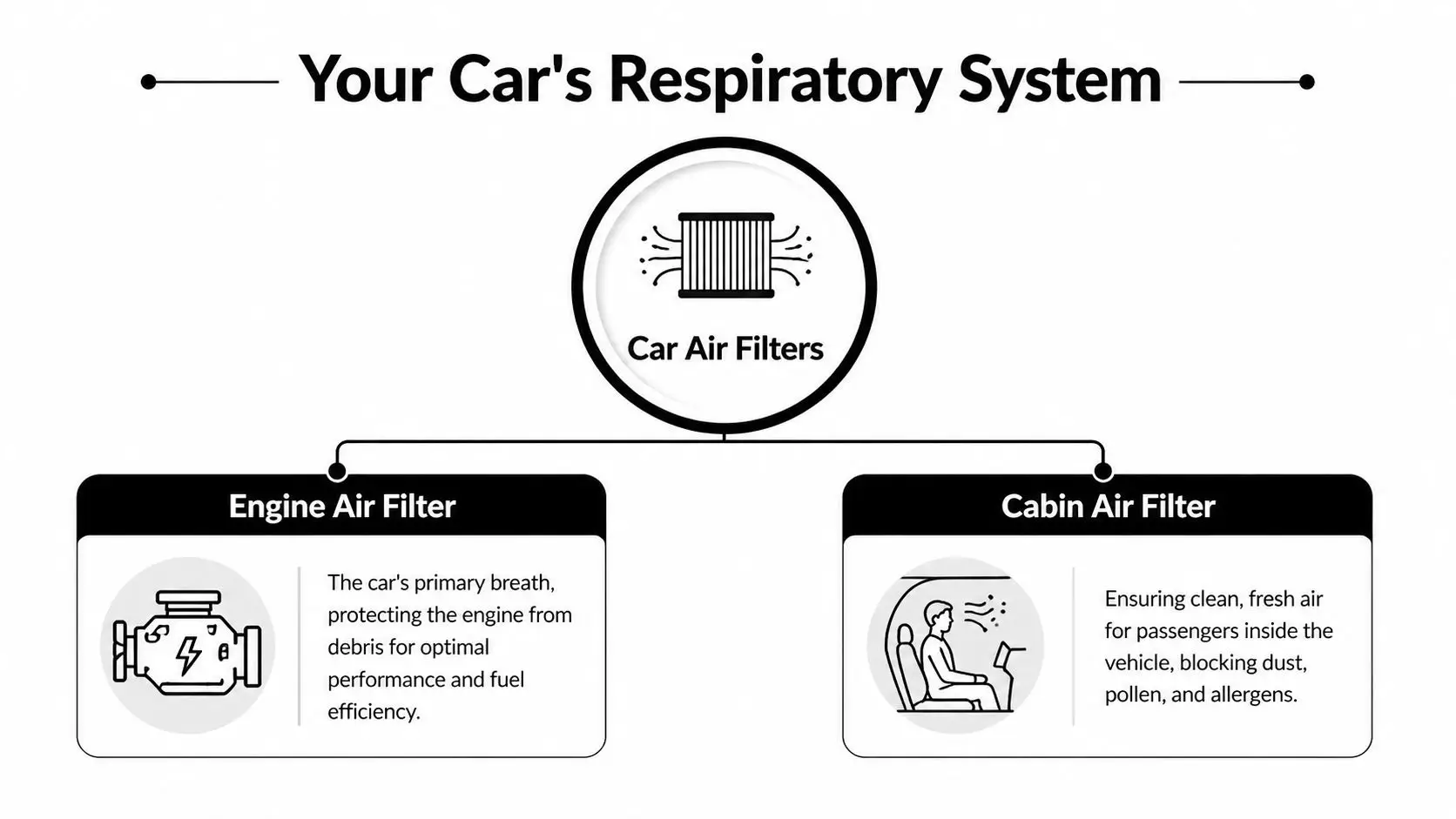
The term “air filter” is often used as if there’s only one. In most vehicles, there are two you should know about. They do different jobs, live in different places, and fail in different ways.
The engine air filter
The engine air filter is the engine’s lung. Its job is to clean the air before that air goes into the engine. If dirt bypasses the filter, that debris can reach sensitive engine components that were never meant to ingest dust.
A clean engine air filter helps the engine breathe normally. A dirty one can choke airflow and make the engine work harder than it should. That’s why this little part matters more than its size suggests.
You’ll usually find it in a black plastic box under the hood. On many vehicles, it’s fairly easy to access. On others, it’s tucked away enough that people don’t want to mess with it. Either way, its purpose is straightforward. Let air in. Keep dirt out.
The cabin air filter
The cabin air filter is more like a face mask for everyone riding in the vehicle. It cleans the air that comes through your vents and HVAC system. That means it affects what you breathe while driving, especially when the fan or A/C is on.
If your cabin filter gets loaded up with dust, pollen, and debris, the inside of the car can start to feel stale. Some drivers notice odd smells. Others notice weak airflow from the vents or that the cabin just never feels as fresh as it should.
If your vents have been smelling dusty or musty, it also helps to learn how to clean car AC vents, because the filter and vent system often affect each other.
Why the difference matters
These filters solve different problems.
- Engine air filter: Protects engine health and supports proper airflow for performance.
- Cabin air filter: Protects passenger comfort by cleaning incoming interior air.
- Same idea, different result: One helps the machine run well. The other helps the people inside feel better.
That distinction matters because drivers often replace one and forget the other. Then they wonder why the car still feels off.
A simple way to remember it
Use this shortcut:
| Filter | Think of it as | What it protects |
|---|---|---|
| Engine air filter | The engine’s lungs | Engine internals and airflow |
| Cabin air filter | A mask for the cabin | Passengers and HVAC airflow |
If you enjoy keeping the interior feeling fresh after replacing a cabin filter, some drivers also pair that with a light fragrance solution like Blushing Ivy car diffusers. That doesn’t replace filter service, of course, but it can be a nice finishing touch once the air inside the car is clean.
Symptoms of a Dirty Car Air Filter
A dirty air filter usually doesn’t announce itself with one dramatic failure. It shows up as a handful of small clues. The challenge is knowing which clues matter and which ones are just everyday vehicle quirks.
If you’ve been driving the same car for a while, you already know its normal behavior. That’s helpful. A clogged filter often changes that normal feel.
What you might notice while driving
The first sign many drivers mention is a car that feels flat. You press the accelerator and the response just isn’t as crisp. The engine may still run, but it can feel like it has to work harder.
You might also notice:
- Sluggish acceleration: The engine may feel less eager when you pull away from a stop or merge into traffic.
- Reduced smoothness: Some vehicles feel rougher at idle or less settled under light throttle.
- Weaker cabin airflow: If the issue is the cabin filter, the fan may seem less effective than usual.
- Dusty or stale smell inside: A loaded cabin filter can make the interior feel less fresh.

What restricted airflow does
Engines need a balanced flow of air to operate the way they were designed to. When a filter is clogged, airflow can become restricted. That can affect responsiveness and overall drivability.
Inside the cabin, a dirty filter can make the HVAC system push air less freely. Drivers often describe it as “the A/C is on, but it just doesn’t blow like it used to.” Sometimes the temperature is fine. The volume and freshness are the problem.
If your car feels stuffy inside and lazy outside, don’t assume those are unrelated issues. You may be dealing with two different filters at once.
What you can check with your eyes
A quick visual inspection can tell you a lot. If the engine air filter looks packed with dirt, darkened across the pleats, or full of leaves and debris, it’s likely not doing the job as well as it should. A cabin filter can show similar signs, though it’s often hidden deeper in the dash or behind the glove box.
If you’re sorting out maintenance items beyond air intake, this separate fuel filter guide from Misfuelled Car Fixer can help you understand how another filter affects drivability in a different part of the system.
When a warning light enters the picture
A dashboard light doesn’t always mean the air filter is the culprit, but airflow problems can contribute to issues that trigger a warning. Don’t treat a check engine light as an air filter diagnosis by itself. Treat it as a sign to stop guessing and inspect the car properly.
That’s especially true if your car already feels different.
Your Air Filter Replacement Schedule
Say your car seems fine on Monday, then by the end of a dusty Fort Worth week it feels a little more sluggish, and the A/C airflow inside seems a little weaker too. Filters usually do not fail all at once. They load up gradually, like a coffee filter that keeps catching more grounds until flow starts to slow down.
For many vehicles, a good starting point is replacing the air filter about every 12,000 to 15,000 miles or once a year, based on maintenance guidance summarized in Mordor Intelligence’s U.S. automotive air filters market report. That gives you a baseline. Fort Worth driving often calls for a shorter leash.
Why Fort Worth drivers should check sooner
Air filters age by what they catch, not just by the calendar. Dust from dry roads, construction zones, spring pollen, and long stretches of hot traffic all add to the load. A filter in these conditions works harder than one in a car that stays on cleaner roads and spends more time parked in a garage.
That is why two neighbors with the same model can end up on different schedules. One filter may still look usable at service time. The other may already be packed with fine grit.
Older vehicles deserve closer attention. A restricted filter can be more noticeable in a high-mileage engine because the whole system has less margin for poor airflow. Small losses in breathing can feel bigger in an older car.
A schedule that makes sense in real life
The simplest plan is to tie filter checks to service you already remember.
- Start with once a year: That works as a practical default if you do not have a recent service record.
- Inspect at oil changes: Regular service visits are an easy time to look at filter condition before it becomes a drivability problem.
- Shorten the interval for dusty use: If you drive near road work, unpaved lots, heavy pollen, or frequent stop-and-go traffic, check it sooner.
- Watch older and high-mileage cars more closely: They often react faster to restricted airflow.
If you want a more detailed local guide, Kwik Kar’s article on how often to change your air filter breaks down timing and warning signs in plain language.
One mistake that costs drivers money
A common DIY mistake is replacing the filter on a fixed mileage schedule without ever looking at the old one, or forcing a new one into the air box without checking the fit. In Fort Worth, one driver may need service earlier because of dust, while another may be replacing a filter that still has life left. And if the filter is installed crooked, the seal can gap and let dirty air slip past.
That is the part many generic articles skip. The goal is not just changing the filter. The goal is changing it at the right time and making sure it seats correctly.
Preventive service beats late service
Waiting until the car feels noticeably different usually means the filter has been collecting dirt for a while. A routine check keeps this small job from turning into a bigger annoyance.
That is better for the engine, better for cabin comfort, and usually better for your wallet too.
A Guide to Inspecting Your Engine Air Filter
If you like doing basic checks yourself, inspecting an engine air filter is one of the more approachable jobs under the hood. You don’t need to be a mechanic to look at it carefully. You just need patience, good light, and the discipline to put everything back exactly the way it came apart.
Step one, find the air box
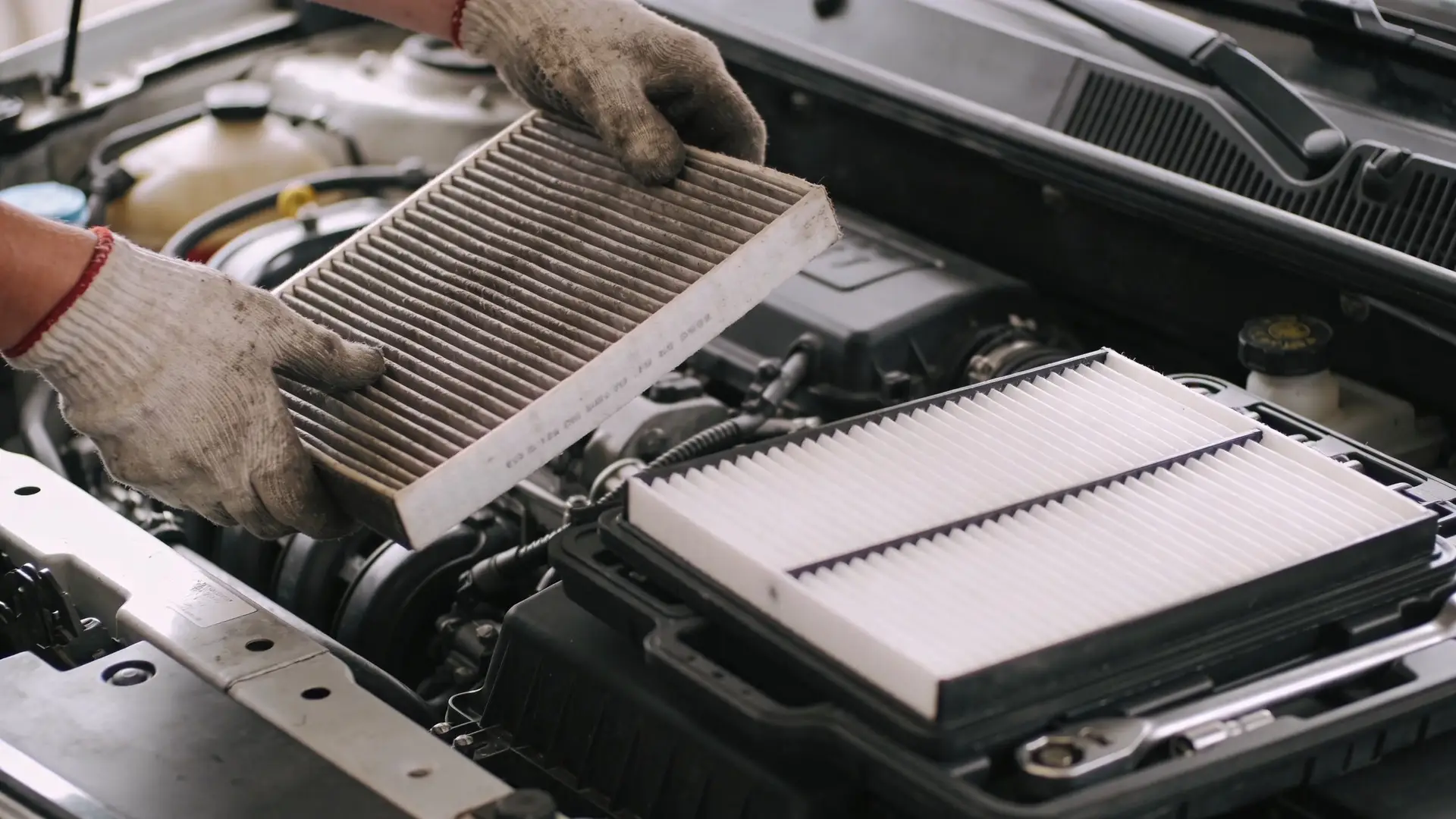
Open the hood and look for a plastic air box connected to the intake tubing. On many cars, it’s a black rectangular housing near the top or side of the engine bay. Some use clips. Others use screws or fasteners.
If the engine is hot, wait. Plastic parts, warm engine covers, and cramped spaces are easier to deal with when the car has cooled down.
Step two, open it gently
Release the clips or remove the fasteners without forcing anything. The goal is inspection, not breaking an old plastic tab and turning a quick check into an extra repair.
Lift the cover enough to access the filter. Take a second before pulling it out. Notice how it sits in the housing. That orientation matters more than many people realize.
Step three, inspect the filter itself
Pull the filter straight out and look at the pleats.
Here’s what you’re checking for:
- Heavy dirt loading: If the pleats are dark and packed with debris, airflow may be restricted.
- Leaves or loose material: Bits of debris in the housing suggest the filter has been working in rough conditions.
- Damage to the seal: Tears, crushed edges, or a poor fit can let unfiltered air sneak past.
- Warping or collapse: A filter that doesn’t hold its shape can’t protect the engine properly.
A clean filter usually has visible pleat definition and doesn’t look packed over with grime. A dirty one often looks tired the moment you pull it out.
Step four, check the housing
Before reinstalling or replacing anything, look inside the air box. Wipe out loose debris carefully if needed. Don’t knock dirt deeper into the intake path. You’re cleaning around the filter area, not pushing contamination downstream.
This is also the moment to make sure the gasket surfaces are clean and the filter can seat evenly all the way around.
Practical rule: A filter only works if air goes through it, not around it.
The DIY mistake that can get expensive
Many guides stop here. They say “drop in the new filter and close the box.” That’s not enough.
A critical mistake is installing the air filter backward. According to the repair warning described in this air filter orientation video explanation, when the mesh-reinforced side is positioned incorrectly, it can collapse against airflow, deform the pleats, and create gaps that allow dust to bypass the filter. Those gaps can act like “tiny sand blasters” on the intake manifold, and intake manifold repair typically costs $300 to $900.
That’s why orientation isn’t a cosmetic detail. It’s the difference between proper filtration and unfiltered dirt entering where it shouldn’t.
How to reinstall the right way
When you reinstall the filter, match the original orientation carefully. Make sure it sits flush in the housing. No corners should be pinched. No edge should be folded. When you close the housing, it should close evenly without forcing it.
If the cover doesn’t sit right, stop and check the filter again. A housing that won’t close properly usually means the filter isn’t seated properly.
A short visual walkthrough can help if you’re more comfortable seeing the process first.
When inspection should turn into service
Some drivers enjoy checking filters but don’t want to risk reinstalling them wrong. That’s reasonable. Inspection is simple. Correct fitment is where people often get overconfident.
If you’re ever unsure about orientation, seal fit, or whether the old filter is still usable, stopping there is the smart move. A filter is cheap. Intake repairs aren’t.
DIY vs Professional Service at Kwik Kar
Replacing an air filter sits in that middle ground of car maintenance. It’s not the hardest job on the vehicle, but it’s also not foolproof. Some drivers can handle it comfortably. Others would rather have someone check the fit, inspect related components, and make sure nothing gets missed.
That’s a practical decision, not a character test.
Where DIY makes sense
DIY works well when the filter housing is easy to reach, the replacement part is correct, and you’re comfortable paying attention to details like orientation, seating, and housing closure. If you already do your own basic maintenance, this may fit your routine.
The risk isn’t usually the act of opening the air box. The risk is assuming every filter drop-in is universal and impossible to mess up.
Where professional service helps
Professional service makes more sense when the housing is awkward, the car uses tighter packaging under the hood, or you want the surrounding system looked at too. A technician can catch things a hurried DIY job might miss, like a damaged seal, debris in the air box, or a filter that looks installed but isn’t fully seated.
If you want a straightforward option for scheduled maintenance, Kwik Kar’s filter replacement service is one available route for having the engine air filter inspected and replaced as needed.
DIY vs. Professional Air Filter Replacement
| Factor | DIY (Do-It-Yourself) | Professional Service (Kwik Kar) |
|---|---|---|
| Upfront cost | Usually lower if you already have the part and basic tools | Includes labor and inspection |
| Time commitment | Depends on access and your familiarity with the vehicle | Usually quicker for the customer because the technician handles it |
| Required tools | Sometimes none, sometimes basic hand tools | Shop tools and service equipment already on hand |
| Knowledge level | You need to identify the right filter, correct orientation, and proper seating | Technician handles part matching and installation details |
| Risk of error | Higher if the filter is installed backward, pinched, or not sealed | Lower because installation is part of routine service |
The real tradeoff
DIY can save money up front. Professional service can save hassle and help prevent mistakes. Which one matters more depends on the vehicle, the driver, and how comfortable you are under the hood.
For some people, it’s worth doing themselves because they enjoy it. For others, the best use of their time is handing off a simple but important job and knowing it was checked correctly.
A lot of maintenance decisions come down to this question. Are you saving money, or are you moving risk from the shop to your driveway?
That’s especially relevant with air filters because the part looks simple enough to make people underestimate it.
Your Fort Worth Partner for a Healthy Engine
Clean filters help a car do two basic things well. They help the engine breathe, and they help the cabin stay more comfortable. When those filters get dirty, the car often tells you in small ways first. Less response at the pedal. Less airflow at the vents. More dust, more odor, more frustration.
Fort Worth driving gives filters a real workload. Heat, traffic, dust, and everyday road grime don’t care whether your vehicle is brand new or well past its easy years. If anything, older cars have even more to gain from staying ahead on simple maintenance.
That’s why filter checks are worth treating like routine care, not an afterthought. Waiting too long can leave you chasing preventable drivability problems or dealing with a DIY mistake that costs more than the original service ever would have.
If your car feels off and you’re not sure whether the problem starts with airflow, a quick inspection is a sensible first step. It’s one of the easiest places to catch trouble early.
Frequently Asked Questions About Car Air Filters
A lot of Fort Worth drivers ask the same thing after learning their car has two different air filters. Which one matters more. How often should they be changed. Is a pricier filter worth it in our dust and heat.
Here are the questions we hear most often at the shop.
Do engine and cabin filters need to be replaced at the same time
They often wear out at different times because they do different jobs. The engine air filter cleans the air your engine burns. The cabin air filter cleans the air coming through your vents. In Fort Worth, one may load up faster than the other depending on where and how you drive.
A car that spends its week in stop and go traffic with the A/C running hard may dirty the cabin filter quickly. A car that sees more dusty roads or construction zones may stress the engine filter sooner.
Checking both by condition makes more sense than replacing both by habit.
Are advanced cabin filters worth it for everyday drivers
For some drivers, yes. According to Fortune Business Insights’ automotive air filter market report, HEPA and SmartFilters are gaining traction in the aftermarket, and that growth is tied to rising concern about in-car air quality.
That trend suggests many drivers are putting a higher priority on cleaner cabin air, not just basic airflow. In practical terms, a standard cabin filter is still a solid choice for many vehicles. But if you deal with allergies, a long commute, heavy traffic, or a lot of Fort Worth dust, a higher-grade cabin filter may be worth considering.
The catch is fit. A better filter that does not seal correctly can let dirty air slip around the edges, which defeats the point.
Is aftermarket always worse than OEM
Aftermarket does not automatically mean lower quality. It only means the part comes from a company other than the vehicle manufacturer. Some aftermarket filters fit well and filter properly. Others use weaker materials or do not seal as tightly.
The box matters less than the fit.
A filter has to sit correctly in its housing, with no gaps, bent edges, or crushed seal. That is where DIY mistakes can get expensive. We have seen filters installed backward, covers not latched all the way, and air boxes forced shut on misaligned filters. Problems like that can let dirt pass where it should not.
Are reusable or performance filters a good idea for a daily driver
They can be, but they are not the easiest choice for every car owner.
Reusable filters work a little like a permanent coffee filter. You clean them, dry them, and reinstall them instead of tossing them out. That sounds good on paper, but the cleaning and re-oiling process has to be done carefully. Too little oil can reduce filtration. Too much can cause problems on some vehicles, especially if residue reaches sensitive sensors.
For a typical Fort Worth daily driver, a quality standard replacement filter is usually the simpler and safer option. Reliable filtration and correct installation matter more than chasing a performance label.
If your car feels sluggish, your cabin air smells stale, or you just want someone to check your filters before a small issue turns expensive, Kwik Kar Oil Change and Auto Care is a convenient local option in Fort Worth. A quick inspection can show whether your engine air filter, cabin filter, or both need attention, and it can help you avoid the preventable problems that come from waiting too long or installing a filter incorrectly.