




You know how it goes. Your schedule fills up, the oil change reminder gets swiped away for the third week in a row, and suddenly you’re stranded at the worst possible moment. Time-saving car care tips exist precisely for this situation. You don’t need to be a mechanic or spend your weekends in the driveway. You need a realistic system that catches problems early, keeps your vehicle reliable, and fits into the life you’re already living. This article gives you exactly that.
Table of Contents
- Key takeaways
- 1. Build a weekly 10-minute car check routine
- 2. Use your manufacturer’s schedule as your maintenance calendar
- 3. Master quick DIY tasks that eliminate unnecessary shop trips
- 4. Protect your paint and cut cleaning time in half
- 5. Protect your car during storage and infrequent use
- 6. Pre-trip inspections save time on the road
- Our perspective on proactive car care
- Let Kwik Kar handle what you shouldn’t do alone
- FAQ
Key takeaways
| Point | Details |
|---|---|
| Weekly 10-minute checks prevent most issues | A brief weekly inspection of fluids, tires, and lights can prevent about 70% of common car problems. |
| Stick to the manufacturer schedule | Following your owner’s manual intervals avoids unnecessary service visits and saves both time and money. |
| DIY basics cut mechanic trips | Tasks like swapping air filters and checking fluid levels take under 15 minutes and reduce shop visits significantly. |
| Protective coatings slash cleaning time | Ceramic coatings and sealant wax create hydrophobic surfaces that mean fewer washes and less scrubbing. |
| Storage habits prevent big repair bills | Smart battery tenders and periodic short drives protect against flat spots, rotor rust, and fluid breakdown. |
1. Build a weekly 10-minute car check routine
The single most effective habit you can adopt is a quick, structured weekly walkthrough of your vehicle. A 10-minute weekly checkup covering tire pressure, oil, fluids, lights, and wipers can prevent about 70% of common car issues. That’s a remarkable return for something that takes less time than your morning coffee.
The reason this works is simple. Most car problems don’t appear overnight. They develop slowly, and a brief weekly look gives you the chance to catch a low tire before it goes flat on the highway, or spot low coolant before your engine overheats.
Here’s what your 10-minute checklist should include:
- Tire pressure: Check all four tires and the spare. Tires lose about 1 PSI per 10-degree temperature drop, so this matters more than most people realize.
- Oil level: Pull the dipstick, wipe it clean, reinsert it, and check the reading. Takes 60 seconds.
- Coolant and brake fluid reservoirs: Both have min/max lines on the side. A glance tells you everything.
- Windshield washer fluid: Low washer fluid is a minor annoyance. Running out on a dirty highway is dangerous.
- Exterior lights: Walk around the car and check headlights, brake lights, and turn signals. Have someone help or back up to a wall.
- Wiper blades: Run them once to see if they streak or skip. Worn blades are a safety issue in rain.
Pro Tip: Set a recurring Sunday morning calendar reminder. Pair it with something you already do, like a weekly fill-up at the gas station, so the habit sticks without extra thought.
You can also download a maintenance checklist to keep in your glove box and run through it methodically each week.
2. Use your manufacturer’s schedule as your maintenance calendar
Most drivers either skip service entirely or fall for the opposite trap: visiting the shop far too often because they follow outdated general advice instead of their owner’s manual. Repair shops often recommend more frequent services than your vehicle actually needs, and that costs you both time and money.
Your owner’s manual is the most reliable source for service intervals specific to your vehicle, your engine, and how you drive. It accounts for factors that generic advice ignores.
Treating your maintenance schedule like digital app updates is a useful way to think about it. You don’t patch software on a random day. You set it to run automatically at a convenient time. Apply the same logic to oil changes, tire rotations, and brake inspections.
A few practical steps that make this work:
Schedule service during naturally slow periods. If you work Monday through Friday, Saturday morning appointments avoid the workday disruption entirely. Plan two or three service visits at the start of the year so they’re already on your calendar.
Use a dedicated app or even a simple notes file to log every service with the date, mileage, and what was done. When you bring your vehicle in, a technician can review your history quickly instead of starting from scratch. That speeds up every visit.
Pro Tip: Take a photo of your odometer each time you have service done. Store it in a phone album labeled “Car.” You’ll have a reliable digital log without any extra effort.
3. Master quick DIY tasks that eliminate unnecessary shop trips
Some of the best car care hacks require zero mechanical knowledge and roughly 10 to 15 minutes of your time. Handling these yourself removes an entire category of shop visits from your schedule.
- Air filter replacement (10 min): Pop the hood, locate the airbox, swap the filter. That’s it. Replacing air filters improves throttle airflow, enhancing fuel efficiency and ride smoothness. Do it every 15,000 to 30,000 miles.
- Wiper blade replacement (5 min): Most blades click or pin into place. Your auto parts store will match the correct size for free.
- Battery terminal cleaning (10 min): White or bluish crust on your terminals is the primary cause of sluggish starts. Disconnect the cables, scrub with a baking soda and water mixture, reconnect. Done.
- Fluid top-offs (5 min): Coolant, brake fluid, and power steering fluid all have reservoir caps clearly labeled under the hood. Top them off, replace the cap, and move on.
- Tire tread check (2 min): Insert a penny into the tread groove with Lincoln’s head facing down. If you can see the top of his head, your tread is worn and stopping distance increases by up to 26% in summer conditions.
- Exterior bulb replacement (10 min): Most modern vehicles have accessible bulb housings. Your owner’s manual shows which type to buy. A burned tail light is a ticketable offense, and fixing it yourself takes minutes.
Pro Tip: Keep a basic toolkit in your trunk: a tire pressure gauge, a small flashlight, a set of funnels, and the correct replacement fluids for your car. When you need them, you’ll already have them.
If you’re newer to maintaining your own vehicle, the car maintenance for beginners guide covers these tasks step by step in plain language.
4. Protect your paint and cut cleaning time in half
Keeping your car clean isn’t just about appearance. Dirt and grime trap moisture against your paint, which accelerates rust. But here’s where efficient vehicle care strategies pay off. With the right protective layer, cleaning your car takes a fraction of the usual effort.
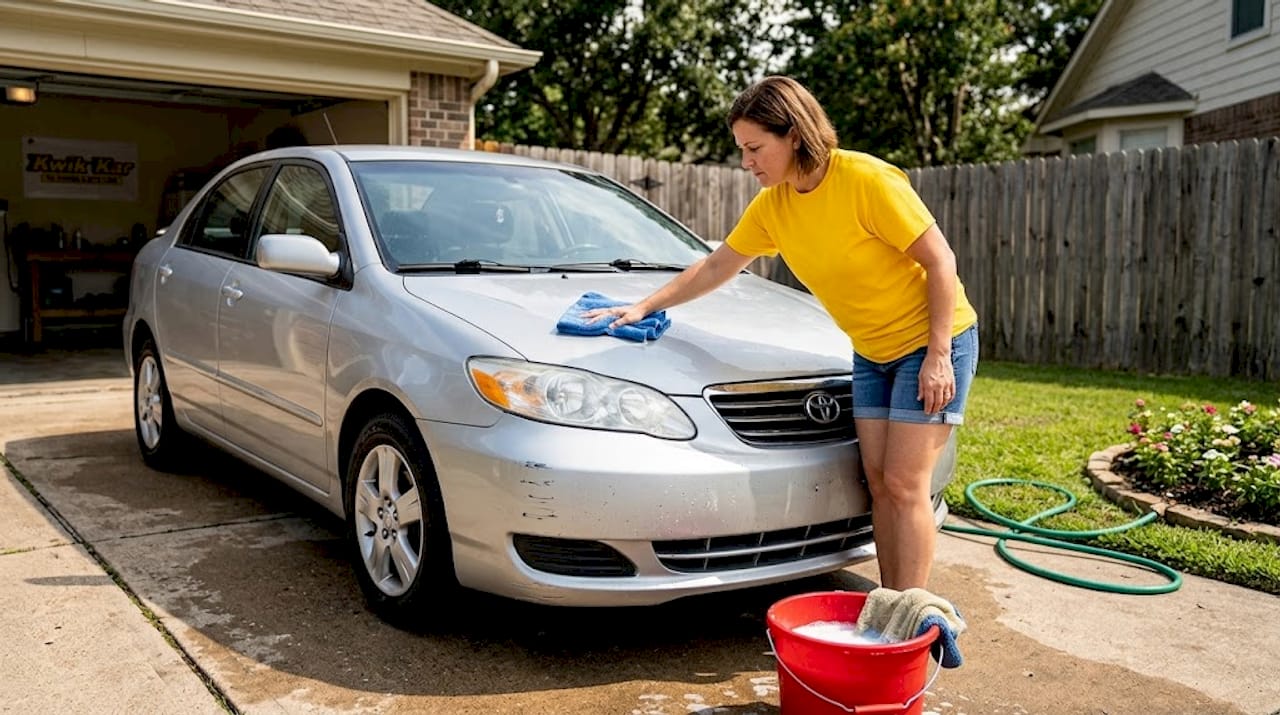
Applying sealant wax or ceramic coating creates a hydrophobic surface that causes water and dirt to bead up and roll off instead of bonding to the paint. The practical result is fewer full washes, less scrubbing, and a cleaner-looking car between washes.
Here’s a quick comparison to help you decide which option fits your schedule:
| Feature | Sealant wax | Ceramic coating |
|---|---|---|
| Application time | 30 to 60 minutes | 2 to 4 hours (professional) |
| Protection duration | 4 to 6 months | 2 to 5 years |
| Hydrophobic effect | Moderate | Strong |
| Cost | Low | Higher upfront |
| Time saved per wash | Moderate | Significant |
| DIY-friendly | Yes | Partially |
Between full washes, a spray detail product and a quality microfiber towel handle most surface dust and light grime in under five minutes. Treating your glass with a rain repellent sealant extends the intervals between full cleans and dramatically improves wet-weather visibility.
Pro Tip: Schedule your sealant wax application on the same day as your seasonal tire rotation. You’re already at the shop or working on the car. Adding 30 minutes of paint protection in the same session costs you almost nothing extra in time.
5. Protect your car during storage and infrequent use
If your vehicle sits unused for weeks at a time, you’re accumulating problems that will take far more time to fix than they would have taken to prevent. Vehicles left unused suffer battery drainage and fluid degradation. Add tire flat spots and brake rotor oxidation to that list if the car sits long enough.
Proper long-term storage demands a few deliberate steps, and none of them are complicated:
- Use a smart battery tender: These plug into a standard outlet and automatically maintain battery charge without overcharging. A $30 to $50 tender prevents a $150 to $200 battery replacement.
- Drive it periodically: Even a 10 to 15-minute drive once every two weeks circulates fluids, prevents flat spots on tires, and keeps brake rotors clean of surface rust.
- Check fluids before storage: Old coolant or degraded brake fluid left sitting does internal damage over time. Fresh fluid is cheap insurance.
- Use a breathable car cover: It keeps dust and moisture off the exterior without trapping condensation underneath.
- Note any warning lights before parking long-term: A check engine light left unaddressed for months can allow a small issue to escalate into a costly repair.
One thing that gets overlooked consistently: brake rotors develop a rust layer surprisingly fast when a car sits in a humid environment. It looks alarming but usually scrubs off within the first mile of driving. The problem is that extended inactivity can allow deeper surface oxidation that reduces braking performance and requires professional attention.
6. Pre-trip inspections save time on the road
A few minutes of checking before a long drive prevents hours of delay on the side of the road. The pre-trip vehicle inspection checklist approach is used by commercial drivers for a reason. It works.
Before any trip over an hour, scan the basics: tire pressure, oil level, coolant, and all exterior lights. Check that your spare is inflated and your jack is accessible. Look under the vehicle for any fresh fluid spots on the ground, which can indicate a leak that developed since your last check. This whole process takes about eight minutes and eliminates the most common causes of roadside breakdowns.
For everyday driving, a quick visual walk-around before you leave in the morning takes 90 seconds and catches flat tires, low fluid leaks, or a burned-out light before they become a bigger issue during your commute.
Our perspective on proactive car care
I’ve seen the same pattern play out hundreds of times at Kwik Kar Oil Change & Auto Care. A customer comes in frustrated because what started as a minor oil leak has turned into an engine sealing repair that costs ten times more. The original issue could have been caught with a basic check weeks earlier.
In my experience, the biggest barrier isn’t laziness. It’s the false belief that car maintenance has to be time-consuming or complicated to matter. The reality is that small, consistent habits protect your vehicle far better than occasional marathon sessions at the shop.
I’ve also noticed that customers who keep a digital service log and stick to their manufacturer’s schedule spend significantly less time in our waiting room over the course of a year. They come in for planned visits, not emergencies. Their cars run cleaner and longer.
One thing I’d push back on is the idea that calling your mechanic repeatedly during a repair helps move things along. Frequent update calls actually slow service times by pulling technicians away from the work. Set a clear time for an update when you drop off, then let the team work. You’ll get your car back faster.
Technology has made this easier than it’s ever been. Maintenance reminder apps, digital odometer logs, even simple calendar alerts take the cognitive load off your shoulders. Use them. Your car will reward you with fewer surprises.
— Kwik Kar
Let Kwik Kar handle what you shouldn’t do alone
Knowing when to handle maintenance yourself and when to call in a professional is one of the most time-efficient decisions you can make as a car owner. Kwik Kar Oil Change & Auto Care in Fort Worth provides certified technicians, transparent pricing, and a full range of services from quick oil changes to complex diagnostics. When you need a reliable partner for the jobs that go beyond a dipstick check, knowing how to find a trustworthy mechanic matters. You can also explore affordable local repair options to keep your maintenance costs predictable without sacrificing quality.
FAQ
What does a 10-minute car check include?
A quick weekly check covers tire pressure, oil level, coolant, brake fluid, windshield washer fluid, exterior lights, and wiper blade condition. This routine can prevent about 70% of common car issues before they become costly repairs.
How often should I follow the manufacturer’s maintenance schedule?
Follow the intervals in your owner’s manual exactly. Repair shops often suggest more frequent service than your vehicle actually needs, so your manual is the most reliable and time-efficient guide.
Is a ceramic coating worth it for saving cleaning time?
Yes. A ceramic coating creates a hydrophobic surface that repels water and dirt, reducing how often you need to wash and how long each wash takes. The upfront investment pays off in ongoing time saved over two to five years of protection.
What’s the fastest DIY maintenance task that makes a real difference?
Replacing your engine air filter takes about 10 minutes and directly improves fuel efficiency and engine performance. It’s one of the highest-impact, lowest-effort tasks any car owner can do at home.
How do I protect my car battery when the car isn’t being driven?
Connect a smart battery tender, which automatically maintains the correct charge level without overcharging. Combine it with a 10 to 15-minute drive every two weeks to keep fluids circulating and prevent tire flat spots and brake rotor oxidation.