

Overpriced auto repairs are defined by inflated labor hours, unnecessary part replacements, and vague fees that push your bill far beyond what the job actually costs. Knowing the most common examples of overpriced auto repairs gives you the power to question charges before you sign anything. Reputable independent shops charge $100–$150 per hour for labor, while luxury specialists may charge $200 or more. That benchmark alone helps you spot when a quote has gone off the rails. State laws in most jurisdictions also require shops to provide a written estimate for repairs exceeding $100–$200, and shops cannot legally exceed that authorized amount without your approval. Understanding these rules is your first line of defense against inflated auto repair costs.
1. Common examples of overpriced auto repairs
The industry term for what most car owners call a “rip-off” is an unjustified repair markup. It covers everything from billing you for parts you did not need to charging labor hours that exceed the flat-rate manual standard. Here are the repairs where overcharging shows up most often.
Clutch replacement. A clutch job is labor-intensive, which makes it easy to inflate. Shops sometimes bill extra hours for “related inspections” that were never performed. Ask for a line-by-line breakdown of every labor task before you approve the work.
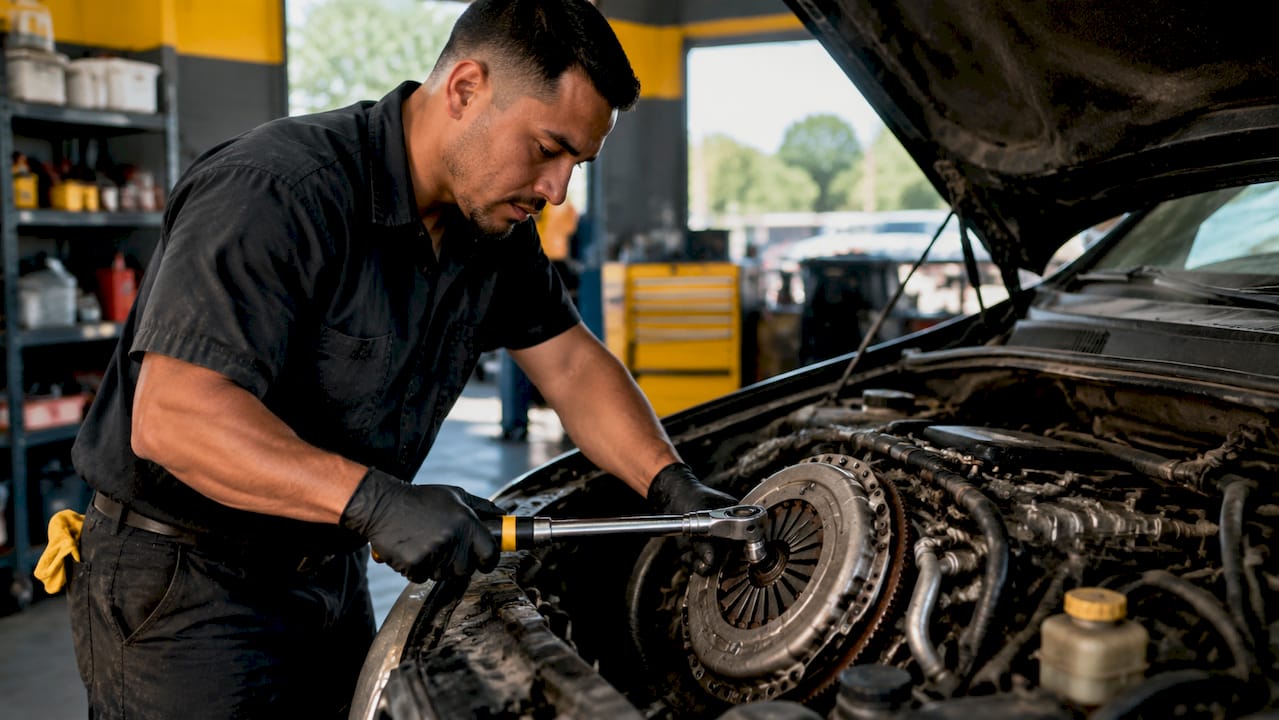
Head gasket repair. This is one of the most expensive repairs on any vehicle. Vague charges like “engine disassembly” without specific hour counts are a red flag. A legitimate shop will tell you exactly how many hours the flat-rate manual assigns to the job.
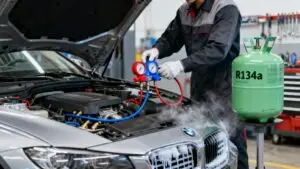
Air conditioner compressor replacement. Parts markup is the main problem here. Shops typically mark up parts 25%–60% over wholesale, and dealerships can go 40%–80%. An A/C compressor is expensive at wholesale, so the markup adds up fast.
Catalytic converter replacement. Catalytic converters carry a high parts cost, which makes them a frequent target for excessive pricing. Always ask for the part number and look up the wholesale price yourself before agreeing to the repair.
Brake system repairs. Brake line replacements and brake fluid flushes are commonly oversold. Some shops recommend brake fluid flushes far earlier than your manufacturer’s schedule calls for. Check your owner’s manual first. For guidance on brake parts quality, understanding which components are worth the investment helps you push back on unnecessary upsells.
Hybrid battery replacement. Hybrid batteries are high-ticket items, and some shops use them as an opportunity to bundle in unrelated services. Always get a second opinion before approving a hybrid battery replacement, since the diagnosis itself can be wrong.
Transmission service. Shops sometimes recommend a full transmission flush when a simple fluid check shows no problem. Unnecessary transmission services are one of the most common auto repair scams car owners face.
Pro Tip: Ask the shop to show you the failed part before they replace it. A reputable technician will always have the old part available for inspection.
2. How labor and parts pricing drive up your repair bill
Labor billing in most shops follows a flat-rate manual, which assigns a standard number of hours to each repair task. Shops bill you based on that standard time, not the actual time the technician spent. That system is not inherently unfair, but it becomes a problem when a shop uses an inflated manual or adds hours for tasks that overlap with work already billed.
Parts pricing adds another layer of cost. OEM parts cost more than aftermarket or remanufactured options, and shops mark up all three categories. Understanding the difference between aftermarket auto parts and OEM options can save you real money on non-safety-critical components. The table below shows how markup ranges compare across shop types.
| Shop type | Typical parts markup |
|---|---|
| Independent repair shop | 25%–60% over wholesale |
| Franchise service center | 30%–65% over wholesale |
| Dealership | 40%–80% over wholesale |
Shop fees are a third source of surprising repair expenses. Supply fees, hazardous waste fees, and environmental fees are legitimate in principle. Fees exceeding 10% of total labor cost without a clear explanation are a sign of padding. A $400 labor bill should not carry $80 in supply fees with no itemization.
Transparent, itemized estimates showing parts cost, labor hours, and the hourly rate are the clearest sign of an honest shop. If an estimate shows only a total price, ask for the breakdown in writing before you agree to anything.
Pro Tip: Ask the service advisor which flat-rate manual they use to calculate labor hours. Mitchell, Chilton, and AllData are the three most common. If they cannot name one, that is a red flag.
3. Red flags that signal inflated or unnecessary repairs
Spotting overpriced mechanic fees before you pay them requires knowing what a bad estimate looks like. Overpriced repairs often show inflated labor hours beyond flat-rate benchmarks, unclear parts descriptions, or fees with no explanation. Watch for these specific warning signs:
- Vague line items. Descriptions like “engine work” or “system inspection” with no hour count or part number attached give you nothing to verify.
- Labor hours that do not match the manual. If a shop quotes six hours for a job the flat-rate manual assigns four hours to, ask why.
- Shop fees above 10% of labor. Hazardous waste or supply fees above this threshold are often padding, not real costs.
- Pressure to approve immediately. Reputable shops allow time to review estimates and seek second opinions. Any shop that cites vague safety concerns to rush your approval deserves extra scrutiny.
- No proof of part failure. A shop should be able to show you a diagnostic report, a worn part, or a measurement that confirms the repair is needed.
- Duplicate diagnostic fees. Charging a diagnostic fee and then folding the same diagnostic work into the labor hours is double billing.
Dealer maintenance upsells are a related concern. Dealers often recommend services based on generic mileage packages rather than your vehicle’s actual condition. Your owner’s manual is the authoritative source for what your car actually needs and when.
4. Practical steps to avoid overpriced repairs
Protecting yourself from inflated auto repair costs does not require mechanical expertise. It requires asking the right questions and knowing where to look for answers.
- Request a written, itemized estimate. Every line should show the part name, part number, quantity, unit cost, labor task, hours, and hourly rate. State laws require written estimates for jobs above a set dollar threshold, and shops cannot legally exceed the authorized amount without calling you first.
- Check labor hours against the flat-rate manual. You can look up standard repair times on sites like Mitchell ProDemand or ask the shop directly. If their hours are significantly higher, ask for a written explanation.
- Verify the parts being used. Ask for the brand name, part number, and warranty. Knowing whether you are getting OEM, aftermarket, or remanufactured parts helps you assess whether the price is fair. A budget-friendly car care checklist can help you track which parts your vehicle has already had replaced.
- Get a second opinion independently. A second mechanic diagnosing without seeing the original estimate gives you an unbiased read on whether the repair is actually needed. Show them the symptoms, not the quote.
- Know your manufacturer’s maintenance schedule. Your owner’s manual lists every service interval. Any shop recommending a service significantly ahead of that schedule owes you a documented reason.
- Negotiate or decline vague fees. Supply fees and environmental fees are negotiable more often than shops admit. Ask what each fee covers. If the answer is vague, ask for it to be reduced or removed.
- Prioritize safety-critical repairs. Brakes, steering, and tires are non-negotiable. Everything else can be evaluated on timeline and budget. Understanding fair auto repair pricing helps you separate urgent needs from upsells.
Pro Tip: Take photos of your odometer and any visible damage before dropping your car off. This creates a timestamped record that protects you if new damage appears during the visit.
Key takeaways
The most reliable defense against overpriced auto repairs is a written, itemized estimate reviewed line by line before you authorize any work.
| Point | Details |
|---|---|
| Know the labor rate benchmark | Independent shops charge $100–$150/hr; anything higher needs justification. |
| Parts markup is real and negotiable | Shops mark up parts 25%–80%; ask for the part number and compare prices. |
| Flat-rate billing cuts both ways | Ask which manual justifies the labor hours on your estimate. |
| Shop fees above 10% of labor are a red flag | Unexplained supply or hazmat fees above that threshold often indicate padding. |
| Second opinions reduce bias | Have a second mechanic diagnose independently, without seeing the first estimate. |
What I have learned from years of watching repair bills
Working in auto care in Fort Worth, we see the same overcharges repeat themselves. The clutch job with four hours of unexplained “associated labor.” The A/C compressor quote where the part is marked up 70% and no one mentions the remanufactured option. The brake fluid flush recommended at 20,000 miles when the manufacturer says 45,000.
The car owners who avoid these charges share one habit: they read the estimate before they hand over the keys. Not after. Not when they come to pick up the car. Before. That single habit changes the entire dynamic of the conversation.
The second thing I have seen work consistently is asking for the old part back. Most shops will hand it over without hesitation if the repair was legitimate. The ones that hesitate or claim they already disposed of it deserve a follow-up question.
At Kwik Kar Oil Change & Auto Care, we built our process around itemized estimates and technician explanations because we know that a car owner who understands what they are paying for is a car owner who comes back. Transparency is not a courtesy. It is the standard. If your current shop cannot explain a charge in plain language, that tells you something important.
— Kwik Kar
Honest auto care starts with a clear estimate
At Kwik Kar Oil Change & Auto Care in Fort Worth, every repair quote breaks down parts, labor hours, and fees line by line. Our RepairPal-certified technicians explain what your vehicle needs and why, so you never pay for work you cannot verify.
Whether you are questioning a quote you received elsewhere or want to understand signs your car needs service, our team gives you straight answers without pressure. We also welcome second opinions and encourage you to compare our estimates against industry benchmarks. Visit Kwik Kar Oil Change & Auto Care or call us to get a written, itemized estimate you can actually trust. Fair pricing is not a promise here. It is how we work every day.
FAQ
What are the most overpriced auto repairs?
Clutch replacements, head gasket repairs, A/C compressor replacements, and catalytic converter replacements are among the most frequently overpriced repairs due to high parts costs and labor markup opportunities.
How do I know if a mechanic is overcharging me?
Compare the quoted labor hours against a flat-rate manual standard and check whether parts markup exceeds 60% over wholesale. Vague line items and fees above 10% of labor cost are also clear warning signs.
Can a shop legally charge more than the estimate?
Most states prohibit shops from exceeding the authorized estimate without contacting you first. Written estimate laws typically cap overruns at 0%–10% of the approved amount without additional authorization.
Is it worth getting a second opinion on an expensive repair?
A second opinion is worth it for any repair above a few hundred dollars. Having the second mechanic diagnose independently, without seeing the original estimate, produces the most unbiased result.
Are dealer maintenance upsells usually necessary?
Dealers often recommend services based on generic mileage packages rather than your vehicle’s actual condition. Always cross-reference any recommended service against your owner’s manual before approving it.