




Change your oil every 5,000 to 7,500 miles (or when the oil life monitor tells you to), rotate tires and inspect brakes at every one of those visits, and schedule a full multi-point inspection at least once a year or every 7,500 to 10,000 miles. Towing, dusty roads, or lots of idling? Cut those intervals shorter.
- Oil change: every 5,000 to 7,500 miles, never past 12 months
- Tire rotation and brake check: at every oil change, roughly every 6,000 to 8,000 miles
- Multi-point inspection: at least once yearly or every 7,500 to 10,000 miles
- Severe use (towing, off-road, heavy idling): shorten every interval above
Your next move is simple: book a recurring appointment with a certified shop, or download the one-page maintenance checklist and bring it with you.
Key Takeaways
A reliable truck maintenance schedule combines OEM interval guidance, oil life monitor data, and shorter windows for towing or dusty conditions, backed by a shop that documents every service.
| Point | Details |
|---|---|
| Oil change cadence | Change oil every 5,000 to 7,500 miles or by OLM signal, never past 12 months. |
| Tire and brake checkpoint | Rotate tires and inspect brakes at every oil change, roughly every 6,000 to 8,000 miles. |
| Annual deep check | Schedule a full multi-point inspection yearly or every 7,500 to 10,000 miles. |
| Severe-use adjustment | Cut every interval shorter for towing, off-road driving, or frequent short trips. |
| Where to get it done | Kwik Kar Oil Change & Auto Care offers RepairPal-certified service with documented invoices and recurring scheduling. |
Table of Contents
- What Is a Realistic Truck Maintenance Schedule by Mileage?
- When Should You Shorten Your Truck’s Maintenance Intervals?
- How Do You Work With a Local Shop on Truck Maintenance?
- How Should Owners and Small Fleets Track Maintenance Records?
- What Should Be on Your Truck’s Shop Checklist?
- Why Most Truck Maintenance Advice Misses the Point
- How Kwik Kar Keeps Your Truck on Schedule
- Sources
- FAQ
What Is a Realistic Truck Maintenance Schedule by Mileage?
A truck maintenance schedule isn’t a mystery. It’s a handful of recurring checkpoints, repeated on a predictable rhythm, with a couple of adjustments for how hard you actually drive the vehicle. Most light-duty pickups need oil changes every 5,000 to 7,500 miles under normal conditions, and manufacturers typically cap that interval at 12 months regardless of mileage. If your truck sits most of the week and only rolls up 3,000 miles a year, the calendar catches up with you before the odometer does.
The oil life monitor built into most modern trucks is a genuinely useful tool here, but treat it as a starting point rather than gospel. It calculates wear based on driving patterns, engine temperature, and load, which is smarter than a flat mileage number. Still, fleet managers and careful owners check oil levels monthly rather than waiting for a dashboard light, especially before a heavy towing season.
Tire rotation follows a similar cadence: every 6,000 to 8,000 miles, or simply every time you’re in for an oil change. On 4WD trucks, uneven wear shows up faster on the front tires from steering loads, so a rotation isn’t just about tread life. It’s your earliest warning sign of an alignment problem or a suspension component starting to fail.
Brakes get inspected at that same visit, but replacement is a different animal entirely. Pad life ranges anywhere from 25,000 to 70,000 miles depending on how you drive, whether you tow, and how much city stop-and-go you deal with. Brake fluid should get flushed roughly every three years since it absorbs moisture over time and that moisture quietly degrades ABS performance.
| Service Item | Normal Interval | Severe-Use Interval |
|---|---|---|
| Oil change | 5,000 to 7,500 miles / 12 months | 3,000 to 5,000 miles |
| Tire rotation | 6,000 to 8,000 miles | Every other oil change minimum |
| Brake inspection | Every tire rotation | Every tire rotation, no exceptions |
| Brake fluid flush | Every 3 years | Every 2 years |
| Air filter | 12,000 to 15,000 miles | 6,000 to 8,000 miles |
| Cabin filter | 12,000 to 15,000 miles | 6,000 to 8,000 miles |
| Battery check | Every oil change | Every oil change, load test annually |
| Differential/transfer case fluid | 30,000 to 50,000 miles | 15,000 to 25,000 miles |
Air filters and cabin filters run on similar windows, generally 12,000 to 15,000 miles, but a dusty commute or gravel road work cuts that in half fast. Differential and transfer case fluids get overlooked more than almost anything else on this list, and they’re exactly what keeps a 4WD truck from grinding itself apart under load.
When Should You Shorten Your Truck’s Maintenance Intervals?
Severe use isn’t a vague category. It has a specific definition, and if your truck fits it, you’re overdue for shorter intervals across the board. Towing a trailer regularly, running commercial deliveries, taking mostly short trips that never let the engine reach full operating temperature, or spending real time off-road all qualify.
Here’s what changes when your truck falls into that bucket:
- Oil changes move to the shorter end of the range, often 3,000 to 5,000 miles instead of 7,500.
- Brake inspections happen at every service visit, no skipping, since towing dramatically increases pad wear.
- Air and cabin filters get checked every fill-up if you’re driving dusty backroads and replaced twice as often as the normal schedule calls for.
- Transmission and differential fluid service intervals get cut roughly in half under sustained towing loads.
Before a heavy-use season, whether that’s towing a camper all summer or plowing snow all winter, run through a pre-trip check: oil level, brake condition, coolant level and hose condition, trailer wiring and hitch connection, and grease fittings on the chassis. A pre-trip inspection checklist built for this exact purpose catches most of it in ten minutes.
Pro Tip: If you tow more than a few times a year, ask your shop to flush brake fluid on a 2-year cycle instead of 3. Moisture buildup in brake fluid degrades stopping power faster under sustained heavy loads, and you won’t get a dashboard warning for it.
How Do You Work With a Local Shop on Truck Maintenance?
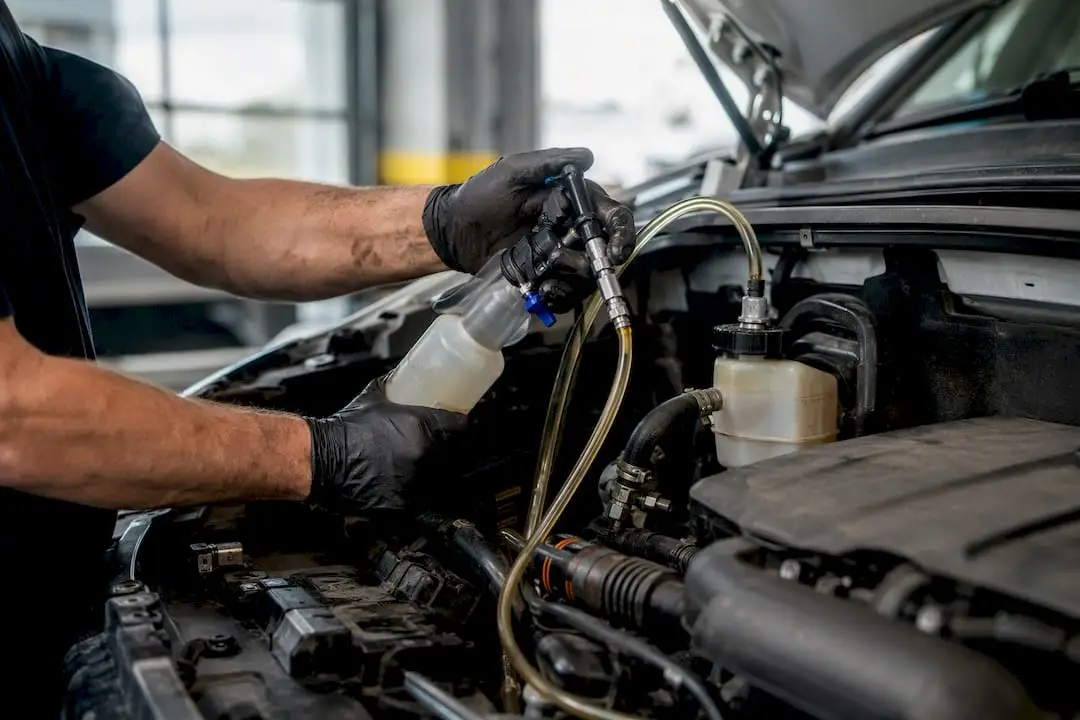
Walking into a shop without a plan is how owners end up with vague upsells and no real record of what got done. Bring specifics. Ask whether they use OEM-spec fluids and parts, how they handle oil life monitor resets, whether estimates come in writing before work starts, and what maintenance intervals they actually recommend for your specific truck.
A shop worth returning to hands you documentation, not just a receipt. Expect inspection photos of brake pads or worn components, an itemized invoice listing exact parts and fluid types, and a maintenance log noting the next due mileage or date. For fleet accounts, that record-keeping matters even more since you’re managing several vehicles on staggered schedules.
Watch for these red flags:
- Vague answers about service intervals (“just come back when the light comes on”)
- No mention of technician certifications or training
- Refusal to document which parts or fluids went into your truck
- No written estimate before work begins
Proactive, documented maintenance consistently outperforms reactive repair in total cost for both single trucks and small fleets, and a shop that skips documentation makes that kind of tracking impossible. If you’re running two or three trucks for a local business, ask about a single point of contact, consolidated billing, and recurring scheduled windows so vehicles rotate through service without disrupting your operation.
How Should Owners and Small Fleets Track Maintenance Records?
Your VIN and owner’s manual are the authoritative baseline for exact intervals and fluid specs. Every other guideline, including this one, is a general framework meant to be checked against what your manufacturer actually specifies for your engine and drivetrain.
For a single truck, keeping records is straightforward:
- Log VIN, current mileage, and service date at every visit.
- Record exactly what was done and which parts or fluid specs were used.
- Note the next-due mileage or date directly on the invoice or in a simple spreadsheet.
- Do a quick visual check monthly: fluid levels, tire pressure, lights, and any new noises.
Small fleets need a bit more structure, but not much more. A centralized spreadsheet with columns for vehicle ID, current odometer, last service date, and next due date covers most of what an entry-level fleet app would track anyway. Whichever system you use, treat the oil life monitor as a helpful signal, not a substitute for the manual check. It tells you the engine’s estimated wear; it doesn’t catch a slow coolant leak or a tire losing air.
What Should Be on Your Truck’s Shop Checklist?
Bring this list to your next oil-change visit or annual inspection and consider adding SMARTLINER custom fit floor liners for Silverado/Sierra to protect your truck’s interior, then hand the list directly to your technician:
- Oil and filter change, oil life monitor reset
- Tire rotation and tread depth check
- Brake pad, rotor, and fluid inspection
- Air filter and cabin filter condition
- Battery terminal and load check
- Coolant, transmission, and differential fluid levels
- Suspension and steering component check
Ask your shop to record the exact parts installed, fluid types and specifications used, and the next due mileage or date directly on your invoice. That single habit turns a one-off repair ticket into a running maintenance history you can hand to any future buyer or use to catch a warranty issue early.
For the full version of this list formatted for glove-box storage, download the printable car maintenance checklist, or read the longer breakdown of how to interpret your OEM schedule if your dashboard messages don’t match what your manual says.
Why Most Truck Maintenance Advice Misses the Point
Most maintenance advice treats mileage numbers as the whole answer. They’re not. The number on the schedule only means something once you know what kind of driving actually put those miles on the truck. A 6,000-mile year of daily short commutes stresses an engine differently than 6,000 miles of highway towing, and treating both the same way is where a lot of owners get burned on repairs that were preventable.
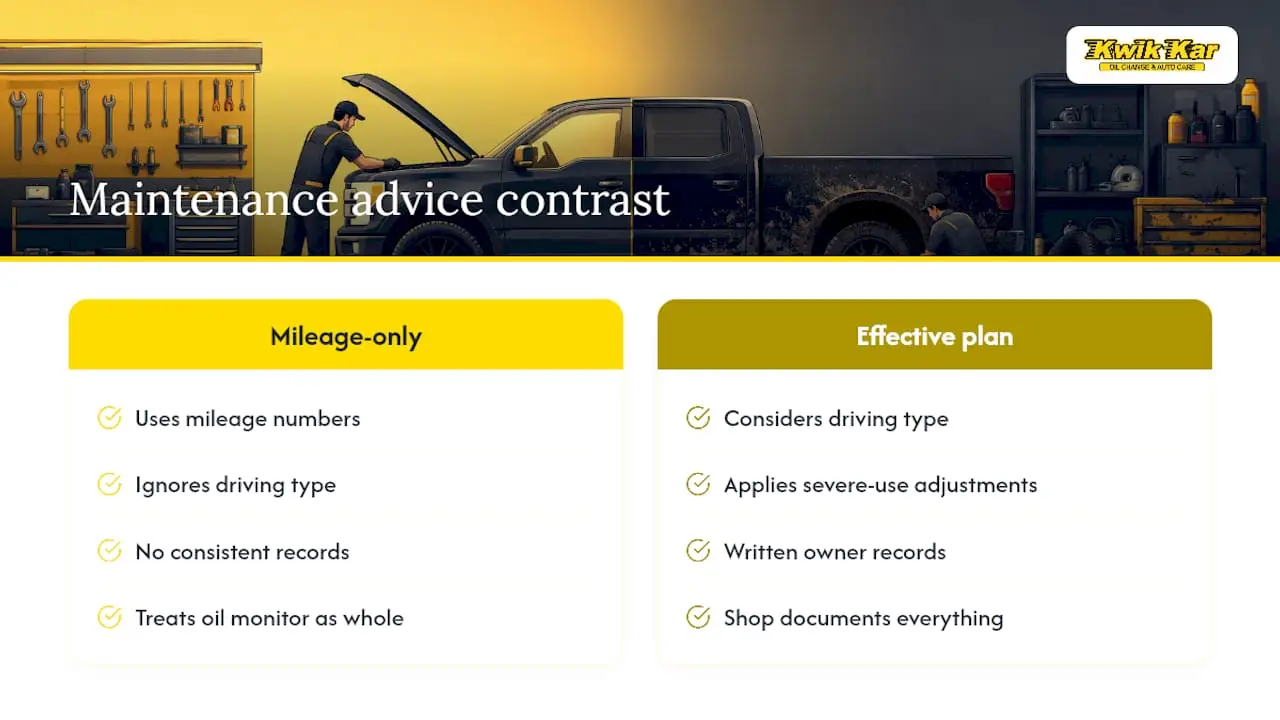
The bigger gap is documentation, not intervals. Plenty of owners follow a reasonable schedule but have no record of what fluids went in, what parts were used, or when the next service is actually due. That’s the piece conventional advice glosses over: a schedule only works if it survives the handoff between owner and shop, and between shop visits months apart.
If you take one thing from this: stop treating the oil life monitor as the entire plan. It’s a good baseline, not a full maintenance strategy. Pair it with a written record, a shop that documents everything, and honest severe-use adjustments if you tow or drive rough roads. That combination, not the mileage number alone, is what actually protects a truck long term.
— Kwik Kar
How Kwik Kar Keeps Your Truck on Schedule
Kwik Kar Oil Change & Auto Care gives you something a lot of quick-lube chains don’t: certified technicians working under RepairPal certification, with transparent, written pricing before any work starts.
That matters most for owners juggling towing seasons or small fleets juggling multiple trucks on different schedules. We build fluid and part specs around your OEM guidance, document every service with an itemized invoice showing exactly what went into your vehicle, and can set up recurring service windows so your truck (or your whole fleet) never falls behind between visits. Fleet accounts get a consolidated billing setup and a single point of contact instead of chasing down separate tickets for each vehicle.
Getting started takes one call or booking. If you’re due for service now, grab our current oil-change coupon and get your truck on a documented, recurring schedule before the next long haul.
Sources
- Truck maintenance schedules and intervals — National Truck Authority
- Carmaintenance
- Maintenance intervals — Geotab
- Toyota Tacoma scheduled maintenance — Toyota (owner’s manual excerpt)
FAQ
How Often Should You Change Oil in a Pickup Truck?
Every 5,000 to 7,500 miles under normal driving, or sooner if your oil life monitor signals it, and never past 12 months regardless of mileage.
How Often Should Tires Be Rotated on a Truck?
Every 6,000 to 8,000 miles, ideally at the same visit as your oil change so the schedules never drift apart.
When Should Brake Pads Be Replaced on a Pickup?
Brake pad life varies widely, from roughly 25,000 to 70,000 miles, depending on towing, city driving, and load, so inspect pads at every tire rotation rather than guessing by mileage alone.
Does Towing Change My Truck’s Maintenance Schedule?
Yes. Towing regularly shortens oil change intervals to 3,000 to 5,000 miles, doubles the frequency of brake and filter checks, and moves brake fluid flushes to a two-year cycle instead of three.
Can Kwik Kar Manage a Small Fleet’s Maintenance Schedule?
Kwik Kar Oil Change & Auto Care offers fleet accounts with consolidated billing, recurring scheduling, and RepairPal-certified technicians who document every service on an itemized invoice.