




“Service Tire Monitor System” means your TPMS has a fault and can no longer reliably monitor tire pressure — this is different from a low-pressure warning. Before you do anything else, grab a handheld gauge and check each tire manually.
Here’s what to do right now:
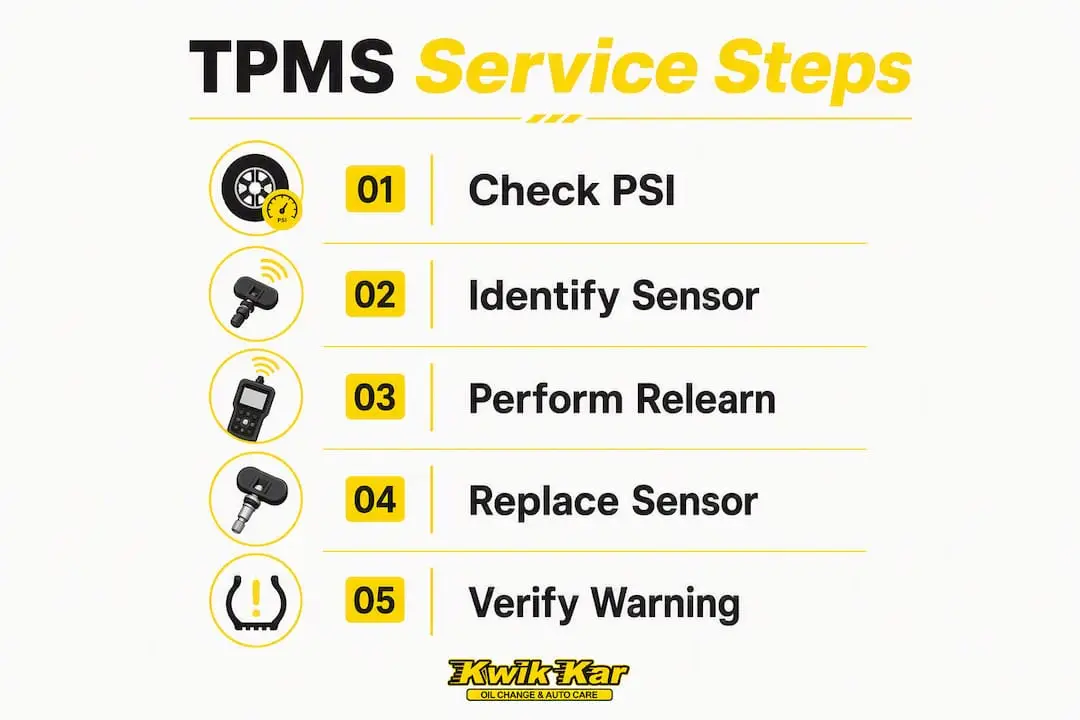
- Check PSI manually. Use a handheld tire gauge on all four tires. Compare readings to the sticker on your driver’s door jamb.
- Inflate if needed. Bring any low tire up to the recommended cold PSI.
- Avoid long highway drives until the system is diagnosed. Temperature changes drop tire pressure about 1 PSI for every 10°F, so a cold morning can mask a real problem.
- Don’t assume adding air fixes it. The “service” message points to a system fault, not necessarily low pressure.
Driving with this warning leaves you effectively blind to slow leaks and sudden pressure loss. That’s the real risk here.
Table of Contents
- What does “Service Tire Monitor System” actually mean?
- Direct vs. indirect TPMS — what’s the difference?
- What causes a “Service Tire Monitor System” warning?
- What should you check right now?
- How do you reset a TPMS warning?
- Vehicle-specific quirks worth knowing
- What does TPMS repair typically cost?
- Is it safe to drive with this warning on?
- What happens when the warning won’t clear?
- How to prevent future TPMS service messages
- How Kwik Kar Oil Change & Auto Care diagnoses a TPMS warning
- Key Takeaways
- The part most drivers get wrong
- TPMS diagnostic and repair at Kwik Kar Oil Change & Auto Care
- Useful sources and further reading
- FAQ
What does “Service Tire Monitor System” actually mean?
Most drivers assume any tire-related dashboard message means a flat or low pressure. The “Service Tire Monitor System” message works differently. It tells you the monitoring hardware itself has a problem, not necessarily the tires.
Your TPMS is designed to signal faults in a specific way:
- Flashing then steady light: A TPMS light that flashes for about 60–90 seconds then stays solid typically points to a system fault — a dead sensor battery, a failed sensor, or a communication break between a sensor and the vehicle’s receiver.
- Steady light only: A light that comes on solid without flashing usually means one or more tires are actually low on pressure.
- Text message on dash: Vehicles with driver information displays often show “Service Tire Monitor System” as a text alert, which almost always indicates a system fault, not a pressure reading.
The key distinction: a low-pressure alert means the system measured low pressure. A “service” message means the system couldn’t measure at all. That’s why manually checking PSI with a gauge is always the first step.
Direct vs. indirect TPMS — what’s the difference?
Understanding which type your vehicle uses changes how you troubleshoot and reset the system.
| Feature | Direct TPMS | Indirect TPMS |
|---|---|---|
| How it works | Pressure sensors inside each wheel transmit real-time PSI data | Uses ABS/wheel-speed sensors to infer pressure from rotation differences |
| Common on | Most U.S. vehicles | Older vehicles, some European models |
| Reset method | Often requires a TPMS scan tool or relearn procedure | Usually recalibrates through a menu or driving cycle |
| Repair cost | Sensor replacement typically costs between tens to low hundreds of dollars per wheel. | Typically lower; no physical sensor to replace |
The two systems behave very differently during diagnosis and repair. Direct TPMS is more precise but also more complex — a dead sensor battery means replacing the entire sensor unit. Indirect TPMS rarely triggers a “Service Tire Monitor System” message from a sensor failure because there are no wheel-mounted sensors to fail.
Pro Tip: Check your owner’s manual or look up your vehicle’s VIN online to confirm which type you have before attempting any reset. Using the wrong reset method wastes time and won’t clear the fault.
What causes a “Service Tire Monitor System” warning?
Several things can trigger this message, and the cause matters because it determines whether you can fix it yourself or need a shop.
- Dead sensor battery. TPMS sensor batteries last roughly 5–7 years, and when they die the entire sensor unit must be replaced — the battery is sealed inside and can’t be swapped out separately. This is the most common cause on vehicles five or more years old.
- Damaged or corroded sensor/valve stem. Curb strikes, pothole impacts, and road salt all take a toll. A bent valve stem or cracked sensor housing breaks the signal.
- Missed relearn after tire work. Rotation, new tires, or new wheels require a relearn step so the vehicle’s computer recognizes the sensors in their new positions. Skip that step and the “service” message appears.
- Module or wiring failure. Less common, but the TPMS receiver module or its wiring can fail, especially on older vehicles with corrosion.
- Spare tire without a sensor. Some vehicles monitor the spare; if the spare lacks a sensor or has a dead one, the system flags it.
- Seasonal temperature swings. Cold weather drops PSI, which can push the system into a fault state if pressure falls outside the expected range.
What should you check right now?
Work through this checklist before driving further. You can do all of this at a gas station or in your driveway.
- Pull over safely and turn on your hazard lights if you’re on the road.
- Visually inspect all four tires. Look for obvious flats, bulges, or sidewall damage. If you see any, stop here and call for service.
- Check cold PSI on each tire with a handheld gauge. Do this before driving more than a mile, since tire pressure rises as tires warm up.
- Inflate to the door-jamb PSI if any tire reads low. The sticker is on the driver’s side door frame, not on the tire sidewall.
- Check the spare if your vehicle monitors it. A spare with a dead sensor can trigger the warning.
- Note any missing readings on the dash. If your display shows dashes instead of PSI numbers for one or more wheels, that’s a strong sign of a sensor fault rather than a pressure issue.
- Record your readings. Write down the PSI you found before and after inflating, and note when the message first appeared. This information saves the technician time.
Pro Tip: If any tire appears severely low, bulged, or you feel vibration or pulling while driving, stop immediately. Don’t drive to the shop — call for a tow. A compromised tire at highway speed is a blowout risk.
How do you reset a TPMS warning?
Reset procedures are not universal — the right method depends on your vehicle’s make, model, and year. Try these in order.
-
Inflate and drive. Bring all tires to the correct cold PSI, then drive at 20 mph or faster for several miles. Many direct TPMS systems auto-relearn sensor positions during a normal drive. Check if the message clears after 10–20 minutes of driving.
-
Use the dashboard menu or TPMS SET button. Some vehicles have a dedicated TPMS button under the steering wheel or a calibration option in the settings menu. The sequence varies by model, so consult your owner’s manual before pressing anything. Doing it wrong won’t damage the system, but it won’t clear the fault either.
-
OBD-II scan tool or dedicated TPMS tool. If the first two methods fail, the vehicle likely needs a scan tool that can read sensor IDs and write them to the ECU. This is typically a shop job. Some auto parts stores offer free OBD-II scans, but not all tools read TPMS-specific codes.
-
Professional relearn or sensor replacement. A persistent “service” message after correct PSI and driving almost always points to a dead sensor battery, a damaged sensor, or a module fault. At this point, escalate to a technician.
When to stop trying DIY resets:
- The message returns within a day or two of clearing.
- Your dash shows dashes instead of PSI for one or more wheels.
- You recently had tires rotated or replaced and the message appeared immediately after.
- The TPMS light flashes every time you start the car.
Vehicle-specific quirks worth knowing
Not all vehicles behave the same way, and some makes are more sensitive to missed relearn steps than others.

Chevrolet and GMC vehicles frequently trigger “Service Tire Monitor System” warnings after routine tire rotation when the shop skips the formal relearn procedure. Many owners in this situation replace sensors unnecessarily, spending $60–$150 per wheel on parts that were working fine. The fix is a relearn, not new hardware.
Common scenarios that prompt the message on these and other vehicles:
- Message appears the day after a tire rotation.
- Warning shows up after a battery disconnect or replacement (the module loses its stored sensor IDs on some models).
- Seasonal temperature drop triggers the fault because one tire was already borderline low.
When you bring your vehicle in, tell the technician exactly what service preceded the message. “I had my tires rotated three days ago” narrows the diagnosis immediately and can save you a diagnostic fee.
What does TPMS repair typically cost?
Costs vary by vehicle, shop type, and what actually needs fixing. Here’s a realistic breakdown for U.S. drivers.
| Service | Typical Cost Range | Estimated Time |
|---|---|---|
| TPMS relearn only | $0 to $50 | 30 minutes |
| Single sensor replacement | $60–$150 | 30–60 minutes per wheel |
| Full set (4 sensors) | $200–$400 | 3 hours |
| TPMS module replacement | $150 to $400 | 1–2 hours |
These ranges reflect typical U.S. independent shop pricing; dealer rates run higher. A few factors push costs up or down:
- OEM vs. aftermarket sensors. OEM sensors cost more but are guaranteed to communicate with your vehicle’s module. Quality aftermarket sensors from reputable brands work well on most vehicles.
- Whether tires are already off the wheel. If you’re combining sensor replacement with new tires, labor costs drop because the wheels are already dismounted.
- Dealer vs. independent shop. Independent shops certified through RepairPal typically charge less than dealerships for the same relearn or sensor swap.
For readers facing higher repair bills, auto repair financing options can spread the cost without delaying a safety-related fix.
Is it safe to drive with this warning on?
Short answer: possible for a brief trip to a shop, but not advisable for anything longer.
Driving with the “Service Tire Monitor System” message active means you won’t receive alerts for slow leaks or sudden pressure loss. That’s the system’s entire job. Without it working, a tire can lose pressure gradually over hours or miles and you won’t know until you feel it in the steering.
- If tires check at correct PSI and show no visible damage: A short, low-speed drive to a nearby shop is generally acceptable.
- If any tire is visibly low, bulging, or you feel handling changes: Stop driving. Call for roadside assistance or a tow.
- Long highway trips: Avoid them entirely until the system is repaired. High-speed driving with an undetected slow leak is a blowout risk.
The false sense of security is the real danger. Knowing your tires look fine right now doesn’t mean they’ll stay that way for the next 50 miles.
What happens when the warning won’t clear?
If simple resets don’t work, a technician will run a structured diagnostic. Here’s what that process looks like.
- Scan for TPMS fault codes using an OBD-II or dedicated TPMS scan tool. The codes identify which sensor (or the module) is causing the fault.
- Read sensor telemetry. The tool pulls each sensor’s ID, battery voltage signal, and last reported pressure. A sensor showing no signal or a low battery flag is the likely culprit.
- Physical inspection. The technician checks valve stems for corrosion or damage and inspects sensor housings if tires are dismounted.
- Test the TPMS receiver module and wiring. If all sensors check out, the fault may be in the module itself or a wiring connection.
What the shop may replace or program:
- Individual sensor units (most common repair)
- Valve-stem assemblies if corroded
- The TPMS receiver module if communication has failed entirely
- A software reflash on some vehicles if the module needs updated firmware
On your invoice, expect separate line items for the diagnostic fee, relearn or programming labor, and any parts. A transparent shop will show you each charge before work begins. Understanding how to compare auto repair prices helps you evaluate whether the quote is fair.
How to prevent future TPMS service messages
A few consistent habits extend sensor life and keep the system working reliably.
- Check tire pressure monthly with a quality handheld gauge. Do it when tires are cold, before driving more than a mile. The door-jamb sticker is your target, not the number on the tire sidewall.
- Plan for sensor replacement at 5–7 years. If your sensors are approaching that age and you’re replacing tires anyway, replacing the sensors at the same time saves a separate labor charge later.
- Always request a TPMS relearn after rotation or new wheels. Ask specifically — not every shop performs this step automatically, and skipping it is the leading cause of post-rotation service warnings.
- Use quality valve stems, especially in salty climates. Cheap aluminum or rubber stems corrode faster and can damage the sensor during tire service. Seasonal tire checks are a good time to inspect them.
- Don’t ignore the message hoping it clears on its own. Sensor batteries don’t recharge. If the fault is a dead battery, the message will stay on until the sensor is replaced.
How Kwik Kar Oil Change & Auto Care diagnoses a TPMS warning
Kwik Kar Oil Change & Auto Care’s certified technicians follow a structured diagnostic path so you’re not paying for guesswork.
Here’s the shop workflow:
- Preliminary visual and PSI check. Every TPMS visit starts with a manual pressure check on all four tires and a visual inspection for obvious damage.
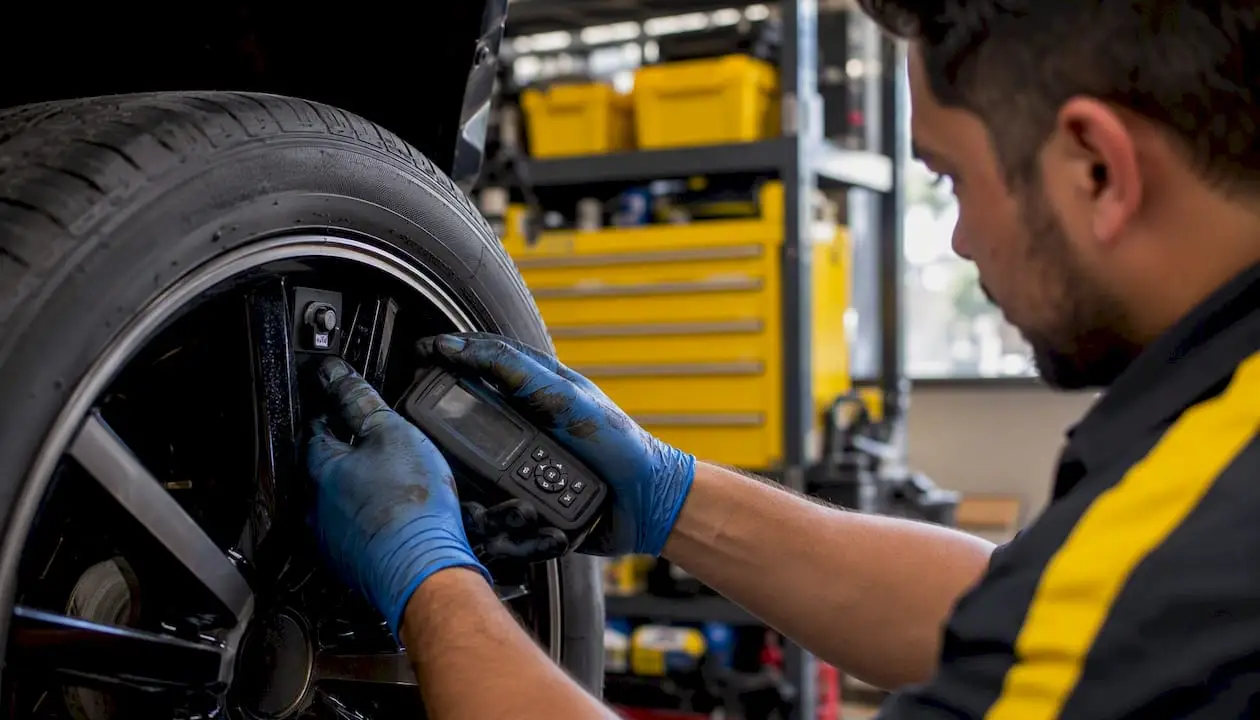
- TPMS code scan. Technicians use a dedicated TPMS scan tool to pull fault codes and identify which sensor or module is flagging.
- Sensor ID and battery health read. The tool checks each sensor’s signal strength and battery status. A sensor with a weak or absent signal gets flagged for replacement.
- Relearn or sensor replacement. If sensors are healthy and the fault was a missed relearn, the technician programs the correct sensor IDs to the vehicle’s computer. If a sensor has failed, it’s replaced with a quality part and reprogrammed.
- Test drive verification. After any repair or relearn, the vehicle goes on a short drive to confirm the system is communicating correctly and the message has cleared.
Kwik Kar Oil Change & Auto Care holds RepairPal certification, which means pricing is transparent and technicians meet verified competency standards. When you bring your vehicle in, let the team know when the message first appeared and whether any recent tire work preceded it. That detail alone can cut diagnostic time significantly.
Pro Tip: Pair your TPMS visit with an oil change and tire rotation — the technician can perform the relearn while the wheels are already off, saving you a separate trip and a separate labor charge.
Key Takeaways
A “Service Tire Monitor System” warning means the TPMS cannot be trusted to monitor your tires, so manually checking PSI and getting a professional diagnosis are the two steps that matter most.
| Point | Details |
|---|---|
| Check PSI manually first | Use a handheld gauge before assuming an electronic fault — inflate to door-jamb PSI if needed. |
| Sensor batteries last 5–7 years | When a sensor battery dies, the entire unit must be replaced; typical cost is $60–$150 per sensor. |
| Relearn is often the fix | Missed relearn after rotation is the top cause on Chevy/GMC and many other vehicles — not a bad sensor. |
| Short drives are okay, long trips are not | With the warning active, you lose all pressure alerts; avoid highway driving until the system is repaired. |
| Kwik Kar Oil Change & Auto Care | Certified technicians perform TPMS scans, relearns, and sensor replacement with RepairPal-verified pricing. |
The part most drivers get wrong
The most common mistake isn’t ignoring the warning — it’s misreading what it’s telling you. Drivers see “Service Tire Monitor System,” add air to their tires, and assume the job is done. When the message stays on, they assume the sensors are defective and authorize a full replacement. In many cases, neither step was necessary.
A proper scan takes minutes and tells you exactly which sensor is at fault, whether the battery is dead or the signal is just weak, and whether a relearn would have cleared it for free. Skipping that scan is what turns a $30 relearn into a $300 sensor replacement.
The other underestimated mistake is not tracking when the message appeared. “It came on this morning” is far less useful to a technician than “It came on the day after my tire rotation.” That one detail changes the entire diagnostic path. Keep notes on your phone. It costs nothing and can save you real money.
TPMS diagnostic and repair at Kwik Kar Oil Change & Auto Care
Spending an afternoon guessing at TPMS resets is frustrating, and replacing sensors you don’t need is expensive. Kwik Kar Oil Change & Auto Care offers a faster path: a thorough TPMS diagnostic using a dedicated scan tool, followed by a relearn or sensor replacement only if the diagnosis confirms it’s needed.

Most TPMS diagnostics and relearns wrap up in under an hour. Sensor replacements, when needed, are typically completed the same visit. The shop’s RepairPal certification means you’ll see itemized pricing before any work starts, with no surprises on the invoice. Certified technicians handle everything from the initial code scan to the post-repair test drive.
Walk in or schedule online at Kwik Kar’s White Settlement location — no appointment needed for most diagnostic visits. Bring your notes on when the message appeared and any recent tire service. For drivers who prefer to plan ahead, vehicle maintenance without an appointment is available for quick checks and relearns.
Useful sources and further reading
- Consumer Reports: Tire Pressure Warning Light — clear guidance on when a pressure warning is a system fault vs. an actual low-tire situation.
- OBD Advisor: How to Reset TPMS Light — covers the full range of reset methods by vehicle type, including scan-tool procedures.
- TireFixes: Service Tire Monitor System — detailed breakdown of causes, costs, and repair options.
- JD Power: How Do You Fix the Service Tire Monitor System? — consumer-friendly overview of diagnosis and repair steps.
- OBD System Readiness — technical background on how scan tools interface with vehicle modules, useful if you’re curious about what a TPMS tool actually reads.
- Kwik Kar: Tire tread depth safety guide — pairs well with TPMS checks; inspect tread while you’re checking pressure.
- Kwik Kar: Diagnose problems with your car — broader guide to reading dashboard warnings and deciding when to DIY vs. visit a shop.
FAQ
What does “Service Tire Monitor System” mean on your dashboard?
It means the TPMS has a fault and cannot reliably detect one or more sensors — this is a system problem, not necessarily a flat tire. Check PSI manually with a gauge before drawing any conclusions.
Can you still drive with a “Service Tire Monitor System” warning?
Short trips to a shop are generally acceptable if tires check at correct PSI and show no damage, but avoid long or high-speed drives. Without a working TPMS, you won’t receive alerts for slow leaks or sudden pressure loss.
How do you get the “Service Tire Monitor System” message to go away?
Inflate all tires to the door-jamb PSI and drive at 20+ mph for several miles — many systems auto-relearn. If the message persists, the vehicle may need a button/menu sequence or a professional scan tool to write sensor IDs to the computer.
How do you fix a “Service Tire Monitor System” warning for good?
A technician scans for TPMS fault codes, checks sensor battery health and signal, and either performs a relearn or replaces the failed sensor. Kwik Kar Oil Change & Auto Care handles this full diagnostic and repair process with RepairPal-certified technicians.
How long do TPMS sensors last before needing replacement?
TPMS sensor batteries typically last 5–7 years, after which the entire sensor unit must be replaced and reprogrammed — the battery is sealed and cannot be swapped separately.