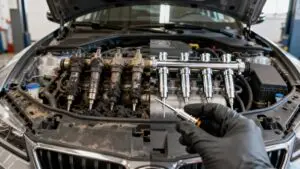





Why cars need regular tune-ups in the modern era
A car tune-up is a scheduled maintenance service that replaces worn components and checks key systems to keep your vehicle running safely and efficiently. For modern vehicles, that means something different than it did 30 years ago. Gone are the carburetors, distributor points, and mechanical timing adjustments your grandfather’s mechanic handled. Today’s modern tune-ups focus on replacing scheduled wear items and performing proactive system health checks, guided by your manufacturer’s maintenance schedule and onboard diagnostics.
The core reason why cars need regular tune-ups hasn’t changed, though. Wear happens. Filters clog, spark plugs degrade, fluids break down, and belts stretch. None of it announces itself loudly until the damage is already done. Staying ahead of that wear is what separates a vehicle that reaches 200,000 miles from one that strands you on the highway at 90,000.
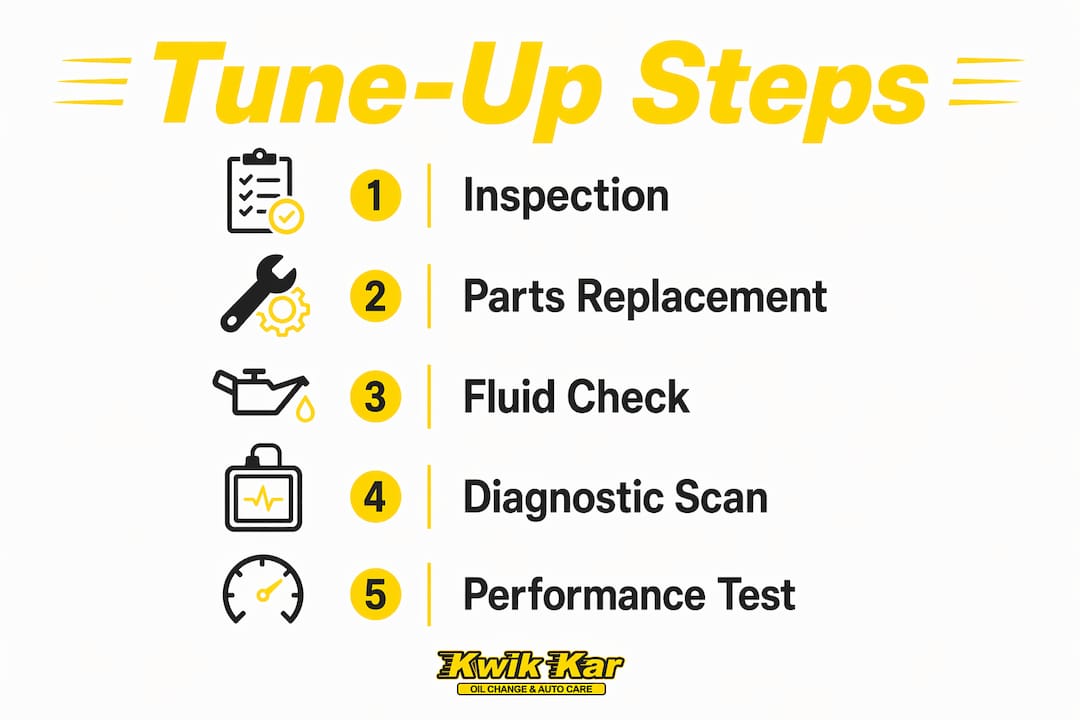
Here’s what a modern tune-up typically covers:
- Spark plug inspection or replacement (usually between 60,000–100,000 miles)
- Air and cabin filter replacement to protect airflow and engine health
- Fluid checks including oil, coolant, brake fluid, and transmission fluid
- Belt and hose inspection for cracks, wear, or tension issues
- Tire pressure check and rotation for even wear and fuel savings
- Battery and charging system test
- Onboard diagnostic scan to catch stored fault codes before symptoms worsen
What gets checked and serviced during a tune-up
The specific services in a tune-up vary by your vehicle’s age, mileage, and condition. A newer car at 30,000 miles needs a different checklist than one pushing 120,000. That’s why preventive vehicle maintenance is best approached through your owner’s manual, not a one-size-fits-all schedule.
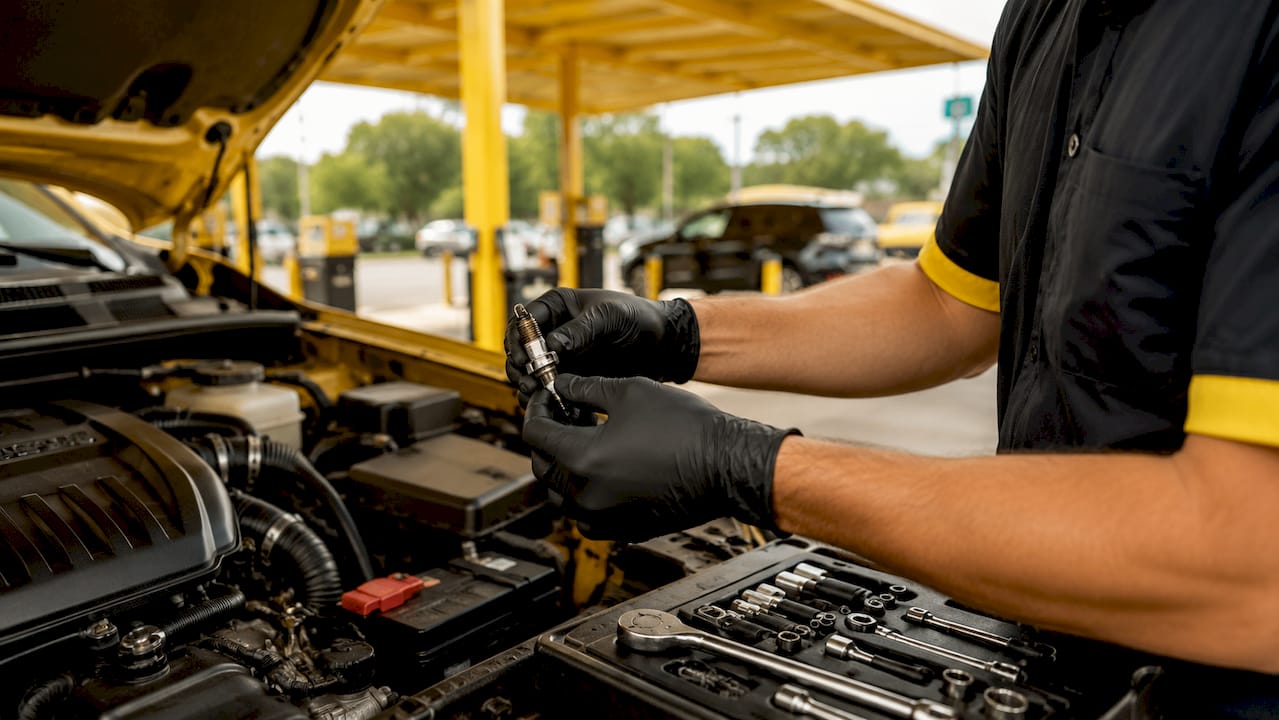
Modern vehicles use onboard diagnostic systems to flag issues before they become failures. A certified technician can pull live sensor data and fault codes to target service precisely, rather than replacing parts on a hunch. That precision matters because misdiagnosing a performance issue as a simple tune-up need often leads to unnecessary parts replacement and higher costs.
Common tune-up service items and their purpose:
- Spark plugs: Worn plugs cause misfires, hard starts, and poor fuel economy
- Air filter: A clogged filter restricts airflow and reduces engine efficiency
- Fuel filter: Keeps contaminants from reaching injectors and the fuel system
- Serpentine/accessory belt: Drives alternator, power steering, and AC; cracks lead to breakdowns
- Coolant flush: Prevents acidic coolant from corroding the radiator and water pump
- Brake fluid check: Moisture-contaminated fluid reduces stopping power under hard braking
- Tire rotation and pressure: Promotes even tread wear and protects fuel economy
A basic tune-up might cover only a visual inspection and fluid top-off. A comprehensive service adds diagnostic scanning, filter replacements, and component testing. The difference in labor and parts cost can be significant, so knowing what your vehicle actually needs at each mileage milestone keeps you from overpaying or underservicing.
What are the real benefits of getting regular tune-ups?
The benefits of tune-ups go well beyond a smoother idle. Regular maintenance directly affects your safety, your wallet, and how long your vehicle lasts.

Engine performance and fuel efficiency improve when worn spark plugs, dirty filters, and degraded fluids are replaced on schedule. Proper tire inflation alone has a measurable impact: tire pressure monitoring systems reduce the likelihood of severe underinflation by 55.6%, saving nearly 9.32 gallons of fuel per vehicle over eight years. That’s a real, documented return from one maintenance habit.
Extended component life is the other major payoff. Internal engine damage develops quietly over time, often unnoticed until a repair bill arrives. Routine tune-ups catch degraded oil, worn belts, and failing sensors before they stress other systems. Following your manufacturer’s maintenance schedule also preserves resale value by preventing premature failure of costly components.
Additional benefits at a glance:
- Lower emissions: Clean filters and properly functioning sensors reduce exhaust pollutants
- Improved safety: Maintained brakes, tires, and steering systems respond predictably
- Avoided repair costs: A $60–$100 oil change prevents $5,000–$10,000 in engine repair from oil sludge damage
- Warranty protection: Documented maintenance records support warranty claims if a component fails
Pro Tip: Keep every service receipt in a folder or digital file. If a warranty dispute arises, documented maintenance history is your strongest defense.
How often should you get a tune-up?
For most modern vehicles, tune-up frequency is tied to mileage and time intervals set by the manufacturer, not a calendar year. Many synthetic oils support 7,500–15,000-mile oil change intervals, well beyond the old 3,000-mile rule. Spark plugs typically run 60,000–100,000 miles before replacement. Other components follow their own schedules.
Your owner’s manual is the most reliable guide. Many newer vehicles also display a maintenance minder in the instrument cluster that tracks actual driving conditions, not just mileage. That system accounts for short trips, towing, and stop-and-go traffic, all of which accelerate wear.
Factors that may shorten your service intervals:
- Severe driving conditions: Frequent short trips under five miles, towing, or extreme temperatures
- High-mileage vehicles: Older cars benefit from more frequent checks as components age
- Dusty or rural environments: Air and cabin filters clog faster
- Extended highway driving: Easier on oil but harder on tires and brakes over distance
General interval guidelines:
- Oil and filter: Follow the oil life monitor or owner’s manual (often 5,000–10,000 miles with synthetic)
- Tire rotation: Every 5,000–7,500 miles
- Air filter: Every 15,000–30,000 miles depending on environment
- Spark plugs: Every 60,000–100,000 miles
- Brake fluid: Every 2–3 years or per manufacturer recommendation
For a detailed breakdown by mileage milestone, the car maintenance by mileage guide covers what to prioritize at each stage.
What happens if you skip tune-ups?
Skipping a single service rarely causes immediate damage. Skipping repeatedly is where the real risk builds. Oil degrades into sludge, losing its ability to lubricate metal surfaces. That leads to overheating, accelerated wear, and eventually engine failure. The cost difference is stark: a $60–$100 oil change versus $5,000–$10,000 for engine repair.
Transmission fluid neglect is another common and expensive mistake. Unlike an engine, which often gives early warning signs, a neglected transmission tends to fail without much notice, and replacement runs $3,000–$6,000. Brake fluid absorbs moisture over time, which lowers its boiling point and reduces stopping power under hard use.
Risks of skipping scheduled maintenance:
- Engine failure from oil sludge and metal-on-metal wear
- Transmission breakdown from degraded fluid causing slipping and hard shifts
- Brake system damage as worn pads destroy rotors and contaminated fluid corrodes lines
- Tire blowouts from undetected underinflation or uneven wear
- Warranty denial: Missed maintenance gives manufacturers grounds to reject powertrain claims, even without direct proof of cause and effect
- Lower resale value: Poor maintenance records cost you money at trade-in
A brake replacement safety checklist can help you understand what gets compromised when brake maintenance is delayed too long.
What does research say about maintenance and vehicle safety?
The evidence for regular vehicle maintenance is well-documented. Jurisdictions with vehicle inspection and maintenance programs experience 2.8%–5.5% lower roadway fatality rates compared to those without such programs. That finding comes from a panel study covering all 50 states over a 44-year period, making it one of the most comprehensive analyses of its kind.
Tire maintenance alone carries measurable safety and fuel economy returns, as noted earlier with the TPMS data. Advanced driver assistance systems, including automated emergency braking and blind spot monitoring, also require professional calibration to function correctly. Even minor sensor misalignments can cause critical malfunctions in these systems, which means scheduled maintenance is increasingly tied to the safety technology your vehicle depends on.
Pro Tip: If your vehicle is misfiring, hesitating, or running rough, that’s a diagnostic situation, not a tune-up situation. Replacing spark plugs without a proper diagnosis often leaves the real cause untouched and makes eventual diagnosis harder.
Kwik Kar Oil Change & Auto Care employs RepairPal-certified technicians who use diagnostic scanning alongside physical inspections. That combination catches what a visual check alone misses, and transparent pricing means you know exactly what you’re paying for before any work begins.
Ready to stay ahead of wear and avoid costly surprises? Kwik Kar Oil Change & Auto Care offers thorough inspections and vehicle maintenance without an appointment so you can fit service into your schedule, not the other way around.
Key Takeaways
Regular tune-ups prevent costly repairs, protect safety, and extend vehicle life by replacing wear items before they fail.
| Point | Details |
|---|---|
| Modern tune-ups are preventive | They replace scheduled wear items and run diagnostics, not manual mechanical adjustments. |
| Spark plug interval | Most manufacturers recommend replacement between 60,000 and 100,000 miles. |
| Fuel savings from tire care | Proper tire inflation, supported by TPMS, saves almost 9.32 gallons per vehicle over eight years. |
| Skipping oil changes is costly | A $60–$100 oil change prevents $5,000–$10,000 in engine repair from sludge damage. |
| Safety programs work | States with vehicle inspection programs see lower roadway fatality rates compared to those without such programs. |
FAQ
Do cars actually need tune-ups anymore?
Yes, though the service looks different today. Modern tune-ups focus on replacing scheduled wear items like spark plugs, filters, and fluids, guided by manufacturer intervals and onboard diagnostics rather than manual mechanical adjustments.
What happens if I skip tune-ups?
Neglected maintenance causes oil to degrade into sludge, filters to clog, and components to wear prematurely. Over time, this leads to engine damage, transmission failure, and brake system deterioration, with repair costs that far exceed what routine service would have cost.
How often should I get a tune-up on a modern vehicle?
Follow your owner’s manual or the maintenance minder in your instrument cluster. Key intervals include oil changes every 5,000–10,000 miles with synthetic oil, tire rotation every 5,000–7,500 miles, and spark plug replacement between 60,000 and 100,000 miles.
What are the signs your car needs a tune-up?
Watch for a check engine light, reduced fuel economy, rough idling, hard starts, misfires, vibrations while driving, or sluggish acceleration. Any of these symptoms warrants a diagnostic scan, not just a parts swap.
Does skipping maintenance affect my car’s warranty?
Yes. Manufacturers can deny warranty claims on related failures if you have no record of scheduled maintenance, even without proving direct cause and effect. Keeping documented service records protects your coverage.