




Comparing auto repair prices means analyzing itemized estimates line by line, not just scanning the total at the bottom. Most car owners look at the final number and pick the lowest one. That approach costs money. The real skill in auto repair cost comparison is reading what each estimate actually includes: labor hours, labor rates, parts type, warranty coverage, and diagnostic fees. Labor rates alone range from $95 to $220 per hour depending on shop type and location. That spread means two quotes for the same repair can look wildly different before a single part is even considered. Kwik Kar Oil Change & Auto Care builds every estimate around full transparency so you can see exactly what you are paying for.
How to compare auto repair prices using labor rates and hours
Labor cost is the single biggest variable between repair quotes. Understanding how it is calculated gives you real leverage when evaluating estimates.
Labor rates typically run $95–$220 per hour, with dealerships and specialty shops sitting at the higher end and independent shops often landing in the middle. The rate itself is only half the picture. The other half is the number of hours billed for the job.
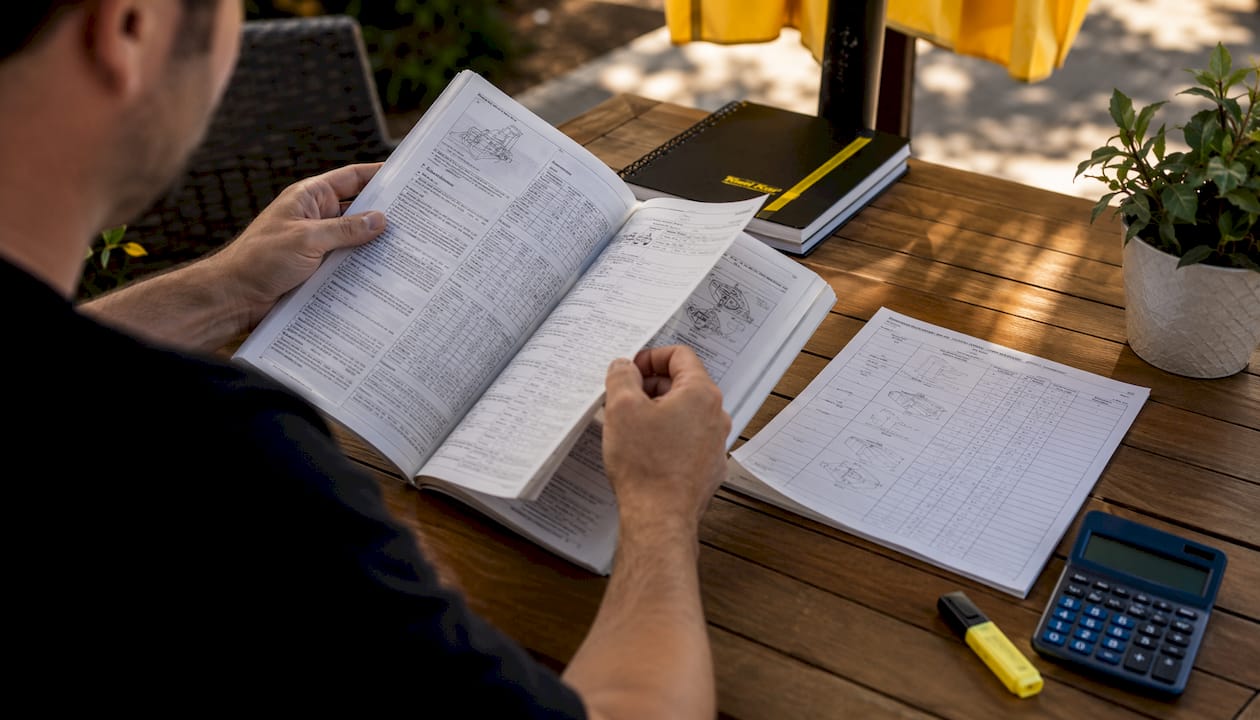
Shops use flat-rate manuals to set labor hours. Industry guides like ALLDATA and Mitchell publish standard labor times for nearly every repair on every vehicle. These are the benchmarks the industry uses. A shop billing 4.0 hours for a job that ALLDATA lists at 2.5 hours deserves a direct question.
One cost driver that most car owners miss is labor overlap. Labor overlap occurs when multiple repairs share the same disassembly steps but each repair is billed for its full individual labor time. For example, if a shop replaces both a water pump and a timing belt, the disassembly work is shared. Billing full hours for each repair separately inflates the total. Ask the shop directly whether they account for overlapping labor when multiple repairs are done together.
- Check the labor hours on each estimate against ALLDATA or Mitchell benchmarks
- Ask which flat-rate guide the shop uses for their estimates
- Flag any job where billed hours exceed the published standard by more than 20%
- Request a line-item breakdown showing hours per repair, not a single combined labor charge
- Ask whether labor overlap is discounted when multiple related repairs are done at once
Pro Tip: Ask every shop to name the flat-rate manual they reference. A shop that cannot answer that question is not calculating labor hours from a verified standard.
How parts choice and warranty affect your repair price comparison
Parts type changes the price and the value of a repair at the same time. Knowing the difference between part categories is one of the most practical skills in any auto service pricing guide.
The four main categories are OEM (original equipment manufacturer), aftermarket, remanufactured, and used parts. OEM parts come directly from the vehicle manufacturer and carry the highest price. Aftermarket parts are made by third-party suppliers and vary widely in quality. Remanufactured parts are rebuilt to factory specifications and often carry solid warranties. Used parts carry the lowest price but also the least predictability.
Markup on parts adds another layer. OEM parts carry a 40–80% markup at dealerships, while independent shops typically mark up parts by 25–60%. That markup covers inventory, warranty backing, and shop operations. It is not automatically unreasonable, but it is worth knowing when you compare car repair costs across multiple estimates.
The quality of auto parts directly affects how long a repair lasts. A cheap aftermarket part with a 90-day warranty on a brake caliper is not the same value as an OEM part with a 12-month warranty, even if the upfront price is lower. The cheapest repair quote rarely delivers the best value when it relies on low-quality parts or short warranty periods.
- Ask for the brand name and part number of every major component on the estimate
- Confirm whether the warranty covers both parts and labor, not just the part itself
- Compare warranty length across quotes, not just part type
- Ask whether aftermarket parts meet or exceed OEM specifications
- Verify that remanufactured parts come with a written warranty from the supplier
Pro Tip: A 12-month, 12,000-mile warranty on parts and labor is a reasonable baseline. Anything shorter on a major repair warrants a direct question about part quality.
Why does itemization matter when reading repair quotes?
A vague estimate is a risk, not a deal. Shops should clearly list parts, labor hours, labor rates, diagnostic fees, taxes, and any shop supply fees on every written estimate. When those details are missing, you cannot accurately compare quotes or catch errors.
Vague terms like “miscellaneous labor” or “engine repair” without a breakdown prevent any fair comparison. They also make it impossible to verify whether the billed work was actually performed. Approving a lump-sum estimate is like signing a blank check.
Common red flags on repair estimates include:
- “Miscellaneous labor” with no description of the actual task
- “Shop supplies” charged as a flat percentage with no itemized list
- Diagnostic fees not credited toward the repair if you proceed
- Unauthorized add-ons appearing on the final bill that were not on the original estimate
- Labor listed as a single total with no hours or rate breakdown
Diagnostic fees typically run $80–$180, and many shops apply that fee toward the repair bill if you approve the work. That credit can meaningfully affect your total. Always confirm upfront whether the diagnostic fee is credited or charged separately.
“A clear, itemized estimate is the only document that lets you compare two quotes on equal terms. Without it, you are comparing totals that may include completely different scopes of work, parts quality levels, and warranty coverage. Insist on the breakdown before you approve anything.”
Understanding what a complete repair estimate should include helps you spot gaps before you sign. If a shop resists providing a full itemized breakdown, that resistance is itself a red flag worth taking seriously.
Steps to compare multiple auto repair quotes effectively
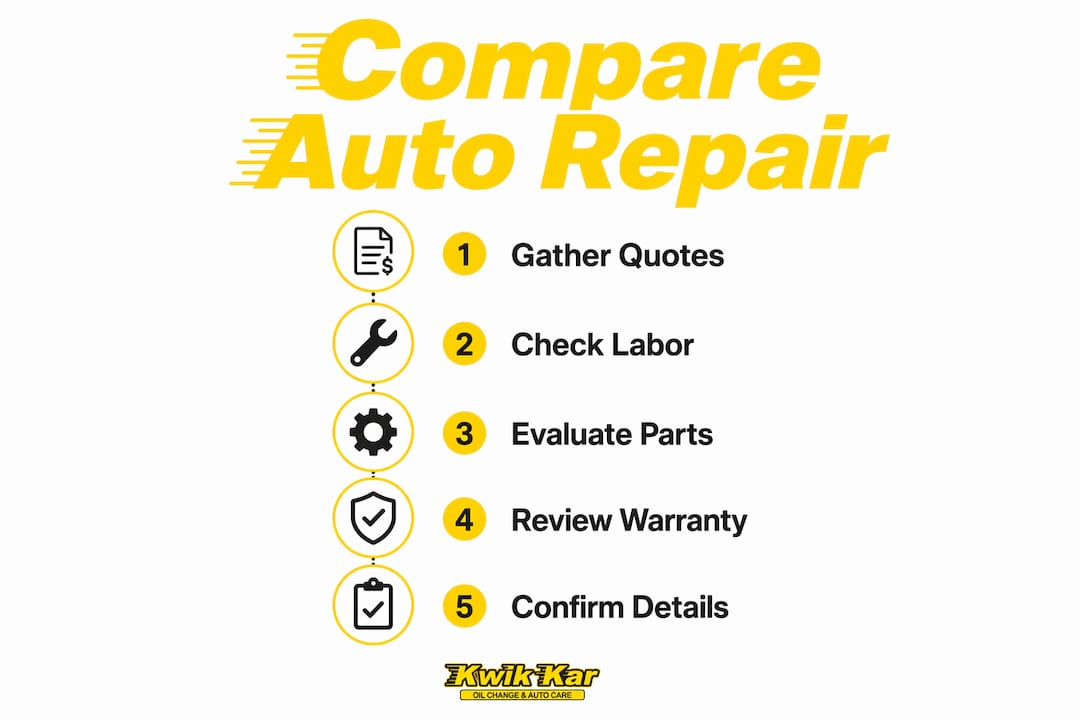
Gathering quotes without a system produces confusion, not clarity. A structured approach turns raw numbers into a real decision.
- Collect at least two or three itemized quotes for the same repair scope. Make sure each shop is quoting the same job. A quote for a brake job that includes rotors is not comparable to one that only covers pads.
- Verify parts quality and warranty for each quote. Ask for brand names, part numbers, and written warranty terms. A quote using OEM parts with a 12-month warranty is a different product than one using unbranded aftermarket parts with a 90-day warranty.
- Compare labor hours and rates line by line. Use ALLDATA or Mitchell benchmarks as your reference point. Flag any estimate where labor hours deviate significantly from the published standard without a clear explanation.
- Check for included fees, taxes, and timeline estimates. Diagnostic fees, shop supply charges, and taxes can add $50–$200 to a final bill. Confirm whether those are included in the quoted total or added at checkout.
- Ask which repairs are safety-critical versus deferrable. Safety-critical repairs should be prioritized and separated from optional maintenance. Asking “what happens if I wait on this?” helps you manage your budget without compromising safety.
- Evaluate total price in context of scope, warranty, and completeness. The lowest number is not always the best deal. A quote that omits a necessary step or uses inferior parts will cost more in the long run.
Pro Tip: Build a simple comparison table with columns for each shop and rows for labor hours, labor rate, parts type, warranty, diagnostic fee, and total. Differences that are invisible in a side-by-side total become obvious in a row-by-row breakdown.
| Comparison factor | What to look for |
|---|---|
| Labor hours | Match to ALLDATA or Mitchell benchmark |
| Labor rate | $95–$220/hr range; ask for rate per hour |
| Parts type | OEM, aftermarket, remanufactured, or used |
| Warranty | Parts and labor; minimum 12 months on major repairs |
| Diagnostic fee | Confirm if credited toward repair total |
| Scope completeness | All necessary steps included, nothing omitted |
For a broader look at where repair costs go wrong, the guide on overpriced auto repairs covers the most common pitfalls car owners face when comparing estimates.
Auto glass pricing follows the same logic. Understanding how glass repair costs are structured is a useful reference for any specialty repair where parts and labor vary widely by shop.
Key Takeaways
The most effective way to compare auto repair prices is to evaluate labor hours, parts type, warranty coverage, and diagnostic fees on itemized estimates, not just the final total.
| Point | Details |
|---|---|
| Labor hours matter as much as rates | Compare billed hours against ALLDATA or Mitchell benchmarks to catch overbilling. |
| Parts type changes the value equation | OEM and remanufactured parts with strong warranties often cost less over time than cheap aftermarket alternatives. |
| Itemized estimates are non-negotiable | Vague terms like “miscellaneous labor” prevent fair comparison and signal potential risk. |
| Diagnostic fees affect your total | Confirm whether the $80–$180 diagnostic fee is credited toward the repair if you proceed. |
| Safety-critical repairs come first | Separate urgent repairs from deferrable maintenance to manage your budget without compromising safety. |
What I have learned from years of watching car owners overpay
Most car owners walk into a price comparison focused on the wrong number. They fixate on the total and ignore the structure underneath it. That is where the real differences live.
The anxiety I see most often comes from not knowing what a fair price looks like in the first place. Car owners feel pressure to decide quickly, and shops know it. The best defense is a simple one: slow down and read the estimate line by line. A shop that charges $160 per hour but bills the correct number of hours for a job can be a better deal than one charging $110 per hour and billing double the time.
Parts quality is the other area where I see consistent misunderstanding. Customers see a lower total and assume they got a better deal. Then the same part fails eight months later and they pay again. Warranty length is not a minor detail. It is the shop’s statement of confidence in the work they just did.
The relationship piece matters too. A shop that explains its estimate clearly, answers your questions without frustration, and puts everything in writing is telling you something important about how it operates. Transparency at the estimate stage predicts transparency at every other stage. That is not a soft consideration. It is a reliable signal.
— Kwik Kar
Kwik Kar Oil Change & Auto Care: transparent pricing you can verify
Kwik Kar Oil Change & Auto Care provides fully itemized estimates on every repair, so you can compare costs with confidence. Certified technicians explain labor hours, parts choices, and warranty coverage before any work begins.
Whether you need a routine oil change or a more involved repair, Kwik Kar offers both OEM and quality aftermarket parts with clear warranty terms. RepairPal certification backs the shop’s commitment to fair auto repair pricing and honest service. Car owners who want to understand their repair options without pressure can also review auto repair financing options to manage costs on their terms. Visit Kwik Kar Oil Change & Auto Care to schedule service or request an estimate.
FAQ
What is a fair labor rate for auto repair?
Labor rates typically range from $95 to $220 per hour, with dealerships at the high end and independent shops in the middle. The rate is fair when it aligns with the shop’s certifications, location, and the complexity of the repair.
How do I know if a repair estimate includes too many labor hours?
Compare the billed hours against published flat-rate guides like ALLDATA or Mitchell, which list standard labor times for every repair. Any estimate that significantly exceeds those benchmarks without explanation warrants a direct question to the shop.
Should I always choose the cheapest auto repair quote?
The cheapest quote is not always the best value if it uses low-quality parts, carries a short warranty, or omits necessary steps. Evaluate total value by comparing parts type, warranty length, and scope completeness across all quotes.
What should a written repair estimate always include?
A complete estimate lists parts cost, labor hours, labor rate, diagnostic fees, shop supply charges, taxes, and warranty terms. Written itemized quotes are the only reliable basis for comparing two shops on equal terms.
How do I tell which repairs are urgent and which can wait?
Ask the shop directly what happens if you delay each repair. Safety-critical repairs should be clearly separated from optional maintenance so you can prioritize spending without putting your vehicle or safety at risk.