



Preventive car maintenance is defined as a scheduled program of inspections, fluid changes, and part replacements designed to stop problems before they cause damage. The industry term for this practice is “scheduled vehicle maintenance,” and it covers everything from oil changes to brake inspections. Car repair and maintenance costs rose 44% between 2019 and 2025, which means skipping routine service today costs far more tomorrow. The examples of preventive car maintenance covered here give you a clear, practical roadmap to protect your vehicle, your safety, and your wallet. Kwik Kar Oil Change & Auto Care sees the consequences of neglected maintenance every week, and the pattern is always the same: small skipped tasks become large, expensive repairs.
1. What are the most critical examples of preventive car maintenance?
Scheduled vehicle maintenance covers seven core tasks that every car owner should perform on a regular cycle. Each one addresses a specific failure point, and together they form a complete car maintenance checklist that keeps your vehicle running reliably.
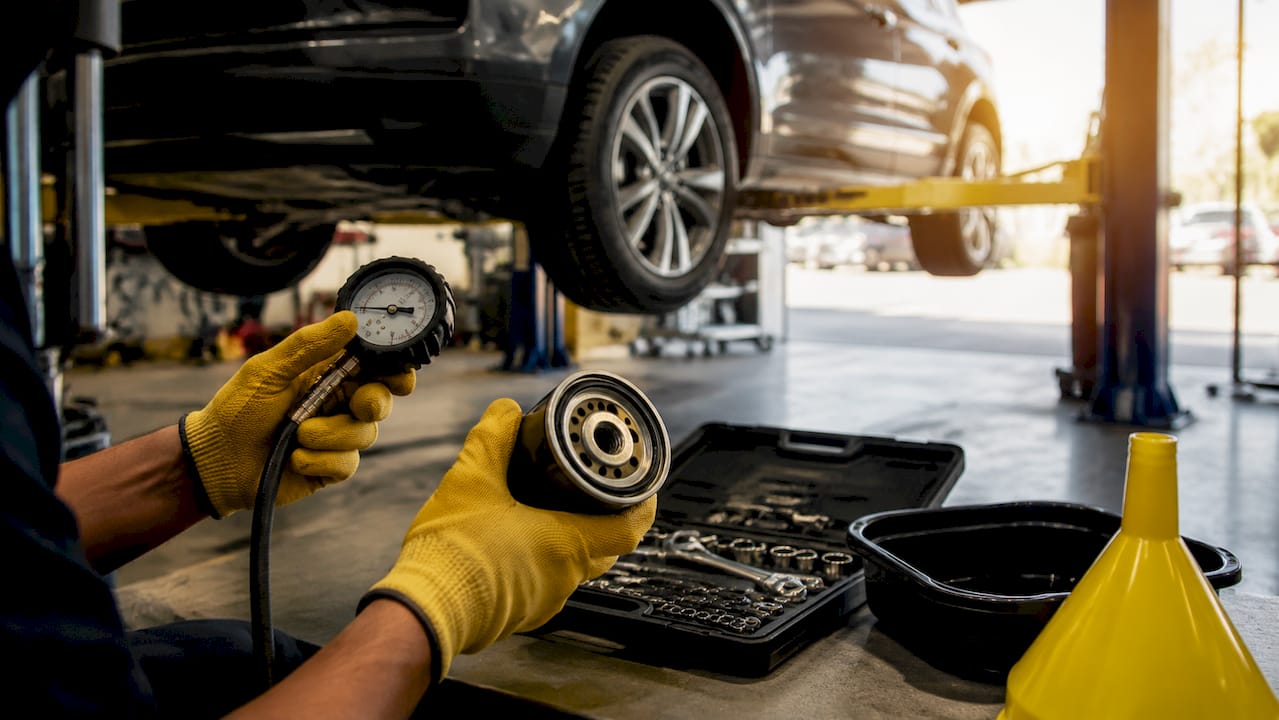
- Oil and filter changes. Engine oil lubricates hundreds of moving metal parts. Dirty or low oil causes friction, heat, and eventually catastrophic engine failure. One in three vehicles checked has dangerously low engine oil. That statistic means the odds are not in your favor if you skip this check.
- Tire inflation and rotation. Properly inflated tires save up to 11 cents per gallon in fuel and extend tire life by 4,700 miles. Rotation every 5,000–7,500 miles evens out tread wear so all four tires last equally long.
- Brake system inspection. Brake pads wear down gradually and silently. A technician can measure pad thickness and rotor condition before the grinding starts, which is far cheaper than replacing rotors.
- Fluid level monitoring. Coolant, brake fluid, power steering fluid, and transmission fluid all degrade over time. Low or contaminated fluid in any of these systems leads to overheating, brake fade, or transmission slipping.
- Battery testing. Most car batteries last 3–5 years. A load test at a shop reveals whether the battery can still hold a charge before it leaves you stranded.
- Air filter replacement. A clogged engine air filter restricts airflow and forces the engine to work harder. Replacing it every 15,000–30,000 miles keeps combustion efficient and protects the mass airflow sensor.
- Wiper blade inspection. Worn blades streak and skip, reducing visibility in rain. Replacing them every 6–12 months is one of the lowest-cost safety upgrades available.
Pro Tip: Set a phone reminder for every 5,000 miles to check all seven items above. Catching one issue early typically prevents two or three related failures down the road.
2. How preventive tasks save money and prevent major repairs
The financial case for routine vehicle maintenance is straightforward. Neglecting oil changes can lead to engine replacement costs of $4,000 to $10,000. A timing belt that snaps because it was never replaced can cost $5,000 to $10,000 or more to repair. Compare that to an oil change at roughly $50–$100 and a timing belt replacement at $300–$600, and the math is not close.
“Dashboard warning lights indicate problems after damage has already occurred. Preventive inspections catch brake pad wear and fluid issues early, before they become system failures.” — 2026 spring car maintenance checklist
Waiting for a warning light is a reactive strategy, not a preventive one. By the time the check engine light appears, the underlying problem has already started degrading a component. A scheduled inspection catches the same issue weeks or months earlier, at a fraction of the repair cost.
Resale value is another financial factor most car owners overlook. Untreated exterior grime can lower resale value by up to 30% due to rust and paint damage. A documented maintenance history also signals to buyers that the vehicle was cared for, which supports a higher asking price.
| Neglected task | Likely failure | Estimated repair cost |
|---|---|---|
| Oil change skipped | Engine seizure | $4,000–$10,000 |
| Timing belt ignored | Belt snap, engine damage | $5,000–$10,000+ |
| Brake pads worn out | Rotor replacement needed | $400–$800 per axle |
| Coolant not flushed | Overheating, head gasket failure | $1,500–$3,000 |
| Battery never tested | Roadside breakdown | $200–$400 plus tow |
The pattern across every row is the same. A small, scheduled task prevents a large, unplanned expense. Understanding preventive vs. reactive maintenance makes the cost difference impossible to ignore.
3. Routine checks car owners can do at home
Home checks are not a replacement for professional service, but they close the gap between shop visits and catch problems early. Most take less than ten minutes and require no special tools.
- Tire pressure. Tire pressure monitoring systems (TPMS) only alert you after pressure drops 25% below the recommended level. That is already too low for safe driving and good fuel economy. Check pressure manually with a gauge every month, before the TPMS ever triggers.
- Fluid top-offs. Open the hood and check engine oil, coolant, brake fluid, and windshield washer fluid. Each reservoir has a min/max marker. Topping off takes two minutes and prevents the kind of low-fluid damage that costs thousands.
- Belt and hose visual inspection. Look for cracks, fraying, or soft spots on belts and hoses. A serpentine belt that snaps leaves you without power steering, the alternator, and sometimes the water pump all at once.
- Exterior lights. Walk around the car and confirm all headlights, taillights, and turn signals work. A burned-out brake light is a traffic ticket waiting to happen and a safety risk for the driver behind you.
- Battery terminals. White or blue corrosion on battery terminals increases electrical resistance and can prevent the car from starting. A wire brush and a little baking soda solution cleans terminals in minutes.
- Wiper blade condition. Run the wipers on a dry windshield and watch for streaking or skipping. If the blade leaves a film, replace it before the next rainstorm.
Pro Tip: Keep a small notebook in your glove box or use a free notes app to log every check with the date and mileage. Maintenance reminders and logs are the single most effective habit for avoiding expensive reactive repairs.
4. How to tailor preventive maintenance to your driving habits and vehicle age
Not every car owner drives the same way, and maintenance intervals reflect that reality. The industry term “severe duty” describes driving conditions that accelerate wear on fluids and components. Understanding which category fits your lifestyle determines how often you actually need service, not just what the standard schedule says.
What counts as severe duty driving?
Severe duty conditions include frequent short trips under five miles, stop-and-go city traffic, towing or hauling heavy loads, driving on dusty or unpaved roads, and extreme temperatures. Severe duty driving requires more frequent oil changes, fluid flushes, and inspections than normal highway driving. If your daily commute fits any of those descriptions, follow the severe duty schedule in your owner’s manual, not the standard one.
Adjusting intervals for older and high-mileage vehicles
- Shorten oil change intervals. Older engines often have more internal wear, which contaminates oil faster. Switching to a high-mileage oil formula and changing it more frequently reduces sludge buildup.
- Test the battery annually. Battery capacity degrades with age. Vehicles over five years old benefit from a load test every year, especially before winter.
- Inspect belts and hoses more often. Rubber components harden and crack with age. A vehicle with 100,000 miles needs belt and hose checks every 15,000 miles rather than every 30,000.
- Flush fluids on schedule. Transmission fluid, coolant, and brake fluid absorb moisture and contaminants over time. High-mileage vehicles need these flushed on the manufacturer’s severe duty timeline.
- Check suspension components. Shocks and struts wear gradually. At high mileage, worn suspension affects braking distance and tire wear, both of which are safety issues.
Reaching 200,000 miles is achievable. Following the manufacturer’s maintenance schedule and budgeting $50–$100 per month for upkeep are the two factors that separate high-mileage survivors from early trade-ins. For a mileage-based breakdown of what to do when, the car maintenance by mileage guide from Kwik Kar Oil Change & Auto Care lays it out clearly.
For fleet operators managing multiple vehicles, the same principles apply at scale. A fleet maintenance management approach that tracks each vehicle’s severe duty status and individual service history prevents the kind of compounding failures that ground entire fleets.
Key takeaways
Preventive car maintenance is the single most cost-effective strategy for extending vehicle life, protecting resale value, and avoiding roadside breakdowns.
| Point | Details |
|---|---|
| Oil changes are non-negotiable | Skipping them risks engine replacement costs of $4,000–$10,000. |
| Tire pressure needs manual checks | TPMS alerts too late; check manually every month to save fuel and extend tire life. |
| Severe duty driving changes everything | Short trips and heavy traffic require more frequent service than standard schedules suggest. |
| Home checks close the gap | Monthly fluid, belt, and light checks catch problems between professional service visits. |
| Logs and reminders prevent skipped service | Tracking maintenance history is the most reliable way to stay on schedule and protect resale value. |
What I’ve learned after years of seeing preventive maintenance done right and wrong
The car owners who come to Kwik Kar Oil Change & Auto Care with the lowest repair bills share one habit: they treat maintenance as a fixed monthly expense, not an optional errand. They budget for it, schedule it, and log it. The ones with the highest bills almost always say the same thing: “I kept meaning to bring it in.”
The most common mistake I see is treating dashboard warning lights as the starting point for maintenance. They are not a preventive tool. They are a damage report. By the time that light appears, the repair bill is already growing. Preventive inspections catch brake wear, fluid degradation, and belt cracking weeks before any warning light ever illuminates.
The second mistake is applying standard maintenance intervals to severe duty driving. A car used for short daily commutes in stop-and-go traffic ages faster than one driven on open highways. The owner’s manual has a severe duty schedule for exactly this reason, and most car owners never read it.
My honest recommendation: pick one day per month, spend ten minutes on the home checks listed above, and schedule a professional inspection every six months regardless of mileage. That combination catches nearly every problem before it becomes expensive. Pair it with a written log or a phone reminder, and you will spend far less on your car over its lifetime than the average owner does.
— Kwik Kar
Kwik Kar Oil Change & Auto Care is ready to help you stay on schedule
Staying current with routine vehicle maintenance is easier when you have a trusted shop handling the tasks that go beyond a home check. Kwik Kar Oil Change & Auto Care in Fort Worth offers oil changes, tire rotations, fluid checks, battery testing, and brake inspections performed by RepairPal-certified technicians using quality parts.
If you are not sure where your vehicle stands, start with the signs your car needs an oil change guide to identify the most immediate need. For a full picture of what your car requires right now, the 2026 car care guide walks through every major service category with updated intervals and cost context. No appointment is necessary at Kwik Kar Oil Change & Auto Care. Pull in, and the team will take it from there.
FAQ
What are the most common examples of preventive car maintenance?
The most common examples include oil and filter changes, tire rotation and inflation checks, brake inspections, fluid top-offs, battery testing, air filter replacement, and wiper blade replacement. These tasks address the highest-frequency failure points on any vehicle.
How often should I change my oil as part of routine maintenance?
Most modern vehicles require an oil change every 5,000–7,500 miles, though severe duty driving conditions may shorten that interval. Always follow the severe duty schedule in your owner’s manual if you drive in stop-and-go traffic or make frequent short trips.
Can I do preventive maintenance checks at home?
Yes. Monthly tire pressure checks, fluid top-offs, belt and hose visual inspections, and light tests are all practical home tasks. TPMS systems only alert after a 25% pressure drop, so manual monthly checks are the only reliable way to catch low pressure early.
How does preventive maintenance affect resale value?
A documented maintenance history signals to buyers that the vehicle was cared for, supporting a higher asking price. Neglected exterior care alone can reduce resale value by up to 30% due to rust and paint damage.
What is severe duty driving and why does it matter for maintenance?
Severe duty driving includes frequent short trips, heavy traffic, towing, dusty roads, and extreme temperatures. These conditions degrade fluids and components faster than normal highway use, requiring more frequent service intervals to prevent premature wear and breakdowns.