

A lot of Fort Worth drivers start the same way. The car feels normal on the way to work, then a light flips on, the engine idles rough at a stoplight, or the brakes start making a noise you know wasn’t there last week. The next search is usually some version of affordable car repair near me, and what you’re really looking for isn’t just a low price. You’re looking for a shop that won’t waste your money.
That’s the hard part. In a big market like Fort Worth, you can find cheap quotes, fast quotes, vague quotes, and shops that sound confident until you ask one simple question: “What exactly are you fixing, and why?” A fair repair experience starts there.
Drivers who do well with car repair usually do three things differently. They understand what they’re paying for, they know how to spot a competent shop, and they don’t confuse the lowest estimate with the lowest final cost. That’s where most overcharging happens. Not always through inflated rates, but through wrong parts, repeat visits, and labor spent chasing the wrong problem.
That Sinking Feeling When Your Check Engine Light Comes On
The check engine light has a way of changing your whole day.
Maybe the car still runs, but now every sound feels suspicious. Maybe it starts shaking at idle. Maybe you’re trying to decide whether to drive it another day or pull over now. That light often creates two worries at once: what’s wrong and how much is this going to cost me.
Fort Worth drivers deal with this all the time, especially on older vehicles and high-mileage daily drivers. The mistake I see most often is panic spending. A driver gets the light, stops at the nearest place, hears a parts list, and approves work before anyone has explained the failure clearly.
A warning light is not a repair plan. It’s a signal that the car needs proper diagnosis.
That’s why a focused inspection matters more than a fast guess. A trouble code points you in a direction, but it doesn’t automatically tell you which part to replace. Misfires, charging issues, sensor faults, emissions problems, and transmission behavior can overlap in ways that fool anyone who’s rushing.
If your light is on and you want a starting point, this guide to check engine light repair helps you understand what the warning can mean before you commit to repairs.
The good news is that affordable repair is possible in Fort Worth. The shops worth using are the ones that explain the problem in plain language, separate diagnosis from guessing, and give you enough detail to decide whether the repair makes sense for your budget and your vehicle’s condition.
Decoding Car Repair Costs in Fort Worth
A repair bill usually comes down to three things: labor, parts, and diagnostic time. If you don’t separate those, every estimate feels random.
Labor is what you pay for the technician’s time and skill. Parts are the physical components being installed. Diagnostic charges cover the process of finding the actual cause, which is different from swapping a common failure item and hoping it works.
What fair labor looks like in Texas
Texas isn’t a one-price market. According to AAA’s 2026 mechanic labor rate overview, nearly half of all auto repair shops in Texas charge between $120 and $159 per hour, while more complex jobs in Texas typically hover around $240 to $260. That matters because “affordable” doesn’t mean “suspiciously low.” It means the quote matches the type of work, the tools required, and the level of technician handling it.
A basic maintenance job and a complex electrical diagnosis should not be priced the same way. If a shop gives you one vague number with no breakdown, you can’t tell whether you’re paying for real expertise or just absorbing a padded estimate.
What you’re actually paying for
Here’s the practical version of how to read a repair quote:
- Labor time: Ask how much time the shop expects the job to take and whether that includes testing after the repair.
- Parts grade: OEM and premium aftermarket parts aren’t the same as bargain-bin components. The cheaper part upfront can cost more if it fails early.
- Diagnostic charge: This should buy a verified answer, not just a code read.
- Shop supplies and fluids: These should be listed clearly, not buried in a total.
If you’re comparing charging-system quotes, this breakdown of alternator replacement cost is a useful reference point for what tends to affect the final bill.
Estimated 2026 repair costs for common services in Fort Worth
The exact price depends on vehicle make, engine layout, parts quality, and whether related components need attention. Still, broad ranges help you spot estimates that don’t pass the smell test.
| Service | Estimated Cost Range |
|---|---|
| Oil change | Varies by oil type, filter, and vehicle requirements |
| Brake pad service | Varies by axle, rotor condition, and parts selected |
| Alternator replacement | Varies by access difficulty, belt condition, and electrical testing needed |
| Battery replacement | Varies by battery size, registration requirements, and terminal condition |
| A/C service | Varies by leak source, refrigerant loss, and component replacement needs |
| Check engine light diagnosis | Varies by fault complexity and testing required |
| Tune-up | Varies by ignition design, plug access, and whether coils or boots are needed |
Practical rule: Don’t judge a quote by the total alone. Judge it by how clearly the shop explains labor, parts, and why those parts are being recommended.
Why two quotes can look wildly different
One shop may quote low because it’s guessing. Another may quote higher because it’s including complete testing, better parts, and the small items that keep the repair from coming back. Cheap estimates often leave out the hard part, which is confirming the failure.
That’s why smart Fort Worth drivers ask for itemized estimates. When the numbers are separated cleanly, you can compare shops on something real instead of reacting to one big total.
How to Choose a Trustworthy and Affordable Mechanic
The cheapest mechanic isn’t always the least expensive option. Real affordability comes from getting the repair right the first time.
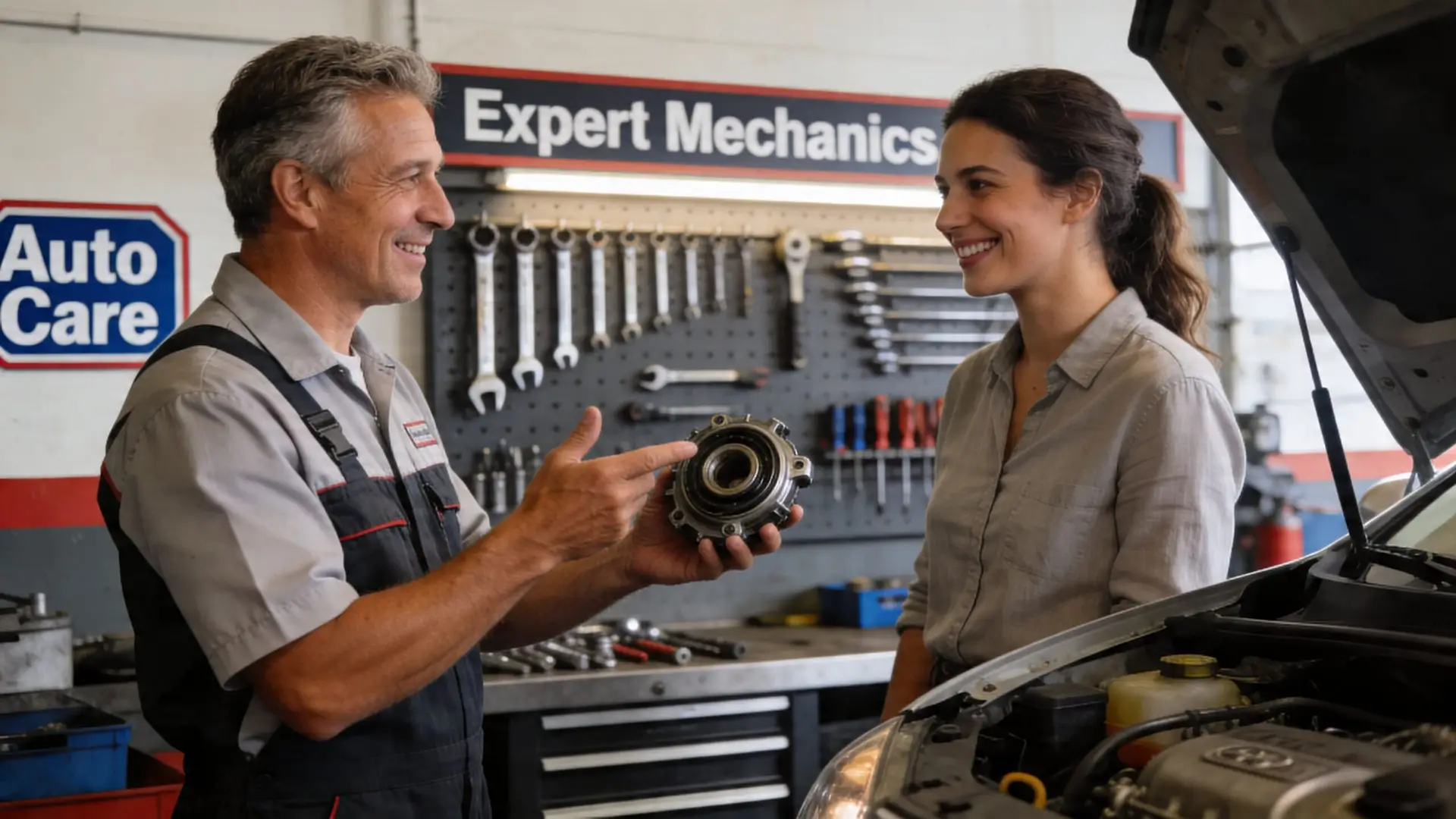
A good shop earns trust in the way it diagnoses, explains, documents, and stands behind the work. If a service writer can’t walk you through the cause of the failure in plain English, that’s a problem. If the shop can explain what failed, how they verified it, and what happens if you wait, you’re usually in better hands.
Why ASE certification matters
Certification isn’t everything, but it’s one of the clearest signs that a technician takes the trade seriously. According to data cited from the National Institute for Automotive Service Excellence in this ASE-focused repair overview, certified technicians resolve 92% of diagnostic faults on the first attempt versus 67% for non-certified techs, which helps reduce repeat visits by 25% and can save customers an average of $150 to $300 per complex repair by avoiding redundant labor.
That’s the kind of detail drivers should care about. A lower hourly rate doesn’t help if the car comes back with the same problem. You paid once for the wrong answer, then again for the right one.
What to look for before you approve work
When you’re choosing a shop, use a short filter:
- Ask who diagnosed the vehicle: Was it handled by a qualified technician or just scanned at the counter?
- Listen for cause and effect: Good shops explain why a part failed and why the replacement fixes it.
- Check whether they welcome questions: Defensive answers usually mean weak diagnosis.
- Read reviews for patterns, not perfection: Repeated comments about communication and follow-through matter more than one dramatic complaint.
If you want a local checklist, this page on how to find a trustworthy mechanic covers the right questions to ask before handing over the keys.
A shop’s online presence can also tell you a lot. Consistent, detailed customer feedback is often a sign that the business takes communication seriously. For shop owners and even curious customers, this guide to auto repair reputation management explains how strong review practices reflect day-to-day operations.
Here’s a quick visual on what good communication from a repair shop should feel like:
What real value looks like
A trustworthy shop doesn’t rush you into the biggest ticket. It helps you sort repairs into categories: needs attention now, should be planned soon, and can wait. That’s how drivers protect both safety and budget.
One practical example in Fort Worth is Kwik Kar Oil Change & Auto Care on White Settlement Road, which provides ASE-certified service, diagnostics, and routine repair work with clear communication about the job being recommended. That kind of approach matters more than a flashy coupon when the main objective is to avoid paying twice.
Smart Strategies for Saving Money on Auto Repairs
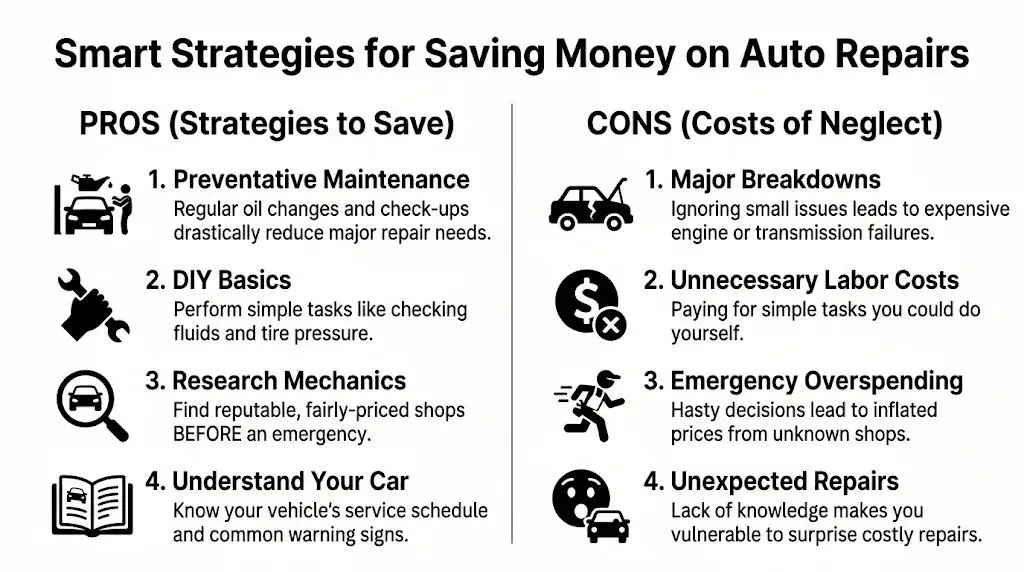
The least expensive repair is often the one you never need because you caught the problem early. That doesn’t mean spending blindly on every recommendation. It means knowing where maintenance prevents bigger failures and where a small delay can turn into a much larger bill.
Spend early on the right things
Fluid services, brake inspections, battery testing, belt checks, and routine tune-up items rarely feel urgent when the car is still driving fine. But those are the jobs that keep minor wear from turning into breakdowns.
A neglected cooling issue can become an overheating event. Worn brake components can damage related parts. A weak charging system can trigger multiple symptoms that look unrelated. Drivers save the most when they treat maintenance as planned spending instead of emergency spending.
Know when aftermarket parts make sense
Not every repair needs a dealer part. Not every repair should use the cheapest aftermarket option either.
A smart parts decision usually comes down to three questions:
- Is this a high-precision electronic component? Some sensors and modules are less forgiving with low-grade replacements.
- Is there a proven premium aftermarket brand for this part? Many wear items have excellent non-OEM options.
- How long do you plan to keep the vehicle? That affects whether long-term durability should outweigh immediate savings.
For many Fort Worth drivers, premium aftermarket parts are the sweet spot. They often lower the upfront bill without dropping into the quality range that causes repeat failures.
If you want affordable car repair near me, focus on value per mile, not just the amount due today.
A practical way to lower repair costs over time
Use this approach instead of reacting one breakdown at a time:
- Follow the factory service schedule. Your owner’s manual holds underestimated value.
- Handle small warning signs early. Vibrations, charging issues, fluid spots, and brake noise usually get more expensive when ignored.
- Keep records. Good records prevent duplicate work and help a shop spot patterns.
- Ask about part options. There’s often more than one sensible path.
- Choose your shop before you need one. Emergency decisions are where people overpay.
What doesn’t work
Waiting for complete failure doesn’t save money. It usually creates extra labor, towing stress, and more damaged parts.
Bouncing from one low-price quote to another also tends to backfire. When nobody has your service history and each visit starts from zero, you lose time, continuity, and clear decision-making. The cheapest line item can become the most expensive ownership strategy.
Red Flags to Avoid When Getting Repair Quotes
Bad estimates usually reveal themselves fast. The problem is that drivers often ignore the warning signs because they need the car back.
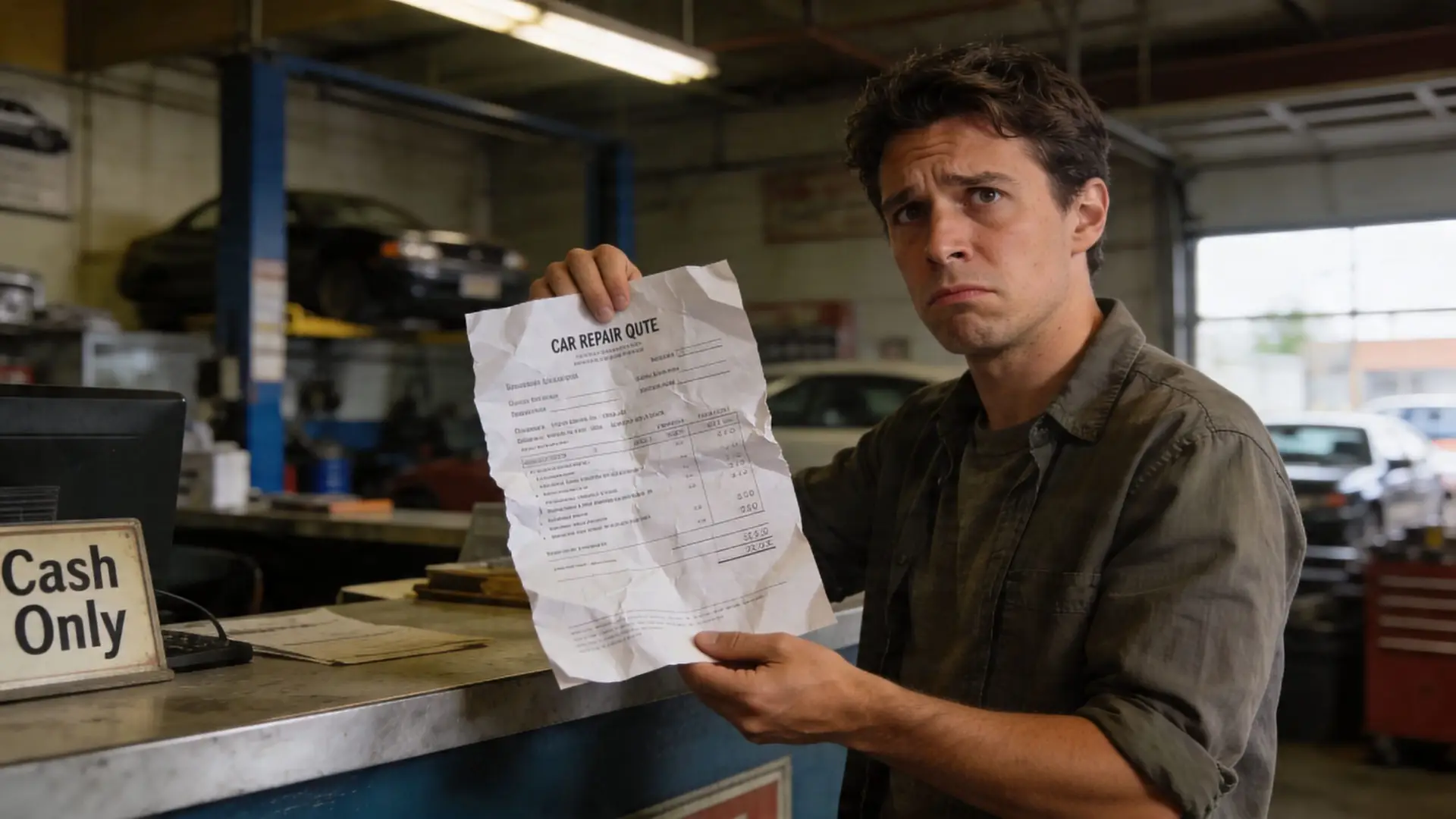
The most expensive mistakes I see aren’t always caused by outrageous prices. They come from vague language, missing details, and pressure to approve work before the customer understands what’s happening.
The estimate is verbal only
If the shop won’t give you a written estimate, slow down. You need to see labor, parts, and any additional charges separated clearly.
A written quote protects both sides. It also forces the shop to be specific. That alone filters out a lot of loose promises.
Nobody explains the why
“Needs brakes,” “needs a sensor,” or “needs a tune-up” isn’t an explanation. A solid shop should tell you what they found, what test confirmed it, and whether the issue is urgent.
Good shops don’t hide behind jargon. They translate it.
You’re pushed to approve immediately
Pressure is a warning sign. Some repairs are safety-critical and should be handled promptly, but even then, the explanation should be calm and specific. If the conversation feels like a sales script, take a breath and ask more questions.
The terms are unclear from the start
Transparency matters before the repair starts, not after the invoice prints. That applies to pricing, timing, warranties, and even service access. As noted by Second Chances Garage’s reduced-cost repair information, unclear qualification or service requirements create friction and wasted time for drivers. The same principle applies at any shop. If basic terms are murky, expect more confusion later.
Every recommendation is “urgent”
Most vehicles have a mix of immediate needs and future needs. If every item is framed as an emergency, you may be getting a sales presentation instead of a repair plan.
A better quote distinguishes between:
- Safety issues that need prompt action
- Maintenance items to budget for soon
- Minor concerns to monitor
That kind of prioritization helps drivers make smart decisions without feeling cornered.
How Advanced Diagnostics Make Repairs More Affordable
A lot of people hear “diagnostic fee” and think they’re paying someone to plug in a scanner for a few minutes. That’s not what accurate diagnosis is.
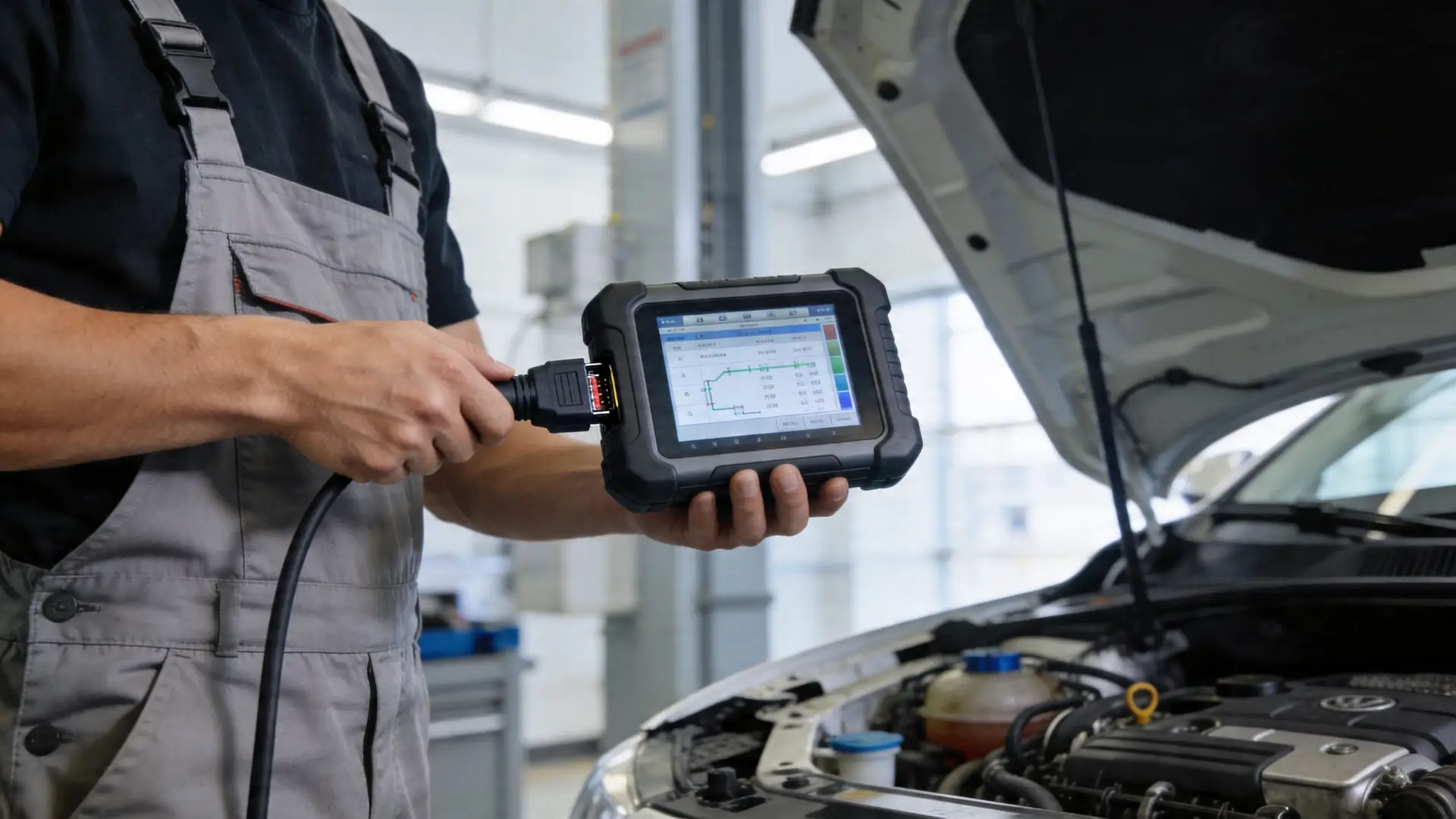
Modern repair work depends on interpreting data, checking live readings, confirming failures, and ruling out the parts that only look guilty. That process saves money because it prevents parts swapping.
Why better tools reduce labor costs
According to evidence cited from AAA repair studies in this advanced diagnostics overview, OEM-level scan tools cut diagnostic time by 40%, from 4 hours down to 2.4. The same source notes that accurate testing helps prevent unnecessary replacements, including cases where a customer could otherwise be sold an $800 brake job when the actual issue is a simple ABS sensor.
That’s a strong example of what affordability really means in the shop. Better equipment isn’t just a convenience for technicians. It shortens labor time and protects the customer from paying for the wrong repair.
What a proper diagnostic process looks like
A capable shop doesn’t stop at the code. It checks supporting data and confirms the fault path.
That can include:
- Live scan data to see what the system is doing in real time
- Electrical testing to verify voltage, resistance, or signal problems
- System-specific checks for braking, charging, drivability, or emissions faults
- Post-repair verification so the problem doesn’t come right back
This matters a lot on aging vehicles. One failing component can create symptoms in several systems. Without proper testing, shops end up replacing parts in sequence until the issue disappears. That approach is expensive, slow, and frustrating.
Time without your car is a cost too
Drivers usually think about the invoice, but downtime costs money too. Missed work, borrowed rides, rescheduled deliveries, and disruption for the family all count. Efficient diagnostics reduce that hidden cost because they shorten the path from symptom to verified repair.
When a shop is organized, equipped properly, and clear about what it knows, the whole process gets easier on your wallet and your schedule.
Your Next Step for Affordable Car Care in Fort Worth
If you’re trying to find affordable car repair near me in Fort Worth, the safest approach is simple. Learn how the estimate is built, choose a shop that values skilled diagnosis, stay ahead on maintenance, and walk away from vague or high-pressure quotes.
That combination protects you better than chasing the lowest number online.
A lot of local drivers also underestimate the value of convenience. Transportation issues, work schedules, and family obligations can make even a reasonable repair feel harder than it should. Shops that keep scheduling straightforward and diagnose efficiently reduce that burden in ways that matter just as much as the invoice total.
One reason local businesses invest in clear online information is the same reason good service businesses in other trades do it. If you’re curious how service companies think about visibility and customer trust, this article on Digital Marketing for Plumbers: A Playbook to Dominate Local Search is a useful example of how local operators make it easier for customers to find reliable help fast.
If your vehicle is making noise, showing a warning light, struggling to start, braking poorly, or overdue for maintenance, don’t wait until the problem grows. Call the shop, ask direct questions, request a written estimate, and make sure the diagnosis is specific before approving work. That’s how you keep repairs affordable without gambling on quality.
If you need a practical next step, contact Kwik Kar Oil Change and Auto Care to schedule service, ask for a written estimate, and get clear answers about what your vehicle needs. For Fort Worth drivers, that means one place to handle maintenance, diagnostics, brakes, charging-system issues, inspections, and routine repairs with straightforward communication and fair pricing.