



You glance at the sticker in the corner of your windshield while sitting at a red light in Fort Worth. You’re already late, your week is packed, and that oil change date has come and gone. The problem isn’t knowing your car needs service. It’s finding time for it without losing half your day.
That’s why the rapid oil change model exists. It’s built for drivers who need routine maintenance handled quickly, but still want to know the job was done right. And that’s where some drivers might pause. Fast sounds convenient, but it also raises a fair question: how can a shop work that quickly without missing something important?
The answer comes down to process, training, and quality checks. A well-run rapid oil change isn’t random or rushed. It’s organized. When you understand how that system works, it becomes much easier to tell the difference between a trustworthy shop and one that rushes cars through the bay.
In and Out Fast The Appeal of a Rapid Oil Change
You notice the mileage sticker, check the time, and realize you have about half an hour before your next stop. That is the moment a rapid oil change makes sense. It gives busy drivers a way to keep up with routine maintenance without turning a simple service into a long wait.
The appeal is easy to understand. Oil changes are repetitive, scheduled services. They are closer to a regular health check than a major repair. For that kind of visit, many drivers want speed, but they also want proof that the work was handled carefully. A good rapid oil change shop is built to deliver both.
That balance matters.
A fast visit can fit into a lunch break, between school pickup and errands, or during a short opening in the workday. If you have ever wondered how long oil changes usually take at different types of shops, the answer often depends on how specialized the service model is. The more focused the shop is on routine preventive care, the easier it is to keep the appointment short and predictable.
Drivers usually value three things here:
- Less waiting: Basic maintenance takes up less of your day.
- Less disruption: You can handle routine service without planning around a long appointment.
- Better follow-through: When service feels manageable, it is easier to stay on schedule with oil and filter changes.
Convenience also has a second benefit. It reduces the temptation to put the job off for another week, then another. Skipping an oil change rarely feels urgent in the moment, but regular delays can leave your engine working with worn oil that no longer protects as well as it should.
Fast service still raises a fair concern. If the car is in and out quickly, how do you know the shop did not miss a step?
The answer is not luck. It is a controlled process. A trustworthy rapid oil change operation uses a narrow service focus, repeatable steps, trained technicians, and clear quality checks. Speed should come from preparation and specialization, not from rushing. That difference is what separates a reliable shop from one that focuses only on moving cars through the bay.
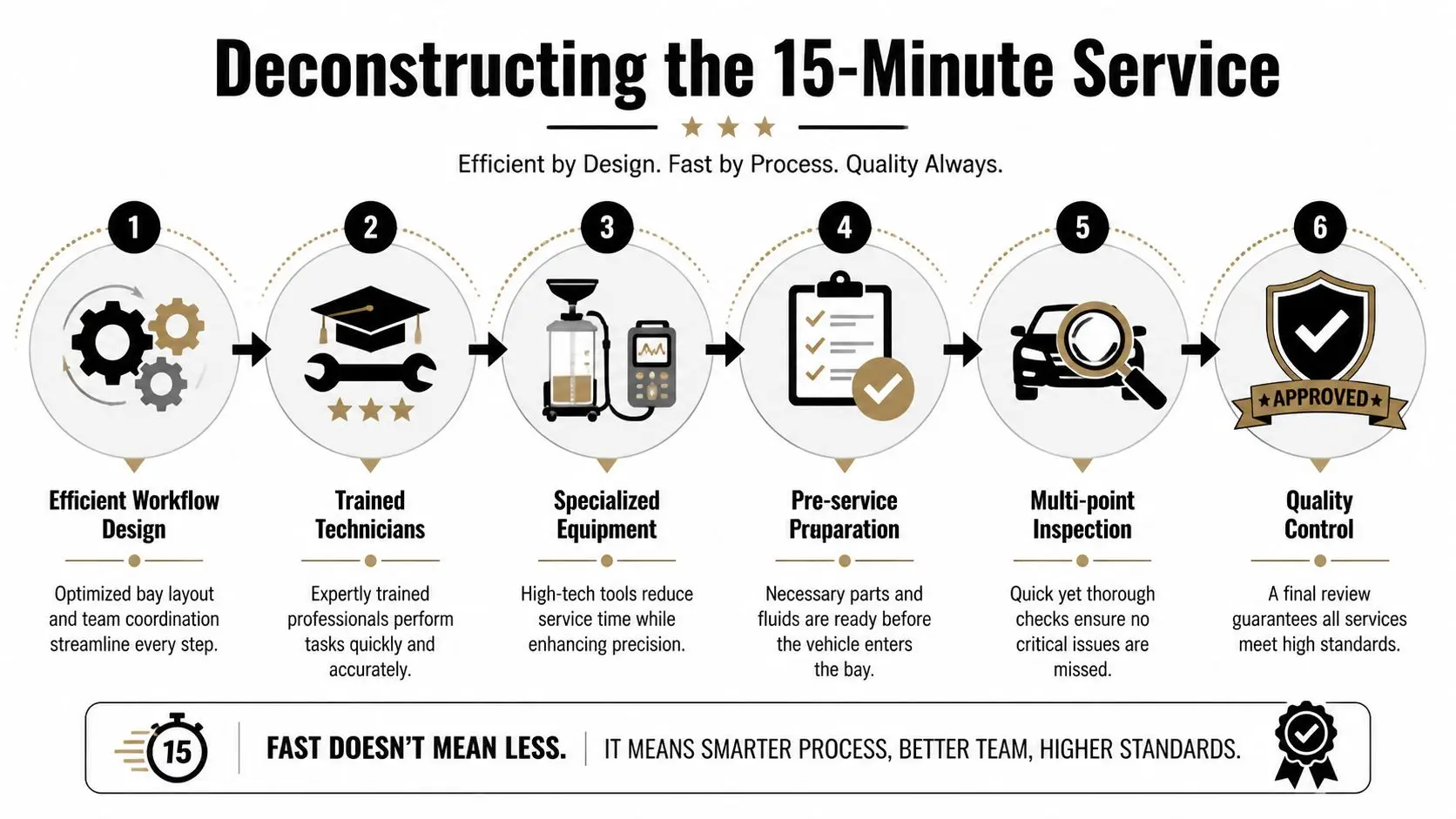
Deconstructing the 15-Minute Service
You pull in for an oil change during lunch and see your car heading into the bay almost right away. The natural question is not only, “Can this really be done that fast?” It is also, “How do I know they will not miss something?”
A good rapid oil change answers both questions with process. The speed comes from preparation, clear roles, and repeatable checks. It should feel like a well-run kitchen during a simple lunch order. Everyone knows their station, the supplies are ready, and the same steps happen in the same order each time.
Why the service can be fast without being careless
A rapid oil change bay is built for one main job. That matters. In a general repair setting, a technician may need to shift between diagnostics, repairs, parts lookups, and customer updates. In a fast oil change bay, the workspace, tools, fluids, and filters are arranged around routine preventive service, so less time is lost between steps.
The biggest time-saver is coordinated work. One technician may handle the drain and filter change underneath while another confirms the oil specification, checks top-side items, and prepares the refill. The vehicle is not waiting for one person to finish every task alone.
That does not mean every shop that works quickly works well. The difference is quality control. A trustworthy location uses technician training, a written service routine, and a final verification before the car leaves the bay. Shops that also serve commercial vehicles often follow the same discipline seen in fleet PM strategies for trucking companies, where consistency matters because small maintenance errors turn into bigger scheduling and reliability problems later.
What should happen during the visit
The core service is straightforward, but each step has to be right:
- Confirm the vehicle’s required oil grade, capacity, and filter.
- Drain the old oil fully and inspect for obvious concerns, such as unusual color or metal debris.
- Remove and replace the filter with the correct part.
- Refill with the proper amount and type of fresh oil.
- Check the dipstick or electronic oil level procedure, depending on the vehicle.
- Reset the maintenance reminder if the vehicle requires it.
- Perform a final review for leaks, fitment, and basic completion.
That final review is where fast service proves its quality. A careful shop does not treat the oil refill as the finish line. The finish line is confirming the drain plug is secure, the filter is seated correctly, the oil level is accurate, and the service reminder has been addressed if needed.
If you are comparing service options, it helps to see how long oil changes take at different types of shops. Time alone does not tell you whether a shop is careful, but it does show why a specialized bay can move faster than a general repair schedule.
What to watch for if you want speed and quality
A well-run rapid oil change usually looks calm. Technicians are not guessing, searching for parts, or stopping to ask what comes next. They verify the vehicle information, communicate clearly, and follow a routine that includes a closing check.
If you want extra peace of mind, ask a simple question before service starts: “How do you verify the correct oil and filter before the car leaves?” A good shop will have a clear answer. That answer matters more than a promise about how many minutes the visit will take.
Rapid Oil Change vs Full-Service Maintenance
You pull in for an oil change on your lunch break. The car is running fine, your schedule is tight, and you want two things at once. Speed and confidence. That is the comparison that matters here. The question is not only which service is faster. It is which service fits the condition of your vehicle, and which shop has the process to do the work right.
A rapid oil change is built for routine maintenance. Full-service maintenance is built for a wider look at the vehicle. One keeps you on schedule. The other gives a technician more time to inspect, test, and diagnose systems beyond the oil change itself.
A simple way to look at it is this: a rapid oil change handles the job your car is already due for. A full-service visit handles the questions your car may be raising.
Side-by-side comparison
| Feature | Rapid Oil Change | Full-Service Maintenance |
|---|---|---|
| Primary purpose | Routine oil and filter service | Broader inspection, maintenance, and repair |
| Time focus | Built for speed and convenience | Built for deeper evaluation |
| Workflow | Team-based process with assigned tasks | More step-by-step, depending on findings |
| Best for | Scheduled preventive care | Warning lights, unusual noises, leaks, or major mileage milestones |
| Typical visit style | Drive-up or short appointment | Longer appointment with expanded checks |
| Customer decision | “I’m due for service” | “Something needs diagnosis or a broader look” |
When a rapid oil change makes sense
Choose a rapid oil change when the vehicle is driving normally and you are due for service. That is often the right fit for commuters, busy families, rideshare drivers, and anyone trying to protect the engine without losing half a day.
The key is quality control. Fast service only works when the shop has a repeatable process, trained technicians, and a final check before the car leaves. A trustworthy rapid service shop should be able to explain how it confirms the correct oil, the correct filter, the proper fill level, and a clean finish with no obvious leaks or loose parts. Speed matters. Verification matters more.
For business vehicles, consistency matters just as much as convenience. Managers who oversee several vehicles may also benefit from reviewing fleet PM strategies for trucking companies if they are trying to reduce downtime and plan maintenance intervals more systematically.
When full-service is the better move
Full-service maintenance is the better choice when the car is asking for more attention. If you notice knocking, overheating, fluid spots, vibration, warning lights, rough shifting, or a sudden change in fuel economy, an oil change alone does not answer the bigger question. The vehicle needs inspection time.
This is also the better route around major mileage intervals, when manufacturers often recommend added services such as filter replacements, fluid checks, tire rotation, or system inspections. A rapid oil change keeps routine care easy. Full-service maintenance gives the technician time to connect symptoms, inspect related components, and recommend the next step based on the car’s condition.
Some drivers also get stuck on the phrase “full-service oil change.” That can sound like the same thing as a full maintenance visit, but it usually is not. If you want that distinction spelled out clearly, this guide to what a full-service oil change includes helps explain the middle ground between a quick oil service and a longer diagnostic appointment.
A good shop will help you choose the right lane instead of pushing every car into the same one. That is one of the clearest signs you are dealing with a service team that respects both your time and your vehicle.
Your Rapid Oil Change Service Checklist
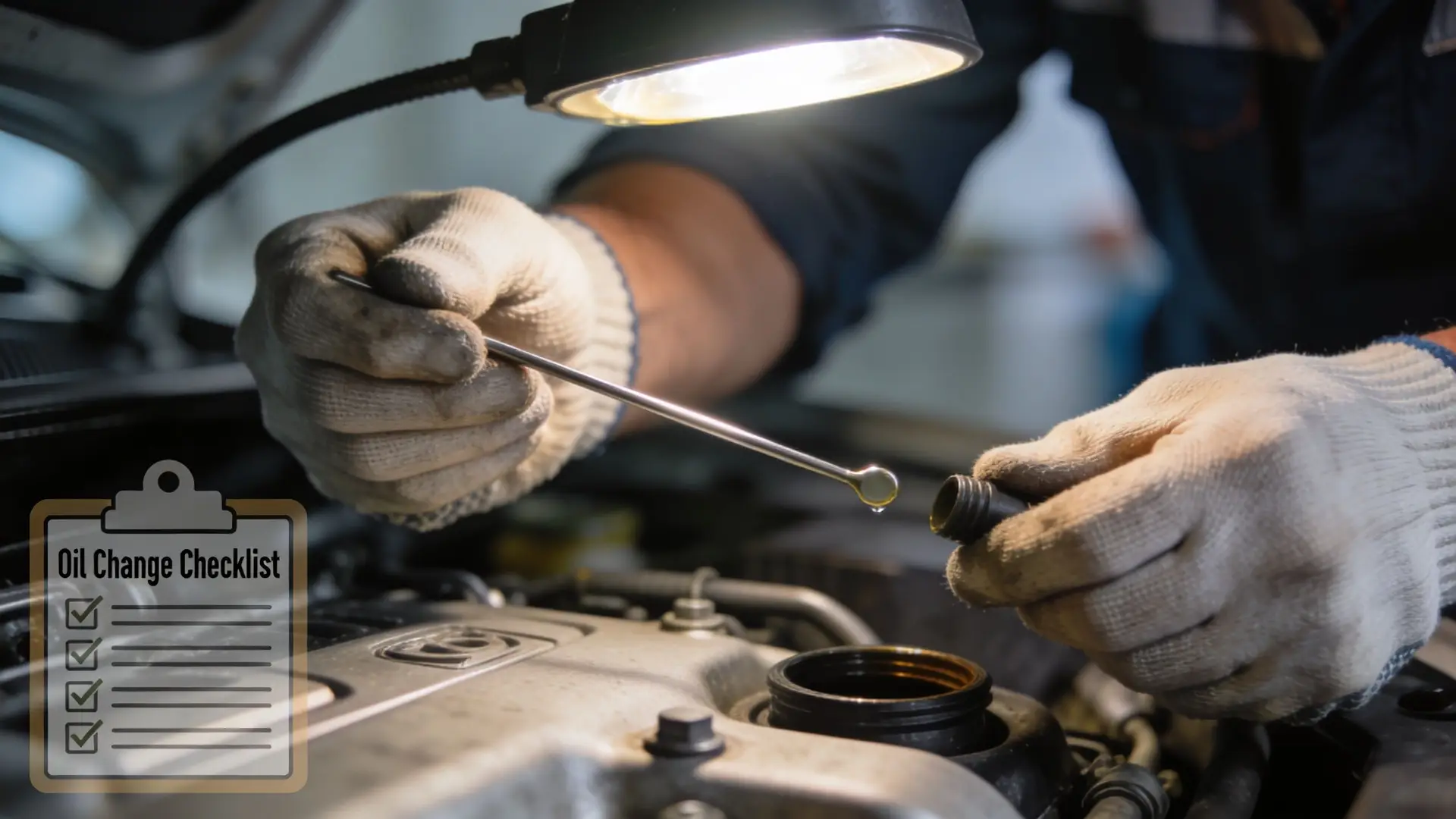
When customers say, “I just want to know what I’m getting,” that’s a smart question. A rapid oil change should be easy to understand. You shouldn’t feel like the work happens behind a curtain.
The core service items
Most visits include a short list of essential tasks:
- Drain the old oil: The used oil is removed so contaminants don’t keep circulating through the engine.
- Replace the filter: A fresh oil filter helps trap debris and protect the new oil.
- Refill with the correct oil: The technician should match the oil to the vehicle’s required viscosity, such as 0W-20, 5W-30, or 5W-40 when applicable.
- Verify the fill level: Too little oil is risky. Too much can also create problems.
- Perform basic courtesy checks: Many shops look over simple items such as visible fluid levels or tire pressure.
For a practical example of the standard service steps, this page on changing oil and filter service shows the core maintenance items drivers should expect.
Why the oil type matters
Many people often get confused. They hear “synthetic” and assume it’s just a more expensive upsell. Sometimes it isn’t optional. Many vehicles are designed around specific oil formulations and viscosities, and using the wrong one can affect lubrication and long-term wear.
According to this oil-change guide focused on oil performance, synthetic oils maintain their viscosity and stability for 7,500 to 15,000 miles, while conventional oils typically fall in the 3,000 to 5,000 mile range when used under the appropriate conditions. That same source notes that the correct premium synthetic oil can reduce engine wear and improve fuel economy over the life of the engine.
That means the “cheapest oil today” isn’t always the lowest-cost choice over time.
Here’s a short visual walkthrough of what a customer should look for during service:
What you should ask before approving service
A good shop should be comfortable answering plain questions:
- What oil does my vehicle require?
- Is this the correct filter for my engine?
- Are you following the manufacturer’s specification or offering an alternative?
- Did you notice anything that needs attention soon?
If the answers are clear, specific, and calm, that’s a healthy sign.
Separating Fact from Fiction in Fast Auto Care
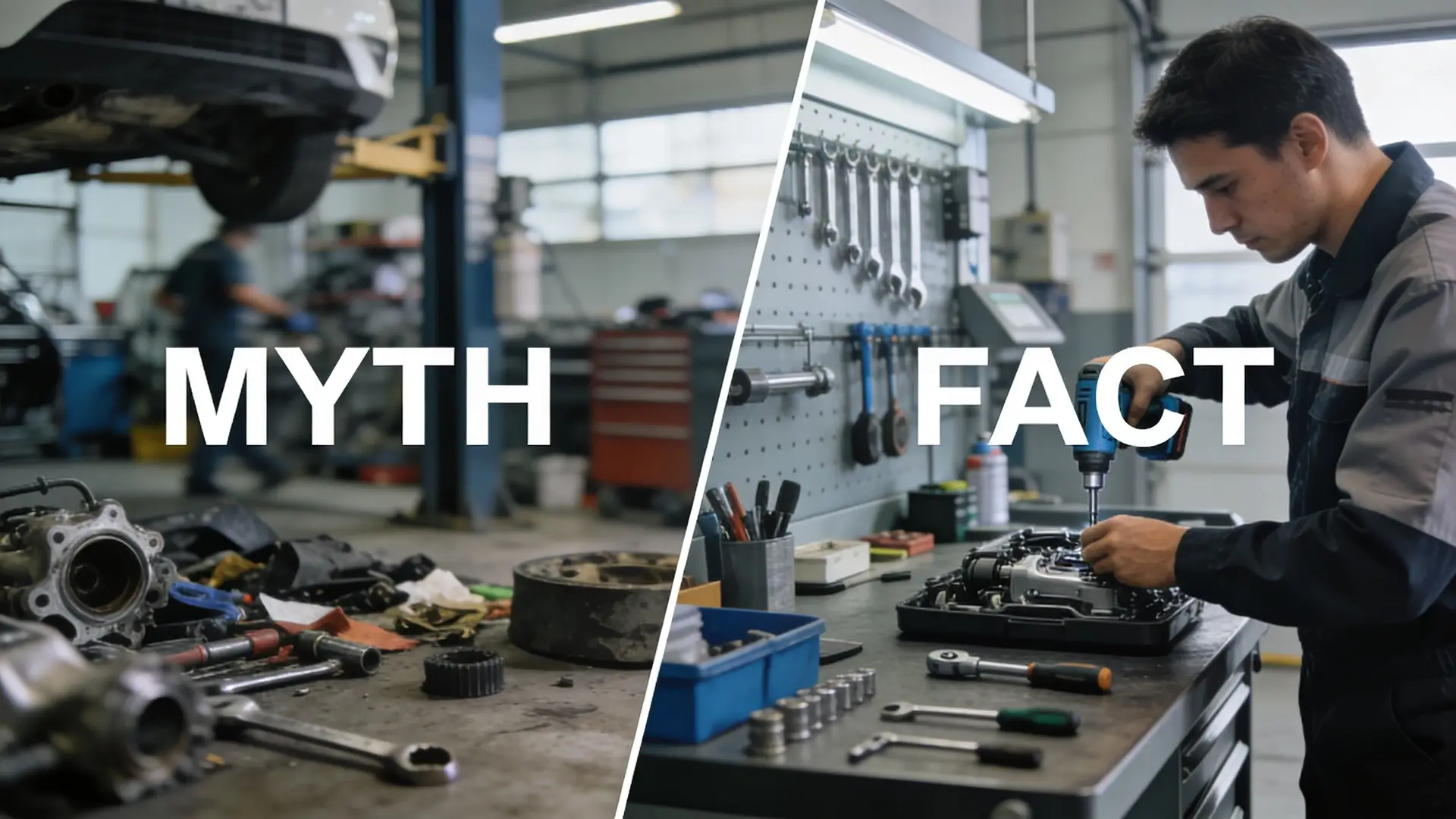
A lot of quick-lube skepticism comes from one fear: “They’re moving too fast to be careful.” That concern is understandable. A rapid oil change only works when the shop uses disciplined procedures, keeps tools and fluids organized, and treats verification as part of the job.
Myth and reality
Some myths deserve a closer look.
- “Fast means sloppy.” Not necessarily. In a strong operation, speed comes from specialization and repetition.
- “They only use cheap oil.” Not if the shop is matching the vehicle to the proper specification and giving you options.
- “A quick service can’t be thorough.” It can be thorough for routine maintenance. It just isn’t the same as a full diagnostic appointment.
A trustworthy fast-service shop should be able to explain its checks in simple language, without getting defensive.
The high-mileage exception
Older vehicles need a little more thought. One of the biggest gaps in generic quick-lube marketing is the lack of guidance for drivers with aging engines. According to this discussion of the quick-lube industry’s future and service gaps, standard rapid oil change intervals may not be sufficient for high-mileage vehicles, and owners should watch for signs that more frequent attention may be needed.
Those signs can include increased oil consumption, darker oil sooner than expected, leaks, or a vehicle that sees hard use through short trips, towing, or constant stop-and-go driving. That doesn’t mean a rapid oil change is wrong for an older car. It means the interval may need to be adjusted, and the conversation should be more specific.
What careful drivers should do
If your car has a lot of miles on it, ask direct questions:
- Is my current oil interval still appropriate?
- Should I monitor oil level between visits?
- Are there signs of leaks or consumption I should keep an eye on?
- Does my engine need a different oil approach based on age and use?
That’s how you turn a fast service into a smart maintenance habit.
Why Trust Kwik Kar for Your Fort Worth Oil Change
Most drivers don’t need convincing that quick service is convenient. What they need is proof that convenience won’t come at the expense of accuracy. That’s where quality assurance matters.

The rapid oil change industry doesn’t always do a good job addressing customer concerns about mistakes, incorrect parts, or weak accountability. According to this discussion of consumer concerns around quick oil changes, premium providers stand out through verifiable quality control, including ASE certifications and transparent accountability for the work performed.
That matters in Fort Worth, where many drivers are balancing busy schedules with older vehicles, family vehicles, or work trucks they can’t afford to have sidelined. ASE-certified technicians signal that the people working on the car have met a recognized professional standard. Clear communication matters just as much. A customer should know what oil was installed, what filter was used, and whether the technician noticed any developing issues.
One practical option for local drivers is Kwik Kar Oil Change and Auto Care, which states that it uses ASE and RepairPal technicians, premium-quality parts, and transparent communication as part of its service approach. Those are exactly the kinds of trust signals customers should look for in any shop offering fast maintenance.
The right rapid oil change shop doesn’t ask you to choose between speed and confidence. It shows you how it protects both.
When you know what to expect, fast service stops feeling risky. It starts feeling sensible.
If you want a rapid oil change with clear communication, certified technicians, and a full-service shop behind the quick visit, schedule with Kwik Kar Oil Change and Auto Care. It’s a practical way to keep your vehicle maintained without giving up your whole day.