




Winter car prep is defined as the set of maintenance checks and safety measures that protect your vehicle from cold weather damage and keep you safe on icy roads. Tarrant County drivers face a specific set of risks each winter: sudden freezes, black ice on highways, and bridges that ice over before the pavement below them does. Organizations like AAA Texas and the National Weather Service consistently flag North Texas as a region where drivers underestimate cold weather hazards. Understanding why winter car prep matters in Tarrant County means recognizing that a single missed maintenance step can turn a routine commute into a dangerous situation.
Why does cold weather affect your car’s performance in Tarrant County?
Cold temperatures attack your vehicle from multiple directions at once. Tires, batteries, fluids, and fuel systems all behave differently when temperatures drop, and Tarrant County’s unpredictable winter swings make each of these vulnerabilities more dangerous.
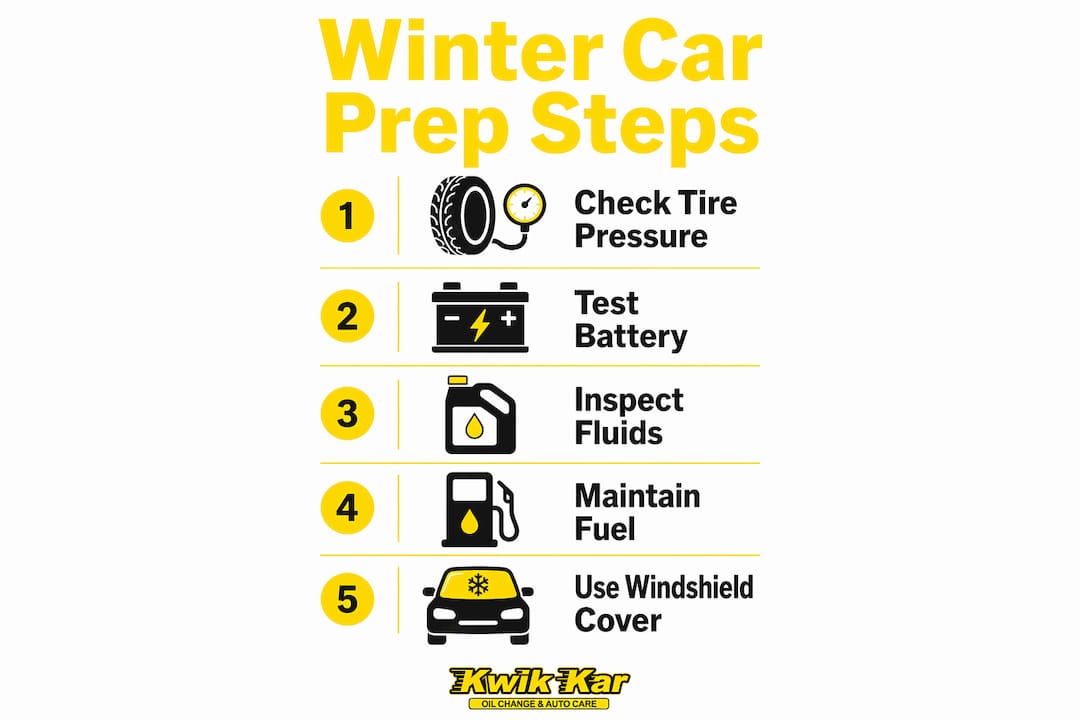
Tires lose pressure faster than you think. Tires lose 1–3 psi monthly due to natural permeability, and cold air accelerates that loss. Underinflated tires reduce traction and braking performance exactly when you need them most.
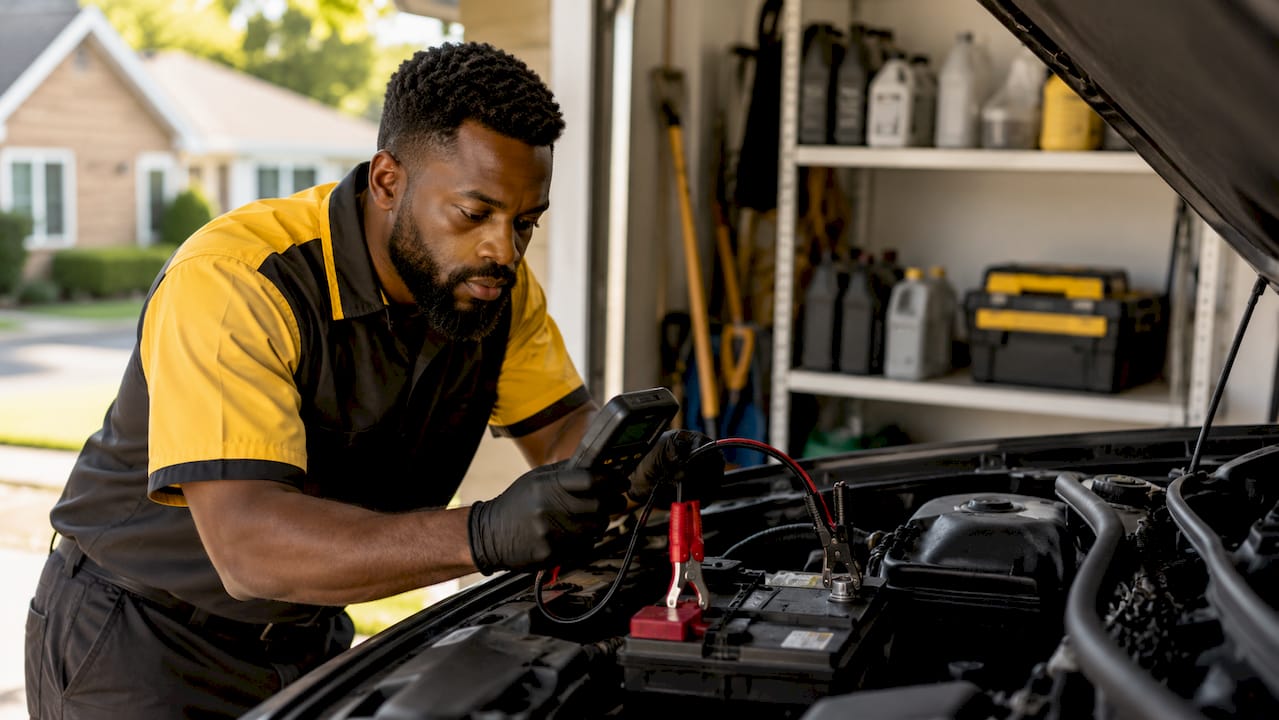
Batteries fail without warning in the cold. Cold weather slows the chemical reactions inside a battery, reducing the power it delivers to start your engine. A battery that works fine in October can leave you stranded in january when temperatures drop overnight.
Fluids thicken or freeze. Engine coolant must contain the right antifreeze mixture to prevent freezing damage to your engine block. Windshield washer fluid without a winter rating will freeze in the reservoir or on your windshield mid-spray, which is a serious visibility hazard.
Fuel lines are vulnerable too. Keeping at least half a tank of fuel during winter prevents condensation from building up in the fuel lines and keeps your engine running if you get stranded and need heat.
Pro Tip: Check your tire pressure every two weeks during winter months, not just when the dashboard warning light appears. By the time the light triggers, you may already have a handling problem.
What are the most important winter car maintenance steps?
Tarrant County cold weather car care does not require a mechanic for every step. Most of these actions take less than 30 minutes and can prevent a breakdown or accident.
-
Check and inflate your tires. Use a tire gauge to verify pressure against the number listed on the sticker inside your driver’s door, not the number on the tire sidewall. Do this every two weeks throughout the cold season.
-
Test your battery. Any battery older than three years deserves a load test before winter. Auto parts stores and shops like Kwik Kar Oil Change & Auto Care offer free battery testing. A weak battery that starts your car in mild weather may not start it at 28°F.
-
Top off your coolant. Check the coolant reservoir when the engine is cold. The mixture should be roughly 50% antifreeze and 50% water for adequate freeze protection in North Texas temperatures.
-
Replace your wiper blades and washer fluid. Standard wiper blades stiffen in cold and streak ice rather than clearing it. Switch to winter-rated blades and fill your reservoir with a washer fluid rated for freezing temperatures.
-
Keep your gas tank at least half full. This is not just about range. A fuller tank reduces the air space where condensation forms, protecting your fuel lines from moisture freeze.
-
Park facing east when possible. East-facing parking lets the morning sun hit your windshield first, accelerating ice melt and reducing the time you spend scraping.
-
Build an emergency kit. Your kit should include a blanket, a flashlight, a phone charger, sand or kitty litter for traction, and a small shovel. A car maintenance checklist can help you track what you have covered before the first freeze hits.
Pro Tip: A windshield cover costs less than $20 and saves you 10 minutes of scraping every icy morning. Lay it over your windshield the night before a freeze is forecast.
How do Tarrant County road conditions change your driving habits?
Knowing how to prepare your car for winter is only half the equation. The other half is adjusting how you drive once you are on the road.
Black ice is a transparent layer of ice that blends with asphalt and looks exactly like a wet road. Drivers who mistake it for a damp surface lose traction without warning, and by the time they react, the car is already sliding. Black ice causes the majority of North Texas winter accidents precisely because it is invisible.
Bridges and overpasses are the most dangerous spots on any Tarrant County winter commute. North Texas bridges freeze before road surfaces because cold air circulates both above and below the elevated deck. The Fort Worth Police Department has specifically advised drivers to avoid elevated roads during freezing conditions.
Safe winter driving in Tarrant County follows a short set of rules:
- Increase following distance to at least three times your normal gap. Stopping distances on ice are dramatically longer than on dry pavement.
- Turn off cruise control on wet or icy roads. Cruise control can accelerate the wheels when traction is lost, making a slide worse.
- Avoid sudden steering, braking, or acceleration inputs. Smooth, gradual movements keep your tires in contact with the road.
- Do not stop on highway shoulders during a storm. Pull off at an exit or a parking lot where you are visible and away from traffic.
- Treat shaded pavement with the same caution as a bridge. Shaded spots stay frozen hours after sunny sections have thawed.
For more guidance on safe highway driving in Tarrant County, the principles of smooth inputs and extended following distance apply year-round but become critical in winter.
Special winter prep tips for gas and electric vehicles in Tarrant County
Not every vehicle responds to cold the same way. Gas vehicles and electric vehicles each have specific vulnerabilities worth addressing before a freeze.
For electric vehicle owners:
EV battery range drops in cold weather because low temperatures slow the electrochemical processes that store and release energy. The fix is preconditioning: warming the battery and cabin while the vehicle is still plugged in. This preserves your driving range because the energy comes from the grid, not the battery.
For gas vehicle owners:
- Verify antifreeze concentration before the first hard freeze.
- Keep the fuel tank above half to prevent fuel line condensation.
- Avoid parking under trees during ice storms. Falling ice-covered branches can crack windshields and dent hoods.
For all drivers:
A portable jump starter is more practical than jumper cables during a winter emergency. It lets one driver restart a dead battery without waiting for another vehicle to pull alongside, which is especially useful when roads are icy and stopping near a stranded car is dangerous.
| Vehicle type | Key winter prep action |
|---|---|
| Gas vehicle | Check antifreeze mix; keep tank above half |
| Electric vehicle | Precondition battery while plugged in before driving |
| All vehicles | Carry a portable jump starter; park east-facing |
Pro Tip: Short daily drives during cold spells keep your battery charged and your fluids circulating. Vehicles that sit for days in freezing temperatures are far more likely to have starting problems.
For a broader look at seasonal vehicle maintenance practices that apply across climates, the principles of fluid checks and battery testing translate directly to Tarrant County winters.
Key Takeaways
Winter car prep in Tarrant County is the most direct way to prevent cold weather accidents, breakdowns, and costly repairs before they happen.
| Point | Details |
|---|---|
| Tire pressure drops in cold | Check pressure every two weeks; cold air accelerates the natural monthly loss of 1–3 psi. |
| Batteries fail without warning | Test any battery older than three years before the first freeze to avoid no-start situations. |
| Black ice is the top road hazard | It looks like a wet road; triple your following distance and avoid bridges during freezes. |
| EVs need preconditioning | Warm the battery while plugged in to preserve driving range in cold temperatures. |
| Emergency kit is non-negotiable | Carry a blanket, traction aid, portable jump starter, and phone charger every winter. |
What I have learned after years of North Texas winters
North Texas winters are deceptive. We get long stretches of mild weather that make it easy to assume a hard freeze will not happen this year. Then february arrives, temperatures drop 30 degrees overnight, and drivers who skipped their winter prep are the ones calling for roadside assistance at 7:00 AM.
The detail that surprises most drivers is how fast black ice forms on bridges. You can drive across the same overpass every day for years and never think twice about it. Then one morning, the temperature is 31°F and the road surface looks damp. That is the moment when skipping a tire pressure check or ignoring worn wiper blades becomes a real safety risk.
What I tell every driver who comes into Kwik Kar Oil Change & Auto Care is this: the cost of a battery test and a tire pressure check is nothing compared to the cost of a tow, a fender repair, or a hospital visit. Winter prep is not about being overly cautious. It is about being realistic about what North Texas winters actually do to vehicles and roads.
Patience matters too. Defrost your windshield completely before driving. Give yourself extra time on icy mornings. Consult AAA Texas and the National Weather Service before driving in a storm. These habits cost nothing and protect everything.
— Kwik Kar
Kwik Kar Oil Change & Auto Care is ready for your winter prep
Tarrant County winters move fast, and your vehicle needs to be ready before the first freeze, not after.
Kwik Kar Oil Change & Auto Care offers battery testing, tire pressure checks, tire rotation, and oil changes at its Fort Worth location, all performed by certified technicians with no appointment needed. Winter is the worst time to find out your oil is overdue or your battery is weak. If you are not sure where to start, check the signs your car needs an oil change before temperatures drop. For drivers who want a full picture of what their vehicle needs this season, the oil change and tire rotation service covers two of the most critical winter prep items in a single visit. Kwik Kar Oil Change & Auto Care makes it straightforward to get your car ready for whatever North Texas winter brings.
FAQ
What makes Tarrant County winters dangerous for drivers?
Black ice and rapidly freezing bridges create hazards that appear without warning. North Texas infrastructure is not built for sustained ice, which means even a brief freeze can make roads dangerous for hours.
Are winter tires necessary in Tarrant County?
Dedicated winter tires are not required for most Tarrant County winters, but maintaining correct tire pressure is critical. Cold weather reduces tire pressure by 1–3 psi monthly, which reduces traction on icy roads.
How do I know if my battery will survive winter?
Have it load-tested at a shop like Kwik Kar Oil Change & Auto Care before temperatures drop. Any battery older than three years is a candidate for replacement before the cold season begins.
What should I keep in my car during a Tarrant County winter?
Carry a blanket, a flashlight, a portable jump starter, sand or kitty litter for traction, and a phone charger. These items cover the most common winter emergency scenarios for stranded drivers.
How should I drive differently on icy Tarrant County roads?
Triple your following distance, turn off cruise control, and avoid sudden braking or steering inputs. Treat every bridge and shaded road section as potentially icy, even when the surrounding pavement looks clear.