


A fleet maintenance checklist has one job: turn a walk-around inspection into a documented, repeatable process that catches problems before they cause breakdowns or violations. It needs to deliver three things every time — driver and public safety, dependable uptime, and records that survive an audit. Every line on the sheet must carry a system to check, a trigger for when to check it, and an owner responsible for closing the work order.
TL;DR:
- Most fleet items should be checked based on the specific system and relevant trigger type, whether mileage, engine hours, or calendar days, to ensure timely maintenance.
- Work orders must be detailed and tied to a checklist to create an audit trail, with clear documentation of parts, technician, and defect pictures to meet compliance standards.
- Tiered maintenance programs like PM-A, PM-B, and PM-C allow for targeted inspections, focusing more frequently on safety-critical items such as brakes, tires, and lights.
- Records, including inspection data and repair history, should be retained for specific periods—DVIRs for three months, annual reports for 14 months—and regularly audited for compliance.
- Partnering with a local certified shop simplifies fleet maintenance, providing consistent service, consolidated billing, and helping maintain a high preventive maintenance completion rate.
Table of Contents
- What Goes Into a Fleet Maintenance Checklist by Vehicle System
- Mapping the Checklist to PM-A, PM-B, and PM-C Service Tiers
- Turning Checklist Lines Into Scheduled Work Orders
- Daily Driver Inspections and DVIR Requirements
- Recordkeeping Rules: What to Keep and for How Long
- Tools and Templates: What Every PM Sheet Needs
- Kwik Kar’s Role in Supporting Fleet PM Programs
- Why Preventive Maintenance Pays for Itself
- Get Fleet PM Support From a Local Fort Worth Shop
- Sources
- FAQ
What Goes Into a Fleet Maintenance Checklist by Vehicle System
A usable fleet inspection guide is organized the way a technician actually walks a vehicle, not the way a spreadsheet template happens to be sorted. Group items by system, and the sheet moves faster and misses less. Preventive maintenance programs work best when they combine daily inspections with routine service intervals and clear ownership at each step, according to the MDOT Preventive Maintenance Manual. Here’s how that plays out system by system.
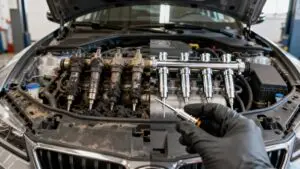
Engine, oil, and filters. Check oil level and condition against a one-line change criterion (mileage, engine hours, or visible contamination, whichever comes first). Inspect the air filter for restriction and the fuel filter for water or debris. Note oil consumption trends across visits, since a slow climb in usage often signals a ring or seal problem long before it throws a warning light.
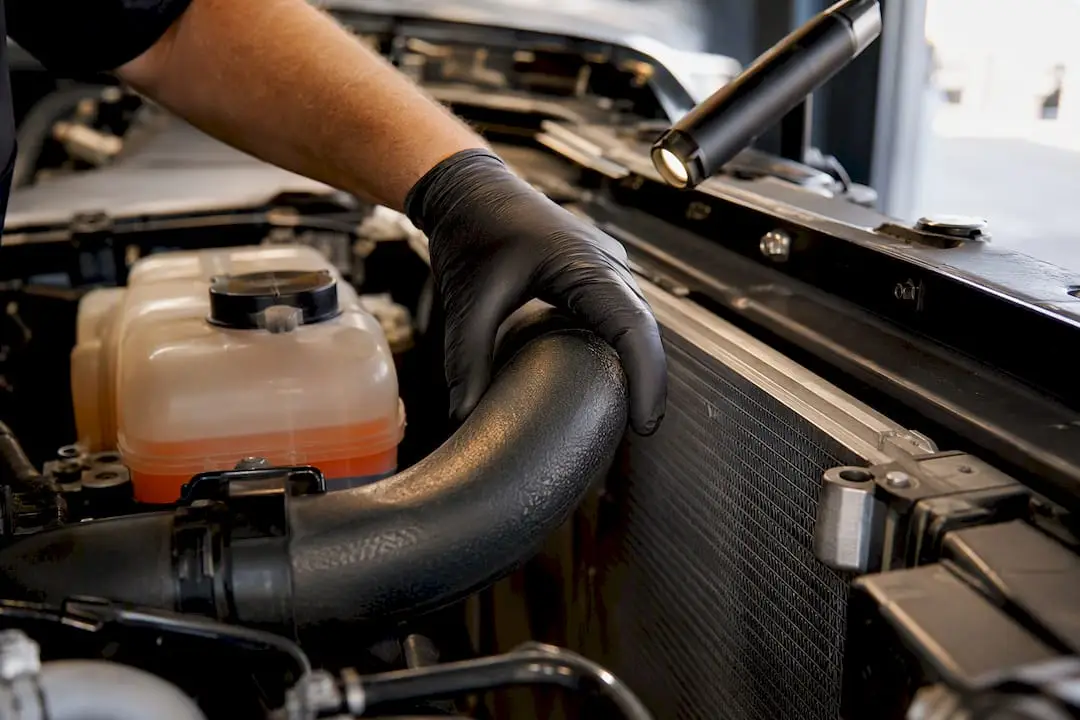
Cooling system. Look at the radiator for bent fins or leaks, squeeze the upper and lower hoses for soft spots or cracking, and verify coolant type matches the manufacturer spec. Rusty or oily coolant is a red flag for head gasket or transmission cooler cross-contamination.
Brakes. Measure lining or pad thickness against your minimum threshold, check rotor and drum condition for scoring or heat cracking, and on air-brake-equipped units, verify air system pressure build time and check valve function. Brakes, tires, and lighting cause the majority of roadside out-of-service violations, so these items deserve the most scrutiny on every visit, per Greenlight DOT’s compliance guide.
Tires and wheel ends. Check pressure against the load chart, measure tread depth, inspect sidewalls for cuts or bulges, and torque-check lug nuts, especially after any wheel-off service.
Steering and suspension. Check for excess play in the steering wheel, inspect ball joints and tie rod ends for looseness, and look at shocks or airbag suspension elastomers for cracking or leaking.
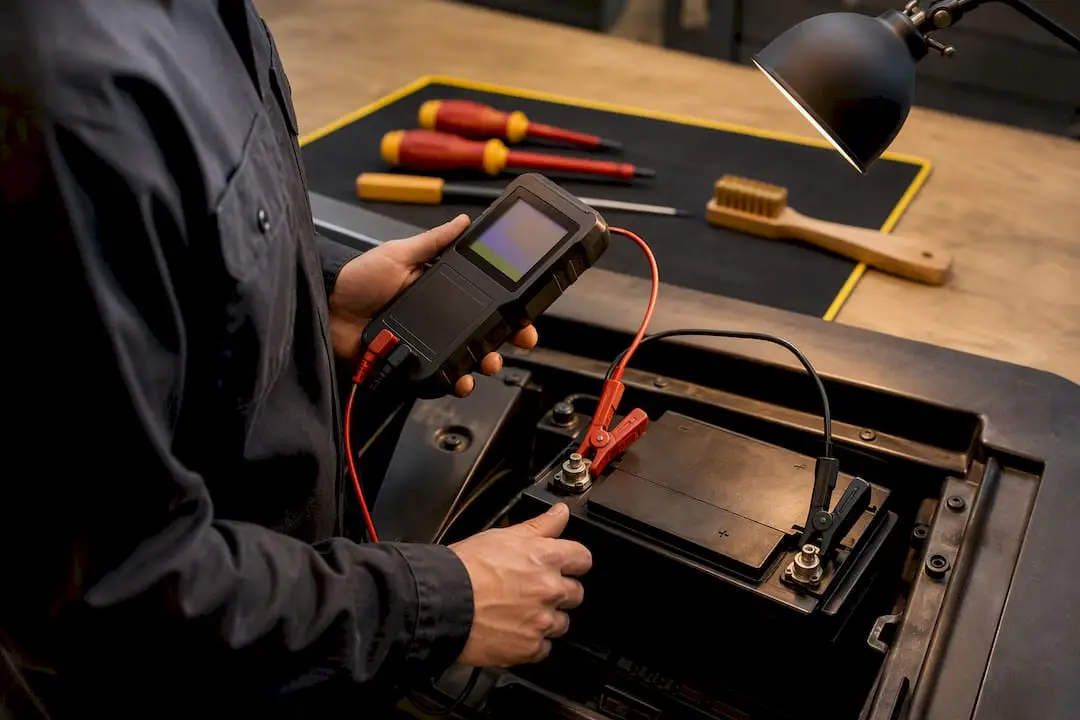
Electrical and battery. Clean terminal corrosion, load-test the battery, verify alternator output under load, and pull diagnostic trouble codes with a scan tool rather than relying on the dash warning light alone.
Lights and reflectors. Verify every required lamp and lens is present, clean, and functioning, including marker lights and reflective tape that are easy to overlook during a quick glance.
Exhaust and aftertreatment. Inspect for leaks at joints and the manifold, and check DPF and DEF system indicators. Fleets running diesel equipment should fold emissions checks directly into the PM cycle rather than treating them as a separate concern, following EPA guidance on inspection and maintenance programs.
Body and safety gear. Confirm mirrors are adjusted and intact, seatbelts retract and latch properly, and the fire extinguisher and warning triangles are present and within their service date.
Every checklist line needs a few consistent fields to be useful later:
- Odometer or engine hours at the time of inspection
- Pass or fail marking for each item, not just a checkmark
- Technician initials
- Work order number tying the inspection to the repair record
Pro Tip: Build your checklist in the same physical order a technician walks the vehicle: front to back, top to bottom. A sheet that jumps between systems randomly gets rushed, and rushed inspections are where defects slip through.
Mapping the Checklist to PM-A, PM-B, and PM-C Service Tiers
Not every item needs checking every time you touch a vehicle. That’s why most fleets running a fleet preventive maintenance checklist structure their program in tiers, commonly labeled PM-A, PM-B, and PM-C, so shop time scales with what actually needs attention at each interval, according to Heavy Duty Journal’s PM compliance guide.
- PM-A covers the safety-critical items you check most frequently: lights, tires, brake basics, fluid levels, and leaks. This is your quick, high-frequency pass, often scheduled every few weeks depending on duty cycle.
- PM-B adds intermediate service work on top of the PM-A list: oil and filter changes, a deeper brake inspection down to lining measurements, and a more thorough steering and suspension check.
- PM-C is the comprehensive tier. It combines PM-A and PM-B coverage with full-system inspection and aligns with the annual DOT periodic inspection required under 49 CFR Part 396.
Choosing the right trigger for each tier matters as much as the checklist content itself. Mileage works fine for over-the-road trucks with predictable annual usage, but it fails for equipment that idles heavily or runs power take-off systems for hours without moving. In those cases, engine hours should be the primary trigger, since a unit that idles all day accumulates wear without ever showing it on the odometer, a point echoed in MySafetyManager’s guidance on truck PM design.
Calendar-based triggers act as a backstop for low-use vehicles: a seasonal box truck that sits for two months still needs fluids checked and a battery tested before it goes back into rotation. A well-built fleet service schedule usually runs all three trigger types simultaneously and services the vehicle on whichever one comes first.
Turning Checklist Lines Into Scheduled Work Orders
A checklist that never generates a work order is just a piece of paper. The item that actually enforces compliance is the recurring work order tied to each PM trigger, since converting checklist lines into closed work orders creates the audit trail regulators and insurers expect, per Fleet Service 365’s PM guide.
The workflow runs in a straight line: a due trigger fires (mileage, hours, or date), a work order opens with the correct checklist tier attached, a technician completes the inspection and logs parts and labor against it, then the work order closes and the system schedules the next interval automatically.
For that work order to hold up under scrutiny, it needs to capture:
- Date and odometer or engine hours at service
- Parts consumed, with part numbers
- Technician name or ID
- Photos of any flagged defect
- A sign-off confirming the vehicle is fit for service
Track two numbers to know if the program is actually working: PM completion rate (the percentage of scheduled PMs done on or before their due date) and the ratio of preventive to reactive repair orders. A healthy program leans heavily preventive; a fleet doing more emergency repairs than scheduled ones is running its checklist in name only.
High-performing operations assign a clear owner to each step. A driver reports the defect, a safety manager triages its urgency, a technician performs the repair, and a separate verifier confirms the work order actually closed correctly, a division of labor that prevents dropped items from Heavy Duty Journal’s compliance framework.
Pro Tip: Any defect touching brakes, steering, or a load-bearing suspension component should trigger an automatic out-of-service hold until a technician clears it. Don’t leave that call to driver judgment under a deadline.
Daily Driver Inspections and DVIR Requirements
Drivers are your first line of defense, and their daily checks are a different process from technician PMs entirely. Daily inspections catch defects the fastest simply because they happen every day a vehicle runs, while scheduled PMs happen on a longer cycle.
A solid pre-trip and post-trip routine covers:
- Headlights, brake lights, and turn signals
- Brake pedal feel and any unusual noise
- Tire condition and visible pressure
- Fluid leaks under the vehicle
- Required safety equipment on board
The FMCSA requires drivers to prepare a written Driver Vehicle Inspection Report (DVIR) noting any defect that could affect safety or cause a breakdown, and carriers must retain those reports and act on documented defects before the vehicle returns to service. A pre-trip inspection checklist built around these same categories keeps drivers consistent from one shift to the next.
Photo attachments and mobile DVIR apps speed up the process and give the shop visual context before the vehicle even arrives. Build a no-fault reporting culture, too. Drivers who fear blame for reporting a defect will quietly skip items, and that habit defeats the entire point of a daily check.
Recordkeeping Rules: What to Keep and for How Long
An inspector doesn’t just want to hear that you have a maintenance program. They want to see it on paper, and the retention clock varies by document type.
Keep, for every vehicle in the fleet: identification details (VIN, unit number), the service schedule assigned to it, a complete inspection and repair history, and copies of annual periodic inspection reports.
Retention periods matter as much as the records themselves:
- DVIRs: retain for three months
- Periodic (annual) inspection reports: retain for 14 months
- General maintenance history: retain per your operating authority’s guidance, commonly the life of the vehicle in your fleet
These figures come from state transit agency PM handbooks and align with FMCSA’s federal recordkeeping expectations. Closed work orders are your best evidence in an audit; a stack of completed, dated, initialed WOs tied to a PM-C schedule tells an inspector your program is real, not aspirational. Run a quick internal audit quarterly: pull five random units, confirm their PM-C dates line up with the annual inspection requirement, and check that no DVIR sat open past its due date. Also keep a habit of checking the NHTSA recall database against your active fleet roster, since a safety recall on a unit you already own won’t show up on any internal checklist.
Tools and Templates: What Every PM Sheet Needs
Whether you run paper sheets or a full CMMS, every template needs the same core fields: vehicle ID and VIN, current odometer or hours, the checklist items themselves, pass/fail marks, parts used, work order number, and technician initials.
- A CMMS pays off once you’re managing more than a handful of units, and it should offer recurring work order generation, mileage/hour/date triggers, photo attachments, and basic compliance reporting.
- Smaller fleets often do fine with a well-formatted spreadsheet or printable sheet, as long as someone owns entering the data consistently.
- Mobile checklists work best when built vertically, one item per screen, so a technician isn’t scrolling and missing lines mid-inspection.
A free preventive maintenance checklist template gives you a starting structure you can adapt to your own fleet’s systems and tiers without building one from scratch.
Kwik Kar’s Role in Supporting Fleet PM Programs
A local shop with certified technicians provides PM work with consistent, documented service. For multi-vehicle accounts, that includes oil changes, inspections, and repairs with consolidated billing across the fleet. A complete fleet vehicle maintenance program guide covers when outsourcing PM-A and PM-B work to a shop makes more sense than keeping it entirely in-house.
Why Preventive Maintenance Pays for Itself
Preventive maintenance is an investment, not an expense, and the shops that see the most breakdown-driven repairs are almost always the ones without a real, owner-based recurring work order system. Neglected PM shows up as brake failures, cooling system blowouts, and tire separations that a $30 filter or a five-minute hose inspection would have caught months earlier. Assign an owner to every checklist line, and the whole program runs itself.
— Kwik Kar
Get Fleet PM Support From a Local Fort Worth Shop
Running a fleet preventive maintenance checklist on your own takes discipline and staff time most operators don’t have to spare. A local shop can handle the PM-A and PM-B workload for fleet managers, providing service with certified technicians and consolidated billing across multiple vehicles.
Bring your fleet in for oil change service on a recurring schedule, and let the shop track intervals so nothing falls through. Fleets managing frequent oil and filter cycles across several vehicles can also use the oil change coupon page to keep routine visits affordable. If your team is still building out a maintenance management workflow around recurring work orders, the Wells Manager blog has useful background on scheduling practices that pair well with a shop partnership. Contact a local auto care provider to set up a fleet account and schedule your first vehicles for PM service.
Sources
- MDOT Preventive Maintenance Manual (excerpts)
- FMCSA DVIR and inspection guidance (Driver vehicle inspection report form and references)
- EPA general information on vehicle emissions inspection and maintenance
FAQ
How do you do fleet maintenance?
Fleet maintenance runs on a tiered PM schedule, daily driver inspections, and work orders that get logged and closed for every service, so nothing depends on memory or a single person’s follow-through.
What is a maintenance checklist?
A maintenance checklist is a documented list of inspection and service items, grouped by vehicle system, each with a pass/fail result, an interval trigger, and an assigned owner responsible for the repair.
What is a PM checklist?
A PM checklist is the specific set of items a technician verifies during a scheduled preventive maintenance visit, typically organized into tiers like PM-A, PM-B, and PM-C based on how comprehensive the visit needs to be.
What are the main factors to consider when performing preventive maintenance?
Key factors include the vehicle’s duty cycle, the right trigger type (mileage, engine hours, or calendar), safety-critical systems like brakes and tires, manufacturer-recommended intervals, technician ownership of each work order, and complete recordkeeping for audit purposes.
Does Kwik Kar Oil Change & Auto Care service fleet vehicles?
Yes, Kwik Kar Oil Change & Auto Care supports multi-vehicle fleet accounts with oil changes, inspections, and repairs, using certified technicians and consolidated billing for fleet customers in the Fort Worth area.