



An oil pan gasket leak is a slow loss of engine oil from the seal between the engine and the metal pan that holds the oil. It usually shows up as dark spots under your parked car, a burning smell after a drive, or a low reading on the dipstick. A small seep can wait a short time for a proper repair. An active drip, a low oil level or an oil pressure warning cannot. The permanent fix is replacing the gasket, not adding something to the oil.
Below, we explain how to confirm the gasket is the source, how serious the leak is, when to stop driving, what replacement involves and what it tends to cost. We also cover what we see on Fort Worth roads that makes small leaks worse.
TL;DR
- Oil spots under the car, grime around the bottom of the engine and a burning oil smell are the classic signs of a failing oil pan gasket.
- Not every leak at the bottom of the engine is the pan gasket. The drain plug, oil filter and valve cover can all leave oil in the same area, so confirm the source before you pay for a repair.
- Short, careful trips may be possible with a small seep, but stop right away if the oil pressure light comes on or you smell burning oil.
- Additives may slow a seep on an aged gasket, but they do not repair a failed one. Replacement is the lasting fix.
- National averages for replacement run roughly $933 to $1,037, and trucks, SUVs and European vehicles can cost more because the pan is harder to reach.
Table of Contents
- What does an oil pan gasket do, and why does it leak?
- What are the symptoms of an oil pan gasket leak?
- How can you tell the leak is from the oil pan gasket?
- How serious is an oil pan gasket leak?
- Can you drive with a leaking oil pan gasket?
- Can you fix an oil pan gasket leak without replacing the gasket?
- How is an oil pan gasket replaced?
- How much does oil pan gasket replacement cost?
- Our perspective: diagnose first, repair once
- How do you prevent oil pan gasket leaks?
- Does a leak affect emissions or inspections in Texas?
- Get an oil pan leak checked in West Fort Worth
- FAQ
- Sources
What does an oil pan gasket do, and why does it leak?
The oil pan sits at the bottom of the engine and holds the oil when the engine is off. A gasket (a flat seal made of cork, rubber or a composite material, sometimes paired with sealant) sits between the pan and the engine block so the oil stays inside.
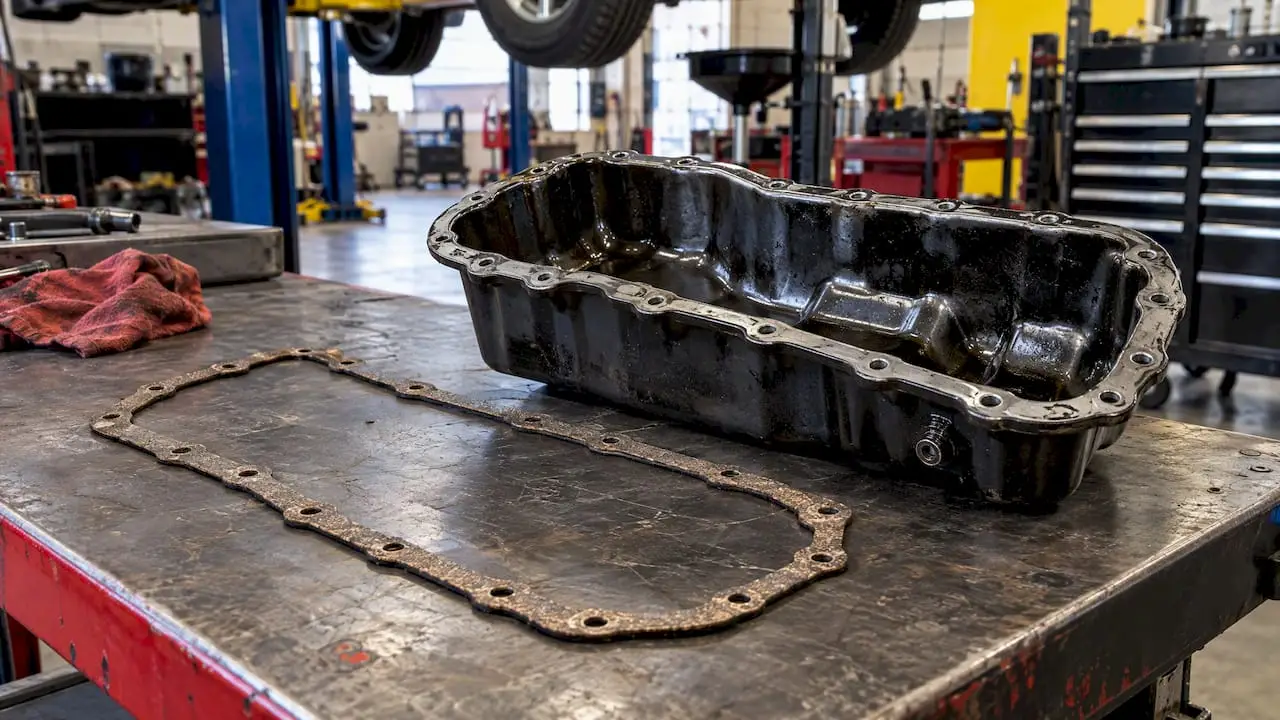
Gaskets do not last forever. Constant heat, pressure, vibration and contact with hot fluids wear even a good gasket over time, as Fel-Pro explains in its guide to oil leaks. A gasket that has hardened, shrunk or cracked stops sealing evenly, and oil starts to seep along the seam.
A few other things cause or mimic a pan leak:
- Over-tightened or uneven pan bolts that distort the pan flange.
- Road damage to the pan itself, such as a dent or crack from debris.
- A worn or poorly seated drain plug and washer. A 2015 GM service bulletin tells technicians to inspect the drain plug seal and oil filter gasket when chasing leaks that appear after an oil change.
- Oil running down from higher up. A leaking valve cover gasket often drips down and coats the pan, so the pan looks guilty when it is not.
What are the symptoms of an oil pan gasket leak?
Most drivers notice one of these first:
- Oil spots or puddles on the driveway or parking space after the car has sat.
- Grime and wet, greasy buildup around the edges of the oil pan.
- A burning oil smell while driving, which happens when drips reach hot exhaust parts. AutoZone lists these signs along with low oil levels and overheating.
- Needing to top off oil between changes when the engine is not burning it.
- An oil pressure warning light, which means the situation has moved past a slow seep. See our guide on the oil pressure light and what to do before engine damage sets in.
Oil on the ground looks similar to other fluids. If you are not sure what you are looking at, our page on identifying a fluid leak under your car walks through colors and textures. Fresh oil is amber to dark brown. Coolant tends to be green, orange or pink and smells sweet. If the color is off, our coolant leak symptoms guide is the better place to start.
How can you tell the leak is from the oil pan gasket?
Leaks travel. Oil from the top of the engine runs down, and airflow while you drive blows it backward. So the spot on the ground is only a clue. A technician traces the leak to its highest, freshest point. Tomorrow’s Technician notes that visual leak tracing and dedicated tools are the standard approach, with greasy stains appearing around or below seams and seals.
Here is a simple routine you can follow before you call a shop:
- Park on clean cardboard overnight so you can see where drops land and how fast.
- Check the dipstick on level ground with the engine off and cool. Note the reading.
- Look at the pan seam with a flashlight if you can see it safely. Wet oil along the whole seam points to the gasket. A single wet spot at one bolt or at the drain plug points to something smaller.
- Note timing. A leak that began right after an oil change often traces to the drain plug, washer or filter, not the gasket.
A shop can go further: cleaning the engine underside, adding a UV dye to the oil, and then checking with a light after a short drive. That is how you avoid paying for a pan gasket when the real culprit is a valve cover or rear main seal. We cover the broader process in our article on on-site auto diagnosis.
How serious is an oil pan gasket leak?
The leak itself is rarely dramatic. The risk is what it does to your oil level. Low oil increases friction between moving parts and speeds up wear, and if it drops far enough it can cause severe engine damage, according to AutoZone. HowStuffWorks makes the same point: losing too much oil can leave the engine low and lead to failure if the leak goes unfixed.
A useful way to rank what you are seeing:
| What you see | How urgent | What to do |
|---|---|---|
| Faint dampness on the pan seam, oil level steady | Low, but schedule it | Check the dipstick weekly and book an inspection |
| A few spots on the driveway each week | Moderate | Book a diagnosis soon and keep oil topped up |
| Fresh puddle or active dripping | High | Avoid long drives and get the car to a shop |
| Oil pressure light, burning smell, or smoke | Stop now | Pull over safely, shut the engine off and call for a tow |
A fixed amount of oil loss is also a fire consideration. Oil that lands on a hot exhaust can smoke or ignite, which is one reason a burning smell deserves attention. These tips for preventing car fires cover other habits that keep a vehicle safer on the road.
Can you drive with a leaking oil pan gasket?
Sometimes for a short distance, but it is not recommended. Castrol’s guidance is that short drives may be possible if the leak is small and the oil level stays in the safe range. It also says to stop if the oil pressure light comes on or you smell burning oil. If the level is low or you see active dripping, avoid long drives and arrange a tow.
Fort Worth driving adds a few factors:
- Summer heat. Triple-digit afternoons and heavy stop-and-go traffic on I-30 and Loop 820 keep oil hot for long stretches. Hot oil is thinner, and a marginal seal can weep faster.
- Highway runs and road trips. Long drives to Dallas, Austin or beyond use oil at a steady rate. Check the dipstick before you leave, not after the warning light appears.
- Trucks and SUVs. Towing and hauling add load and heat, and these vehicles often have lower pans exposed to road debris.
If you have to move the car, check the oil first, top it up to the proper mark with the grade in your owner’s manual, and drive straight to the shop rather than running errands along the way.
Can you fix an oil pan gasket leak without replacing the gasket?
Not permanently. According to Tomorrow’s Technician, no additive can stop a major leak or repair a broken gasket or worn seal. Sooner or later, a leaking gasket has to be replaced. Stop-leak products can sometimes slow a seep by swelling aged seals, which may buy a little time on a high-mileage engine. They are a stopgap, not a repair, and they do nothing for a cracked pan or a loose bolt.
If you drive an older, higher-mileage car and want to stretch the time between repairs, the right oil matters too. Our guide to oil for high-mileage engines explains what these formulas are designed to do.
How is an oil pan gasket replaced?
The steps are simple to describe and tedious to carry out:
- Raise the vehicle and drain the oil.
- Remove any parts in the way, such as skid plates, exhaust pieces or crossmembers.
- Unbolt and lower the pan.
- Clean both mating surfaces completely, since leftover gasket material or oil causes a new leak.
- Install the new gasket, with sealant only where the manufacturer calls for it.
- Torque the bolts evenly, to specification and in sequence.
- Refill with the correct oil and a fresh filter, then run the engine and check for seepage.
AutoZone notes that access may require lowering a subframe or significant disassembly on some vehicles. Some manufacturers publish specific procedures. For example, a 2025 Ford bulletin calls for a carrier gasket and RTV sealant at the T-joints on listed vehicles and describes the job as one for trained professional technicians.
That is why the same job can be a short afternoon on one car and a long day on another. It is also why uneven torque, reused gaskets and skipped cleaning are the usual reasons a repair leaks again.
How much does oil pan gasket replacement cost?
Kelley Blue Book reports an average of $933 to $1,037 for oil pan gasket replacement, and its tool adjusts the figure for your vehicle and area. The part is cheap. Most of the bill is labor, so the price depends mostly on:
- How hard the pan is to reach. Subframes, exhaust components and transmission mounts can all be in the way.
- Vehicle type. Trucks, SUVs and European vehicles often take more time and need specific parts or tools. Our article on why European vehicles need specialized tools explains one reason.
- Pan condition. A dented or corroded pan may need replacing, not just resealing.
- Related leaks. If the valve cover or rear main seal is also seeping, it often makes sense to address it while the area is open.
- Oil and filter. The job includes fresh oil, so the grade and capacity of your engine matter.
We do not publish set prices for this repair, because the right quote depends on your exact vehicle and what the inspection finds. For more on how leak repairs are priced, see our oil leak repair cost guide.
Our perspective: diagnose first, repair once
We see the same pattern often. A driver notices a few spots, adds a bottle of oil every few weeks and hopes it holds. Months later, the oil level drops on a hot day in traffic and the repair conversation changes.
Our approach is to find the real source before recommending anything. ASE-certified technicians use professional diagnostic equipment and a digital vehicle inspection, so you can see what we see instead of taking our word for it. If the pan gasket is the cause, we say so. If it is the valve cover or the drain plug, we say that too, because the cheapest correct repair is the one that fixes the actual leak.
We are a full-service repair shop, not just an oil change counter. That matters here because a leak rarely travels alone. A technician who can also look at the engine, cooling system, brakes and suspension can tell you what needs attention now and what can wait. Our repairs are backed by a 24-month/24,000-mile warranty on qualifying repairs, and the shop holds RepairPal certification.
Kwik Kar
How do you prevent oil pan gasket leaks?
You cannot stop a gasket from aging, but you can avoid what speeds it up:
- Follow your manufacturer’s maintenance schedule. The owner’s manual lists the oil and filter intervals for your engine and driving conditions. Hard use such as towing, short trips or heavy traffic is often treated as severe service there.
- Check oil regularly. A monthly dipstick check catches a slow loss before a warning light does. If you suspect the engine is using oil, see our article on a car burning oil fast.
- Watch for oil that looks wrong. Very dark or sludgy oil is a sign of overdue service. Our guide to what makes engine oil turn black explains what is normal.
- Ask for an underside look at every oil change. Early seepage is cheaper to deal with than a dripping pan.
- Avoid over-tightening. Fel-Pro warns that overtightened fasteners can distort covers and gaskets and worsen a leak. Torque specs exist for a reason.
- Protect the pan. Slow down over debris and potholes, especially in a lower vehicle.
Preventive inspections, filter replacement and fluid exchanges are part of the preventative maintenance we perform, and they are where most early leaks get noticed.
Does a leak affect emissions or inspections in Texas?
Since January 1, 2025, most noncommercial vehicles in Texas no longer need an annual safety inspection, as FOX 4 reported. Emissions testing continues in the counties that require it, and that includes Tarrant County for eligible vehicles. Qualifying commercial vehicles remain subject to safety inspection requirements. Check the Texas DPS or your county tax office for the current rules that apply to your vehicle.
A leak will not automatically fail you, but oil on the exhaust or a worn engine can contribute to smoke and other problems. If you see blue or gray smoke, our guide to exhaust smoke color can help you tell oil burning from other issues.
Get an oil pan leak checked in West Fort Worth
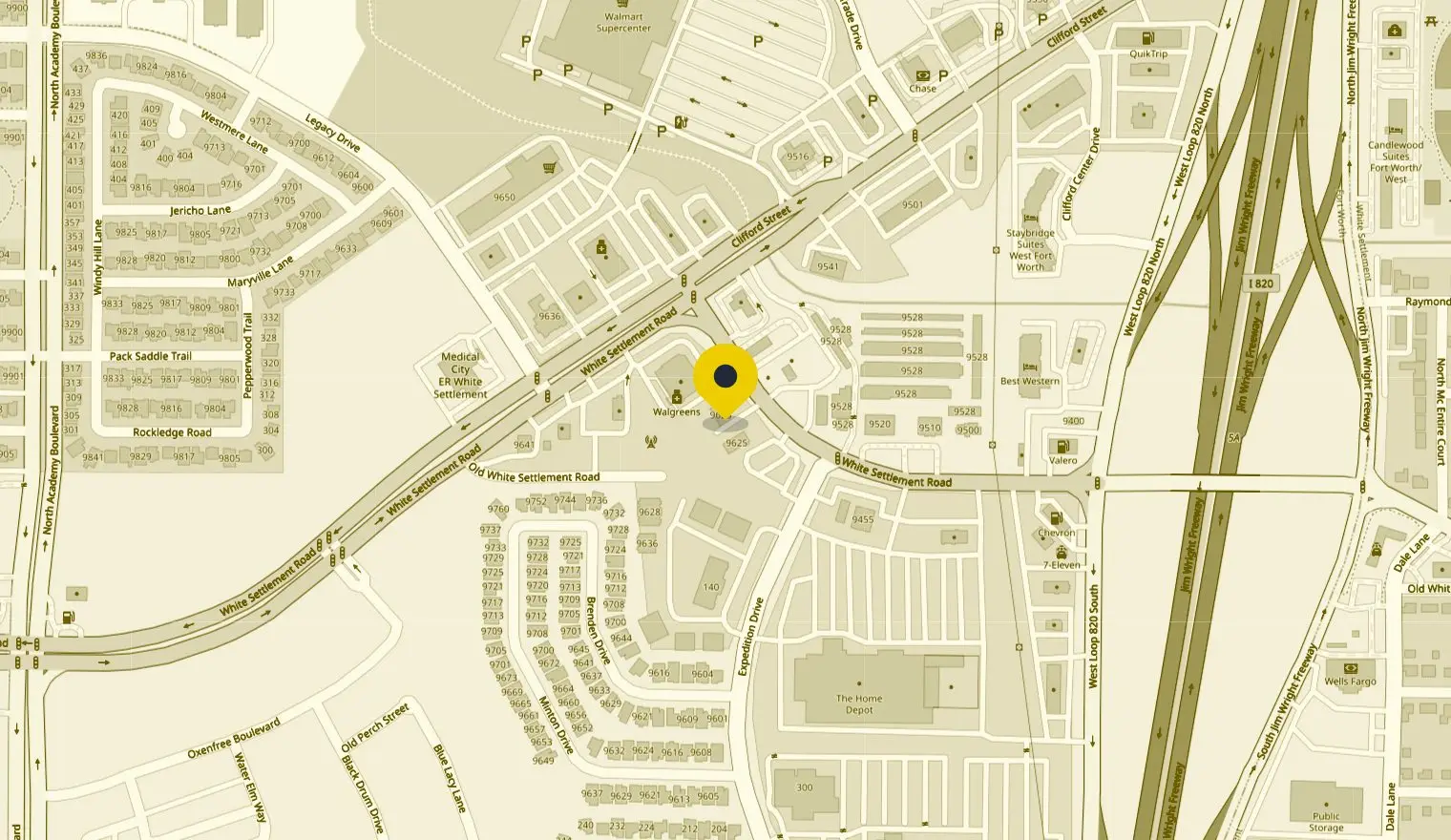
We are at 9613 White Settlement Rd, Fort Worth, TX 76108, a straightforward drive for drivers in White Settlement, Westworth Village, Westover Hills, River Oaks, Lake Worth and Benbrook. This is our only location. We inspect the leak, show you the findings in a digital vehicle inspection and explain your repair options before any work starts.

See everything we handle on our auto repair services page, from engine diagnostics to oil changes, or schedule an appointment at kwikkarwhitesettlement.com. If you manage a work or rideshare vehicle, our fleet page covers multi-vehicle accounts. Our shop has also earned CARFAX Top-Rated recognition.
FAQ
How serious is an oil pan gasket leak?
It depends on how fast you lose oil. A slow seep with a steady dipstick reading is a repair to schedule soon. A fast drip, a low oil level or a warning light can lead to engine damage, because low oil increases friction and wear.
Can I drive with a leaking oil pan?
Only for short distances and only if the leak is small and the oil level stays in the safe range. Stop if the oil pressure light comes on or you smell burning oil. Tow the car if you see active dripping or the level is low.
Is replacing an oil pan gasket hard?
The steps are simple, but access is not. Some vehicles need a subframe lowered or exhaust parts removed, and every mating surface must be spotless with bolts torqued to spec. Many manufacturers describe the procedure as one for trained technicians.
Will stop-leak additive fix my oil pan gasket?
No. Additives can sometimes slow a seep by swelling aged seals, but they cannot repair a broken gasket. The gasket still needs to be replaced.
How do I know it is the pan gasket and not another leak?
Oil from the valve cover, drain plug or oil filter can end up on the pan. A technician cleans the area, may add dye to the oil and traces the leak to its highest point before recommending a repair.
Sources
- Diagnostic Tips for Preventing Oil Leaks After Changing the Oil (GM service bulletin, 2015)
- Ford Technical Service Bulletin 25-2395, Oil Pan Leaking (2025)
- How to Replace an Oil Pan Gasket, AutoZone
- ASE G1 Prep: Gaskets and Leak Diagnostics, Tomorrow’s Technician
- How to Fix an Oil Pan Leak, HowStuffWorks
- How to fix an oil leak: causes and repair costs, Castrol USA
- Causes of Oil Leaks, Fel-Pro
- Oil Pan Gasket Replacement Costs, Kelley Blue Book
- Texas won’t require vehicle inspections starting Jan. 1, FOX 4
- Tips for preventing car fires