



The most common brake pad symptoms are a high-pitched squeal, a grinding or scraping noise, a pulsing pedal or steering wheel, a car that pulls to one side, and longer stopping distances. Some of these mean you have time to book a visit. A few mean you should stop driving. This guide sorts them so you know which is which.
One caution up front: these signs overlap with rotor, caliper, brake fluid, tire and suspension problems. AAA’s guidance lists the same symptoms for the whole brake system, so a hands-on inspection is the only way to know whether pads alone are the cause.
TL;DR
- A squeal or grinding when you brake, a pull to one side, vibration, a burning smell or a brake warning light all call for an inspection soon.
- A soft or sinking pedal, a fluid leak, or a smoking wheel is different: stop driving and arrange a tow.
- Pad life varies widely. Mileage alone cannot tell you when to replace them.
- Visible pad thickness through the wheel can mislead, because inner and outer pads can wear differently.
- Kwik Kar in Fort Worth inspects brakes and replaces pads and rotors. Book an inspection if something feels off.
Table of Contents
- The nine signs, from noise to feel
- Quick reference: what you notice and how urgent it is
- When to stop driving and call a tow
- How long brake pads last, and why mileage misleads
- Why looking through the wheel is not enough
- Pads only, or rotors too?
- Our perspective: inspect first, then decide
- Get your brakes checked in Fort Worth
- FAQ
- Sources
The nine signs, from noise to feel
1. A high-pitched squeal
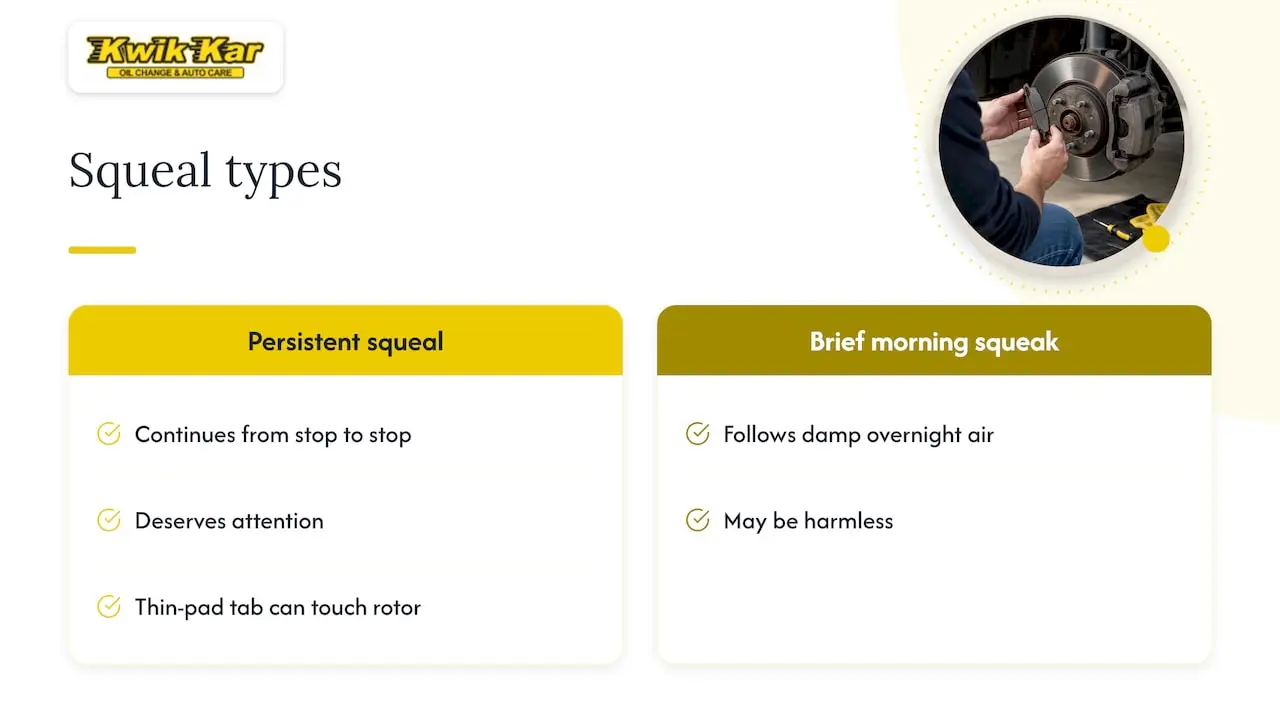
Many pads include a built-in wear indicator, a small metal tab. When the pad gets thin, the tab touches the rotor and makes a high-pitched sound. AAA describes this high-pitch or grinding noise as a strong indicator that the pads have worn thin.
Not every squeak is a warning. A brief squeak first thing in the morning after damp overnight air can be harmless, according to AAA’s brake service tips. A squeal that sticks around from stop to stop deserves attention. Our brake squeal checklist walks through the quick things to look at safely.
2. Grinding or scraping
Grinding is the sound of metal on metal, or something close to it. Once the friction material is gone, the pad’s backing plate can bite into the rotor. That tends to turn a pad replacement into a pad-and-rotor replacement. If you hear grinding, schedule service promptly and avoid long trips in the meantime.
3. Vibration in the steering wheel or brake pedal
A pulsing pedal or a shaking steering wheel under braking often points to a rotor that is uneven or warped, though worn or sticking components can contribute. It is on AAA’s list of symptoms, but it is a good example of why a pad-only diagnosis can miss the real issue. If you want to understand what a technician measures, see our guide on how to inspect brake rotors.
4. Pulling to the left or right
If the car drifts to one side when you brake, the brakes are not working evenly. A sticking caliper, a collapsed hose or pads that are worn unevenly can all cause it. Tires and suspension can also do it, which is another reason to have someone look at the whole system. We explain the wear pattern side in what causes uneven brake pad wear.
5. Longer stopping distances
You press the pedal and the car takes more road to stop, or you find yourself braking earlier than you used to. This change is often gradual, so you may adapt to it without noticing. Ask a passenger or a family member who drives the car whether it feels different.
6. A low or soft pedal
A pedal that feels spongy, sits lower than normal or sinks slowly under steady pressure is not a pad-wear signal to wait on. See the safety section below. Our hold test for a soft brake pedal explains what the feel can mean, but if the pedal is going toward the floor, do not run tests. Call for a tow.
7. A burning smell
An acrid, hot smell after hard or repeated braking can mean the brakes are overheating, possibly from a caliper that is not releasing. It is listed among the signs in the AAA brake guidance. Pull over when it is safe.
8. A brake warning light
A lit brake warning light is the car telling you to have the system checked. Do not treat it as a nuisance. Car Care Council names an illuminated brake warning light among the reasons to get brakes inspected.
9. Thin pads you can see
Look through the spokes of the wheel. AAA says pads thinner than about 1/4 inch are likely due for replacement, and another AAA guide points to roughly 3 mm as a replacement point. Treat these as inspection guidelines. Your vehicle manufacturer’s limits control. Our article on replacing pads at 3 mm explains why waiting for the last sliver is a poor plan.
Quick reference: what you notice and how urgent it is
| What you notice | What it may mean | What to do |
|---|---|---|
| Squeal that comes and goes after damp nights | Surface moisture on the rotors | Watch it. If it persists, book an inspection |
| Constant squeal | Pad wear indicator contacting rotor | Book an inspection soon |
| Grinding or scraping | Pads worn through, rotor contact | Service promptly, limit driving |
| Pulsing pedal or shaking wheel | Rotor issue, sticking parts | Inspection soon |
| Pull to one side | Uneven braking, caliper, hose, tires or suspension | Inspection soon |
| Burning smell or smoke | Overheated brakes, sticking caliper | Pull over, let cool, then arrange service |
| Soft pedal, pedal near floor, fluid leak | Hydraulic problem | Stop driving, tow it in |
When to stop driving and call a tow
Some situations are not drive-to-the-shop situations. Based on AAA’s brake guidance, arrange a tow if:
- The pedal feels soft or spongy, or goes unusually low or toward the floor.
- Braking is severely reduced.
- You see brake fluid leaking.
- A wheel is smoking.
If the brakes are smoking or smell acrid, do not pour water on them. The same AAA source warns that abrupt cooling can warp metal. Pull over safely and let them cool. A sticking caliper still needs prompt professional service, even after the smoke stops.
If you are unsure whether your situation falls into this group, treat it as if it does and call us or a towing service first. Brake fluid also matters here, since low fluid can come from a leak or from wear. Our guide on what brake fluid does covers why.
How long brake pads last, and why mileage misleads
AAA mechanic guidance puts typical pad life at about 30,000 to 40,000 miles, while another AAA source gives a wider range of 30,000 to 70,000 miles for front pads. That spread is wide because pad life depends on the vehicle, the pad material, traffic, hills, load, towing and how you drive.
In Fort Worth, a few things tend to shorten that life:
- Stop-and-go traffic on commuter routes
- Heavy SUVs and trucks, especially when towing or hauling
- Delivery and rideshare routes with constant stopping
- Repeated hard braking
Highway miles are gentler on pads. Two drivers with the same odometer reading can have very different pad thickness.
Brake dust is another clue you can see. Heavy dust on the wheels often accompanies pad wear, and a guide on removing brake dust safely can help you keep wheels clean, though cleaning will not tell you how much pad is left.
Why looking through the wheel is not enough
Visible pad thickness can be misleading. According to AAA’s Ask a Mechanic, the inner and outer pads can wear differently, so the pad you can see may look fine while the other is nearly gone. A useful inspection checks:
- Both the inner and outer pads
- Rotor thickness and runout
- Calipers
- Hoses and lines
- Warning lights
The Car Care Council recommends a brake inspection at least once a year, even with no symptoms. Its thorough version includes lining wear, brake fluid level, rotor thickness, hoses and lines, warning lights and a road test. That yearly check is especially practical for high-mileage fleet, Uber, Lyft and delivery vehicles. For a plain-language rundown of the work involved, read what brake service includes.
Pads only, or rotors too?
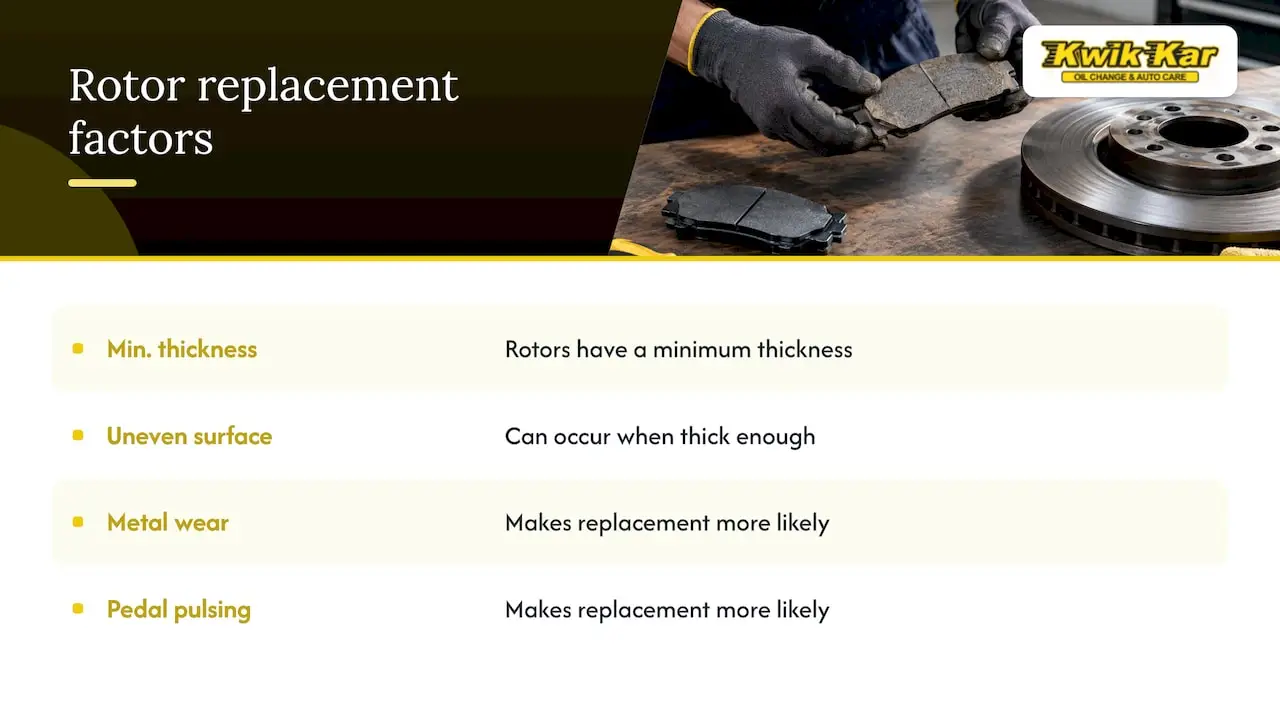
This is the question most drivers ask next, and the honest answer is that it depends on measurement. Rotors have a minimum thickness, and they can be uneven even when thick enough. If pads have worn to the metal or the pedal pulses, rotors are more likely to need replacement along with the pads. Our explainer on why rotors can surprise you on a brake bill goes into how that decision is made. We do not publish prices for brake work, so the way to learn your cost is an inspection of your own vehicle.
Our perspective: inspect first, then decide
Most drivers who come to us for brakes say the same thing: they heard a noise, put it off, and now want to know how bad it is. What we try to do is take the guessing out of it. Our technicians are ASE and RepairPal certified, and we use digital vehicle inspections so you can see what we see before you approve any work.
We would rather tell you that the squeak is nothing serious than sell you a repair you do not need. And we would rather you come in at the first squeal than wait for grinding. Brakes are the system on your car where waiting almost never saves money and sometimes costs safety.
If you drive a heavy SUV or truck, tow, or put long hours on a rideshare or delivery vehicle, ask for a brake check at your regular oil change visits. It is a simple habit.
— Kwik Kar
Get your brakes checked in Fort Worth
Kwik Kar Oil Change & Auto Care handles brake pad and rotor replacement for drivers in Fort Worth, White Settlement and the rest of Tarrant County. We also work on fleets, so if you manage several vehicles, ask us about maintenance for multi-vehicle accounts. See everything we do on our services page, or start at our homepage to schedule an appointment. Tell us what you are hearing or feeling and we will start there.
FAQ
Can I tell if my brake pads are worn?
Often, yes. Squealing, grinding, pulling, a pulsing pedal, longer stops or a brake warning light are the usual clues. You can also look at the pad through the wheel spokes, but inner and outer pads can wear differently, so a technician should check both. A shop inspection is the reliable answer.
How do I tell if I need rotors or just brake pads?
You cannot tell from sound alone. Rotors need to be measured for thickness and runout, and pulsing in the pedal or steering wheel often points to them. If pads have worn down to the metal, rotor damage is more likely. See our guide to brake pad wear for more detail.
What happens when brake pads get low?
First you usually hear a squeal from the wear indicator. If you keep driving, the noise turns to grinding, stopping takes longer, and the rotors can be damaged. At that point the repair is typically bigger and the car is less safe to drive.
How long should brake pads usually last?
AAA sources give figures between 30,000 and 70,000 miles, depending on the source and whether you mean front pads. Your own number depends on traffic, hills, load, towing, pad material and driving style. Inspect them at least yearly rather than waiting for a mileage target.
Is it safe to drive with a soft brake pedal?
No. A soft, spongy or sinking pedal, or one that goes toward the floor, is a reason to stop driving and have the car towed in. AAA guidance treats a weak pedal or a suspected serious leak as a tow-and-inspect situation.
Sources
- 11 Ways To Know You May Need New Brakes, AAA Automotive
- Ask a Mechanic: How Long Do Car Brakes Last?, AAA Northeast
- Stop and Check Your Brakes, Car Care Council
- Signs Your Brakes Need Service, AAA Via