



You hear it at the first stoplight. A scrape, a squeal, maybe a steering wheel shake that wasn’t there last week. Then your mind goes straight to the same place most drivers go. Is it just brake pads, or is something bigger going on?
That worry makes sense. Brake problems are one of those issues you can feel, hear, and sometimes smell, but they’re not always easy to interpret. One pad can wear out long before the others. One side can drag. The car can dip hard when you brake, even after you’ve already paid for brake work.
If you’re trying to understand what causes uneven brake pad wear, the answer usually isn’t random wear and tear. It’s a clue. Something in the system isn’t moving freely, isn’t applying pressure evenly, or isn’t holding the vehicle steady during braking.
That Noise When You Brake A Sign You Cannot Ignore
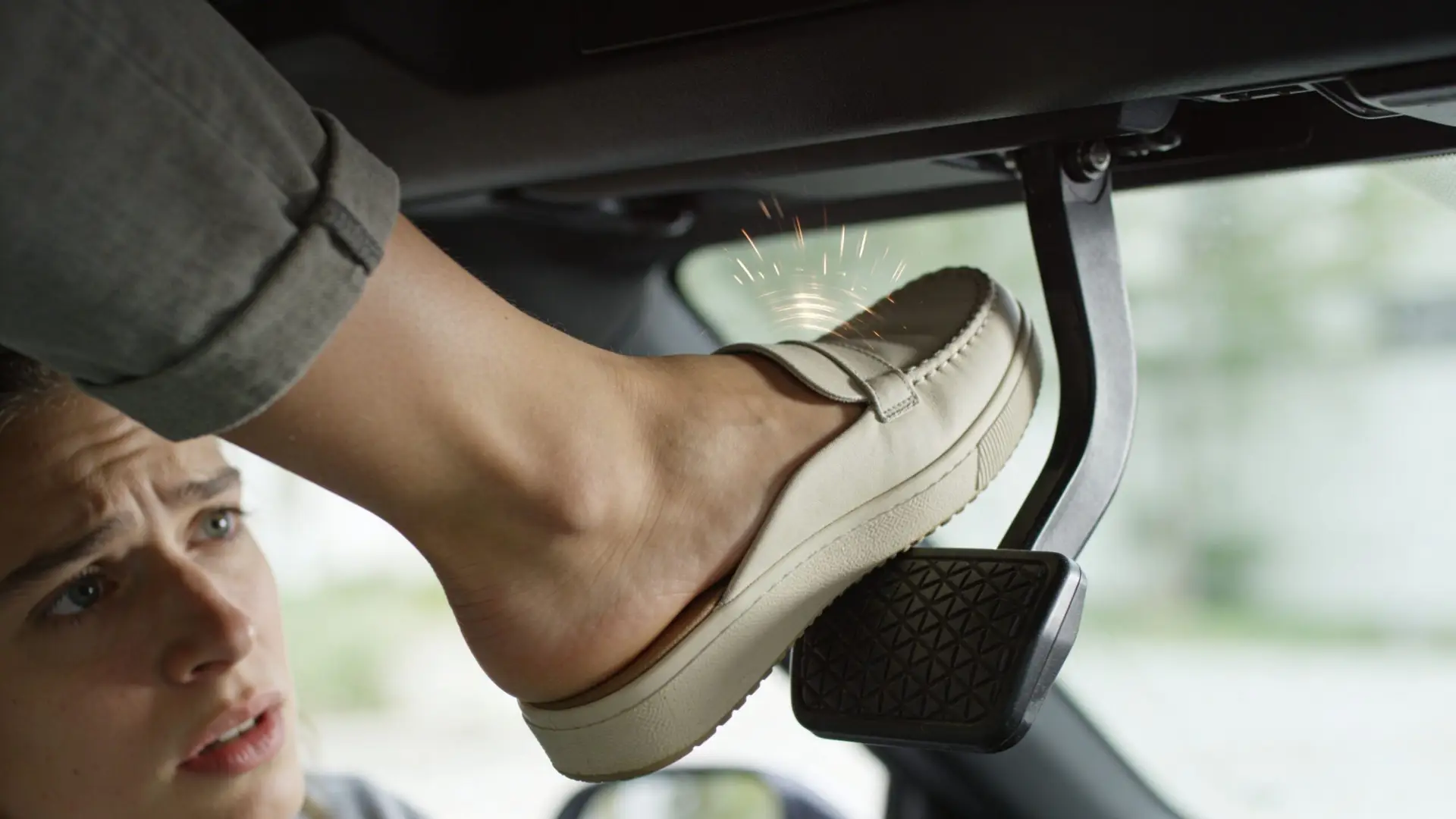
A lot of brake stories start the same way. You back out of the driveway, tap the pedal, and hear a chirp. Later that day, the noise turns into a grind at a stop sign. By the weekend, the car pulls a little to one side and the brake pedal doesn’t feel quite right.
That sequence matters because brake pads don’t usually wear unevenly for no reason. They leave clues before they fail completely.
What drivers usually notice first
Drivers often don’t start by measuring pad thickness. They notice symptoms:
- New noises: Squealing, scraping, grinding, or a rhythmic rubbing sound.
- Brake feel changes: A pedal that feels rough, jerky, or less smooth than normal.
- Vehicle behavior: Pulling, shuddering, or a nose-down feeling that seems stronger than it used to be.
- Wheel heat or smell: One wheel may feel hotter than the others after a short drive.
A grinding brake doesn’t always mean every pad is worn out. Sometimes one pad on one wheel is doing far more work than the pad next to it. That’s the heart of uneven brake pad wear.
Why this problem gets expensive fast
When one brake pad wears faster than the others, the rest of the system starts paying the price. The rotor can overheat. The caliper can cook itself from extra friction. The car may not stop as smoothly or as straight as it should.
Practical rule: If the sound changed recently, don’t wait for it to “work itself out.” Brake noise almost always means something has already changed mechanically.
The good news is that uneven wear is usually diagnosable. It follows patterns. Once you know how a healthy brake system should move, the failures make a lot more sense.
How Your Brakes Should Work A Simple Mechanical Handshake
A disc brake system works like a firm, even handshake. Not a crushing grip from one side and a weak touch from the other. Both sides need to meet the rotor evenly.
When you press the brake pedal, hydraulic pressure pushes the brake caliper into action. The brake pads clamp onto the rotor, which is the metal disc spinning with the wheel. Friction slows the rotor, and that slows the car.
Think of the rotor like a spinning dinner plate
Now think of the pads as two flat hands pressing that plate from both sides. If both hands press evenly, the plate slows down smoothly. If one hand presses harder, sticks, or doesn’t let go, the plate wears unevenly.
That’s what happens inside your brake assembly.
In many passenger vehicles, the caliper is a floating caliper. That means it slides on guide pins or slide pins so it can center itself and apply even pressure. Those pins are small parts, but they do a big job. If they don’t move freely, the whole system stops acting balanced.
The parts have to move in sequence
A healthy brake system does four simple things:
- The pedal sends hydraulic pressure
- The caliper piston pushes one pad toward the rotor
- The caliper body slides so the opposite pad joins in
- Everything releases cleanly when you lift off the pedal
If that release step doesn’t happen, the pad keeps dragging. That’s where heat, smell, and premature wear start.
A simple shop analogy
I explain it to customers like a drawer in a tool chest. A good drawer slides out straight and comes back in without fighting you. If one rail is rusty, the drawer twists, sticks, and wears one side faster.
A brake caliper with stuck slide pins behaves the same way. One side moves. The other side hangs up. The pad contact stops being even.
A brake system isn’t just about stopping power. It’s about even pressure, clean release, and stable movement every single time you use the pedal.
Why even contact matters so much
Brake pads are designed to wear down gradually and predictably. In a healthy setup, both pads on the same wheel should wear in a similar pattern. They won’t always look perfectly identical, but they should look like they’ve been doing the same job.
When they don’t, that mismatch tells you where to look:
- One pad much thinner than the other points to caliper movement problems.
- A pad worn at an angle suggests pressure isn’t being applied squarely.
- Recurring brake wear after recent service can point beyond the brake hardware itself.
That last one is where many guides stop too soon. They focus only on the brake parts you can unbolt, not the vehicle motion that affects them while braking.
The Main Mechanical Culprits Behind Uneven Wear
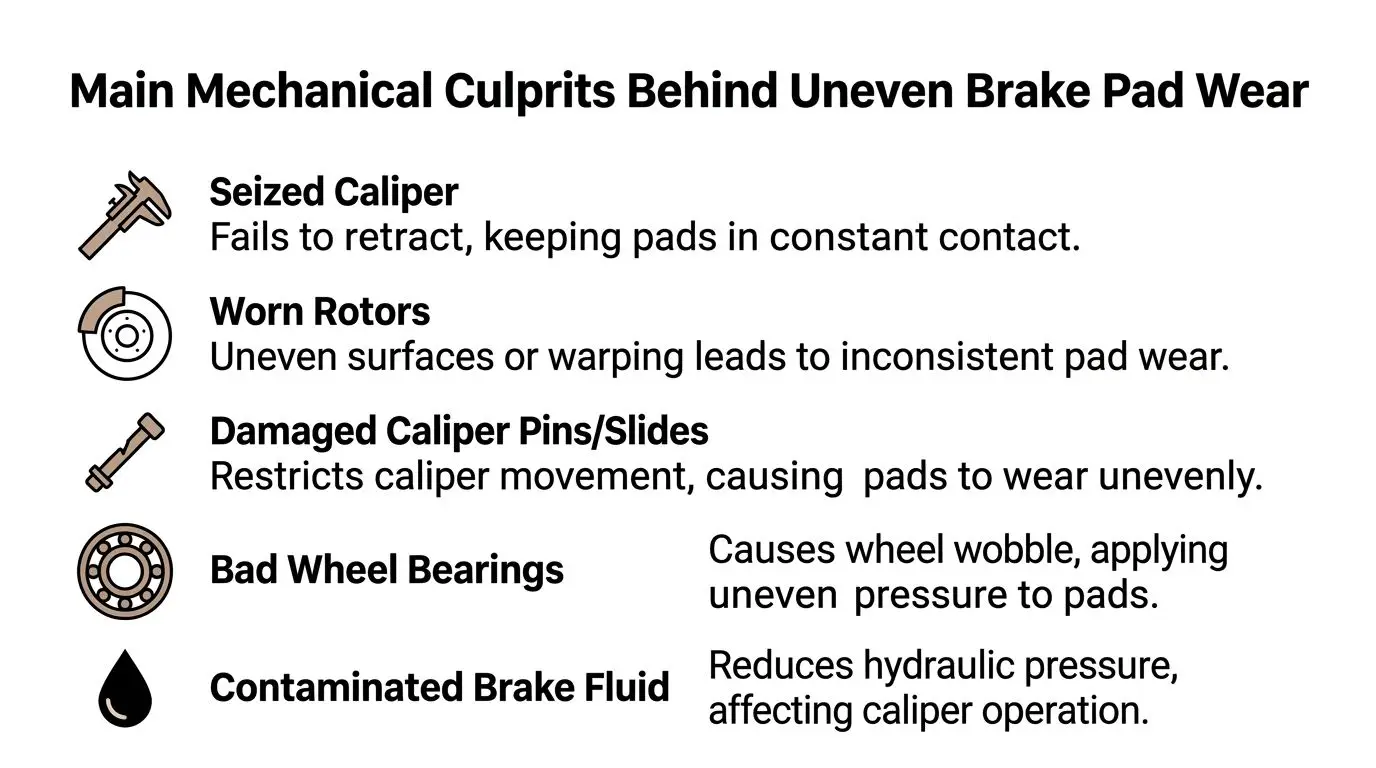
Uneven brake pad wear usually starts with a part that cannot move the way it was designed to move. A caliper may stick. A rotor may no longer run true. A wheel bearing may let the hub wobble. Sometimes the brake parts are only half the story, and extra movement from worn suspension pieces keeps feeding the same brake problem.
Seized caliper slide pins
Slide pins let a floating caliper shift side to side so both pads share the work. If those pins rust, dry out, or bind, the caliper cannot center itself. One pad stays busy while the other barely helps.
A stuck slide pin works like a tool chest drawer with one rusty rail. The drawer still opens, but it twists and drags. A caliper does the same thing. Pressure reaches the rotor unevenly, and the pads wear unevenly.
Common causes include:
- Moisture getting past the pin boots
- Road grime and old grease building up
- Salt exposure
- Torn or loose protective boots
- Wrong lubricant
- Long periods without brake service
Fort Worth roads do not produce the heavy salt corrosion seen up north, but age, humidity, dirt, and neglected maintenance still cause plenty of guide pin problems.
Sticky caliper pistons
The caliper piston pushes the inner pad into the rotor, then retracts slightly when you release the pedal. If it sticks, the pad keeps rubbing the rotor even when you are no longer braking.
That light drag creates constant heat. Heat hardens pads, stresses seals, and can discolor the rotor surface. Drivers often notice one wheel making more brake dust than the others, a hot wheel after a short drive, or a burning smell that seems to come and go.
Sticky pistons usually trace back to worn seals, corrosion inside the caliper bore, or contaminated brake fluid that has absorbed moisture over time.
Pad binding in the bracket
Pads need to slide freely in their bracket hardware. If rust builds up under the abutment clips, or the hardware is bent or installed poorly, the pad can hang up instead of releasing cleanly.
That gives you a strange kind of wear. The caliper may be working, but the pad itself is jammed in place like a door that swells in humid weather and sticks in the frame. One end of the pad drags, the contact patch turns uneven, and the wear pattern starts to tilt or feather.
This is one reason a quick pad slap rarely solves repeat brake problems. The bracket lands and hardware need attention too.
Rotor surface and thickness problems
Pads can only wear evenly if the rotor face is smooth and consistent. If the rotor develops hot spots, thickness variation, grooves, or surface distortion, the pad contacts a changing surface every time the wheel turns.
That often shows up as pulsation in the pedal, steering wheel shake, or a rough braking feel. It can also leave patchy or tapered marks across the pad face. If you want to understand what rotor damage looks like before replacing parts, this guide on how to inspect brake rotors gives you a useful starting point.
Wheel bearings and hub runout
A worn wheel bearing changes the way the rotor travels through the caliper. The rotor should spin straight. If the hub has play, the rotor can wobble slightly, and that repeated side-to-side motion changes pad contact.
This can fool people. It looks like a brake problem because the symptoms are brake-related, but the root cause is supporting hardware behind the rotor. Noise, vibration, and irregular wear can continue until the bearing issue is corrected.
Hydraulic problems and old brake fluid
Brake fluid does more than carry pressure. It also affects how smoothly caliper parts operate inside the system. Old fluid absorbs moisture, and that moisture promotes internal corrosion.
Corrosion inside the caliper or brake hose can keep pressure from applying or releasing evenly. The result may be a brake that feels normal some of the time, then starts dragging or wearing one pad faster than the other.
Suspension movement that keeps upsetting brake wear
This is the piece many articles skip. Your brakes do not work in isolation. They work while the tire, hub, knuckle, and suspension are all moving together.
Worn shocks or struts let the wheel bounce more during braking. That repeated up-and-down motion changes how firmly the tire stays planted and how steadily the brake components meet each other. On high-mileage vehicles around Fort Worth, I often see recurring uneven pad wear paired with weak dampers, front-end looseness, or worn suspension bushings. The brake parts may be new, but the extra motion keeps reintroducing vibration, uneven contact, and heat.
If brake wear keeps returning after recent service, a good inspection should go beyond pads and rotors. It should include caliper travel, rotor condition, hub play, and suspension control. That full picture usually explains why one set of pads wore out wrong in the first place.
A Visual Guide to Diagnosing Brake Pad Wear Patterns
Brake pads wear in patterns. If you know what those patterns mean, you can stop guessing and start narrowing down the cause.
You don’t need to be a full-time technician to notice something is off. You just need to know what “normal” should roughly look like.
Inner pad wear
If the inner pad is much thinner than the outer pad on the same wheel, think caliper piston or seized guide pin. In many floating caliper systems, the piston acts on the inner pad first. If the caliper can’t slide correctly, the force doesn’t balance out.
This is a common pattern when the caliper isn’t retracting cleanly.
Outer pad wear
If the outer pad wears faster, the caliper may not be sliding back as it should, or the hardware may be binding on the outer side. It can also point to pad fitment issues in the bracket.
A close inspection is essential here. The cause is often mechanical, not just “cheap pads.”
Tapered wear
A pad with one end thinner than the other is showing tapered wear. That means the pad isn’t meeting the rotor squarely.
Common reasons include:
- Stuck guide pins
- Misaligned hardware
- Uneven caliper movement
- Bracket corrosion
A tapered pad tells you pressure is arriving crooked, not flat.
Feathered or patchy wear
If the pad face looks rough, ridged, or uneven across the surface, the rotor may have an inconsistent braking surface. The pad is reacting to what it touches every rotation.
When you suspect rotor issues, a close rotor inspection matters as much as the pad inspection. This practical guide on how to inspect brake rotors helps show what technicians look for during that check.
Uneven brake pad wear is less about the pad itself and more about what the rest of the system is forcing that pad to do.
Brake Pad Wear Pattern Diagnostic Chart
| Wear Pattern Description | Likely Mechanical Cause | Recommended Action |
|---|---|---|
| Inner pad much thinner than outer pad | Sticky caliper piston or seized guide pin | Inspect caliper movement, piston retraction, and guide pin condition |
| Outer pad much thinner than inner pad | Caliper sliding problem or binding pad hardware | Check slide function, hardware fit, and bracket condition |
| Pad worn thicker at one end and thinner at the other | Stuck guide pin, crooked caliper movement, or bracket corrosion | Remove hardware, inspect contact points, clean and service mounting surfaces |
| Pad face looks rough, ridged, or uneven across the surface | Rotor surface issue or thickness variation | Inspect rotor condition and confirm it runs true |
| One wheel’s pads wear much faster than the opposite side of the vehicle | Dragging caliper or wheel-end issue | Compare side-to-side temperatures and inspect caliper and hub components |
| Repeated uneven wear after recent brake service | Underlying hardware issue or suspension-related movement | Check the full brake assembly and inspect suspension components |
What confuses many drivers
People often expect all brake wear to look the same on both front wheels. That’s not always how failures show up. One side can act up long before the other. One pad can wear to almost nothing while its mate still has life left.
That’s why a simple “you need brake pads” diagnosis can miss the underlying problem. Pads are the part you replace. Wear patterns are the clues that tell you what caused the failure.
The Hidden Link Between Your Suspension and Brakes
Most brake articles stop at calipers, rotors, and pads. That’s useful, but it misses a real-world problem on older vehicles. Sometimes the brakes aren’t the only reason the pads keep wearing unevenly.
If the suspension is tired, the vehicle’s weight doesn’t stay controlled during braking. The nose dips harder. The body bounces. The tire contact and brake loading become less stable.
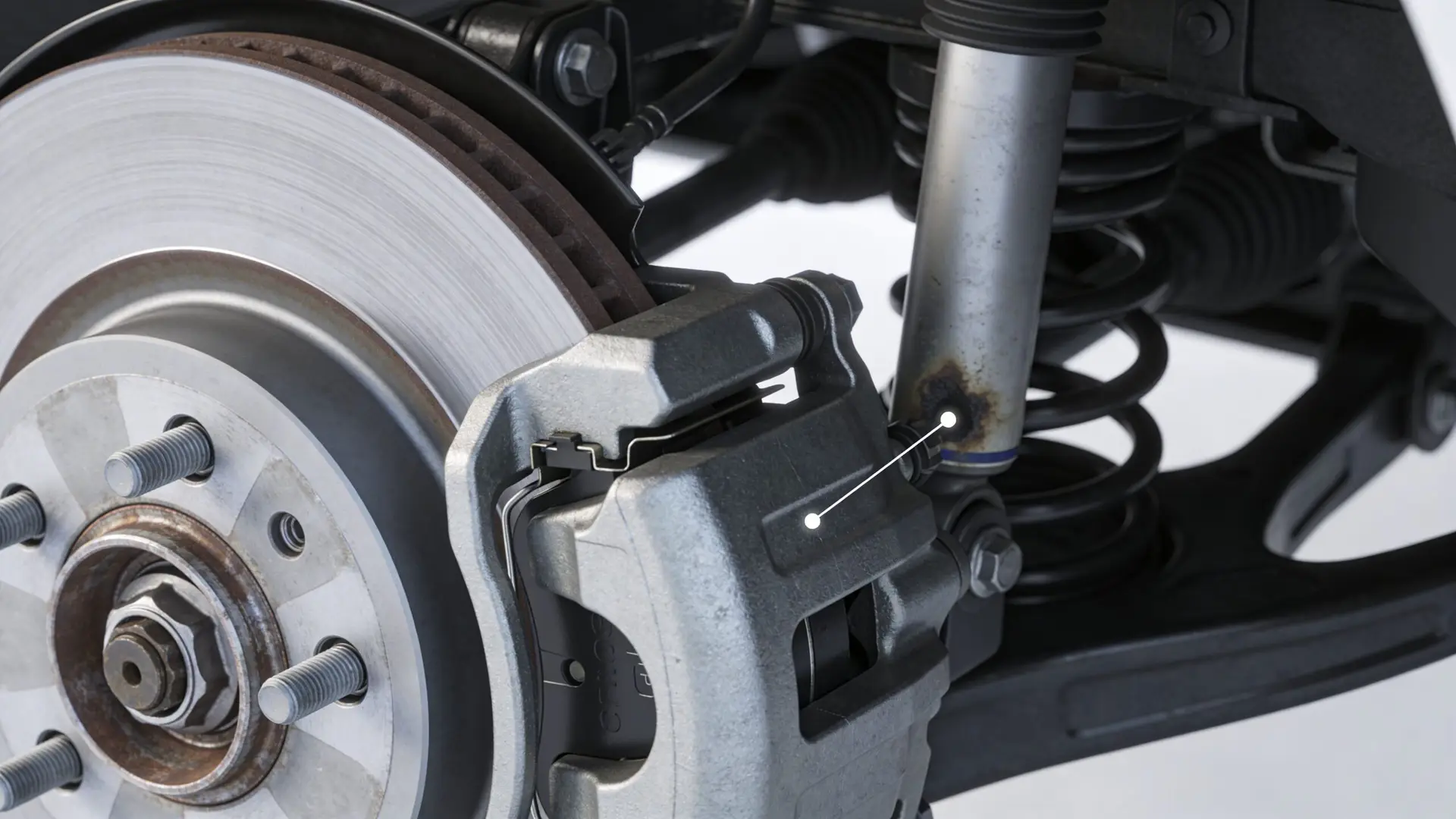
What worn suspension changes during braking
Shocks and struts don’t stop the car. Brakes do that. But shocks and struts control how the car transfers weight while braking.
When those parts wear out, the front end can dive too much. The car may bounce after a stop or feel unsettled on rough pavement. That unstable motion changes how evenly the brakes do their work.
The Colorado Tire & Service explanation of uneven brake wear notes that uneven brake pad wear combined with vehicle bounce or nosedive during braking may indicate suspension problems requiring separate diagnosis. It also points out that drivers often replace brake pads repeatedly without fixing the worn suspension parts behind the recurring problem.
Clues that point beyond the brake hardware
If your brake pads keep wearing unevenly after proper brake service, pay attention to these symptoms:
- The front end drops sharply when you brake
- The car bounces after dips or speed bumps
- Braking feels less stable on rough roads
- The wear pattern sits more on the outer edge of the pad than you’d expect from a simple caliper issue
That combination should raise a flag. You may have a brake complaint with a suspension root cause.
Why high-mileage vehicles are especially vulnerable
On an older vehicle, it’s common for both systems to age together. The caliper hardware may be getting stiff at the same time the shocks, struts, or front-end components are losing control.
That’s why some drivers feel stuck in a loop. They replace pads, maybe even rotors, and the problem returns. The brake parts were worn, yes. But the conditions that wore them out never changed.
A brake job can fix the symptom. A full inspection finds the reason the symptom keeps coming back.
If your car dips, floats, or feels loose during stops, it’s smart to look at suspension health along with brake wear. This local guide on when to replace shock absorbers can help you connect those handling symptoms to worn suspension parts.
Your Proactive Brake Care and Prevention Checklist
A lot of uneven brake wear starts as a small maintenance miss. A dry guide pin, a torn rubber boot, or a front strut that no longer controls wheel movement can slowly turn a normal brake job into repeat repairs.
The good news is that prevention is usually straightforward. You are trying to keep the brake parts sliding, clamping, and releasing the way they were designed to. If one part starts hanging up, the pad wears like a shoe with one sole dragging harder than the other.
What you can watch for at home
You do not need to take the car apart to catch early warning signs.
- Listen for new sounds: A squeak, scrape, or light rubbing noise during braking deserves attention before it turns into rotor damage.
- Notice changes in direction: If the vehicle pulls left or right when you brake, one side may be doing more work than the other.
- Check for uneven heat: After a normal drive, one wheel that feels much hotter than the others can point to a brake that is not releasing fully.
- Watch how the body moves: Extra bounce, front-end dive, or a loose feeling over rough roads can signal worn shocks or struts. That matters because a tire that is not staying planted consistently can create repeat brake wear problems.
- Ask to see the old parts: Used pads tell a story. Two pads from the same wheel should not look dramatically different.
That last step helps more than many drivers realize. Looking at the old pads side by side is like reading the tread wear on a tire. The pattern often points the technician toward sticking hardware, a caliper problem, or suspension movement that keeps upsetting the contact at the wheel.
What needs professional service
A proper brake service should include the hardware that lets the caliper move freely, not just the friction material.
Guide pins are a good example. They work like the rails on a drawer. If the rails are dry, rusty, or bent, the drawer does not slide evenly. A caliper with sticky pins behaves the same way. One pad stays pressed harder than it should, and uneven wear follows.
A solid brake inspection usually includes:
- Guide pin service: Remove the pins, check for corrosion, clean them, and apply the correct high-temperature brake lubricant.
- Boot inspection: Torn boots let in water and road grit, which quickly turns a smooth sliding pin into a sticking one.
- Bracket cleaning: Rust where the pad ears sit can pinch the pads and keep them from moving freely.
- Caliper movement check: The piston must apply and release pressure correctly, and the caliper body needs to slide as intended.
- Rotor inspection: The rotor should be checked for hot spots, grooves, cracking, and uneven contact.
- Suspension check if wear keeps returning: If the pads wear unevenly again after proper brake service, the shop should inspect shocks, struts, and front-end components instead of treating it like a brake-only problem.
That last item is the one many guides skip. On higher-mileage vehicles around Fort Worth, worn suspension parts can keep feeding the same brake complaint back into the system.
Habits that help
A few simple habits can cut down the odds of repeat brake trouble:
- Drive the vehicle regularly: Cars and trucks that sit for long periods often build corrosion on brake hardware.
- Replace matched wear items together when needed: Pads, hardware, and damaged rotors should work as a set, not as a patchwork of old and new parts.
- Have the whole corner inspected: If one pad wore oddly, the rotor, caliper, bracket, hardware, and nearby suspension parts all deserve a look.
- Address handling changes early: If the vehicle starts bouncing more or diving during stops, deal with that before it shortens the life of the new pads.
- Follow normal brake inspection intervals: Catching sticky hardware early is usually much cheaper than replacing overheated rotors and worn-out pads later.
If you want a practical overview of timing, parts, and what a normal service should include, this brake pad replacement guide is a helpful reference.
When to See a Pro What to Expect at the Repair Shop
You press the brake pedal at the next stoplight, and something feels off. The car pulls, the pedal feels softer than usual, or one wheel smells hot after a short drive. At that point, it makes sense to stop watching and start scheduling an inspection.
Some brake problems can wait a short time while you arrange service. Others point to a safety issue that should be checked right away.
Red flags that shouldn’t wait
These symptoms deserve prompt professional attention:
- Grinding noise
- Strong pull to one side
- A wheel that gets excessively hot
- Heavy vibration while braking
- A soft or inconsistent pedal
- Brake warning lights
- Repeated uneven wear after recent brake service
Those signs often mean more than worn pads. A sticking caliper, restricted brake hose, damaged hardware, hydraulic problem, or suspension fault can all change how the vehicle stops.
What a good shop will inspect
A proper uneven wear diagnosis should go past “pads are low.”
An experienced technician should check the whole braking corner, because the pad is often the clue, not the root cause. If one pad is wearing faster, the question is what kept that pad from sliding, releasing, or contacting the rotor evenly.
| Inspection area | What they’re looking for |
|---|---|
| Pad condition | Thickness difference, taper, cracking, glazing, and side-to-side mismatch |
| Rotor condition | Surface damage, uneven contact, and signs of overheating |
| Caliper function | Piston movement, release, and evidence of drag |
| Guide pins and boots | Corrosion, dryness, torn boots, and restricted travel |
| Bracket and hardware | Rust buildup, bent clips, and pad binding |
| Suspension clues | Bounce, dive, looseness, or handling symptoms that affect brake wear |
That last row matters more than many drivers realize. On a high-mileage vehicle, weak shocks or struts can let the tire bounce and the nose dive harder during stops. That changes how the pad meets the rotor, adds heat, and can help the same uneven wear pattern come back even after new brake parts are installed.
A quick pad swap may quiet the noise for now. It will not correct a slide pin that sticks like a swollen drawer, a caliper that does not release fully, or front-end wear that keeps upsetting brake contact.
What to expect from the repair conversation
A trustworthy shop will explain the pattern they found, not just hand you a parts list. If one pad is much thinner than the other, ask what caused that difference. If calipers are recommended, ask what the technician saw during inspection or testing. If the wear keeps returning, ask whether shocks, struts, or loose front-end parts were checked along with the brakes.
You want a diagnosis that connects the worn parts to the reason they wore that way.
When a technician shows you the old pads, points out the wear shape, and explains how the hardware moved or failed, that usually means you are getting real diagnostic work instead of guesswork. Finding a local shop that gives that level of detail is a big part of getting a repair that lasts.
If your car is making noise, pulling while braking, or wearing through pads unevenly, have it checked before the problem spreads to rotors, calipers, or tires. The team at Kwik Kar Oil Change and Auto Care in Fort Worth can inspect the full brake system, explain the wear pattern in plain language, and help you fix the cause so the issue does not keep coming back.