

If the shop says you need a new transmission, a catalytic converter, or major engine work, and the estimate runs several hundred dollars or more, get a second opinion before you sign anything. Routine maintenance rarely needs a fresh set of eyes. Anything urgent involving brakes, steering, or a fuel leak still needs immediate attention, just from a shop you trust.
TL;DR:
- Second opinions are most cost-effective for repairs exceeding a few hundred dollars, especially for engine, transmission, catalytic converter, or complex electrical issues.
- Providing detailed symptom descriptions, relevant test results, and written estimates helps ensure a more accurate and independent diagnosis from the second shop.
- Expect diagnostic fees between $75 and $250, which are often credited toward the repair, and verify the specific tests planned to confirm the issue.
- Independent shops are suitable for most repairs, while dealers are better for brand-specific electronic or proprietary diagnostics, with reputation and certification checks recommended beforehand.
- Disputes over diagnosis should be supported by documented test results and estimates; keep all paperwork, and engage in respectful, symptom-focused conversations to preserve relationships.
Table of Contents
- When Is a Second Opinion Car Repair Worth Getting?
- How to Get an Effective Second Opinion
- What to Expect From a Second Diagnostic Visit
- Independent Shop, Dealer, or Specialist: Where Should You Go?
- Comparing Estimates and Settling a Diagnostic Disagreement
- What a Trustworthy Shop Should Do (and How Kwik Kar Approaches It)
- When the First and Second Opinions Don’t Match
- Your Rights When a Repair Diagnosis Is in Dispute
- How to Ask for a Second Opinion Without Burning a Bridge
- A Technician’s Perspective: Common Patterns and Practical Tips
- Get a Straightforward Second Opinion at Kwik Kar
- Sources
- FAQ
When Is a Second Opinion Car Repair Worth Getting?
Money is the simplest filter. A second opinion earns its keep once the estimate climbs into the several-hundred-dollar range or touches a major system, and AAA’s guidance on car repair advice backs that threshold directly. Routine work like oil changes, wiper blades, or a cabin air filter almost never justifies the extra stop.
Where a second opinion pays off most:
- Engine or transmission repairs. These jobs run expensive, and misdiagnoses happen more often than most drivers realize.
- Catalytic converter replacement. It’s a common target for unnecessary upsells because the part itself carries a high price tag.
- Complex electrical or intermittent faults. Wiring issues that come and go are notoriously hard to pin down on the first visit.
- Any estimate built on vague language. If a technician names a part but can’t point to a specific test that proves the failure, treat that as a signal to pause.
One exception overrides all of this: never delay safety-critical repairs. Worn brakes, a fuel leak, or a steering fault needs attention now, not after a week of shop hopping. In those cases, get the car safe first, then revisit any questions about scope or cost afterward.
How to Get an Effective Second Opinion
A second opinion is only as good as the information you hand over. Walk in prepared and you’ll get a sharper answer, often on the same visit.
- Gather your paperwork first. Bring the written estimate, any OBD2 code printouts, photos of warning lights, your maintenance history, and the actual part if it’s already been pulled.
- Describe symptoms, not conclusions. Explain when the noise happens, what triggers the warning light, or how the car behaves under load. Hold off on repeating the first shop’s diagnosis until the technician has formed an independent view. Documenting these symptoms clearly before you arrive makes the conversation faster.
- Ask about the diagnostic fee upfront. Find out whether it gets credited toward the repair if you move forward there, and ask for that policy in writing.
- Ask what tests they’d run. A shop that offers to reproduce the symptom with a road test or a specific gauge reading is giving you evidence, not a guess.
Pro Tip: Keep the first shop’s estimate in your bag, not on the counter. Let the second technician reach their own conclusion before you show them anything, then compare notes.
What to Expect From a Second Diagnostic Visit
Expect to pay for the diagnostic itself. According to Steer’s breakdown of second-opinion costs, a second diagnostic typically runs $75 to $250, and many shops apply that fee toward the repair bill if you have the work done there.
That fee buys real testing, not just a visual check:
- Code reads confirm what the onboard computer flagged, but codes alone rarely tell the whole story.
- Live-data monitoring watches sensor readings in real time, useful for catching intermittent issues.
- Pressure or leak tests confirm whether a seal, gasket, or hose is actually failing.
- A road test reproduces the symptom under real driving conditions.
The diagnostic runs $75 to $250, so on a $3,000 transmission job, that cost is small next to the risk of paying for the wrong repair. Expect one of three outcomes: confirmation of the original diagnosis, a cheaper fix, or a referral to a specialist. Most second opinions take a few hours to a day, depending on how much testing the symptom requires.
Independent Shop, Dealer, or Specialist: Where Should You Go?
The right facility depends on what’s wrong, not just what’s cheapest. Independent shops handle the majority of engine, emissions, and general mechanical work at a lower cost, and they’re a solid choice for most second opinions.
Dealers earn their higher rate when the problem involves brand-specific electronic modules, proprietary diagnostic software, or a technical service bulletin tied to your exact model. Motor1’s reporting on dealership repairs notes that dealer estimates can be accurate even when they’re expensive, so the goal isn’t to assume the dealer is wrong. It’s to confirm the tests support the price.
Before you commit to either option:
- Check certifications and reputation through ASE, RepairPal, or the Better Business Bureau.
- Read recent reviews, not just the shop’s overall star rating.
- Consider a small job first, like an oil change, to see how they communicate before trusting them with a major repair.
- Ask directly whether they’ve worked on your make and model before.
Comparing Estimates and Settling a Diagnostic Disagreement
Two estimates that name different problems aren’t automatically a red flag. They’re a starting point for a quick comparison.
- Check whether both estimates name a specific fault, not just a symptom, and whether each breaks out parts and labor separately.
- Favor the shop that points to a concrete test. A shop that says “we’d confirm this with a pressure test” is offering proof; a shop that just repeats a guess is not.
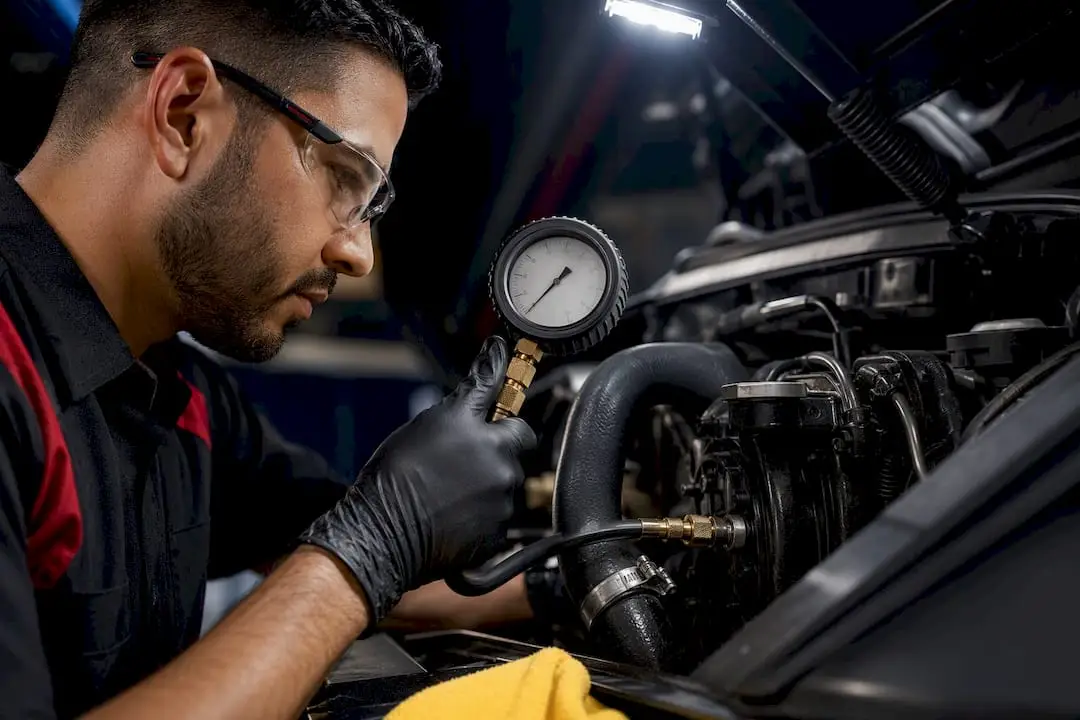
- If the two shops disagree, pay for the deciding test. A pressure gauge reading, a smoke test, or a live-data capture on the specific system in question turns an argument into a number you can act on.
- Accept agreement within roughly 10% of cost and matching test results as a green light to proceed.
Reviewing scan data and matching the named part to an observable failure, as outlined by shops that specialize in this kind of dealer review, keeps the comparison grounded in evidence instead of opinion.
What a Trustworthy Shop Should Do (and How Kwik Kar Approaches It)
A shop worth trusting shows its work. That means an itemized estimate that separates parts from labor, along with photos or video from a digital vehicle inspection tied to the actual test performed, not just a verbal assurance.
Here’s what to look for in a trustworthy shop process:
- A clear diagnostic-fee policy, stated before any work begins, including whether it’s credited toward the repair.
- Technicians certified to industry standards, reflecting a consistent, repeatable diagnostic process rather than guesswork.
- Evidence you can actually see, whether that’s a photo of a worn part, a test log, or the old part itself set aside for you to inspect.
- Use of high-quality parts and transparent pricing, so the estimate you receive matches the work performed.
If a shop doesn’t show you the test behind the diagnosis, consider that carefully before you approve anything.
When the First and Second Opinions Don’t Match
Disagreement between two shops doesn’t mean one of them is lying. Diagnostics involve judgment calls, and intermittent problems in particular can look different depending on when the car was tested.
Start by comparing the two estimates side by side using the tiebreaker test described above: whichever shop’s test result actually matches the observed symptom carries more weight than whichever shop sounded more confident. If a pressure test shows a leak, that’s data. If a technician simply says “it’s probably the gasket” without running the test, that’s a guess.
If the two shops name entirely different systems as the culprit, a third opinion is reasonable, especially for a repair that will cost more than a few hundred dollars. Three independent reads on the same symptom rarely all miss the same thing.
You can also go back to the first shop with what you learned. A reputable shop will listen if you say, “the second shop ran a smoke test and found a different leak location. Can you take another look?” That’s not an accusation. It’s giving them the same evidence you gave the second shop, and most shops will re-examine their work rather than lose a customer over a preventable miss.
Keep every estimate, invoice, and test result in one folder, physical or digital. If the dispute escalates, that paper trail is what protects you.
Your Rights When a Repair Diagnosis Is in Dispute
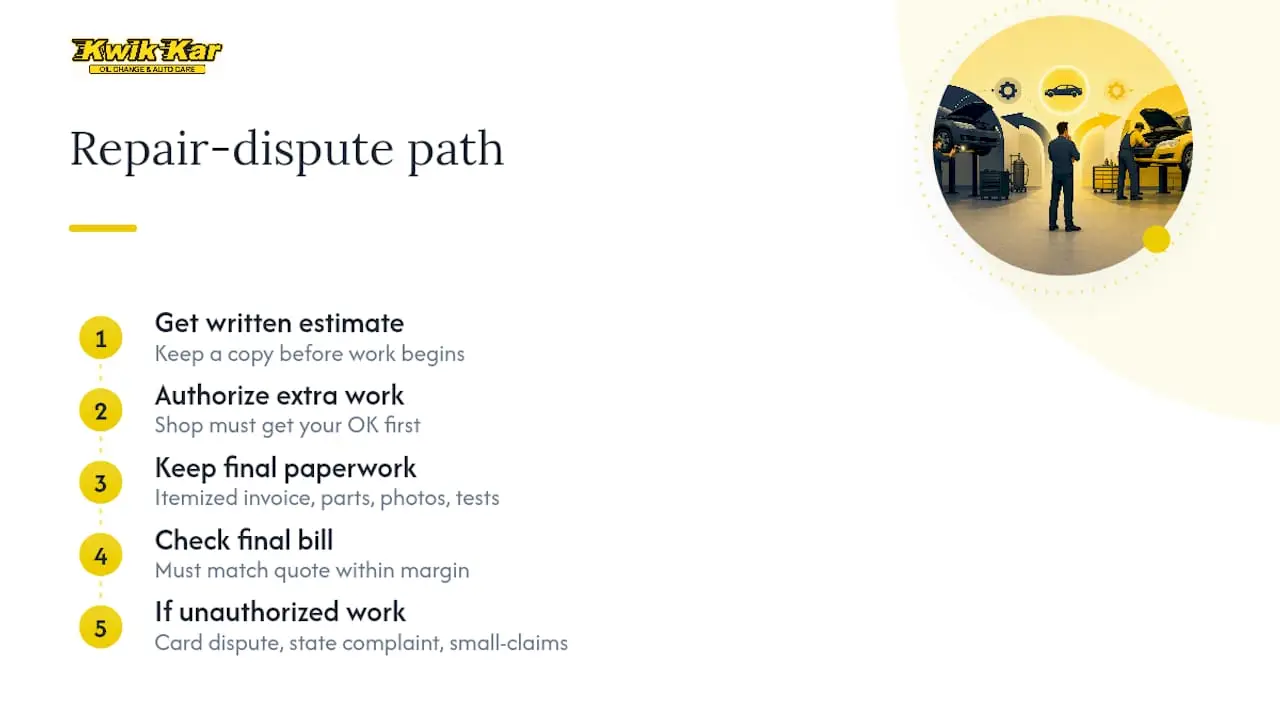
You have more leverage than most drivers realize once a disagreement starts. The FTC’s guidance on auto repair basics recommends getting a written estimate before any work begins and keeping copies of every repair order and recommendation a shop gives you. That written record becomes your primary evidence if a dispute ends up with a credit card company, a small claims court, or a state consumer protection office.
Most states also require a shop to get your authorization before performing work beyond the original estimate, and many require the final bill to match what was quoted within a defined margin. Texas and other states maintain consumer complaint processes through their attorney general’s office for exactly this kind of dispute, and some state guides, including Massachusetts’s consumer guide to auto repair, spell out what a shop owes you before charging for unexpected work.
If a shop performed unauthorized repairs, refused to show you the failed part, or charged for a diagnostic they never disclosed, you can dispute the charge with your card issuer, file a complaint with your state’s consumer protection agency, or leave a detailed public review that documents what happened. None of these routes require a lawyer for a typical repair dispute. They just require the paperwork you should already be keeping: the written estimate, the itemized invoice, and any photos or test results the shop gave you along the way.
How to Ask for a Second Opinion Without Burning a Bridge
You don’t need to accuse anyone of anything to get a second opinion. Most shops expect it, especially on big-ticket repairs, and a straightforward request rarely damages the relationship.
The simplest approach: tell the first shop directly that you’d like to get a second quote before authorizing expensive work. Something as plain as “I’d like a second opinion before I commit to this” is normal enough that a good shop won’t push back. If they react defensively or pressure you to decide on the spot, that reaction itself tells you something.
When you get to the second shop, frame your visit around the symptom, not the first shop’s verdict. Say what the car is doing, when it happens, and what you’ve already had checked, like an oil change or a recent inspection, rather than opening with “the other shop said I need a new transmission.” Withholding that conclusion, even briefly, helps the second technician form an independent read instead of anchoring to the first one.
If you do end up going back to the original shop with new information, keep the tone collaborative. Most shops would rather revisit a diagnosis than lose a customer over it, and many will happily explain their reasoning again once they know you’ve done your homework. Treat the second opinion as due diligence, not a confrontation, and most conversations on either end stay easy.
A Technician’s Perspective: Common Patterns and Practical Tips
Intermittent electrical faults get misdiagnosed more than any other category, mostly because a symptom that shows up once on a cold morning can vanish by the time it hits the shop bay. Confident-sounding diagnoses without a matching test are the biggest tell that something’s off. A trustworthy technician will tell you what would prove the diagnosis, then go prove it. Asking for a second opinion isn’t a knock on anyone’s skill. It’s just good practice on a repair that matters.
— Kwik Kar
Get a Straightforward Second Opinion at Kwik Kar
A trusted shop gives you an itemized estimate and a digital vehicle inspection with photos, so you see exactly what technicians found before you approve any work.
Bring your written estimate, any OBD2 code printouts, and photos of warning lights when you visit, and certified technicians will walk you through what they find and what test backs it up. Whether the concern is a transmission, a check engine light, or a brake system that needs a closer look, you’ll get a clear answer instead of a guess. Browse our full range of diagnostic and repair services or call your local Kwik Kar to schedule a diagnostic appointment today.
Sources
- Car Repair Advice: When a Second Opinion Can Save You Money
- How to Find a High-Quality Car Repair Shop – Consumer Reports
- Dealership Repair: Should You Get A Second Opinion?
- Second Opinion on a Car Repair: When and How – Steer
- Auto Repair Basics – FTC
FAQ
What Is the $3,000 Rule for Car Repairs?
There’s no official “$3,000 rule,” but many drivers use a version of it: if a repair costs more than the car is worth, or approaches a large fraction of its value, it’s worth comparing that cost against a used replacement before approving the work. Pairing that math with a second opinion on the diagnosis itself gives you a fuller picture before you decide.
Is $100 an Hour Fair for Mechanic Labor?
Labor rates vary widely by region, shop type, and vehicle complexity, so there’s no single fair number. What matters more is whether the rate is disclosed upfront in a written estimate and matches the complexity of the job at hand.
What Is the 30-60-90 Rule for Cars?
This isn’t a standard industry term, and definitions vary depending on the source. If you’ve seen it referenced for maintenance intervals or break-in periods, check the specific context it came from rather than assuming a universal standard.
How Do I Pay for Car Repairs When I Have No Money?
Start by asking the shop for a written, itemized estimate so you know exactly what’s essential versus optional, then ask which repairs are safety critical versus deferrable. Many shops, including Kwik Kar Oil Change & Auto Care, will walk through which repairs to prioritize first so you can spread the cost without risking your safety on the road.
Should I Tell the Second Shop What the First Shop Said?
Hold off until they’ve finished their own inspection. Describing your symptoms without repeating the first diagnosis helps the second technician reach an independent conclusion, which gives you a cleaner comparison once both estimates are in hand.