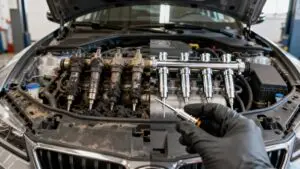




A check engine light right after an oil change usually points to something simple: a loose oil fill cap, a dipstick that isn’t fully seated, or a sensor connector that got bumped during the service. Start by checking the cap and dipstick yourself. If the light is steady, drive carefully to a shop for a scan. If it’s flashing, stop and call for help instead of driving further.
TL;DR:
- Most check engine lights after an oil change are caused by loose oil caps, improperly seated dipsticks, or disconnected sensor connectors, which are quick fixes.
- A steady light indicates a monitored but non-urgent issue, while a flashing light signals a misfire that requires immediate attention and a tow.
- Using an OBD-II scanner to identify specific fault codes helps determine if the problem is simple, like a vacuum leak, or more serious, such as oil pressure or VVT system faults.
- For safety, avoid driving long distances if the warning light flashes or if there’s an oil pressure warning or knocking, and seek professional diagnostics promptly.
- Most post-service check engine lights are resolved by a technician reseating connectors or tightening caps during a quick repair visit, often within the same appointment.
Table of Contents
- Check Engine Light After Oil Change: Quick Checks First
- Common Causes, From Simple to Serious
- Reading the Codes: What They’re Telling You
- When to Stop Driving and When It Can Wait
- What a Shop Checks and How the Fix Usually Goes
- The Kwik Kar Perspective on Post-Service Check Engine Lights
- A Practical Take on When to Worry
- Get Your Check Engine Light Scanned the Right Way
- Sources
- FAQ
Check Engine Light After Oil Change: Quick Checks First
Before you assume the worst, rule out the easy stuff. Most of these take less than five minutes in your driveway.
- Check the oil fill cap. Make sure it’s screwed on tight. A loose cap creates a vacuum leak the engine notices right away.
- Check the dipstick. If it’s not pushed all the way down, it can throw off readings and let air into the system.
- Check the oil level. Pull the dipstick and confirm it’s between the marks, not overfilled or underfilled.
- Look under the car. A fresh oil spot on the ground means a filter or drain plug wasn’t seated correctly.
- Check the gas cap. It’s unrelated to the oil change but an easy thing to bump and a common source of check engine light problems after getting gas.
A steady light means the issue is being monitored but isn’t urgent. A flashing light means the engine is misfiring right now. If tightening the cap and dipstick fixes the underlying problem, the light often needs several drive cycles to clear on its own, since many service-related causes self-clear once the ECU confirms the issue is resolved.
Pro Tip: Don’t just disconnect the battery to “reset” the light. That clears the code but not the problem, and if something’s genuinely wrong, the light comes right back once the car finishes its next drive cycle.
Common Causes, From Simple to Serious
Most post-service check engine lights trace back to one of a handful of causes, and they range from a two-minute fix to something that needs a technician’s attention.
- Loose or missing oil cap, or a dipstick that isn’t seated. This creates a small vacuum leak, which the engine reads as too much air relative to fuel. That often triggers a lean-condition code like P0171 or P0174.
- Oil filter or drain plug not torqued correctly. A slow leak drops oil pressure faster than normal, and low pressure can set off an oil pressure code alongside the check engine light.
- Wrong oil viscosity or an overfilled crankcase. Modern engines use oil pressure to control variable valve timing (VVT), and the wrong weight or too much oil can throw off that system’s readings.
- A bumped or disconnected sensor. Technicians work near the oil pressure sensor, the mass airflow (MAF) sensor, and various vacuum hoses during a routine service. A connector that isn’t clicked back in fully can trigger the light within minutes of starting the car after the oil change.
- Coincidental failure. Sometimes a car component like an oxygen sensor or ignition coil was already close to failing, and it happened to cross the fault threshold around the same time as the service. The timing looks suspicious, but the oil change didn’t cause it.
The good news is that the first four causes are all things a shop can fix quickly, often on the same visit, without ordering parts or scheduling a follow-up.
Reading the Codes: What They’re Telling You
An OBD-II scan is the fastest way to know which of those causes you’re dealing with, since the onboard diagnostics system stores a specific code for whatever tripped the light.
| Code | What It Means | Likely Service-Related Cause |
|---|---|---|
| P0171 / P0174 | System too lean (too much air, not enough fuel) | Loose oil cap, dipstick not seated, vacuum hose disconnected |
| P0520 | Oil pressure sensor circuit issue | Wrong oil viscosity, overfill, sensor connector bumped |
| P0456 | Small EVAP system leak | Loose gas cap |
| P0011 | Camshaft timing over advanced (VVT issue) | Wrong oil, overfill, or low oil pressure affecting VVT solenoid |
Codes in the P0171/P0174 family point toward an air or vacuum leak, which lines up with a cap or hose issue. Anything in the P0520 range points toward oil pressure or the sensor reading it. P0011 suggests the VVT system isn’t getting the oil pressure it expects.
A basic OBD-II reader costs around $25 and will show you the code in seconds. If you’d rather skip the guesswork, a shop can run the same scan and give you a documented readout to work from.
When to Stop Driving and When It Can Wait
Not every check engine light means the same level of urgency. Here’s how to sort it out.
- Flashing light: This means an active misfire. Driving on it risks damaging the catalytic converter, and continued misfires can cause serious, expensive damage if you keep driving. Pull over and arrange a tow.
- Oil pressure warning (the red oil can icon) plus the check engine light, or new knocking or smoke: Stop the car and have it towed. Don’t try to drive it to a shop yourself.
- Steady check engine light with no other symptoms: A short drive to a shop is usually fine, but don’t put it off. Get it scanned soon rather than waiting weeks.
When in doubt, treat any combination of warning lights as a reason to stop rather than push through the drive.
What a Shop Checks and How the Fix Usually Goes
A technician working through a post-service check engine light follows a fairly predictable sequence, and it’s worth knowing what to expect and what to ask for.
- Visual inspection first. They’ll check the oil fill cap, dipstick seating, filter, and drain plug for anything obviously loose or leaking.
- Verify the oil itself. They’ll confirm the correct viscosity was used and that the level matches the manufacturer’s specification, not overfilled or underfilled.
- Check sensor connectors. The oil pressure sensor and MAF connector get reseated and tested if they were disturbed during the service.
- Run the OBD-II scan. This confirms which code triggered the light and whether the fix resolved the underlying issue.
- Test drive. A short drive confirms the light stays off and nothing else pops up.
Pro Tip: Ask for a copy of the code readout and a list of anything the technician touched or replaced. A shop with nothing to hide will hand this over without hesitation.
The Kwik Kar Perspective on Post-Service Check Engine Lights
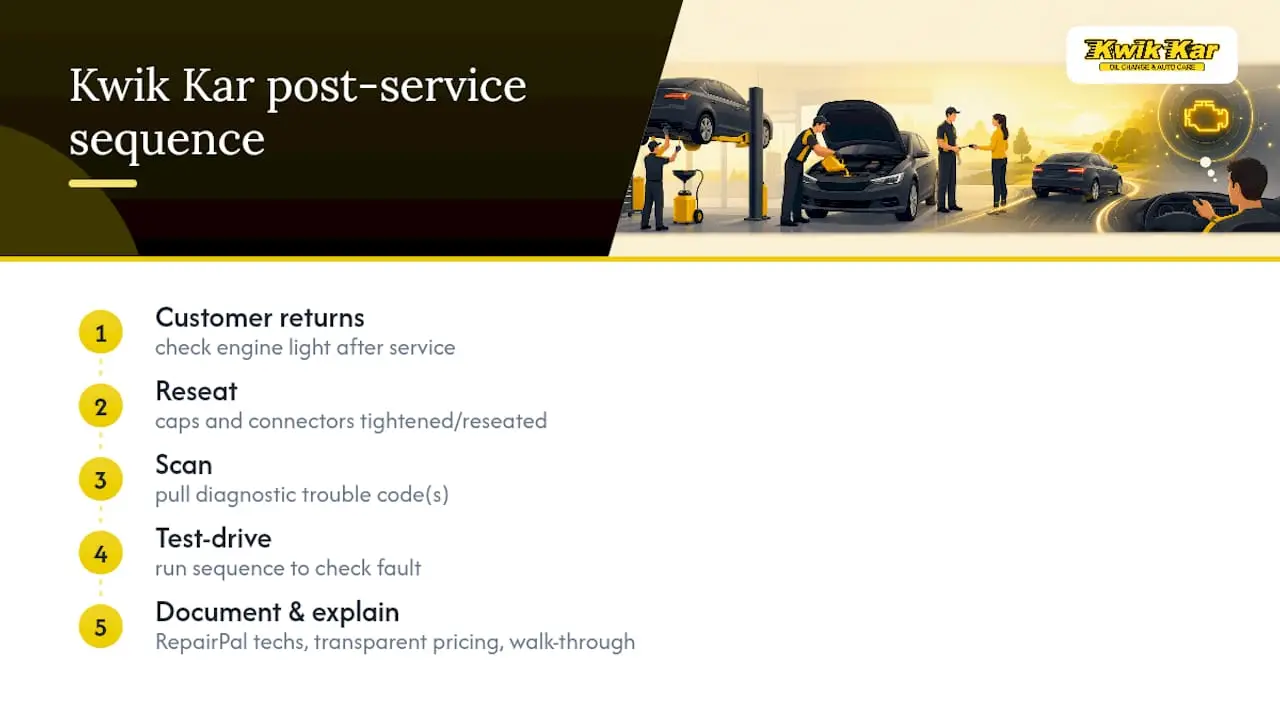
Certified technicians follow this same reseat, scan, and test-drive sequence whenever a customer returns with a check engine light after service. Most of these visits end with a simple fix. A cap gets tightened, a connector gets reseated, and the car goes back out the door.
We back this up with RepairPal-certified technicians and transparent pricing, so you know exactly what was checked and what, if anything, was replaced. If your light comes on after a visit with us, bring it back. We’ll pull the code, document it, and walk you through what it means.
A Practical Take on When to Worry
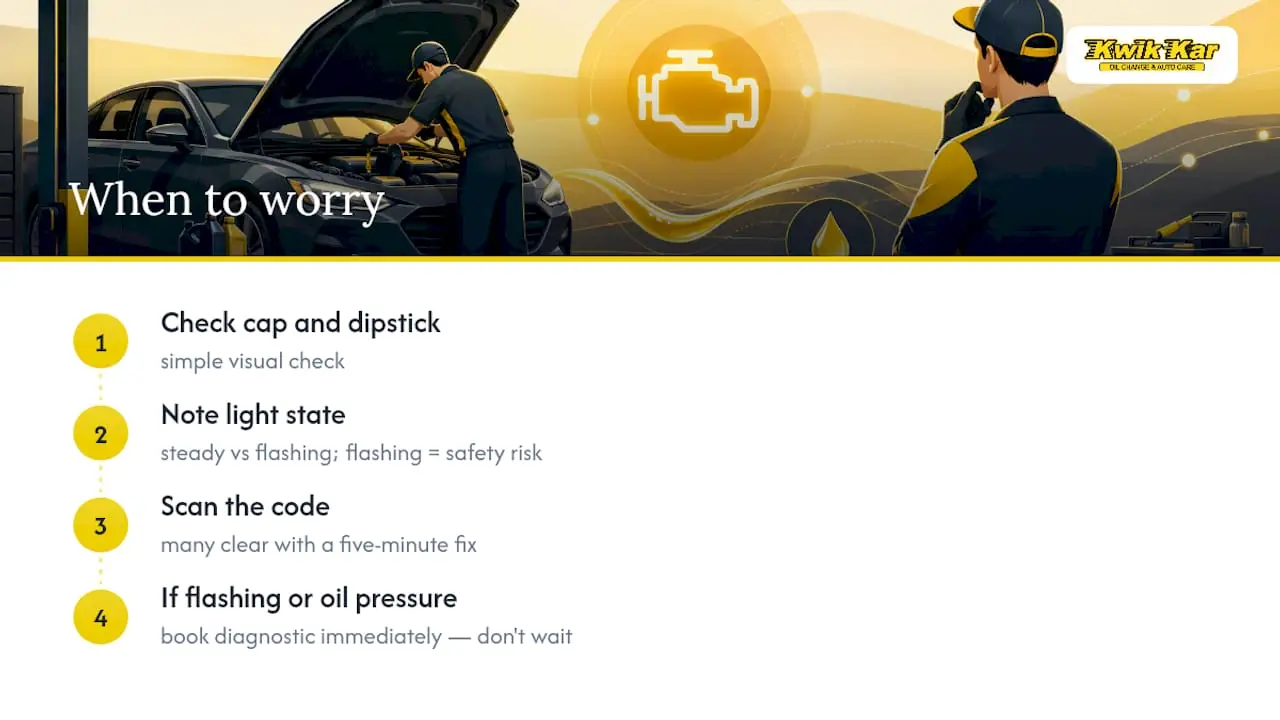
Frustration is normal when a light comes on right after you paid for service. The sequence that works is simple: check the cap and dipstick, note whether the light is steady or flashing, and scan the code before assuming the worst.
Most of the time, this ends with a five-minute fix and a clear code reader. Where I’d draw a hard line is safety. A flashing light or an oil pressure warning isn’t the moment to “wait and see.” If you’re not confident in what you’re looking at, book a diagnostic and let a technician read the code properly instead of guessing.
— Kwik Kar
Get Your Check Engine Light Scanned the Right Way
A quick oil re-check and OBD-II scan costs less time and stress than driving around wondering what’s wrong. Kwik Kar Oil Change & Auto Care gives you a documented code readout, a sensor inspection, and a test drive before you leave, so you know exactly what triggered the light and what was done about it.
If your check engine light came on after a recent visit, bring your vehicle back for a free look at the cap, dipstick, and connectors our technicians touched. If it’s been a while since your last service, this is also a good moment to check our oil change coupon before you book. Either way, schedule your visit at a location near you and get a clear answer instead of a guess.
Sources
This article draws on explainers about check engine light causes, OBD-II diagnostics, and post-service troubleshooting. When in doubt, a professional scan beats guessing.
- Check Engine Light On After an Oil Change? Here’s What Happened | TorqueBot Blog
- Check Engine Light On After an Oil Change 2026: Causes, Codes & Fixes | AmpAuto
FAQ
How long after an oil change will the check engine light turn off?
If the cause was a loose cap or a bumped connector and the fix resolves the underlying issue, the light can take a few drive cycles to clear on its own. If it’s still on after several drives, get it scanned rather than waiting longer.
Can a past-due oil change cause a check engine light?
Not directly. A maintenance-required reminder is a mileage-based timer separate from the check engine light, though seriously overdue oil can eventually lead to low oil pressure that triggers a genuine fault code.
Can I drive 4 hours with a check engine light on?
If the light is steady with no other symptoms, a short local drive to a shop is usually fine, but four hours is too far without knowing the code. Scan it first or have it checked before a long trip.
How do I reset the engine light after an oil change?
Clearing the code without fixing the cause usually brings the light right back once the car completes another drive cycle. The better approach is to check the cap and dipstick, then bring it to a shop like Kwik Kar Oil Change & Auto Care for a scan and proper reseating.