





Most drivers pay between $100 and $250 for a straightforward serpentine belt replacement, and $150 to $400 when a tensioner or idler pulley gets swapped at the same time. Complex engine bays, especially on European or V6 vehicles, can push that number to $300 or $475 or more. If a shop quotes you $1,000 for this job alone, something is off. Get two written estimates and ask each shop for its labor hours and the parts brand before you approve anything.
TL;DR:
- The typical cost for replacing a serpentine belt ranges from $100 to $250, with additional costs for tensioner or pulley replacement reaching up to $400.
- Parts prices vary from $25 for economy belts to $75 for OEM belts, with labor times spanning from 0.25 to 2 hours depending on the vehicle’s engine layout.
- Higher quotes often reflect longer labor times due to engine access, the need to replace tensioners or pulleys, and regional shop rates, not just parts.
- DIY replacement can save $80 to $200 but carries risks if the routing isn’t photographed and the tensioner isn’t properly inspected.
- The most reliable way to verify a fair quote is to ask for the parts brand, labor hours, and compare the total against standardized costs.
Table of Contents
- What Does a Serpentine Belt Replacement Cost Break Down Into?
- Why Do Some Serpentine Belt Quotes Run So Much Higher?
- Is It Worth Replacing a Serpentine Belt Yourself?
- How Long Does a Serpentine Belt Replacement Actually Take?
- What Are the Warning Signs You Shouldn’t Ignore?
- How Do You Know if a Repair Quote Is Fair?
- Why Certification Matters When You’re Comparing Quotes
- The Real Lesson Here Isn’t the Price, It’s the Math
- Get an Inspected Replacement With Pricing You Can Actually Verify
- Sources
- FAQ
What Does a Serpentine Belt Replacement Cost Break Down Into?
Every invoice for this repair has the same three ingredients: the belt itself, the labor to install it, and whatever shop fees get tacked on at the bottom. Understanding each piece is how you catch a quote that’s padded versus one that’s fair.
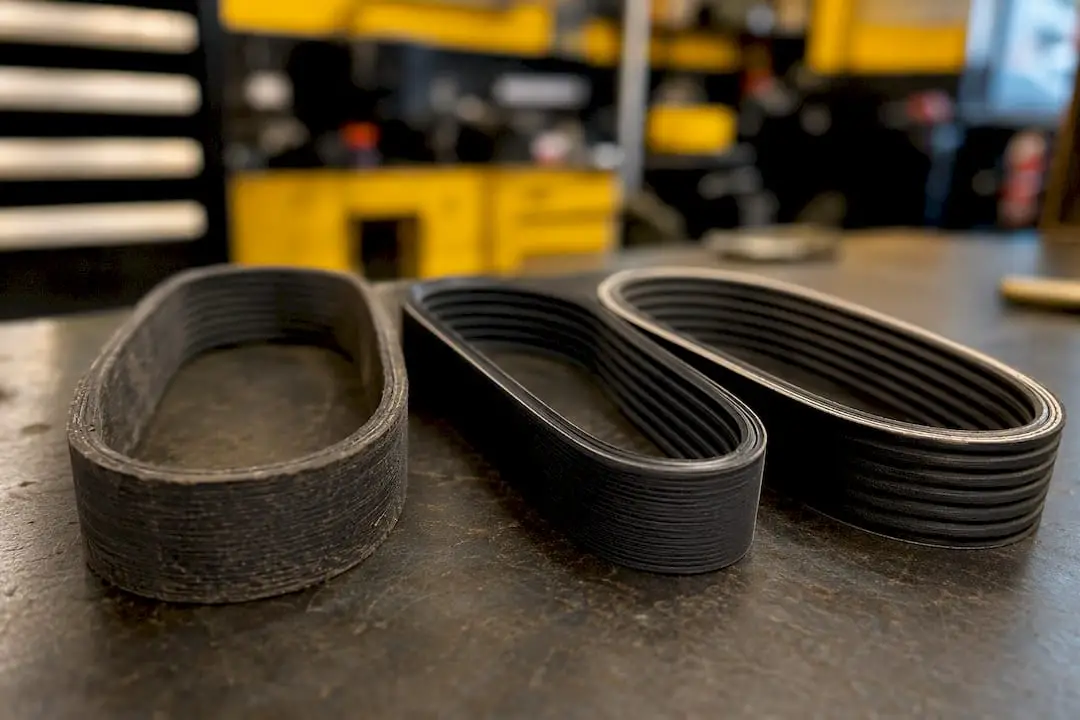
Parts pricing splits into three tiers. Economy belts run $25 to $35, mid-grade aftermarket belts land at $45 to $60, and OEM belts from the dealer typically cost $50 to $75. The material and rib design barely differ between tiers on most vehicles, but OEM belts often carry a longer warranty and a tighter fit tolerance, which matters more on newer engines with sensitive accessory alignment.
Labor is where quotes diverge the most. Book times for a serpentine belt swap generally run 0.25 to 2.0 hours depending on the vehicle, according to labor-time data from Carsymp. A shop multiplies that book time by its hourly rate to reach the labor charge, so the same belt job can cost wildly different amounts depending on where you take it.
Here’s how the math plays out on two real-world examples:
- Honda Civic (easy access): 0.4 hours of labor at a chain shop’s $80/hr rate equals $32, plus a $35 aftermarket belt, for a total around $67 before tax and fees.
- V6 luxury sedan (tight bay, serpentine routing around the AC compressor): 1.5 hours of labor at an independent shop’s $110/hr rate equals $165, plus a $65 OEM belt, landing near $230 before fees.
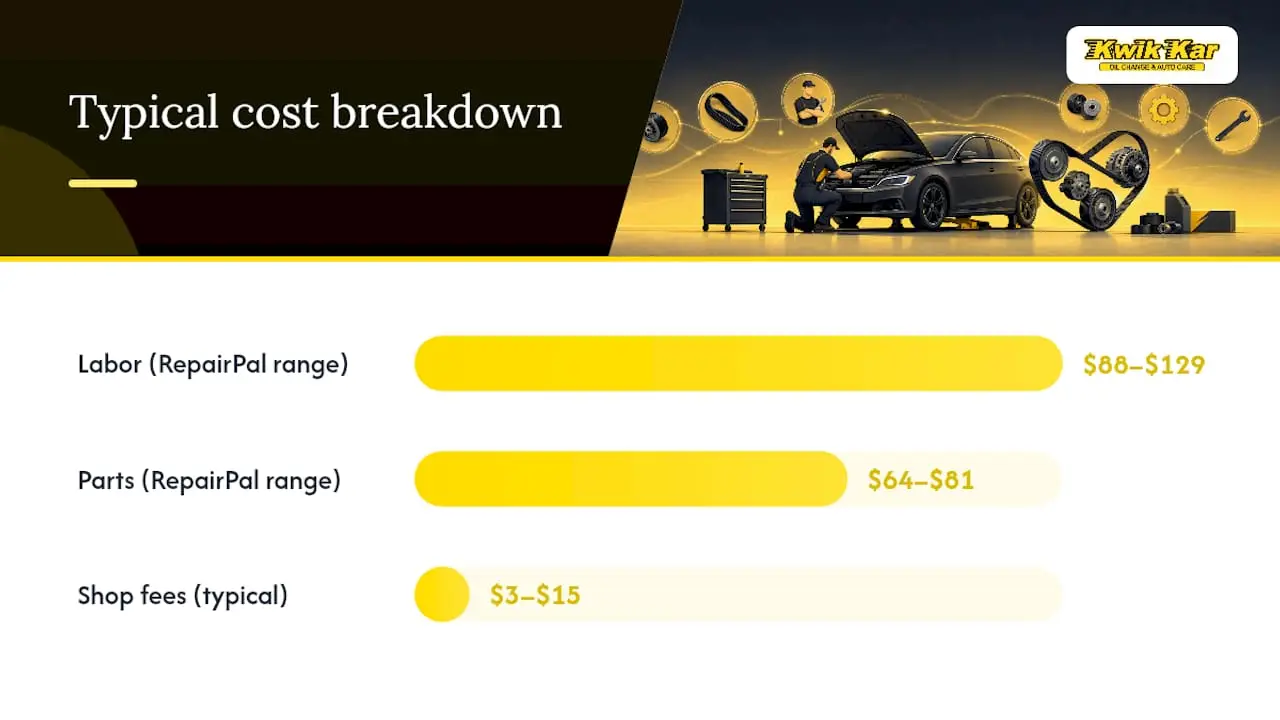
Those numbers track closely with RepairPal’s national cost estimate, which puts the average total between $152 and $210, with labor typically running $88 to $129 and parts $64 to $81. A separate estimate from CarParts places the professional range at $150 to $250 for common vehicles, which lines up well with what most Fort Worth area drivers should expect to pay.
Don’t forget the extras. Shop supply fees (usually $3 to $15), sales tax on parts, and in some states a small disposal fee for the old belt all show up on the final bill. None of these should be a surprise if the shop writes a clear estimate up front, but they do explain why your total might run $10 to $20 higher than the parts-plus-labor math alone suggests.
Why Do Some Serpentine Belt Quotes Run So Much Higher?
Two vehicles with identical belts can generate wildly different invoices, and the reasons are almost always legitimate once you know what to look for.
- Engine layout and access. A belt tucked behind an AC compressor or buried under a plastic splash shield takes longer to reach than one sitting in open air, and every extra 15 minutes of labor adds real dollars.
- Whether the tensioner or idler pulley needs replacing. A worn tensioner with play or audible bearing noise will chew through a brand-new belt fast, so replacing it while the belt is off typically adds only 15 to 30 minutes of labor and $40 to $120 in parts, according to Carsymp’s labor-time breakdown.
- Shop type and region. Chain service centers tend to run $60 to $100 per hour, independents fall between $70 and $130, and dealerships often charge $120 to $200 per hour for the same book time.
- Parts choice and warranty terms. OEM belts cost more upfront but often carry longer warranty coverage, which can matter if you plan to keep the vehicle past 100,000 miles.
Pro tip: If a shop quotes you for belt replacement but your tensioner is original and has over 80,000 miles on it, ask whether bundling the two makes sense. It often costs less than paying for a second labor visit six months later.
Is It Worth Replacing a Serpentine Belt Yourself?
DIY replacement is genuinely doable on many vehicles, and the savings are real. Expect to spend $25 to $75 on the belt itself, plus $15 to $80 if you need to rent a serpentine belt tool or tensioner wrench you don’t already own. Skip the labor charge entirely and you can save $80 to $200 compared to a shop visit, assuming the job goes smoothly.
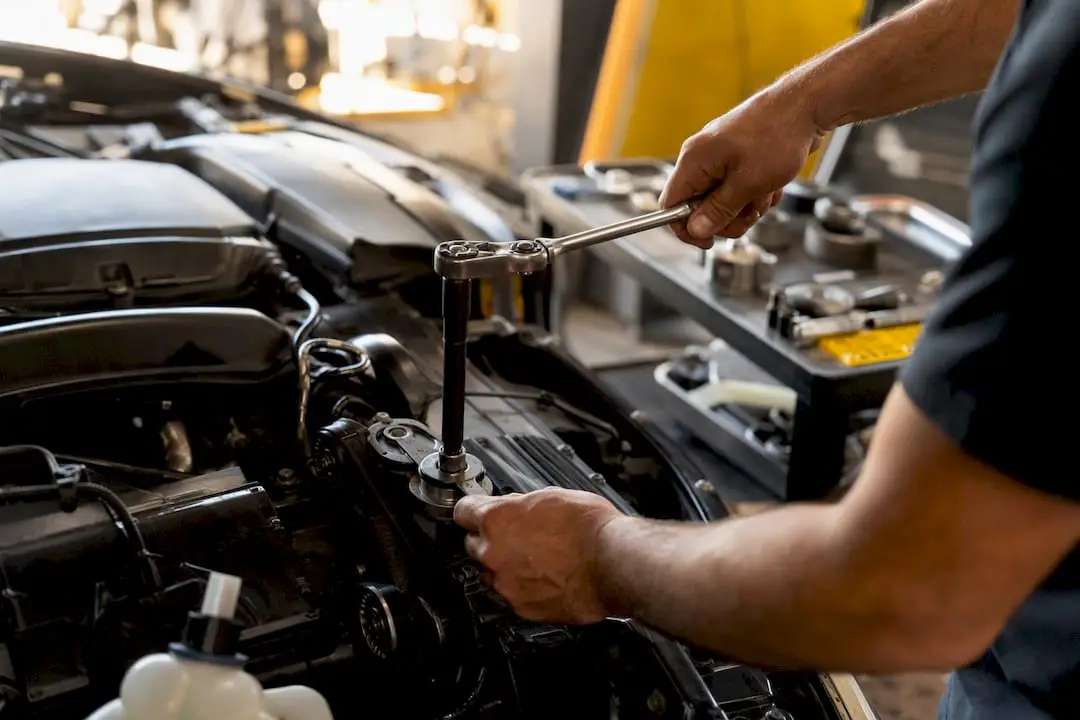
It doesn’t always go smoothly. The most common DIY mistakes are misrouting the belt around a pulley, under tensioning it so it slips within a few weeks, or nicking a pulley edge while wrestling the old belt off. Photographing the belt routing before you touch anything, according to CarParts’ routing guide, prevents the single most common error DIYers make.
If you’re going to attempt it, follow this sequence:
- Photograph the current belt routing from at least two angles, including how it wraps around the crankshaft pulley.
- Pull up your vehicle’s specific routing diagram from a service manual rather than relying on memory or a generic diagram.
- Release tension with the correct tool, slide the old belt off, and inspect the tensioner and idler pulleys for play or noise while everything is accessible.
- Route the new belt exactly as photographed, release the tensioner slowly, and confirm every rib sits correctly in its pulley groove.
- Start the engine and run the AC, power steering, and alternator through a full cycle to confirm nothing squeals or slips.
Pro tip: Even if you’re confident in your mechanical skills, a five-minute idle-and-load test after installation catches 90 percent of routing mistakes before they turn into a stranded car two weeks later.
If your vehicle has a tight engine bay, a dual-tensioner setup, or you don’t have a repair manual handy, the labor savings usually aren’t worth the risk of a comeback repair.
How Long Does a Serpentine Belt Replacement Actually Take?
Book time for this job typically runs 0.25 to 2.0 hours depending on the vehicle, but the number you see on your invoice usually runs a bit longer than the pure wrench-turning time. Technicians build in time for inspection, cleaning, a test run, and paperwork, which is a normal part of how book time gets calculated rather than padding.
Here’s how labor cost typically shakes out by shop type:
- Quick job, chain shop: 0.5 hours × $90/hr labor rate + $35 aftermarket belt = roughly $80 total.
- Complex job, dealer or specialty shop: 1.5 hours × $160/hr labor rate + $55 OEM belt = roughly $295 total.
- Middle-ground job, independent shop: around 0.75 to 1.0 hour × $100/hr + $45 belt = roughly $120 to $145 total.
Most shops can fit a belt-only replacement into a same-day appointment, often within an hour or two of drop-off if parts are in stock. If a tensioner needs ordering, plan for next-day service instead.
What Are the Warning Signs You Shouldn’t Ignore?
A failing serpentine belt rarely quits without warning. Watch for these signs, and treat more than one appearing together as a signal to schedule service within days, not months:
- A high-pitched squeal or chirp on startup or when turning the wheel, often worse in cold or wet weather.
- Visible cracks, fraying edges, or a shiny, glazed surface across the belt’s ribs.
- Missing chunks of rubber or a rib that’s separated from the belt body.
- Sudden loss of power steering assist, an intermittent battery warning light, or the AC cutting out unexpectedly.
Belts and their tensioners typically last 60,000 to 100,000 miles, according to O’Reilly Auto Parts’ diagnostic guidance, which makes that mileage window a smart trigger point for inspection even without symptoms. Driving on a belt showing rib separation risks a sudden snap, which can knock out your alternator, power steering, and water pump all at once, sometimes stranding you roadside. Ask any shop doing an oil change to visually check belt condition. Our guide on what a serpentine belt actually does breaks down exactly which systems fail when it goes.
How Do You Know if a Repair Quote Is Fair?
The fastest way to judge a quote is to build your own comparator number and see how close the shop’s price lands to it.
- Ask for the parts brand and warranty length. A shop unwilling to name the brand it’s installing is a red flag worth walking away from.
- Ask for the labor hours quoted, not just a flat dollar figure, and compare that number against the 0.25 to 2.0 hour book-time range typical for this repair.
- Ask whether the tensioner or idler pulley is included, and if not, whether the technician inspected them.
- Calculate your own comparator: parts cost + (labor hours × the shop’s stated hourly rate) + any disclosed fees.
- Compare that number to what you were quoted. A gap of $20 or $30 is normal margin. A gap of $150 or more deserves a direct question.
Watch for vague estimates that list “belt service” with no hourly breakdown, pressure to replace parts that weren’t part of your original complaint, or reluctance to show you the old belt afterward. Bundling a tensioner replacement with the belt is smart when the tensioner shows play, since it’s a small labor add and can prevent a second visit soon after. Our guide to comparing auto repair prices walks through this same math with more examples, and a look at commonly overpriced repairs shows where shops tend to pad estimates most.
Pro tip: If two shops quote similar labor hours but wildly different totals, the gap is almost always the hourly rate, not the belt. That’s a negotiating point worth raising directly.
Drivers outside the US looking for general cost-saving strategies on repairs like this one can find useful groundwork in these repair-budgeting steps, though hourly rates and parts pricing will differ by market.
Why Certification Matters When You’re Comparing Quotes
A RepairPal certification and ASE-certified technicians aren’t just badges on a wall. They mean the shop has agreed to fair, transparent pricing standards and that the people turning the wrenches have passed standardized competency testing on exactly this kind of accessory-drive work. That matters on a repair where the difference between a correct job and a rushed one often shows up three weeks later as a squeal or a snapped belt.
Kwik Kar Oil Change & Auto Care holds both distinctions, and pairs them with written estimates that break out parts and labor before any work starts, so you’re never guessing what you’re paying for. If your serpentine belt job also touches your charging system, our alternator and starter repair page shows the kind of accessory-drive expertise that carries over directly to belt and tensioner work.
The Real Lesson Here Isn’t the Price, It’s the Math
Most of the anxiety around this repair comes from not knowing whether $250 is fair or a ripoff. It usually is fair. The bigger mistake drivers make isn’t overpaying for the belt itself. It’s skipping the tensioner inspection and paying for labor twice within a year.
Conventional advice tells you to “get three quotes,” which is fine but incomplete. The better move is asking every shop for the same two numbers: labor hours and parts brand. Once you have those, the math does the comparing for you, no negotiating skill required.
Prioritize the tensioner conversation first, price second. A belt installed on a worn tensioner will fail faster than the number on your receipt would suggest, and that’s the trap that costs drivers the most money over time.
— Kwik Kar
Get an Inspected Replacement With Pricing You Can Actually Verify
Kwik Kar Oil Change & Auto Care gives you what most of this article has been asking you to demand from any shop: a written estimate that breaks out parts and labor before you approve anything. Our technicians are ASE certified and the shop carries RepairPal certification, backed by our certified auto repair credentials, so the belt and tensioner inspection you get is thorough, not rushed.

If your belt is showing cracks, glazing, or that telltale squeal, schedule an inspection and we’ll show you exactly what a tensioner or idler pulley looks like before recommending replacement. If a repair bill catches you off guard, our financing options page can help you spread the cost. Request your written estimate today and compare it against the math in this article. It should hold up.
Sources
- Serpentine belt replacement cost — RepairPal estimator
- Serpentine belt symptoms, diagnosis — O’Reilly Auto Parts
- Serpentine belt replacement labor time — Carsymp
- Serpentine belt symptoms, replacement cost and more — CarParts blog
FAQ
Can I Drive With a Bad Serpentine Belt?
You can drive short distances if the belt shows only minor wear, but a belt with visible cracking, glazing, or rib separation can snap without warning and knock out your power steering, alternator, and cooling system at once.
How Much Would a Shop Charge to Replace a Serpentine Belt?
Most shops charge between $100 and $250 for a belt-only replacement, rising to $150 to $400 when a tensioner or idler pulley is replaced at the same time, according to RepairPal’s national estimate.
What Are the Signs of a Bad Serpentine Belt?
Squealing or chirping noises, visible cracks or fraying, a shiny glazed surface, and sudden accessory failures like lost power steering or AC are the clearest warning signs, and belts typically show these symptoms somewhere between 60,000 and 100,000 miles.
Are Serpentine Belts Easy to Replace?
Many vehicles allow a DIY replacement in under an hour with basic tools, but tight engine bays and multi-pulley routing on some V6 and European engines make professional installation the safer choice.