



Car maintenance during lunch break is the practice of performing fast, prioritized vehicle checks or simple upkeep tasks within a typical 30–60 minute midday window. You do not need a full Saturday afternoon or a shop appointment to keep your car road-ready. With the right checklist, a few basic tools, and knowledge of what to skip until later, you can cover the checks that prevent most breakdowns. Busy professionals across Fort Worth and beyond are already using their lunch hour to stay ahead of costly repairs. This guide tells you exactly how.
What car maintenance tasks can you realistically do at lunch?
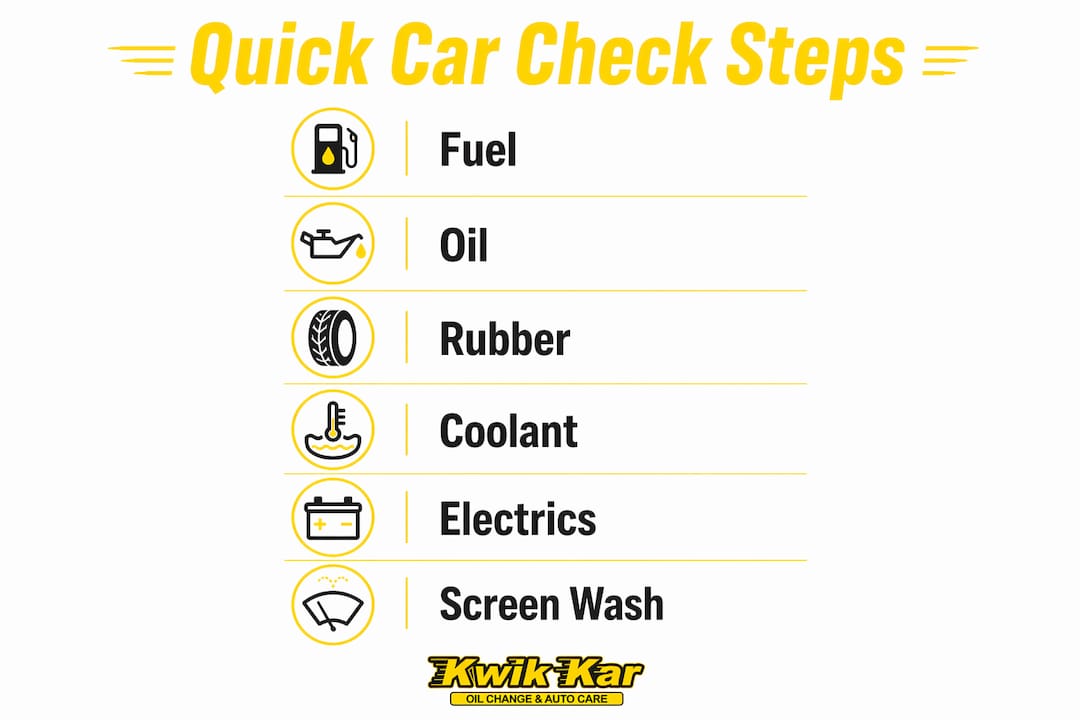
The most productive approach to lunch break car maintenance is the RAC’s FORCES checklist: Fuel, Oil, Rubber, Coolant, Electrics, and Screen wash. This framework was built for short inspections, and it covers every category that causes roadside breakdowns. Working through it takes 5–10 minutes when you know the order.
Only 19% of drivers always check their cars are road-ready before driving, while 30% never check at all. That gap explains why so many breakdowns are preventable. A quick midday check every few weeks closes that gap without eating your whole break.
Here is what fits inside a 10-minute lunch hour car care window:
- Fuel level: Glance at your gauge before you walk inside. Running low mid-commute wastes more time than a 3-minute fill-up.
- Oil level: Pull the dipstick, wipe it clean, reinsert, and read the level. The oil must sit between the MIN and MAX marks. See the safety note below before you do this.
- Tire pressure: Carwow recommends comparing your PSI reading against the manufacturer’s spec on the door frame sticker or owner’s manual. Low pressure hurts fuel economy and handling.
- Coolant reservoir: Check the level through the translucent plastic tank. No need to open the radiator cap.
- Lights: Walk around the car and test headlights, brake lights, and turn signals. Ask a coworker to confirm brake lights while you press the pedal.
- Screen wash: Top it off with pre-mixed washer fluid. Low screen wash is the one item that causes an MOT fail and costs nothing to fix.
- Battery terminals: Carwow notes that corrosion on battery terminals is a leading cause of no-start situations, especially in colder months. A visual check takes 30 seconds.
Pro Tip: Never check your oil immediately after driving. RACV advises waiting at least 10 minutes after shutting off the engine. A hot engine gives a falsely low oil reading and risks a burn. Use that 10 minutes to check your lights and tires first.
How to prepare your tools and workspace for a faster check
Preparation is what separates a productive quick car checkup from a wasted lunch. Showing up at your car without the right tools means you either skip checks or spend half your break searching your trunk.
Keep a small kit in your car at all times. The list is short:
- A clean lint-free cloth for wiping the dipstick
- A digital tire pressure gauge (more accurate than the dial gauges at gas stations)
- A small flashlight or phone flashlight for checking under the hood in a shaded lot
- A bottle of pre-mixed screen wash
- A copy of your owner’s manual or a saved photo of the fluid spec stickers
Parking surface matters more than most drivers realize. Always park on a flat, level surface before checking oil or coolant. A sloped surface tilts the fluid in the reservoir and gives you an inaccurate reading. This is the kind of preparation detail that RACV specifically flags as a source of incorrect diagnostics during quick checks.
The table below maps each tool to its task so you can decide what to grab before you leave your desk:
| Tool | Task | Time Required |
|---|---|---|
| Lint-free cloth | Oil dipstick check | 2 minutes |
| Digital tire gauge | Tire pressure check | 3 minutes |
| Flashlight | Battery terminal inspection | 1 minute |
| Pre-mixed screen wash | Washer fluid top-off | 1 minute |
| Owner’s manual or spec photo | Fluid level reference | Ongoing |
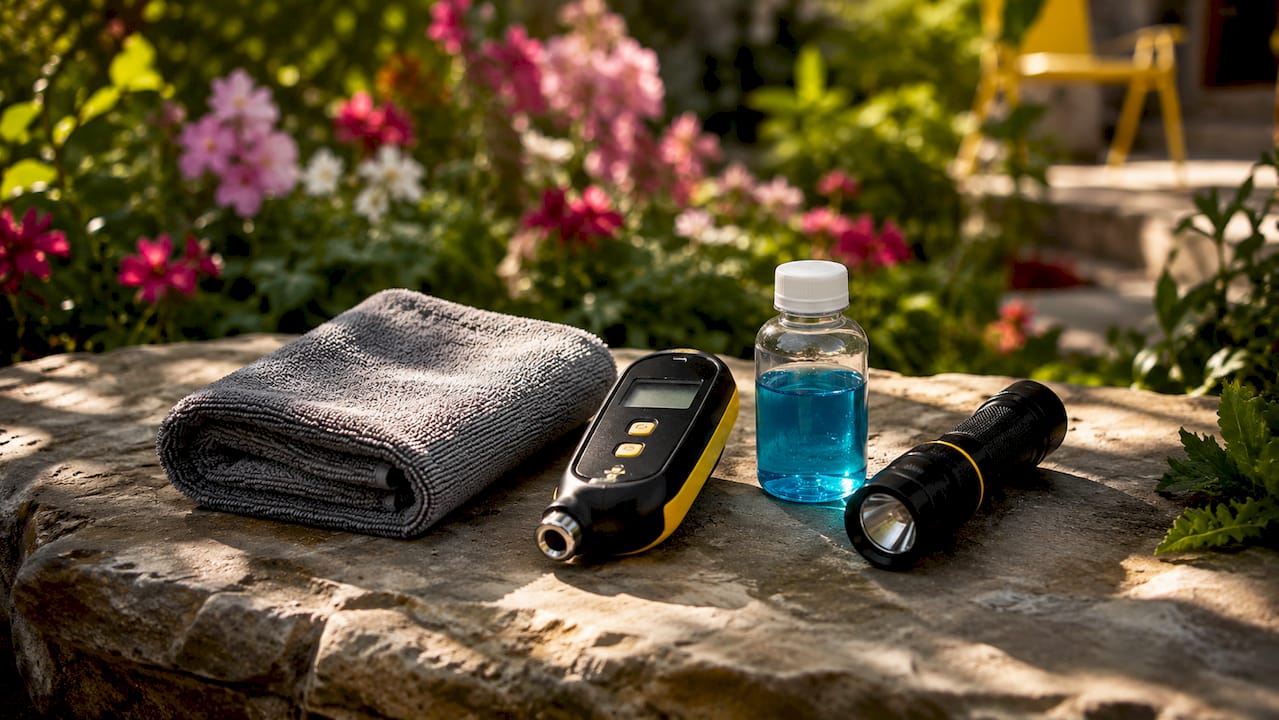
Pre-staging your kit the night before means you walk to your car with a plan. That discipline is what turns a vague intention into a time-saving car care habit that actually sticks.
Step-by-step: how to run a quick car check in under 10 minutes
A staged inspection approach lets you work through the most critical items first and stop cleanly if time runs short. Car Care Routine recommends a tiered pass: tires and lights in the first 5 minutes, fluids and battery in the next 5. This structure means even a 5-minute check covers your highest-risk items.
Follow this sequence:
- Park on level ground and shut off the engine. Set a 10-minute timer on your phone. This is your cool-down window before touching fluids.
- Walk the perimeter. Check all four tires visually for obvious damage, sidewall bulges, or objects embedded in the tread. Press the valve stem on each tire to confirm it is seated.
- Test all lights. Turn on headlights and hazards. Walk around the car. Ask a colleague to confirm brake lights.
- Check tire pressure. Use your digital gauge on all four tires and the spare. Compare each reading to the door frame sticker. Add air at a nearby station if any tire is more than 5 PSI below spec.
- Open the hood. By now your 10-minute cool-down is complete. Check the oil dipstick, coolant reservoir, and screen wash bottle. Top off anything that is low.
- Inspect battery terminals. Look for white or blue-green powder around the terminals. That is corrosion. A mix of baking soda and water cleans it off, but if the buildup is heavy, schedule a professional inspection.
- Note anything unusual. Use your phone’s notes app or a car maintenance checklist PDF to log what you found and what needs follow-up.
Knowing when to stop is as important as knowing what to check. If you find low oil, add the correct grade from your trunk supply. If you find a flat tire, call for roadside assistance rather than attempting a change in a parking lot without proper safety equipment.
Pro Tip: Use your owner’s manual app or a saved photo of your fluid spec labels to confirm the correct oil grade, coolant type, and tire pressure range. Guessing the wrong spec and topping off with the wrong fluid causes more damage than running slightly low.
What professional mobile car maintenance services can do at your workplace
Mobile car maintenance services complete professional tasks in under 60 minutes on-site, which makes them a natural fit for the lunch hour. You book online, a certified technician arrives at your workplace, performs the service, and your car is ready before you finish eating. No drop-off, no waiting room, no second trip.
The services that fit inside a lunch break through a mobile provider include:
- Oil and filter change: The most common mobile service. A technician drains, replaces, and tops off in 20–30 minutes.
- Battery replacement: Diagnosis and swap typically takes under 30 minutes.
- Tire rotation: Moving tires to even out wear takes 20–40 minutes with the right lift equipment.
- Fluid top-offs: Brake fluid, power steering fluid, and coolant checks with top-off service.
- Wiper blade replacement: A 5-minute job that most drivers delay for months.
Mobile auto service suits busy professionals because it eliminates the commute cost of a shop visit. You lose zero productive work time. The technician handles everything while you are at your desk.
When evaluating a mobile service provider, look for these specifics:
| Factor | What to Look For |
|---|---|
| Technician certification | ASE-certified or manufacturer-trained |
| Parts quality | OEM or equivalent quality parts |
| Pricing transparency | Written estimate before work begins |
| Service confirmation | Booking confirmation and arrival window |
| Post-service documentation | Digital or printed service record |
Kwik Kar Oil Change & Auto Care employs RepairPal-certified technicians and provides transparent pricing before any work starts. For Fort Worth professionals who want dependable service without rearranging their schedule, that combination of certification and transparency removes the guesswork entirely. You can also review affordable maintenance options to plan your service budget in advance.
Key takeaways
Effective car maintenance during lunch break requires a prioritized checklist, the right tools staged in advance, and a clear rule about when to call a professional instead of improvising.
| Point | Details |
|---|---|
| Use the FORCES checklist | RAC’s Fuel, Oil, Rubber, Coolant, Electrics, Screen wash framework covers every breakdown category in under 10 minutes. |
| Follow the 10-minute cool-down rule | Always wait 10 minutes after shutting off the engine before checking oil for a safe, accurate reading. |
| Stage your tools in advance | Keep a gauge, cloth, flashlight, and screen wash in your car so every check starts without wasted time. |
| Use a tiered inspection sequence | Check tires and lights first so even a 5-minute stop covers your highest-risk items. |
| Mobile services fill the gap | Certified mobile providers complete oil changes and battery swaps on-site in under 60 minutes. |
What we’ve learned about lunch break car care at kwik kar
Most drivers treat car maintenance as an all-or-nothing task. They skip it entirely because they cannot do everything at once. That thinking is the real problem, not the time constraint.
At Kwik Kar Oil Change & Auto Care, we see the results of deferred checks every week. A driver comes in with a low oil warning that has been on for two weeks because they “did not have time.” The fix is a $10 top-off. The consequence of waiting is sometimes a $2,000 engine repair. The math is not complicated.
What actually works is treating your lunch break like a triage window, not a full service appointment. You are not trying to replace your brake pads in a parking lot. You are scanning for the three or four things that could leave you stranded tonight. Tires, oil, lights, coolant. That is the list. Everything else waits for a proper shop visit.
The drivers who maintain the most reliable vehicles are not the ones who spend the most time on maintenance. They are the ones who check consistently and act quickly on what they find. A 5-minute check every two weeks beats a 2-hour inspection twice a year. Consistency is the variable that matters.
One more thing: document what you find. A note in your phone with the date, mileage, and what you checked takes 30 seconds. That log becomes genuinely useful when a warning light appears and you need to tell a technician what changed recently. It also helps you track patterns, like a tire that keeps losing pressure, before the pattern becomes a blowout.
— Kwik Kar
How kwik kar makes lunch break car care simple
Your lunch break is 30–60 minutes. Kwik Kar Oil Change & Auto Care is built for exactly that window. Our certified technicians in Fort Worth handle oil changes, tire rotations, battery checks, and fluid services with transparent pricing and no surprise charges. You know the cost before we start, and most services are complete before your break ends.
Whether you need a quick oil change or want to review your full affordable car maintenance plan for the year, Kwik Kar Oil Change & Auto Care gives you dependable service without the runaround. If budget is a concern, our auto repair financing options make it easy to stay on top of maintenance without a large upfront cost. Stop in during your lunch hour and drive away with confidence.
FAQ
What can i realistically check on my car in 10 minutes?
In 10 minutes, you can check tire pressure, oil level, coolant, screen wash, and all exterior lights. Follow the RAC FORCES checklist to cover the categories most likely to cause a breakdown.
Is it safe to check my oil right after driving?
No. RACV advises waiting at least 10 minutes after shutting off the engine before checking oil. A hot engine gives a falsely low reading and risks a burn from hot components.
What tools should i keep in my car for quick checks?
Keep a digital tire pressure gauge, a lint-free cloth, a small flashlight, and a bottle of pre-mixed screen wash. These four items cover every check on the FORCES checklist.
When should i stop a DIY check and call a professional?
Stop and call a professional when you find heavy battery corrosion, oil that is black and gritty, a tire with visible sidewall damage, or any warning light you cannot identify. These issues require a certified technician, not a parking lot fix.
Can a mobile service really finish an oil change during my lunch break?
Yes. Mobile auto service providers typically complete an oil change in 20–30 minutes on-site. The full process, including booking confirmation and technician arrival, fits inside a standard 60-minute lunch break.