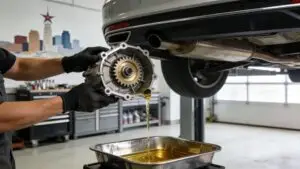




A quality oil change in Keller usually takes about 15 to 30 minutes, depending on whether you’re getting a basic service or adding preventive maintenance. If you’re driving around Keller right now wondering whether you can squeeze it into your day, you usually can, but the right shop matters as much as the timing.
A lot of drivers put off oil service for the same reason. Life gets busy, the car still runs, and nothing feels urgent. Then one hot Texas afternoon the engine sounds a little rougher, or the dash light pops on, and now the simple question becomes, “Where do I go for a keller oil change that won’t waste my time or cut corners?”
That is the central concern in this area. Keller drivers have choices. National quick-lube chains, dealerships, and independent shops all offer oil changes, but they don’t all deliver the same level of inspection, honesty, or fit for your vehicle. In North Texas heat, oil condition matters more than many people realize, and a cheap service that skips the details can cost you later.
Your Practical Introduction to Keller Car Care
If you commute through Keller, run errands across North Tarrant County, or spend time idling in traffic with the A/C blasting, your engine oil has a real job to do. It has to lubricate moving parts, carry heat away from internal components, and help keep deposits from building up. When that oil is old, low, or the wrong type, wear starts showing up where you don’t want it.
For most vehicles, oil service is the maintenance item that sets the tone for everything else. Skip it long enough and small problems get harder to catch. Stay ahead of it and a technician has regular chances to spot leaks, worn belts, or a weak battery before they turn into a tow-truck day.
Keller drivers also care about convenience. One local benchmark many people compare against is Valvoline Instant Oil Change’s advertised approximately 15-minute full-service standard at its Keller location on S. Main Street, with added maintenance potentially taking 10 to 20 minutes or more, as noted on the Keller Valvoline service page. That tells you something useful. Fast service is available, but extra inspection and add-on work take time.
Practical rule: A fast oil change is good. A rushed oil change isn’t.
Clean oil is one part of total vehicle care. If you also want the outside and interior of your car to hold up better between maintenance visits, Derek’s detailing insights give a helpful breakdown of what real detailing includes and where drivers often confuse a wash with true protective care.
When people ask what matters most in a keller oil change, the answer is simple. Use the right oil, change it on the right schedule, and choose a shop that treats the service as a vehicle checkup, not just a drain-and-fill.
Conventional vs Synthetic Oil What Keller Drivers Need to Know
The biggest oil decision isn’t whether to change it. It’s what type to use.
Conventional oil is the basic option. It can work well in the right engine and under the right maintenance schedule. Synthetic blend gives you a middle ground. Full synthetic is the premium option for heat resistance, stability, and longer service intervals. For Keller drivers dealing with high temperatures, long idling, and stop-and-go driving, that difference isn’t theoretical. It shows up in how well the oil holds up.
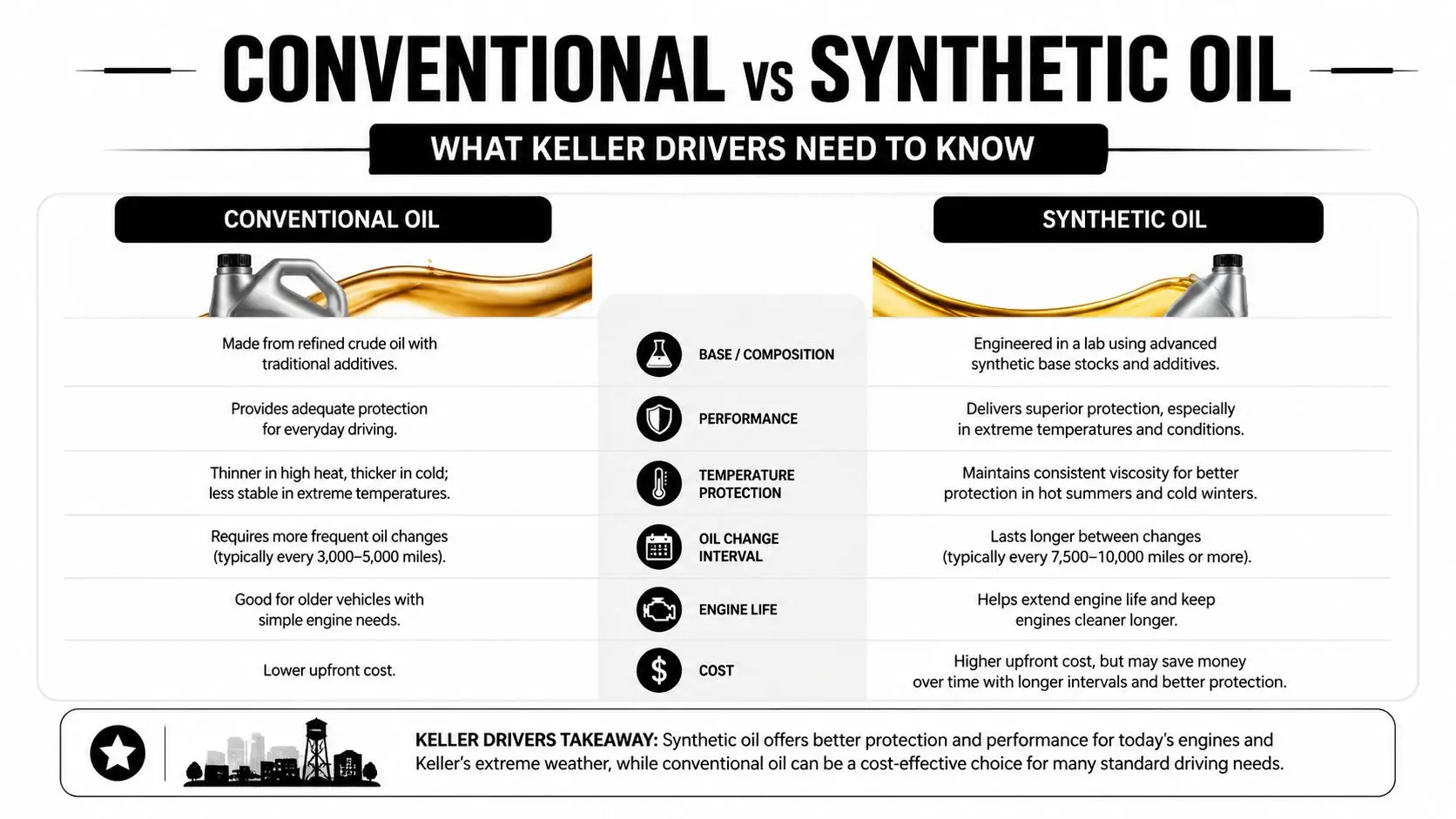
How the three main types compare
Industry data shows that conventional oil typically needs changing every 3,000 to 5,000 miles, synthetic blend every 5,000 to 7,500 miles, and full synthetic every 7,500 to 10,000 miles, with synthetics offering stronger resistance to breakdown in hot climates like Fort Worth, according to Keller’s Pro Auto oil change guidance.
An easy way to consider the process:
| Oil type | Best fit | Main trade-off |
|---|---|---|
| Conventional | Older vehicles or engines designed around it | Lower upfront cost, shorter interval |
| Synthetic blend | Drivers who want better protection without going all the way to full synthetic | Balanced cost and performance |
| Full synthetic | Newer engines, hotter driving conditions, tougher daily use | Higher upfront cost, stronger long-term protection |
The technical reason matters. Synthetic oils use base stocks with more uniform molecular chains, so they resist shearing and thermal breakdown better. Conventional oils have more variation in their hydrocarbon molecules, which makes them break down faster under stress. In plain English, synthetic oil keeps its protective qualities longer when your engine gets hot.
What usually works best in Keller
If you do short trips, sit in traffic, or drive a newer vehicle with tighter engine tolerances, full synthetic often makes the most sense. If you have an older vehicle and the manufacturer allows conventional oil, the lower-cost option may still be perfectly reasonable, but only if you stay disciplined about intervals.
Full synthetic isn’t automatically the right answer for every car. The right answer is what your engine is designed for and how you actually drive it.
A lot of confusion comes from drivers trying to choose oil based only on price. That’s where mistakes happen. The better approach is to match the oil to the engine, mileage, and use pattern. If you want a plain-English overview of the options before you book service, this guide to different oil change types lays out the categories clearly.
Where people overspend and where they underbuy
Drivers overspend when they buy premium oil for a vehicle that won’t benefit from it. They underbuy when they treat Texas heat like it doesn’t matter or assume all oils protect the same way.
A sensible decision usually comes down to three questions:
- What does the owner’s manual call for? Start there before listening to anybody’s sales pitch.
- How hard is your vehicle working? Commuting, towing, idling, and summer driving all put more stress on oil.
- What are you trying to avoid? If you want stronger resistance to deposits, rust, corrosion, and heat-related breakdown, synthetic formulations generally do that better.
Recognizing the Signs Your Car Needs an Oil Change
Most cars give you a warning before old oil becomes a repair problem. The trick is paying attention early instead of waiting for the vehicle to force the issue.
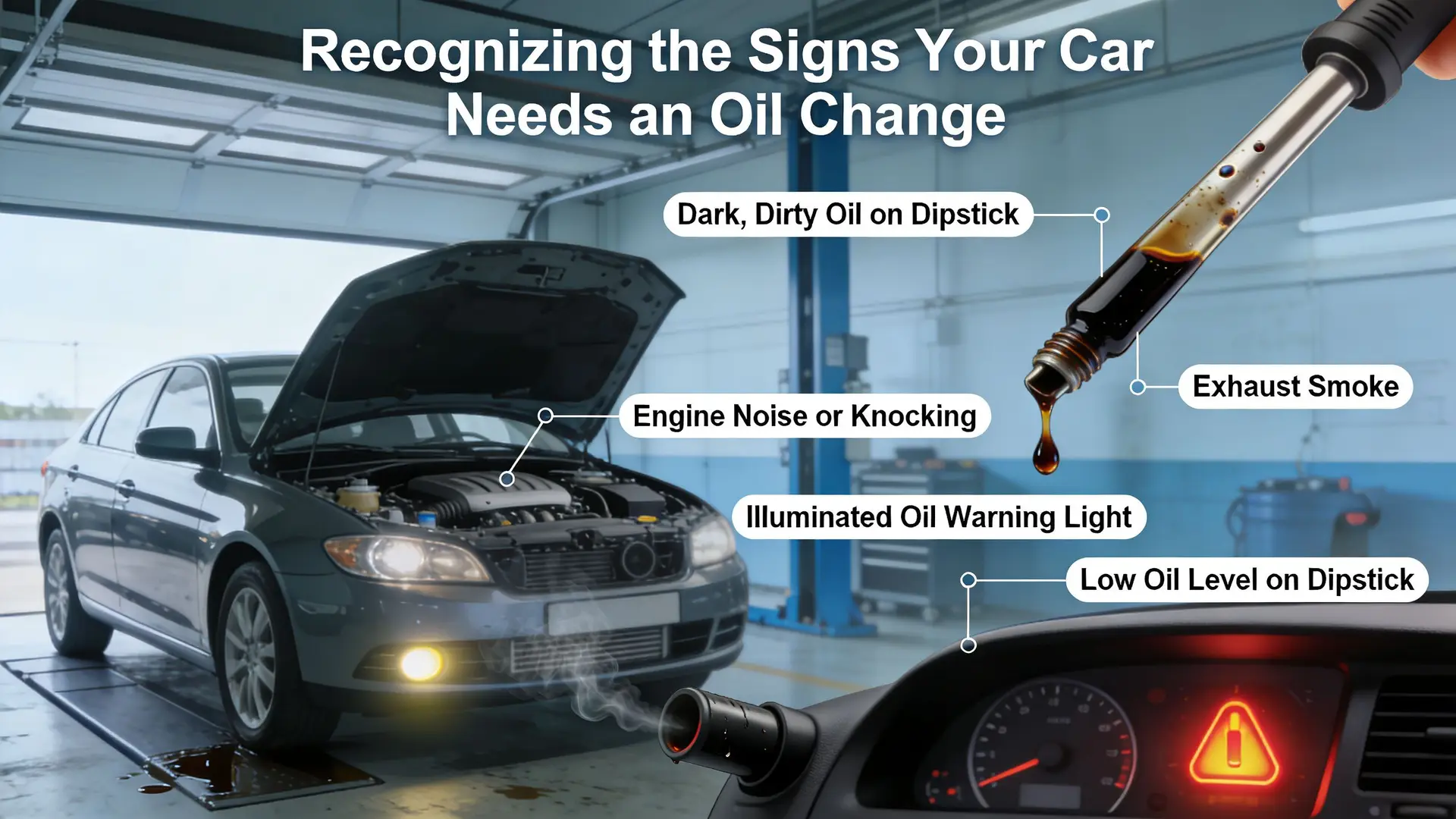
Five signs worth taking seriously
- The oil light comes on: That can mean low oil level, pressure problems, or oil that isn’t circulating the way it should. Don’t treat it like a reminder you can ignore for another week.
- The engine sounds louder than usual: Ticking, knocking, or a rough mechanical sound can mean the oil has lost lubricating strength and metal parts aren’t cushioned as well.
- The oil on the dipstick looks dark and dirty: Fresh oil doesn’t stay clean forever. If it looks heavily contaminated or sludgy, it’s time to stop guessing and schedule service.
- You notice smoke from the exhaust: Some exhaust haze can have other causes, but if it shows up with overdue maintenance, oil condition should be checked right away.
- You smell oil inside the vehicle: That can point to overheating oil or a leak landing on hot engine components.
What not to do
The mistake I see most often is waiting for multiple symptoms at once. Drivers think, “It still starts, so it must be fine.” But by the time you have noise, smell, and a warning light together, you’ve usually waited too long for comfort.
Another common mistake is relying only on memory. If you’re not certain when your last service happened, don’t guess. Check your sticker, service record, or your last invoice.
If the oil is overdue and the engine feels different, listen to the car before it teaches you a more expensive lesson.
For a deeper symptom-by-symptom checklist, this page on signs your car needs an oil change is a practical reference to keep handy.
What to Expect During Your Keller Oil Change Service
A proper oil change should feel straightforward from your side of the counter. You pull in or arrive for your appointment, the technician confirms your vehicle details and oil specification, and the service begins. What happens next is where quality starts to separate itself.
The basic service
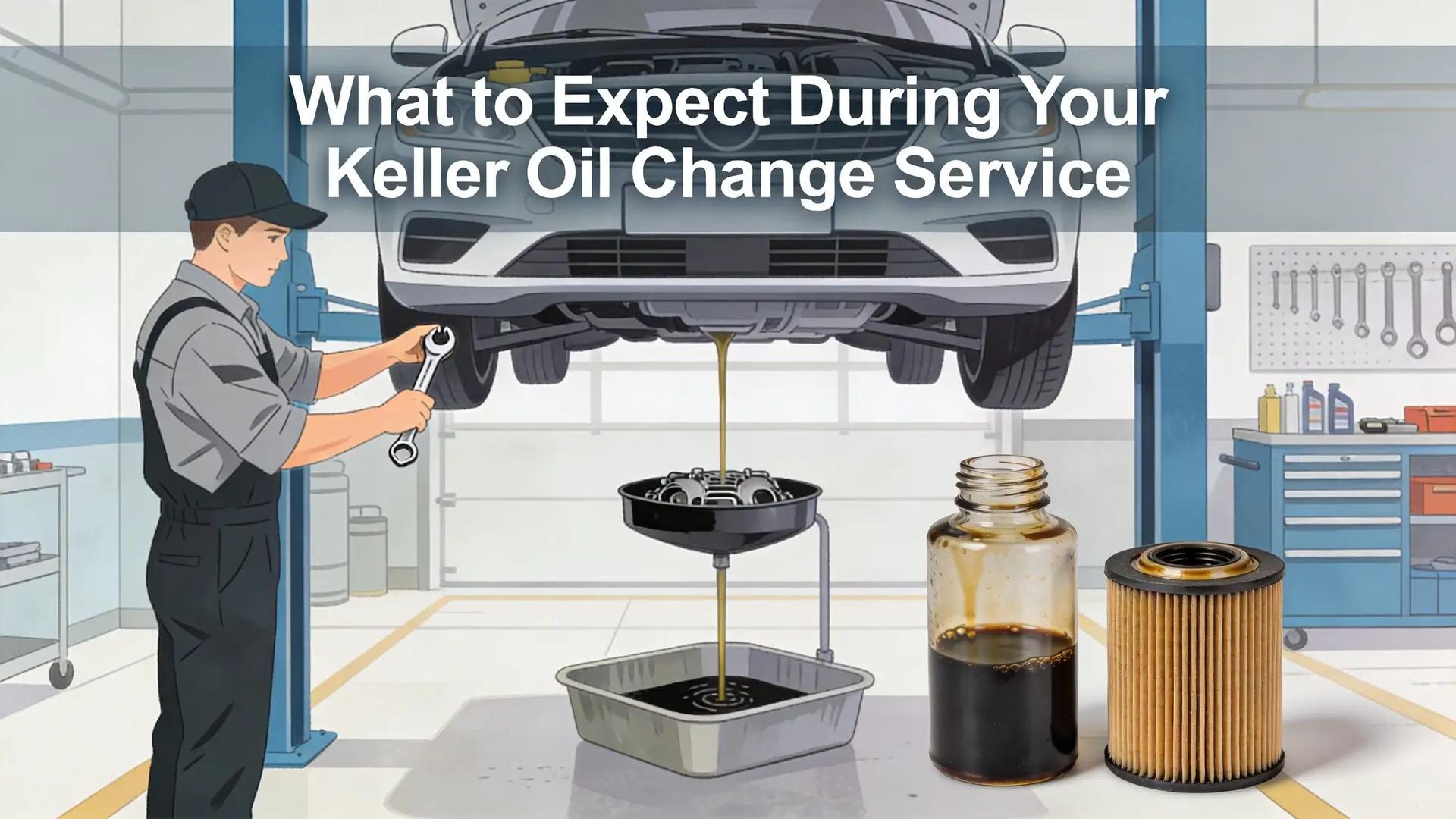
At minimum, the shop should drain the old oil, replace the filter, refill with the correct oil, and verify the level. That sounds simple because it is simple. But simple work still gets messed up when shops rush, use the wrong viscosity, install a low-quality filter, or skip a final leak check.
This is also the point where a good shop checks the condition of what came out. Oil that looks heavily degraded, signs of leakage underneath, or a filter that suggests poor past maintenance all tell a story.
Why the inspection matters
A professional oil change service isn’t just the oil swap. It also includes a multi-point inspection. Technicians check for leaks, assess filter effectiveness, and inspect the battery, belts, and tires. That inspection process typically takes 12 to 15 minutes and can reduce unexpected breakdowns by 15 to 25 percent, according to Keller Deal’s certified service oil change overview.
That’s the difference between a receipt and useful maintenance. A technician who catches a seeping gasket, weak battery, or worn belt during oil service may save you from a roadside problem later.
Shop-floor advice: If a place promises speed, ask what they actually inspect during that time.
What a thorough visit should include
Here’s what I’d want to hear from any shop handling a keller oil change:
- Oil specification confirmed: The technician should know whether your vehicle takes conventional, blend, or full synthetic, plus the correct viscosity.
- Filter replaced, not ignored: A fresh filter matters because clean oil pushed through a poor filter isn’t a complete service.
- Leak check performed: This should happen before the car leaves the bay.
- Wear items reviewed: Belts, battery condition, tires, and related filters should get a quick look.
- Clear recommendations: You should be told what needs attention now, what can wait, and what was checked and found okay.
Some drivers only want the quickest in-and-out visit possible. Others want a full record of what the technician saw. Both are fair, but if you value prevention, a full-service visit usually gives you more than a sticker in the windshield. If you want an example of what that kind of visit includes, full-service oil change details show the broader maintenance approach many drivers prefer.
How to Choose a Reputable Oil Change Shop in Keller
Keller has plenty of places that can change oil. Fewer places do it with consistency, transparency, and enough mechanical awareness to catch trouble before it grows.
The market is competitive, and many providers now bundle oil changes with inspections and tire rotation instead of treating oil service as a standalone task. That broader maintenance model is visible in dealership service offerings such as Keller Ford Lincoln’s oil change service approach, and it reflects how customers now evaluate value, not just sticker price.
A simple checklist that works
Use this when you’re comparing shops:
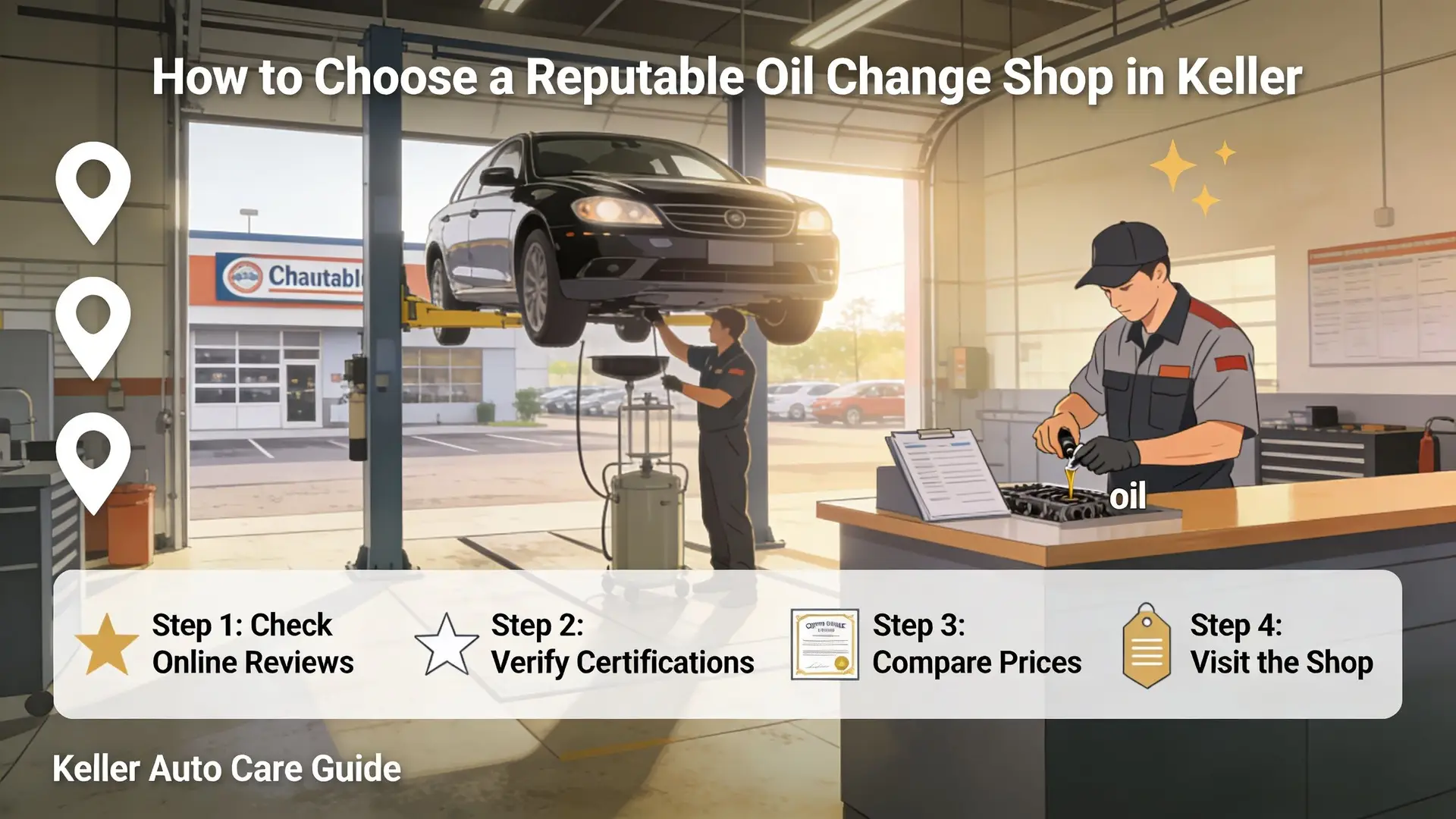
- Check technician credentials: ASE certification matters because it tells you the staff has formal standards behind the work. RepairPal participation can also be useful if you’re comparing trust signals.
- Look for pricing clarity: You want to know what the base service includes, what oil type is being used, and what extra services cost before the work starts.
- Read recent reviews for patterns: Don’t just look at star ratings. Look for repeated mentions of honesty, communication, and whether the shop pushed unnecessary work.
- Ask what the inspection includes: If they can’t answer clearly, that tells you plenty.
- Notice service range: A shop that handles diagnostics, brakes, inspections, and maintenance usually sees vehicle health more completely than a place focused only on speed.
What usually separates a solid shop from a weak one
A weak shop sells on price alone. A solid shop explains what your vehicle needs and why. It doesn’t talk in circles, and it doesn’t use vague language to pad an invoice.
If you’re reviewing local businesses online, it helps to understand how business listings work and why accurate reviews, hours, and service information matter. This essential Google Business Profile resource gives a useful primer if you want to vet local shops more carefully.
Kwik Kar Oil Change and Auto Care is one example of the kind of shop worth considering because it offers full-service maintenance with ASE and RepairPal technicians, broader repair capability, and straightforward communication about service recommendations.
Keller Oil Change FAQs Your Questions Answered
Do high-mileage vehicles need a different oil change approach
Usually, yes. Once a vehicle has a lot of miles on it, the right interval and filter choice may depend more on engine condition and usage than on a generic rule. For owners of high-mileage vehicles or small business fleets, standard guidance is often not enough. Advanced preventive maintenance programs should adjust oil change frequency and filter types based on engine condition and use, as explained in J. J. Keller’s preventive maintenance guidance.
That’s why a good shop asks questions. Is the engine consuming oil? Is the vehicle idling for long periods? Is it hauling equipment? Those details matter.
Is it better to make an appointment or just walk in
That depends on your schedule and your tolerance for waiting. Walk-ins are convenient when the shop has room, but appointments usually make the day easier if you have a tight lunch break or need additional maintenance checked during the same visit.
If you know you want more than a basic oil service, booking ahead is the safer move.
Can I do other maintenance at the same time
Often, yes. Oil service is a smart time to handle inspections or minor maintenance because the car is already in the bay and a technician is already reviewing its condition. Combining services can be more efficient than making separate trips later.
Should I always choose the cheapest oil change coupon
Not automatically. Coupons can be fine, but the better question is what’s included. The cheapest price on the sign may leave out the inspection, use a lower-tier filter, or apply only to a narrow oil type. Low price isn’t a problem. Hidden trade-offs are.
What should I ask before approving the work
Keep it simple:
- What oil and viscosity are you putting in my car?
- Are you replacing the filter?
- What does your inspection include?
- Did you find any leaks or wear items I need to plan for soon?
If you’re looking for a straightforward place to handle your next service, Kwik Kar Oil Change and Auto Care offers full-service maintenance and repair for Fort Worth area drivers who want clear communication, proper inspections, and an oil change done with the right attention to detail.