So, what exactly is battery reconditioning? Think of it less like a magic fix and more like a lifeline for a weak or aging car battery. It's a process designed to breathe some extra life into a battery that's starting to lose its punch.
Instead of immediately running out to buy a new one, reconditioning aims to reverse the chemical wear and tear that naturally happens over time. It's a way to get more miles out of the battery you already own.
Understanding the Core Idea and Tradeoffs
At its core, battery reconditioning is all about fighting a process called sulfation. Imagine the lead plates inside your battery slowly getting coated with tiny, hard sulfate crystals. It’s a bit like plaque building up in an artery.
This buildup gets in the way, making it harder for the battery to store a full charge and deliver the power your car needs to start. Reconditioning uses specific, controlled charging methods or sometimes chemical additives to dissolve these crystals, clearing the way for electricity to flow freely again.
It's a fantastic way to extend your battery's lifespan for a fraction of the cost of a replacement. But, it's important to be realistic—it can't fix a cracked case or other physical damage. It’s best to see it as a life extension, not a permanent solution.
The goal of reconditioning is to recover lost performance, not to create a "like-new" battery. A successfully reconditioned battery might regain 50-80% of its original capacity, providing several more months or even a year of reliable service.
To help you weigh your options, it's useful to see a direct comparison. Looking at the cost, longevity, and performance side-by-side really clarifies when reconditioning is a smart move for vehicle owners here in Fort Worth.
Battery Reconditioning vs Full Replacement At a Glance
Here’s a quick breakdown to help you compare the two choices at a glance.
| Factor | Battery Reconditioning | New Battery Replacement |
|---|---|---|
| Initial Cost | Significantly lower, typically a fraction of the price of a new unit. | Higher upfront investment, with prices varying by brand and type. |
| Expected Lifespan | Extends life by 6-18 months on average, depending on the battery's age and condition. | Provides a full lifespan of 3-5 years or more, backed by a manufacturer's warranty. |
| Environmental Impact | Highly eco-friendly, as it reduces waste and postpones the energy-intensive recycling process. | Creates manufacturing and shipping-related emissions, and requires proper recycling of the old unit. |
| Performance | Restores usable capacity but will not perform like a brand-new battery. | Offers peak performance, reliability, and maximum cold-cranking amps. |
Ultimately, choosing between reconditioning and replacement comes down to your immediate needs and budget. While a new battery offers peace of mind and top-tier performance, reconditioning is a cost-effective and environmentally friendly way to get more use out of your current one.
How Battery Reconditioning Actually Works
To really get what battery reconditioning is all about, you first have to understand what’s going wrong inside an old, tired battery. The main problem is something called sulfation. The best way to think about it is like plaque building up in an artery—it slowly clogs up the whole system and cuts off the flow.
Inside your car's lead-acid battery, tiny sulfate crystals form on the lead plates whenever the battery is discharging. That's normal. When you start your car and recharge it, those crystals are supposed to dissolve right back into the battery's acid. The trouble starts when a battery sits too long without a full charge, or if it's never quite getting fully charged. Those soft crystals start to harden and grow, eventually choking the life out of the battery and killing its ability to hold a charge.
This infographic breaks down the choice every vehicle owner faces: do you try to bring your current battery back to life, or do you just buy a new one?
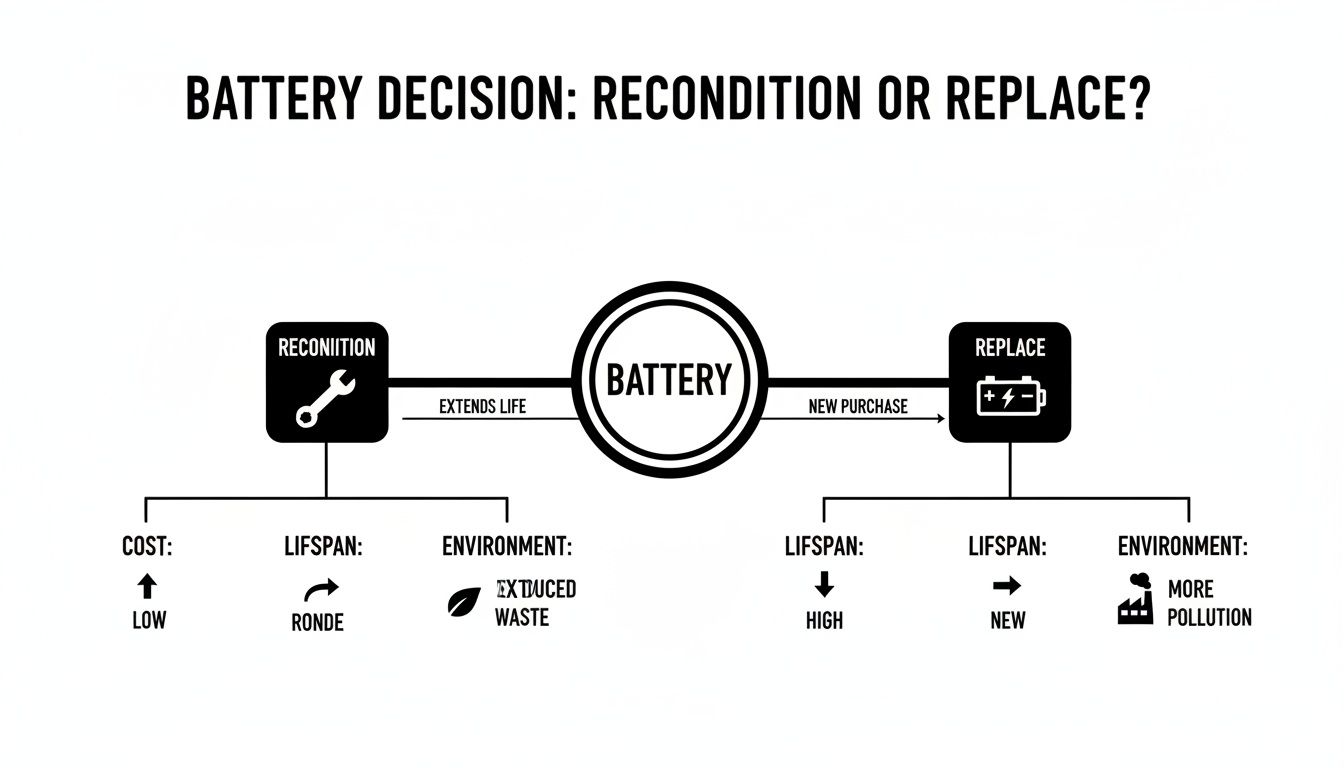
As you can see, reconditioning is the lower-cost, greener choice that gives your current battery a second chance. Replacement means a brand-new unit, but it comes with a higher price tag. The whole point of reconditioning is to break down those hardened sulfate crystals, clearing out the gunk so the battery can work properly again. This is usually done in one of two ways.
Pulse Charging to Break Down Crystals
One of the most effective methods we use is a specialized smart charger that sends high-frequency electronic pulses into the battery. This isn't your standard trickle charge. Instead, it’s a series of controlled, high-frequency jolts designed to literally shake the sulfate crystals apart.
These vibrations gently break up and dissolve the hardened buildup on the plates without causing any damage. It’s a slow and steady process that can take many hours, but it gradually reopens the active surface area of the plates. Once it's done, the battery can once again accept and hold a much stronger charge.
The key thing to remember is that pulse charging is an electronically controlled process that gets to the root of the problem. It’s far more advanced than a standard charger and is built specifically to reverse sulfation and restore lost capacity.
Chemical Additives for Sulfation Reversal
Another route we can take involves adding a special chemical solution directly into the battery's electrolyte fluid (the mix of acid and water). This only works on non-sealed, serviceable batteries where we can actually get to the individual cells.
These additives are designed to chemically react with the lead sulfate and dissolve the crystals, putting them back into the solution where they belong. After the additive does its job, the battery has to go through a very specific, controlled charging cycle to make sure everything is rebalanced and properly mixed.
You might see some DIY kits for this, but it’s a job that needs a careful, professional touch. Using the wrong chemical or even just the wrong amount can ruin a battery for good. When done right, though, it’s a powerful way to revive a battery that’s got some serious sulfation going on. Both methods have the same goal: clearing the internal pathways to bring your battery back to life.
Signs Your Battery Is a Good Candidate for Reconditioning
Not every struggling battery can be brought back from the brink. Think of it like a mechanic trying to save an old engine—sometimes a good tune-up is all it needs, but other times, the damage is just too severe. We have to figure out if your battery is a candidate for recovery or if it's simply time to say goodbye.
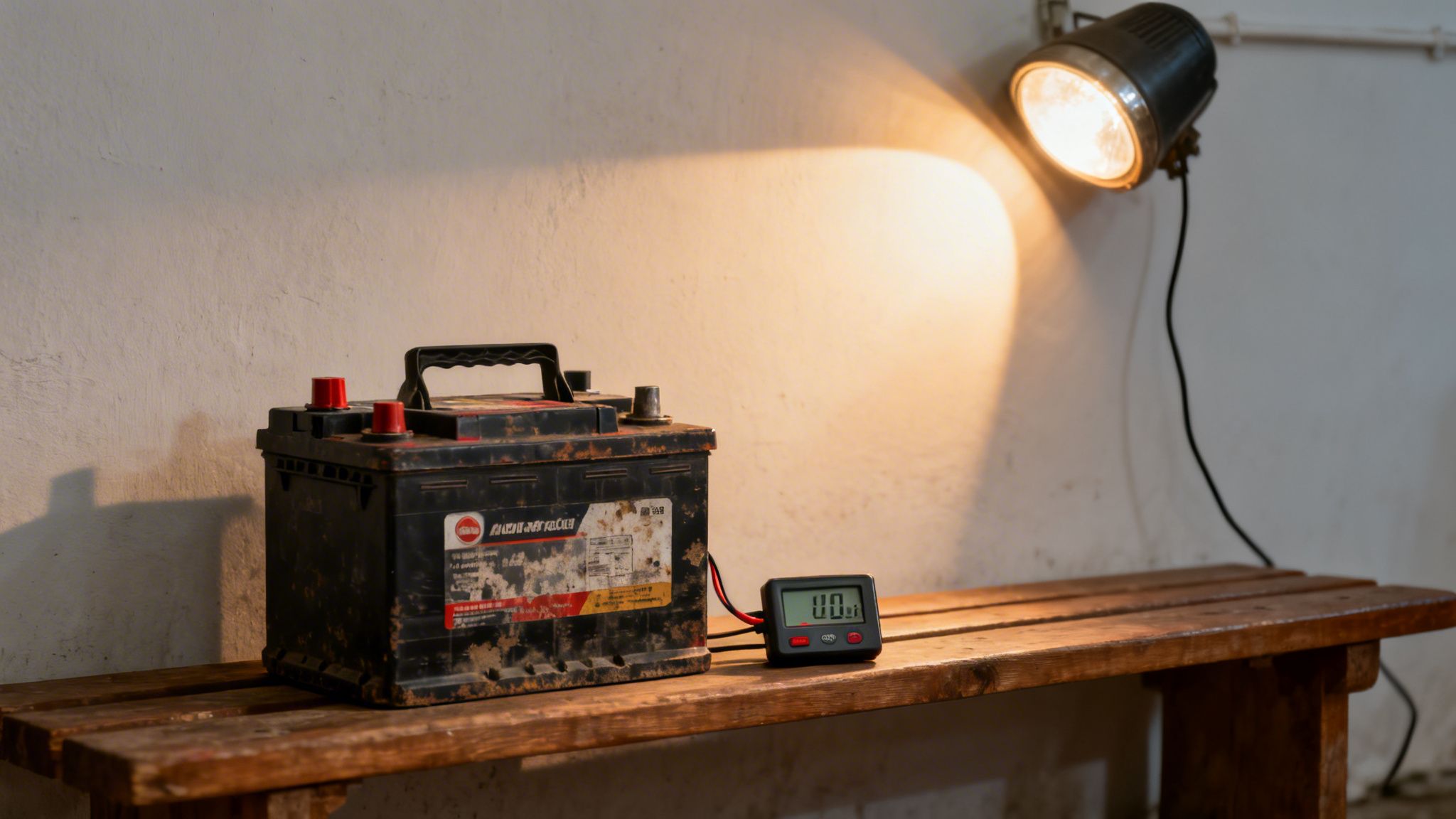
Knowing the difference is the key to not wasting your time or money. A successful reconditioning job starts with a battery that still has "good bones." We're looking for one that’s suffering from reversible sulfation, not one that's physically falling apart.
Green Lights: Signs of a Salvageable Battery
If your battery is just starting to show its age, it's often a perfect candidate. These early symptoms usually mean sulfation is the main problem, which is exactly what reconditioning is designed to reverse.
Keep an eye out for these tell-tale signs:
- Slow Engine Crank: Your car still starts, but it sounds tired and sluggish, especially on a chilly Fort Worth morning. This is a classic sign the battery isn't delivering its full cranking power.
- Dimming Lights: You might notice the headlights or dome lights flicker and dim at a stoplight, then brighten back up as you accelerate. This points to a battery that’s having trouble keeping a steady voltage.
- Recent Sluggishness: The battery has only been acting up for a few weeks or months, but it hasn't died completely yet. A slow, gradual decline is often something we can fix.
The ideal candidate for reconditioning is a battery that’s about 2-4 years old. It's started showing signs of weakness but doesn't have any physical damage. The voltage might be low, but there hasn't been a catastrophic internal failure.
Red Flags: When a Battery Is Beyond Repair
On the other hand, some problems are clear indicators that a battery has reached the end of the road. Trying to revive a battery with these issues isn't just a waste of effort—it can be downright dangerous.
You should plan for a replacement right away if you see any of these:
- Swollen or Cracked Case: If the battery case is bulging or looks bloated, it’s a sign of serious internal damage from overheating or freezing. This is a major safety hazard.
- Foul Odor: A distinct "rotten egg" smell means the battery is leaking sulfuric acid. This stuff is highly corrosive and dangerous to handle.
- Extreme Age: If a battery is over 5-6 years old, its internal parts are likely too worn out for reconditioning to make any real, lasting difference.
- Fails a Load Test: Even after a full charge, the battery can't hold its voltage when put under a load. This signals permanent, irreversible damage to the plates inside.
A professional load test is the only way to know for sure. It mimics the strain of starting your car and reveals how the battery truly performs under pressure—something a simple voltage check just can't do. If you're seeing these red flags, it might also be a good idea to learn about what causes a car battery to drain to avoid similar issues with your new one.
The Real-World Cost and Environmental Savings
Choosing to recondition a battery isn’t just a technical fix—it’s a practical decision that hits on two things most people care about: saving money and being a little kinder to the planet. When your car battery starts giving you trouble, the first thing that probably comes to mind is the hefty price tag on a brand-new one. This is exactly why it pays to understand the real-world benefits of reconditioning.
The most obvious win is the immediate relief for your wallet. A professional battery reconditioning service usually costs just a small fraction of a new battery. For instance, a new car battery can easily set you back anywhere from $150 to over $350. In contrast, a reconditioning service might only run you $50 to $100, making it a fantastic choice for budget-conscious drivers here in Fort Worth.
This smart, cost-effective approach is catching on. The global Battery Rebuild Service Market was valued at $4.45 billion and is projected to keep growing, which tells you a lot about how people are thinking differently. More and more vehicle owners see the logic in getting more life out of the parts they already own.
The Environmental Upside of a Second Life
Beyond the cash you save, reconditioning offers a major environmental perk. Every battery we bring back to life is one less that has to be manufactured from scratch and one less that ends up in the energy-heavy recycling process before its time. It’s all part of a circular economy, where we focus on repairing and reusing things to make them last as long as possible.
Here’s how it helps the planet:
- Reduces Waste: It keeps heavy, bulky batteries full of lead and sulfuric acid out of our landfills and recycling centers for longer.
- Conserves Resources: It cuts down on the need for raw materials like lead, plastic, and acid, all of which take a ton of energy to mine and manufacture.
- Lowers Energy Consumption: The energy it takes to recondition a battery is a drop in the bucket compared to what’s needed to smelt lead, create new plastic casings, and ship a new battery across the country.
By choosing reconditioning, you're doing more than just fixing a car part. You’re actively taking part in a more sustainable way to own a vehicle. It's a small choice that adds up to a big positive impact, shrinking your car's overall environmental footprint.
Making the Right Financial Decision for Your Vehicle
Ultimately, it all boils down to a simple cost-benefit gut check. If your battery is a good candidate—meaning it’s not ancient and has no physical damage—reconditioning is a smart, economical move that can get you another 6 to 18 months of reliable starts. Of course, not all power sources can be saved; for example, understanding the common issues that might lead to a full Segway Ninebot battery replacement can help you decide if a repair is even on the table.
For a vehicle owner in Fort Worth, this means you can put off a major expense without sacrificing the peace of mind that your car will start when you need it to. To see what a professional diagnosis involves, you can read more about a full-service battery check.
DIY vs. Professional Reconditioning: What's the Safer Bet?
When your car battery starts to feel weak, it's tempting to look up a DIY reconditioning guide. The idea of saving a few bucks and getting your hands dirty has a certain appeal. But this is one of those jobs where the risks can quickly outweigh the rewards, and every car owner in Fort Worth should know what they’re getting into.
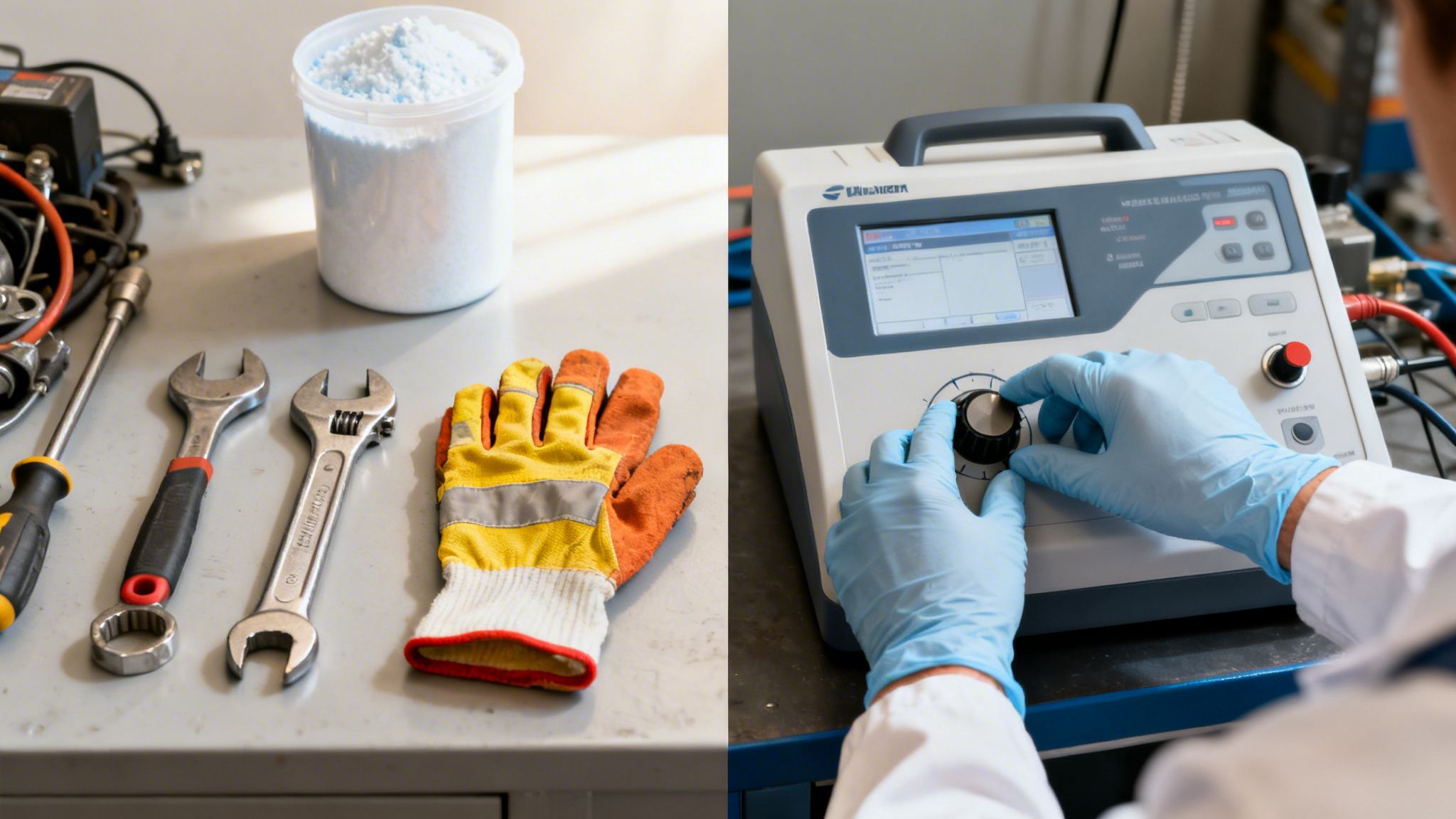
A proper DIY attempt is more involved than just hooking up a charger. You need specialized safety gear, including acid-resistant gloves and goggles, a smart charger with a pulse mode, and a load tester to even know if it worked. You're dealing with highly corrosive sulfuric acid and flammable hydrogen gas, so a well-ventilated space isn't just a suggestion—it's a requirement.
The Risks of Going It Alone
Trying to recondition a battery at home without the right gear and experience can go sideways fast. A simple mistake like overcharging or adding the wrong kind of water can destroy the battery for good. Worse, you could crack the casing or even cause an explosion, leaving you with a dangerous chemical spill in your garage.
The biggest risks of a DIY attempt include:
- Exposure to Sulfuric Acid: This is nasty stuff. It can cause severe burns to your skin and eyes on contact.
- Hydrogen Gas Buildup: The charging process releases hydrogen, which is incredibly flammable. A single spark is all it takes to cause an explosion.
- Permanent Battery Damage: Using the wrong voltage or adding unapproved chemicals can permanently ruin the battery's internal plates.
- Inaccurate Diagnosis: Without professional tools, you might be wasting your time trying to save a battery that's already too far gone.
The core danger lies in the unpredictability of a damaged battery. Professionals use specialized diagnostic equipment to assess the internal health before attempting any reconditioning, a critical step that DIYers almost always skip.
The Professional Advantage: Safety and Certainty
Bringing your car to a professional shop like Kwik Kar completely sidesteps these dangers. Certified technicians operate in a controlled environment, following strict safety protocols and using the right equipment for the job. We have the advanced diagnostic tools to figure out if your battery is even a good candidate for what is battery reconditioning to begin with.
Here’s what you get by trusting an expert:
- Guaranteed Safety: Our technicians are trained to handle battery acid and safely manage the risks of hydrogen gas.
- Advanced Diagnostics: We use load testers and high-tech analyzers to get an accurate picture of your battery's true condition.
- Proper Equipment: We have commercial-grade pulse chargers and desulfators designed for controlled, effective treatment.
- Reliable Results: You leave with the peace of mind that the job was done right, giving you the best possible chance of extending your battery’s life.
While the DIY route might look like a good way to save money, the potential for personal injury and costly mistakes is just too high. Knowing when to call in a pro is just as important as knowing how to jump a battery safely. For a guaranteed safe and effective fix, trusting a professional is always the smarter—and safer—bet.
The Future of Battery Reconditioning and Electric Vehicles
While battery reconditioning is an incredible tool for the gasoline-powered cars we drive today, the concept is becoming even more important as electric vehicles (EVs) hit the road. The huge, high-tech lithium-ion battery packs in EVs are a world away from a standard car battery—and way more expensive. Making them last is a massive part of making EVs affordable and truly sustainable.
With EVs, however, "reconditioning" takes on a whole new meaning. We aren't just dissolving sulfate crystals anymore. Instead, it’s often about smart, software-level fixes and deep diagnostics. Technicians plug into the vehicle and use advanced tools to rebalance the voltage across all the different battery modules. They might also recalibrate the Battery Management System (BMS) to give you a more honest and accurate range estimate.
Second-Life Applications and Sustainability
Here’s where it gets really interesting. What do you do with an EV battery that can’t quite power a car anymore?
Even when a battery pack drops to 70-80% of its original strength, it still holds a ton of energy. Instead of sending it straight to the recycling plant, these batteries are being given a “second life.”
This way of thinking is creating a circular economy for batteries, where old EV packs are repurposed for brand-new jobs:
- Energy Storage: They’re perfect for storing solar or wind power for homes and businesses.
- Grid Stabilization: Utility companies can use giant arrays of these batteries to help balance energy supply and demand across the power grid.
- Backup Power: They make for incredibly reliable backup power sources, keeping critical infrastructure online during an outage.
This idea of squeezing every last drop of usefulness out of a battery is at the heart of making electric transportation truly green. It cuts down on waste, conserves precious resources, and reduces the environmental toll of manufacturing new batteries.
The market for automotive battery recycling, which includes these second-life strategies, is projected to skyrocket from $26.21 billion in 2025 to $43.42 billion by 2030. This boom is almost entirely fueled by the first generation of EV batteries reaching the end of their automotive life, which just goes to show how critical battery lifecycle management has become. You can read more about these market trends and their drivers.
The same common-sense logic we use when we ask what is battery reconditioning for a lead-acid battery in Fort Worth—extending its life and getting the most value—is already paving the way for the future of sustainable transportation.
Common Questions About Battery Reconditioning
Even after getting the rundown on battery reconditioning, it’s natural to still have a few questions floating around. We get it. Here are the answers to some of the most common things Fort Worth drivers ask us when they come into the shop.
How Much Longer Will My Battery Last?
This is always the first question, and for good reason! The honest answer is that it really depends on the battery's age and how worn it was to begin with. That said, a successful reconditioning can give you anywhere from 6 to 18 additional months of reliable service.
While it's not a forever fix, it’s an incredible way to stretch your dollar and get more life out of the battery you already own. Think of it as a smart, cost-effective pit stop before you have to spring for a brand-new replacement.
Is Reconditioning Safe for My Car?
Absolutely. When a professional handles the job, the process is completely safe for your vehicle. We use specialized, computer-controlled equipment that sends precise electronic pulses to the battery, ensuring the reconditioning cycle never puts your car's sensitive onboard computers or electronics at risk.
DIY attempts are a different story. Using the wrong voltage or a makeshift setup can cause serious, permanent damage to both the battery and your car's electrical system. Professional service is your guarantee that it's done right, every time.
Can All Types of Car Batteries Be Reconditioned?
Most, but not all. The standard flooded lead-acid batteries you find in the majority of gasoline cars are perfect candidates. They respond really well to the pulse charging and chemical additives we use.
However, some other battery types are a bit more particular:
- AGM (Absorbent Glass Mat) batteries can often be revived, but they need a much more delicate and controlled process.
- Gel batteries are very sensitive to any kind of over-voltage, so they generally aren't good candidates for reconditioning.
- Lithium-ion batteries—the kind in EVs and hybrids—are built on completely different technology and can't be reconditioned with these methods at all.
The only way to know for sure is to have a trained technician take a look and assess your specific battery’s health.
If your battery is starting to feel weak, don't wait until you're stuck on the side of the road. Let the certified technicians at Kwik Kar Oil Change and Auto Care diagnose its health and see if reconditioning is the right move for you. Swing by our shop in Fort Worth or book your service online today