



A suspension clunk over bumps most often comes from worn sway bar end links, failing strut mounts, tired shocks or struts, deteriorated control arm bushings, or loose ball joints. If you hear the sound, avoid testing the vehicle yourself and arrange a professional inspection. A shop like Kwik Kar Oil Change & Auto Care can investigate the cause.
TL;DR:
- A clunk heard on only one side narrows the search to that corner; a central underbody noise may come from an exhaust hanger or drivetrain.
- Pulling, prolonged bouncing, steering looseness, or a broken spring or link means do not drive; arrange a tow for professional inspection.
- A corner that keeps bouncing after a firm push may indicate a shock or strut problem; inspect visible parts only and never reach underneath.
- Shocks and struts are commonly replaced in pairs on the same axle, because one worn unit and one new unit can respond differently to bumps.
- Repair costs depend on the failed part and vehicle; some factory strut parts cost at least $2,000 each, so request a written estimate.
Table of Contents
- How Suspension Clunks Typically Sound and When You’ll Hear Them
- Most Common Mechanical Causes Behind a Clunking Suspension
- Simple At-Home Checks and Parking-Lot Tests to Narrow the Source
- Is It Safe to Drive With a Clunking Suspension?
- What a Shop Checks During a Professional Suspension Diagnosis
- Repair Guidance and Cost Context for Suspension Clunk Fixes
- When to Book Service and What to Ask the Shop
- What We Commonly Find When Diagnosing a Clunking Suspension
- Suspension Repair Services That Fix a Clunk Over Bumps
- FAQ
- Sources
How Suspension Clunks Typically Sound and When You’ll Hear Them
A suspension clunk rarely sounds the same from car to car, but the patterns are consistent enough to help you describe what you are hearing. Some owners hear a sharp metallic clunk, others describe a duller thud, and a few report a single loud knock rather than repeated knocking.
- Metallic clunk: often points to a loose link or bracket striking metal.
- Dull thud: usually suggests a bushing or mount absorbing impact poorly.
- Single loud knock: can mean a component has reached the end of its travel.
- Repeated knocking over rough roads: typically signals ongoing play in a joint or link.
The sound is usually loudest at low speed over a single-wheel bump, during a sharp turn, or when pulling into a driveway at an angle. If the noise only happens on one side, that narrows the search to that corner. A clunk from the center or underbody, on the other hand, points toward exhaust hangers or drivetrain components rather than the suspension itself. Watch for related clues too: pulling to one side, uneven tire wear, or a vibration through the steering wheel often ride along with a clunk and help confirm which system is at fault.
Most Common Mechanical Causes Behind a Clunking Suspension
Most clunks trace back to a short list of parts that wear out through normal driving. Knowing what each one sounds like and what to look for helps you talk to a technician with more confidence.
- Sway bar end links: these connect the sway bar to the suspension and wear out at their small ball joints. Listen for a clunk as the wheel drops into a dip, and check for play by grabbing the link and wiggling it by hand.
- Strut mounts and upper bearings: a worn mount clunks when the suspension compresses or when you turn the wheel at low speed. In rare cases, a severely worn mount can let a coil spring shift out of position.
- Shocks and struts: leaking fluid, a bouncy ride, and clunks over heavier impacts are classic signs that these parts have lost their damping ability. Our guide to telling if struts need replacing walks through the symptoms in more detail.
- Control arm bushings: the rubber inside these bushings breaks down over time, letting the control arm shift under load and produce a thud when weight transfers.
- Ball joints: worn ball joints tend to produce a sharper clunk and may come with looseness in the steering feel, which is worth mentioning to your technician.
- Loose hardware or broken brackets: intermittent clunks that seem to come and go can mean a bolt has backed out or a bracket has cracked. Exhaust hangers are a common non-suspension source of a similar sound, since a loose hanger lets the exhaust pipe knock against the underbody.
Less common but still worth ruling out are the CV axles, wheel bearings, and brake hardware. A CV axle problem tends to click or clunk in rhythm with wheel speed, especially while turning, while a failing wheel bearing usually adds a grinding or humming note that changes with speed rather than with bumps. Loose or worn brake hardware can rattle too, which is one reason a full inspection checks brake components alongside the suspension when diagnosing an unusual noise.
Simple At-Home Checks and Parking-Lot Tests to Narrow the Source
Before you call the shop, a few safe checks can help you describe the problem more precisely, which speeds up diagnosis once you arrive.
- Bounce test: push down firmly on each corner of the car and let go. A corner that continues bouncing after you release it may indicate a problem with the shock or strut on that side.
- Visual check: look at each strut for signs of fluid leaking down the shaft, check for torn rubber dust boots, and glance at the sway bar links and exhaust hangers for anything hanging loose or missing hardware.
- Road test: Have a technician investigate the noise under controlled conditions.
- Describe when it happens: Tell the technician whether the clunk occurs when entering a driveway or crossing a bump.
- Describe turning-related noises: Tell the technician if you hear a clunk when turning, so they can inspect the relevant components.
- Visual observation: Without touching components, note any visibly loose or damaged parts and report them to a technician.
Pro Tip: Write down exactly which test triggers the clunk and on which side, it turns a vague complaint into a useful lead for your technician.
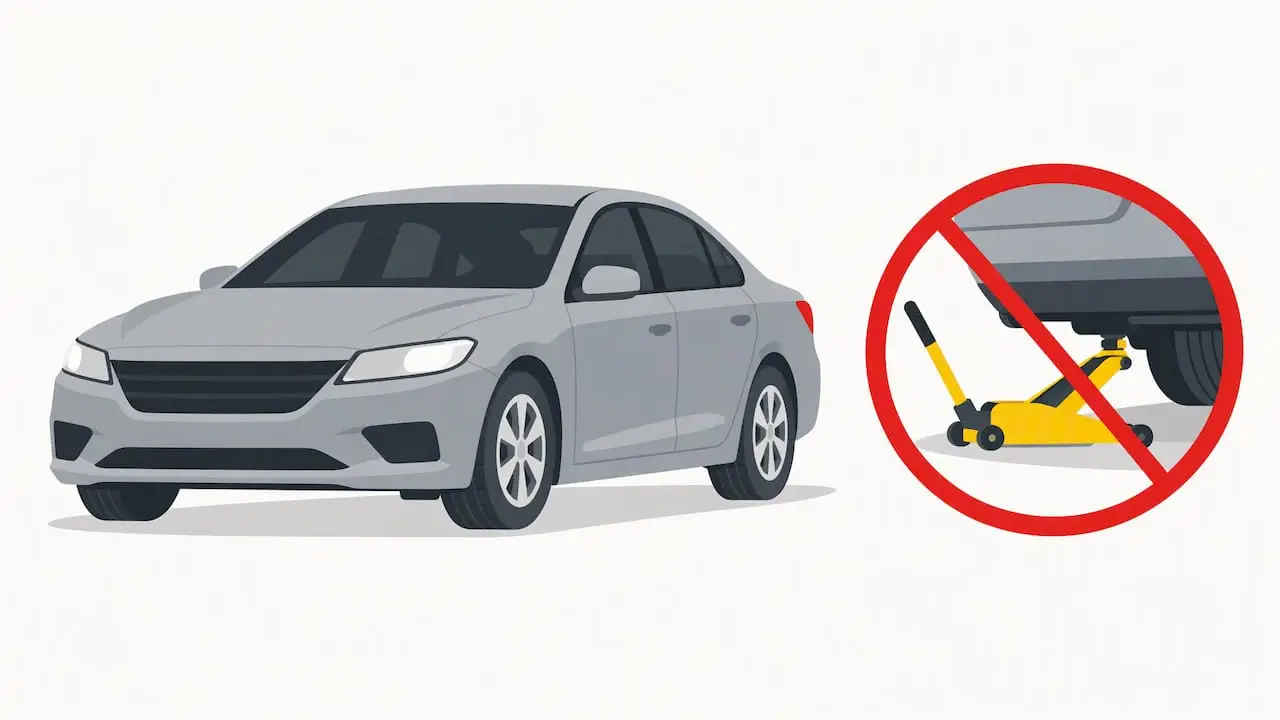
Skip anything that involves jacking up the car or reaching underneath it. Do not drive the vehicle if a part looks broken, bent, or disconnected, or if the car handles oddly. Arrange professional help.
Is It Safe to Drive With a Clunking Suspension?
Not every clunk means you need to pull over immediately, but some do. A clunk can indicate a problem that affects vehicle control. If you hear one, avoid driving and arrange a professional inspection. A safety-critical failure is a different story.
- Pulling to one side while braking or driving straight.
- Excessive bounce that continues long after a bump.
- A visibly broken or disconnected spring, link, or bracket.
- Looseness or play in the steering wheel.
If any of these show up alongside the clunk, AAA notes that booms or loud clunks over rough surfaces are signs the suspension needs attention, and worn shocks or struts that reduce control should be inspected right away rather than driven on. If a part looks broken or the car handles unpredictably, do not drive it. Arrange a tow to a repair shop.
What a Shop Checks During a Professional Suspension Diagnosis
A proper diagnosis goes well beyond listening for the noise once. A multipoint inspection examines shocks, struts, springs, ball joints, and bushings and is designed to catch problems before they turn into bigger failures, which gives you time to plan and budget for the repair rather than facing an emergency fix.
Beyond the visual checklist, technicians typically run several targeted tests:
- Lift inspection: with the car raised, a technician checks for play in ball joints, tie rods, and bushings by hand.
- Road test: driving over varied surfaces to reproduce the clunk and confirm which corner it comes from.
- Wheel play checks: grabbing the wheel at different points to feel for looseness in bearings or joints.
- Targeted stress tests: applying pressure to suspect components to isolate the exact source.
Shops often recommend replacing shocks or struts in pairs rather than one at a time. Monroe explains that replacing them in pairs helps maintain balanced handling and performance, since one worn and one fresh unit on the same axle can respond differently to the same bump. You should expect to leave with an itemized estimate, photos of the worn parts, and written recommendations you can review before agreeing to any repair.
Repair Guidance and Cost Context for Suspension Clunk Fixes
Repair costs for a suspension clunk vary widely depending on the vehicle and which part has failed. A basic sway bar end link is a modest repair on most vehicles, but complex systems like factory air suspension can run much higher. Consumer Reports found examples where factory strut parts alone cost at least $2,000 each on certain high-end vehicles, which shows just how much the total bill depends on the make and model involved.
- Expect pairs, not singles: since shocks and struts are commonly replaced in pairs for balanced handling, budget for both sides of an axle rather than one unit.
- Ask for a written estimate before any work begins so you know exactly what’s included.
- Ask about parts options and financing if a repair turns out to be larger than expected.
When to Book Service and What to Ask the Shop
If you notice any of the safety red flags above, do not drive the vehicle and arrange a tow for professional inspection. For a clunk with no handling change, arrange an inspection promptly.
- Describe the noise clearly: mention when it happens (bumps, turns, braking), whether it’s side-specific, and any recent pothole or curb impacts.
- Ask about the scope of inspection: confirm whether it includes a full suspension check or just the part you suspect.
- Ask whether parts are replaced in pairs and how that affects the estimate.
- Ask about warranty coverage on both parts and labor.
- Ask about diagnostic fees and turnaround time so there are no surprises.
If the noise started after hitting a pothole, it’s also worth asking about an alignment check, since impacts can knock a vehicle out of alignment at the same time they damage suspension parts.
What We Commonly Find When Diagnosing a Clunking Suspension
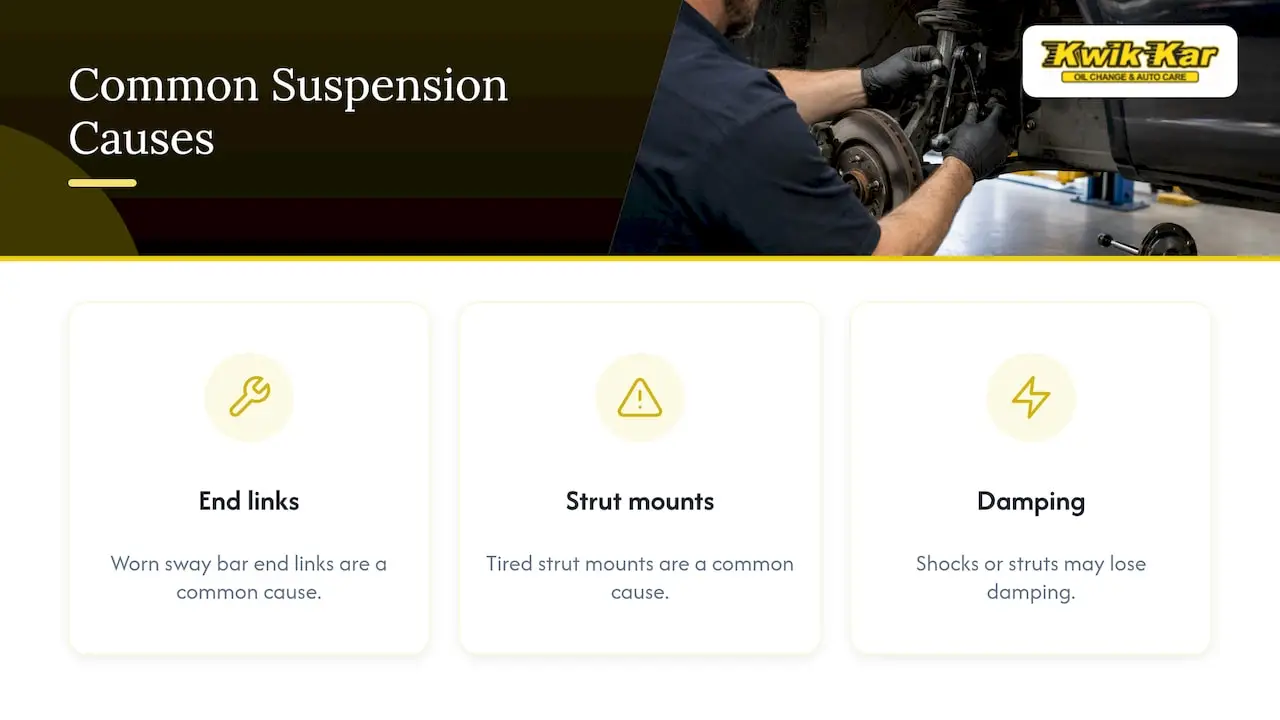
When diagnosing a clunking suspension, common causes include worn sway bar end links, tired strut mounts, and shocks or struts that have lost their damping. A road test can help reproduce the noise, followed by an inspection to check for physical play in the suspected area.
We rely on trained technicians so you can understand what they find. When a repair calls for it, we recommend replacing paired components together to keep handling balanced on both sides of the axle.
— Kwik Kar
Suspension Repair Services That Fix a Clunk Over Bumps
If you have narrowed down a clunk to the suspension, or you would rather skip the guesswork, we offer inspection and repair work to help identify and address the cause.

- Inspection to help identify the source of a suspension clunk.
- Vehicle diagnostics when the noise might be tied to more than one system.
- Suspension repair when needed.
You can also look into our preventative maintenance and tune-up services to catch suspension wear before it turns into a clunk. When you are ready, schedule a suspension inspection or repair and discuss what your vehicle needs.
FAQ
Can I drive with clunking suspension?
A clunk can signal a problem that affects vehicle control. Avoid driving and arrange a professional inspection. If you notice pulling, excessive bounce, or a visibly broken part, AAA recommends treating loud clunks over bumps as a sign the suspension needs immediate attention, and towing is the safer option in that case.
How much does it cost to fix clunking?
Cost depends entirely on which part has failed and which vehicle you drive, since a sway bar link is a modest repair while complex factory suspension parts can run much higher. Consumer Reports found factory strut parts alone costing at least $2,000 each on certain vehicles, so getting a written estimate after inspection is the only reliable way to know your actual cost.
What does suspension knocking sound like?
Suspension knocking usually sounds like a metallic clunk, a dull thud, or a sharp single knock, most noticeable over bumps, during turns, or when entering a driveway at an angle. The exact sound and timing often point toward a specific part, which is why describing when and where you hear it helps a technician diagnose it faster.
What does a failing suspension sound like?
A failing suspension often produces repeated knocking over rough roads, clunks that get worse over time, or a bouncy ride that continues well after a bump. Worn shocks and struts reduce vehicle control and should be inspected as soon as the noise becomes noticeable rather than left to worsen.
Sources
- Vehicle Noises You Should Never Ignore | AAA Club Alliance
- Cars and SUVs With Highest Repair Costs – Consumer Reports
- Monroe