

The fastest way to find a certified auto technician is to search the ASE Find-a-Repair-Shop and Blue Seal locator, then ask the shop for the technician’s name or ASE ID and confirm it yourself with ASE’s Verify a Certification tool. That takes about five minutes and settles the question before you hand over your keys.
Do these three things right now:
- Pull up the ASE shop locator and search your zip code for Blue Seal recognized businesses.
- Call the shop and ask which technicians hold current ASE certifications for the repair you need.
- Verify the name or certification number online instead of just trusting a wall plaque.
ASE (the National Institute for Automotive Service Excellence), the ASE Blue Seal program, and Consumer Reports all exist because “certified” gets thrown around loosely in this industry. Knowing how to check it yourself is the difference between guessing and knowing.
Key Takeaways
The single most reliable way to hire a trustworthy mechanic is to verify a technician’s ASE credentials online before authorizing any repair, not after.
| Point | Details |
|---|---|
| Start with official ASE tools | Use the ASE Find-a-Repair-Shop and Blue Seal locator, then confirm individual credentials with the Verify a Certification tool. |
| Know the 75% rule | ASE Blue Seal shops require a high percentage of technicians certified, plus coverage across every service area offered. |
| Certifications expire | ASE credentials require retesting every five years, so ask about expiration dates, not just certificate age. |
| Insist on written estimates | Itemized parts, labor, and warranty terms in writing protect you from vague verbal promises and upsell pressure. |
| Kwik Kar Oil Change & Auto Care models this | The Fort Worth shop employs ASE-certified technicians and holds RepairPal certification with itemized, transparent estimates. |
Table of Contents
- Where to Start Your Search for a Certified Auto Technician
- How Do I Verify an Individual Technician’s Certification?
- Individual ASE Certification vs. ASE Blue Seal: What’s the Difference?
- What to Ask Before You Authorize Any Repair
- How to Read an Estimate, Timeline, and Warranty Before You Commit
- Can You Get ASE Certified on Your Own? How the Credential Works
- Your Printable Checklist: Find, Verify, Book
- How Kwik Kar Oil Change & Auto Care Handles Technician Verification
- Why Verification Protects Both Sides of the Counter
- Book With a Shop That Shows Its Credentials, Not Just Claims Them
- Where to Verify Credentials and Learn More
- Sources
- FAQ
Where to Start Your Search for a Certified Auto Technician
Two ASE tools do most of the work. The Find-a-Repair-Shop and Blue Seal locator lets you search by city, state, or zip code for shops that either employ ASE-certified technicians or have earned Blue Seal of Excellence recognition. That’s your starting point, since it filters out the noise before you ever pick up the phone.
The Verify a Certification tool is different. It confirms one specific person’s credentials, not a shop’s general reputation. You’ll use it after you’ve picked a candidate technician, not before.
Third-party sites fill in the gaps ASE doesn’t cover, mainly reputation and customer experience:
- RepairPal: certifies shops based on fair pricing and technician training standards, and it’s a useful cross-check against ASE data.
- BBB (Better Business Bureau): shows complaint histories and how a shop actually resolved past disputes, which Consumer Reports recommends checking alongside credential verification.
- Yelp: gives you volume of recent, unfiltered customer feedback, good for spotting a pattern of complaints.
- Consumer Reports and AAA: both publish independent guidance on what a trustworthy shop looks like, separate from any shop’s own marketing.
When you search, use your zip code first, then narrow by business name once you have a shortlist — see the Certified Pre-Owned Program Explained for Car Buyers | Liberty CDJR for related dealership insights. If a technician’s name doesn’t show up anywhere official, that’s worth a direct question, not an assumption of dishonesty.
Pro Tip: Screenshot the ASE verification result and the shop’s BBB profile before your appointment. If a shop’s in-person claims ever drift from what you found online, you’ll have your own paper trail.
How Do I Verify an Individual Technician’s Certification?
Verifying one person’s credentials is a short, repeatable process. Here’s the sequence:
- Ask the shop for the technician’s full name or ASE ID number before you book the appointment.
- Enter that information into ASE’s Verify a Certification tool.
- Review which specific tests the technician passed (brakes, engine repair, electrical systems, and so on) and check the expiration date on each one.
- If the results look thin or the tests don’t match the repair you need, ask the shop directly which technician will actually handle your car.
ASE certifications expire. Every credential requires retesting every five years to stay current, so a certificate from 2018 sitting behind the counter tells you almost nothing about today.
If a shop can’t or won’t give you a name or ASE ID, call ASE’s customer service line directly, or ask to see the technician’s credentials pulled up live on ASE’s site in the office. A shop with nothing to hide will pull that page up without hesitation.
You don’t need personal information from the technician beyond their name or ASE number. If a shop asks you for anything more just to “look someone up,” that’s a red flag, not a verification step.
A clean verification result typically shows the technician’s name, a list of passed ASE test series (say, A1 Engine Repair and A5 Brakes), and an expiration date for each. If any test shows as expired, ask what’s been retaken since.
Individual ASE Certification vs. ASE Blue Seal: What’s the Difference?
An individual ASE certification means one technician passed a specific test, like brakes or engine performance, and stays current through retesting. It tells you about that person’s competence in that specialty area, nothing more.
ASE Blue Seal of Excellence is a shop-level recognition, not a person-level one. To earn it, a large percentage of a shop’s technicians must hold current ASE certifications, and the shop aims to have certified coverage across every service area it offers, not just its most common repairs
Here’s what each one actually guarantees, and what it doesn’t:
- Individual certification guarantees that one technician passed a specific test. It doesn’t guarantee every other tech at the shop is qualified.
- Blue Seal guarantees broad staffing standards across the shop. It doesn’t guarantee the specific tech working on your car holds the certification your repair requires.
Both matter. A Blue Seal shop with an uncertified technician on brakes that day is still worth a direct question.
What to Ask Before You Authorize Any Repair
Ask these questions before you approve a single line item:
- “Which ASE tests does the technician handling my car currently hold?”
- “Can I see the certificate, or pull up the ASE verification page yourself?”
- “Is this estimate itemized by parts, labor, and fees?”
- “What warranty covers this specific repair, and is it in writing?”
A credible shop answers without hesitation. If you ask “can I see your tech’s ASE verification?” and get a straight answer like “sure, here’s his ID, let’s pull it up,” that’s a good sign. If you get a shrug or a “we’re all trained here,” push further.
Watch for these red flags:
- Refusal to name or show credentials for the technician assigned to your vehicle.
- A verbal estimate with no line-item breakdown.
- Pressure to approve expensive parts or extra work before any diagnostic has been run.
- Vague warranty language that avoids specifics on duration or coverage.
The FTC’s auto repair guidance is blunt about this: get everything in writing, and treat vague verbal promises as a warning sign, not a courtesy.
Pro Tip: If a shop hesitates when you ask to see ASE verification on their own computer, that hesitation is more informative than anything they say next.
How to Read an Estimate, Timeline, and Warranty Before You Commit
A proper written estimate itemizes parts, labor rate, hours estimated, tax, and any sublet fees (work farmed out to another specialist, like a transmission rebuild). The FTC recommends insisting on this in writing before any work begins, not after.
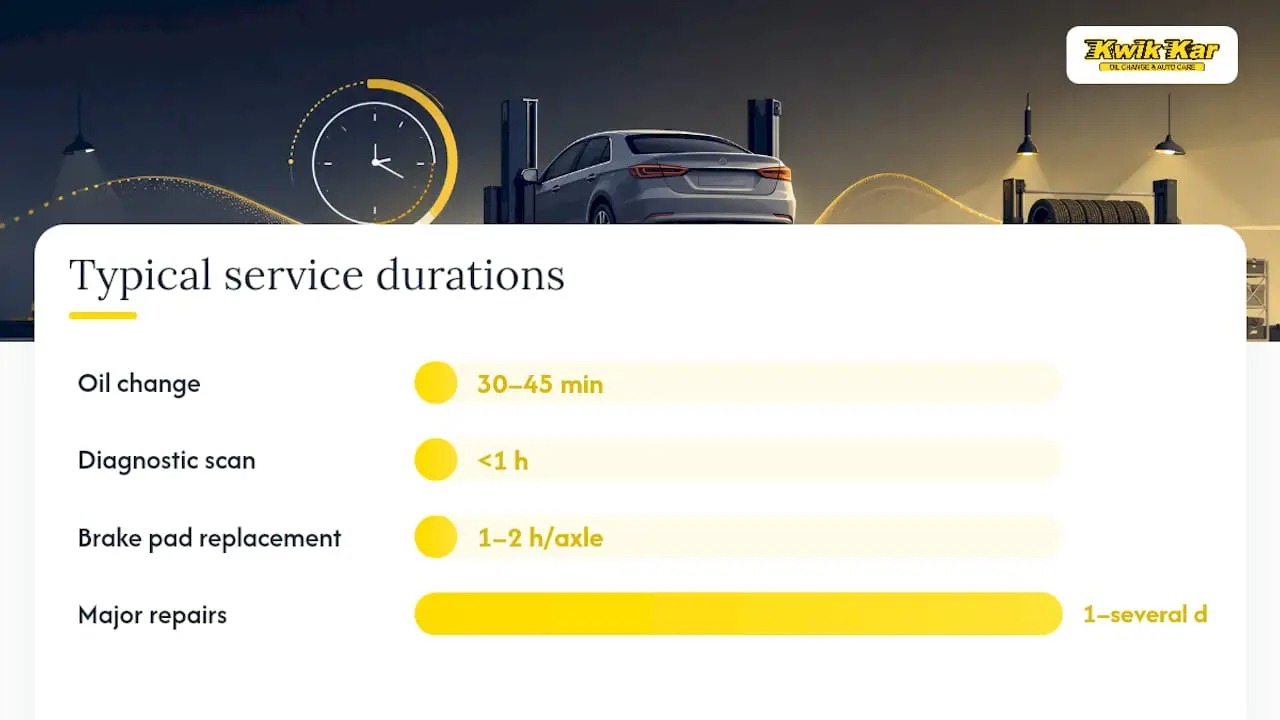
Timelines vary by job, and knowing the rough range helps you spot something off:
- Oil changes typically run 30 to 45 minutes.
- Brake pad replacement usually takes one to two hours per axle.
- A diagnostic scan for a check-engine light often takes under an hour, though tracking the root cause can take longer.
- Major repairs, like engine or transmission work, can stretch from a full day to several days depending on parts availability.
For warranty coverage, ask three things: what’s covered, how long the coverage lasts, and whether there’s a mileage cap on top of the time limit. Nationwide warranty programs, the kind offered through Certified Auto Repair Centers-style networks, typically cover both parts and labor for a defined period, and getting those terms in writing protects you if something fails a few states away from where the repair happened.
Can You Get ASE Certified on Your Own? How the Credential Works
Yes, technicians can pursue ASE certification independently, though most do it alongside shop-sponsored training. The process generally works like this:
- Meet the relevant work experience requirement, typically one to two years in the field depending on the certification.
- Pass the ASE test for that specialty area.
- Submit documentation of qualifying work experience where the certification requires it.
Common test areas include A1 (Engine Repair), A5 (Brakes), A8 (Engine Performance), and L3 (Hybrid/Electric Specialist), each signaling competence in a distinct system. A shop full of A1 and A5 techs might still lack anyone qualified for hybrid diagnostics, which is exactly why the specific test matters more than the word “certified” alone.
Every ASE credential requires retesting every five years to remain valid, so certification isn’t a one-time achievement. It’s ongoing.
Your Printable Checklist: Find, Verify, Book
Work through this in order:
- Search the ASE locator or Blue Seal list for shops near you.
- Ask the shop for the technician’s name or ASE ID before booking.
- Verify that credential online yourself.
- Request an itemized estimate and written warranty terms.
- Book the appointment, or seek a second opinion if anything feels evasive.
Save screenshots of the ASE verification result and the shop’s BBB or RepairPal rating before your appointment date.
Pro Tip: You never need to share your Social Security number, full address, or vehicle title info just to verify a technician’s ASE status. That step only requires a name or certification number, nothing more.
How Kwik Kar Oil Change & Auto Care Handles Technician Verification
Kwik Kar Oil Change & Auto Care in Fort Worth builds its process around the same verification standards this guide walks through, not around asking customers to take its word for it. The shop employs ASE-certified technicians and holds RepairPal certification, which means pricing and repair standards get checked against an outside benchmark, not set arbitrarily at the counter.
What that looks like day to day:
- Technician credentials are documented and kept current, not left to expire quietly.
- Estimates are itemized and explained before any work starts.
- Staff will pull up certification proof directly for a customer who asks.
Ask to see the certificate, or watch the shop pull up the ASE verification page on their own tablet or computer. A shop with nothing to hide does this without a second thought.
Pro Tip: Next time you’re in the waiting area, ask to see the technician’s certificate or the live ASE lookup page. It takes thirty seconds and tells you more than any wall plaque.
Why Verification Protects Both Sides of the Counter
Verifying credentials isn’t paperwork for its own sake. It’s the fastest way to know the person working on your brakes actually passed a test on brakes, not a general assumption that “certified” means qualified for anything.
For Kwik Kar Oil Change & Auto Care, that verification also protects fair pricing. A technician who’s actually tested on the system in question diagnoses faster and more accurately, which cuts down on the guesswork that leads to inflated estimates. Verified credentials and honest pricing tend to move together, not separately.
If you want help walking through this checklist for your own vehicle, Kwik Kar Oil Change & Auto Care is happy to show you exactly how our technicians’ certifications hold up.
Book With a Shop That Shows Its Credentials, Not Just Claims Them
Most shops tell you they’re certified. Kwik Kar Oil Change & Auto Care in Fort Worth shows you, with ASE-certified technicians on staff and RepairPal certification backing up the pricing on every estimate.
That means you skip the guesswork this entire guide just walked you through. Instead of cross-referencing three directories before you trust anyone with your car, you get an itemized estimate, a technician whose ASE credentials are documented and current, and a warranty you can actually read before you sign anything. If a routine oil change is what brought you here, current coupons for oil change services make it an easy first visit to see the process firsthand.
When you call to book, just ask the same question this article taught you to ask anywhere: which ASE certifications does my technician hold. Kwik Kar Oil Change & Auto Care will show you.
Where to Verify Credentials and Learn More
- ASE Verify a Certification to confirm an individual technician’s active status.
- ASE Find-a-Repair-Shop and Blue Seal locator to find recognized shops near you.
- Consumer Reports’ guide to finding a quality repair shop for reputation research.
- FTC auto repair basics for estimate and warranty rights.
- Better Business Bureau for complaint histories before you book.
Use the ASE tools to confirm credentials, Consumer Reports and BBB to check reputation, and the FTC guidance to understand your rights around estimates and warranties.
Sources
- FAQs – ASE Certifications and Testing
- Find a repair shop – ASE
- How to Find a High-Quality Car Repair Shop – Consumer Reports
- Auto repair basics – Federal Trade Commission
FAQ
How Do You Know if Your Mechanic Is Certified?
Ask for the technician’s name or ASE ID number and check it yourself using ASE’s Verify a Certification tool, which shows current test results and expiration dates.
How Do I Find an ASE Certified Mechanic?
Search the ASE Find-a-Repair-Shop and Blue Seal locator by zip code, then confirm the specific technician’s credentials online before booking. Shops like Kwik Kar Oil Change & Auto Care publish their ASE and RepairPal certifications directly, which simplifies this step.
Can I Get ASE Certified on My Own?
Yes. Technicians can independently meet the work experience requirement, pass the relevant ASE test, and submit documentation, though most also complete shop-sponsored training alongside it.
Can You Look Up ASE Certifications Online?
Yes, ASE’s Verify a Certification tool lets you look up an individual technician’s current status by name or certification number, showing which tests they passed and when each one expires.