



Most vehicles need a coolant change every 2 years or 24,000 to 30,000 miles with traditional green (IAT) coolant, while modern OAT and HOAT coolants often stretch to 5 to 10 years or 50,000 to 150,000 miles, according to AAA. Your owner’s manual sets the exact number for your engine, and Consumer Reports notes some long-life formulas run up to 100,000 miles before service. We always check coolant condition before recommending anything.
TL;DR:
- Frequent towing, traffic in extreme heat, heavy idling, and dusty roads shorten service windows; follow the shorter end of the specified range.
- Certain Mazda models call for a first replacement at 10 years or 120,000 miles, then service every 5 years or 60,000 miles.
- These warning signs warrant prompt inspection: recurring low coolant, rusty or oily fluid, sludge, overheating, weak cabin heat, or a sweet engine bay smell.
- Choose a drain and fill for clean systems due for routine service; reserve a full flush for visible rust, sludge, recent repairs, or neglected coolant.
- A full flush typically costs $200 to $400, while simpler service costs less; confirm the estimate covers correct coolant type, inspection, testing, and disposal.
Table of Contents
- 1. What coolant does and why the type on the label matters
- 2. How often to change coolant by type, and what shortens that window
- 3. Signs your coolant needs attention before the scheduled interval
- 4. Coolant flush vs drain and fill: what each one actually does
- 5. Typical cost and how long a coolant service takes
- 6. How we check your coolant before recommending any service
- 7. A simple rule you can actually remember
- Schedule a coolant check at Kwik Kar in Fort Worth
- FAQ
- Sources
1. What coolant does and why the type on the label matters
Coolant has three jobs inside your engine: it pulls heat away from metal surfaces, it keeps the mix from freezing in winter or boiling over in summer, and it carries corrosion inhibitors that protect aluminum, steel, and rubber hoses from breaking down. The additive package is the part that wears out first, long before the base fluid stops transferring heat.
Three coolant families dominate the market, and each one ages differently:
- IAT (Inorganic Additive Technology), the traditional green coolant, protects well but its inhibitors deplete fastest, which is why AAA ties it to roughly 2-year or 24,000 to 30,000 mile service.
- OAT (Organic Acid Technology) uses longer-lasting organic inhibitors and commonly runs 5 years or more between services.
- HOAT (Hybrid Organic Acid Technology) blends both approaches and lands in a similar long-life range, often specified for vehicles with mixed metal cooling systems.
Engines built mostly from aluminum need a formulation that resists a different kind of corrosion than older iron block engines, which is part of why manufacturers specify a particular type rather than “any coolant that fits.” Mixing coolant types can cause the inhibitors to react poorly with each other, so we always match the fluid to what the automaker calls for rather than whatever is on sale.
2. How often to change coolant by type, and what shortens that window
The honest answer depends on your coolant type, your vehicle’s age, and how you drive it. Here’s how the ranges typically break down:
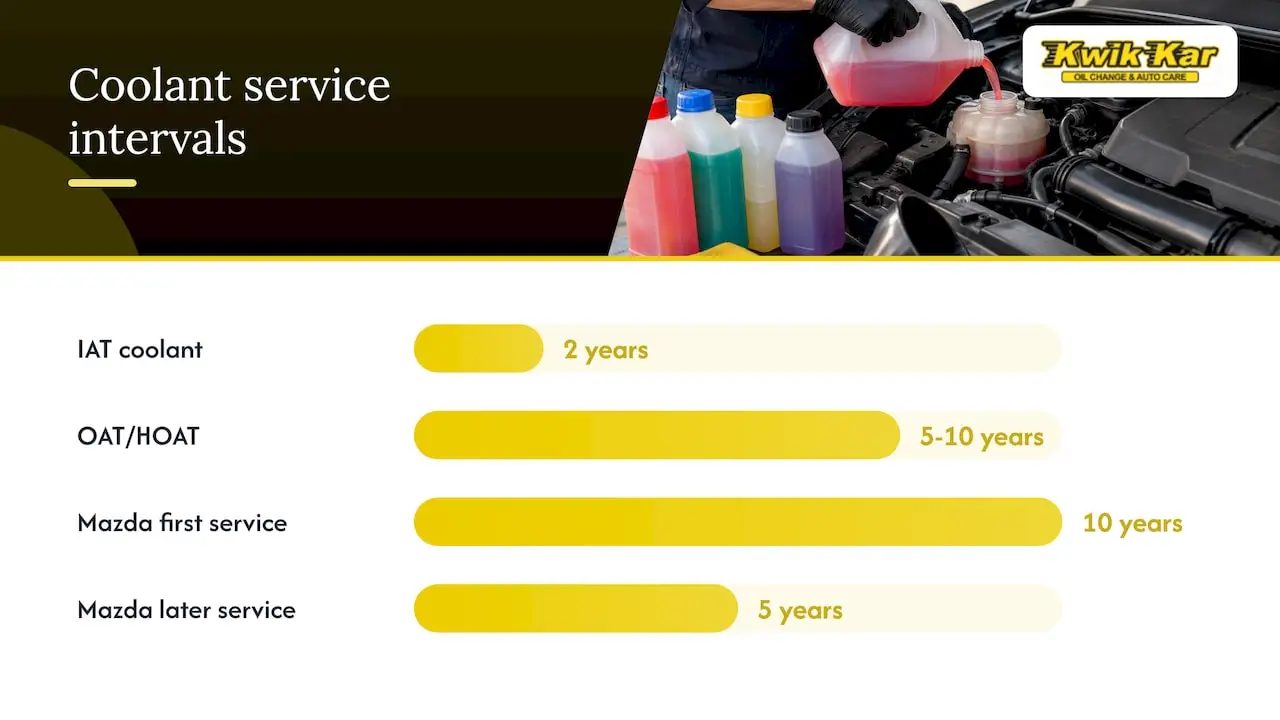
- IAT (green) coolant: service around every 2 years or 24,000 to 30,000 miles, per AAA guidance.
- OAT and HOAT long-life coolants: service every 5 to 10 years or 50,000 to 150,000 miles, with some long-life formulas reaching up to 100,000 miles according to Consumer Reports.
- Some OEM first-service intervals run even longer. AAA’s Car Doctor column notes that Mazda specifies a first coolant replacement at 10 years or 120,000 miles on certain models, then every 5 years or 60,000 miles after that.
Those ranges assume normal driving. Severe duty shortens them: frequent towing, stop-and-go traffic in extreme heat, heavy idling, or regular driving on dusty roads all put extra strain on the cooling system and its additive package. If your routine includes any of those, lean toward the shorter end of your coolant type’s range rather than the longer one.
The confirmation step is simple: open your owner’s manual and find the fluid type and mileage figure your manufacturer specifies. If you’re not sure where you stand, ask a shop to test the coolant’s condition before you commit to a service interval based on guesswork. We cover how to read that schedule in our guide to understanding your car’s maintenance schedule.
3. Signs your coolant needs attention before the scheduled interval
A scheduled interval is a starting point, not a guarantee. Watch for these signs between services:
- Low reservoir level that keeps dropping even after you top it off.
- Color changes: healthy coolant should look consistent with its type; rusty, muddy, or oily coolant signals contamination.
- Visible rust or sludge floating in the reservoir or on the radiator cap.
- Overheating, weak cabin heat, or a sweet smell from the engine bay, all signs the system isn’t circulating properly.
- Steam from under the hood, which calls for pulling over immediately rather than continuing to drive.
Test strips that check pH and inhibitor levels give a quick read on coolant condition, and a shop can run a more complete pressure and coolant analysis if something still seems off. If you’ve lost coolant and aren’t sure why, our guide to diagnosing coolant loss walks through common causes.
Pro Tip: Snap a photo of your reservoir fluid color before your appointment. It helps your service advisor assess the situation faster once you arrive.
4. Coolant flush vs drain and fill: what each one actually does
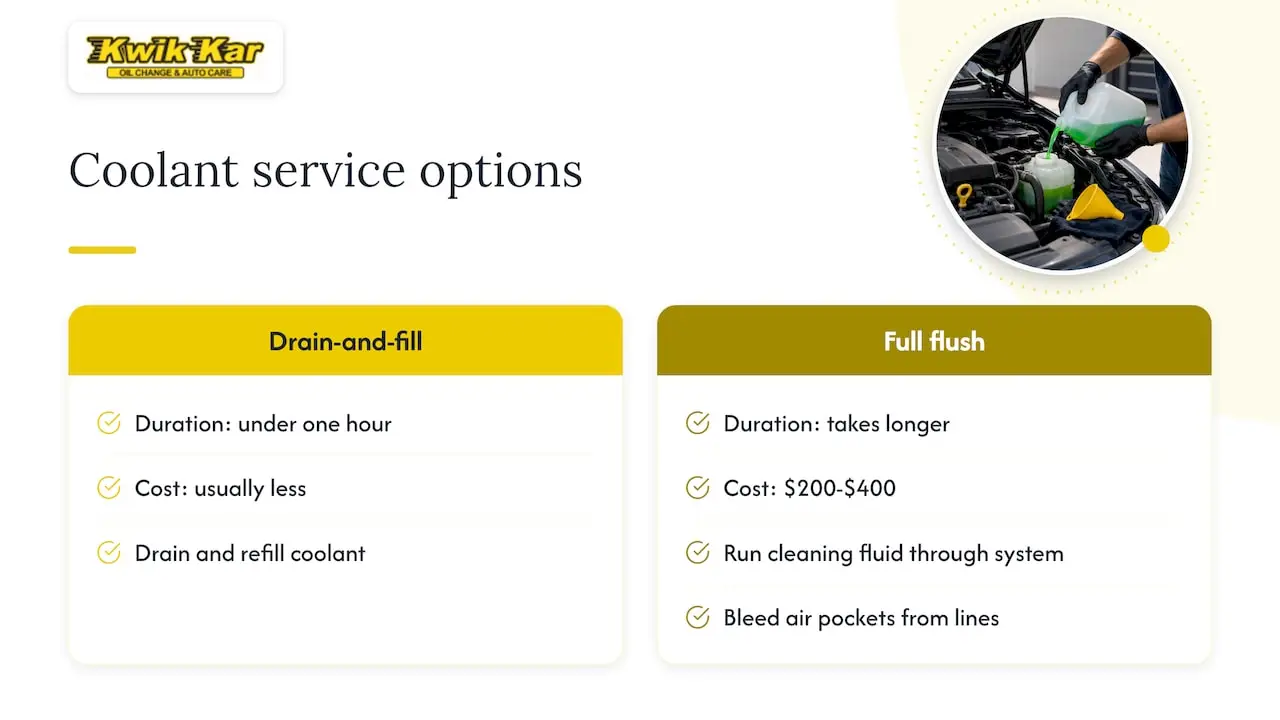
A drain-and-fill removes the old coolant from the radiator and refills it with fresh fluid mixed to the correct ratio. It’s a straightforward job for a system that’s clean and simply due for routine replacement.
A full flush uses equipment to push cleaning fluid through the entire cooling system, including the engine block and heater core, to clear out rust, sludge, or old coolant residue before refilling. It takes more time and is the right call when there’s visible contamination, after a cooling system repair, or when corrosion has built up.
- Drain-and-fill fits routine service on a system that already looks clean.
- Full flush fits visible rust, sludge, a recent repair, or coolant that’s been neglected past its interval.
Consumer Reports points out that flushes aren’t always necessary outside the manufacturer’s schedule, and some shops recommend them more often than needed. We always check your actual coolant condition and your owner’s manual before suggesting either service, and we follow the manufacturer’s own cautions on flush frequency rather than defaulting to the more aggressive option.
5. Typical cost and how long a coolant service takes
A coolant flush typically runs $200 to $400, according to Consumer Reports, while a basic drain-and-fill usually costs less. That range reflects coolant type, system size, and whether a flushing machine is used.
A straightforward drain-and-fill often takes under an hour. A full flush takes longer because it involves running cleaning fluid through the system, bleeding air pockets out of the lines, and sometimes checking the thermostat or radiator for related issues. When you get an estimate, confirm it covers the correct coolant type for your vehicle, a system inspection, condition testing, and any fluid disposal fee, so there are no surprises when you pick up your car.
6. How we check your coolant before recommending any service
We start with your owner’s manual to confirm the coolant type and mileage interval your manufacturer specifies, then run a visual inspection of the reservoir, hoses, and radiator for rust, sludge, or low fluid—matching exact fluid specifications as explained in our car oil specs decoded checklist. From there, we test the coolant’s condition rather than guessing based on age alone, and we document what we find before recommending a drain-and-fill or a full flush. We provide clear estimates that specify the fluid type and service recommended so you know what to expect before work begins.
7. A simple rule you can actually remember
Check your owner’s manual first: it tells you the coolant type and interval your manufacturer engineered for. Pair that number with a yearly visual check of color, level, and any warning signs, and lean toward the shorter end of the range if you tow, idle a lot, or drive in extreme heat. Keep your service records and bring your manual to every appointment.
— Kwik Kar
Schedule a coolant check at Kwik Kar in Fort Worth
We offer cooling system inspections and fluid exchange services backed by ASE and RepairPal certified technicians, so you get a straight answer instead of an upsell. Bring your owner’s manual when you come in, and we’ll check your coolant’s actual condition, confirm the right fluid type for your engine, and write up a clear estimate before any work begins.

Ready to get your cooling system checked? Visit our services page to see everything we offer and schedule your appointment today.
FAQ
How often do you really need a coolant flush?
Most vehicles need coolant service every 2 years or 24,000 to 30,000 miles with traditional IAT coolant, or every 5 to 10 years or 50,000 to 150,000 miles with OAT or HOAT long-life coolant, according to AAA. Your owner’s manual gives the exact figure for your engine, and a full flush is only needed when there’s visible contamination or a recent cooling system repair.
What is the average cost of a coolant flush?
A coolant flush typically costs $200 to $400, according to Consumer Reports, while a simple drain-and-fill usually costs less. The exact price depends on your coolant type and whether your system needs a full flush or just a routine refill.
How long can I go without a coolant flush?
That depends entirely on your coolant type and manufacturer schedule. Some OEMs specify a first coolant service as far out as 10 years or 120,000 miles, per AAA’s Car Doctor column, but severe driving conditions like towing or extreme heat can shorten that window significantly.
At what mileage should a coolant flush be done?
Traditional IAT coolant is typically serviced at 24,000 to 30,000 miles, while OAT and HOAT long-life coolants often run from 50,000 up to 100,000 or 150,000 miles depending on the formula, according to AAA and Consumer Reports. Checking your owner’s manual confirms the exact mileage figure for your specific vehicle.
Sources
- AAA – Make Sense of Car Care: Oil, Fuel, Coolant & Fluids
- Consumer Reports – Your car maintenance checklist
- Q&A With AAA’s Car Doctor: July 2026