




Most shaking when you brake traces back to disc thickness variation, the technical term for what drivers call “warped rotors.” Worn pads, a sticking caliper, or loose suspension parts can cause it too. If you feel grinding, a pull to one side, or the brake warning light comes on, stop driving and get it inspected before you get back on the road.
TL;DR:
- Most shaking during braking results from disc thickness variation caused by uneven heating, not from actual rotor warping.
- Front wheel vibration typically indicates front rotor issues or suspension problems, while rear vibration points to rear rotors or drums.
- A wobble in the steering wheel at highway speeds suggests front rotor thickness variation or wheel bearing wear, whereas pedal pulsation often involves rear components.
- Before visiting a shop, inspect tires for uneven wear, check for visible rotor grooves or discoloration, and record where and when the shake occurs.
- Critical warning signs like grinding, brake warning lights, or strong pulling require immediate towing and professional diagnosis.
Table of Contents
- What causes your car to shake when braking?
- Where do you feel it? A quick diagnostic guide
- Safe checks you can run before your appointment
- When to stop driving and call for a tow
- How professionals diagnose and fix brake vibration
- What to expect for repair timing
- Our take on stopping repeat brake vibration
- Book a brake inspection with Kwik Kar Oil Change & Auto Care
- Sources
- FAQ
What causes your car to shake when braking?
Rotor disc thickness variation tops the list of culprits. As rotors heat and cool unevenly, usually from riding the brakes or repeated hard stops, they develop high spots that pulse against the pads every rotation. True warping from heat is rare; what most people feel is this thickness inconsistency, and driving habits like riding the brakes or heavy downhill braking accelerate it.
Several other issues produce the same sensation:
- Worn or glazed brake pads develop uneven friction material or a hardened surface layer that grabs the rotor inconsistently, creating a pulsing feel rather than smooth stopping power.
- A sticking caliper or seized slide pin keeps one pad pressed harder than the other, often pulling the car to one side and generating heat that can warp that specific rotor.
- Worn tie rods, ball joints, or bushings let suspension components shift slightly under brake force, amplifying vibration that starts elsewhere.
- Tire and wheel problems, including flat spots from hard parking, imbalance, a bent rim, or loose lug nuts, create rhythmic shaking tied to wheel speed rather than brake application.
- Wheel bearing wear or hub runout mimics brake vibration closely, since a damaged bearing often gets louder and rougher specifically under load, which braking applies.
Where do you feel it? A quick diagnostic guide
Location and speed narrow the list of suspects faster than almost anything else. Technicians rely on this same logic before they ever pull a wheel.
- Steering wheel shakes when braking at highway speed usually points to front rotor thickness variation, worn front suspension parts, or a front wheel bearing. Front-end components are the most common source when the vibration comes through the wheel itself.
- Pedal pulsation without much steering wheel movement often means rear rotor or drum trouble, though it can also signal an ABS-related issue worth checking.
- Vibration through the seat or floor, especially if it shows up even when you’re not braking, suggests a wheel bearing, driveline component, or multiple rotors affected at once.
- A shudder only in the final few miles per hour of a hard stop is frequently just the ABS cycling normally, pulsing the pedal 10 to 15 times per second during wheel lock. It rarely signals a defect.
- Pulling to one side combined with vibration almost always means a sticking caliper or badly uneven pad wear on one axle.
Pro Tip: Note your speed and exactly where you feel the shake, in the wheel, the pedal, or the seat, the first time it happens. That single detail often tells a technician more than an hour of guessing.
Safe checks you can run before your appointment
You don’t need a lift or a torque wrench to gather useful information. A few careful observations speed up diagnosis considerably.
- Look at your tires and wheels for uneven wear, a visible flat spot, or a bent rim, and check tire pressure while you’re at it.
- Peek through the wheel spokes at the rotor surface. Deep grooves, a blued discoloration, or uneven scoring are visible signs of trouble, and you can check pad thickness through the caliper opening. A closer look with the wheel off is covered in this guide to inspecting brake rotors.
- Listen for grinding when you brake at low speed in an empty lot, and note whether the car pulls left or right.
Do not attempt to remove wheels, calipers, or rotors yourself unless you’re trained for it. Instead, shoot a short video of the dashboard and road while braking, noting your speed, and bring it along with your findings.
When to stop driving and call for a tow
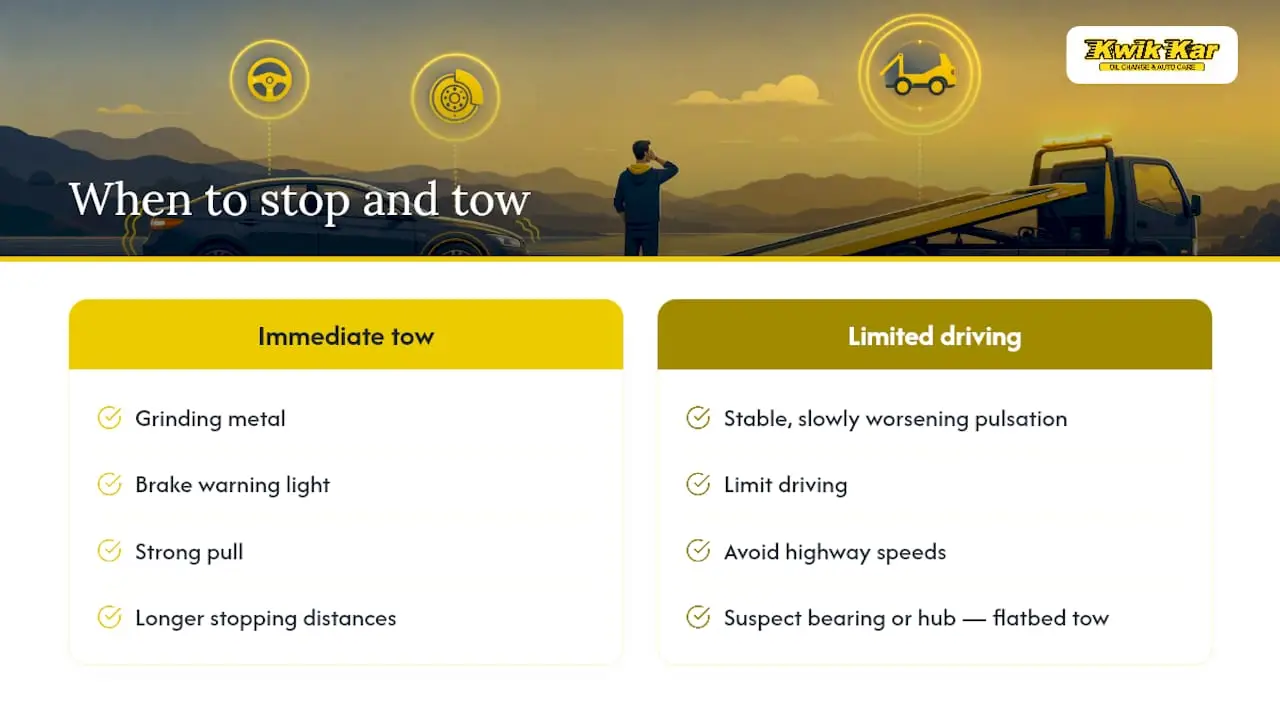
Grinding metal, a lit brake warning light, a strong pull, or noticeably longer stopping distances mean you should stop driving and arrange a tow rather than risk the drive to a shop. These are the same red flags that signal an immediate professional assessment is needed, not a wait-and-see situation.
A pulsation that’s stable but slowly worsening is less urgent. Limit driving, avoid highway speeds, and book an inspection the same day. If you suspect a wheel bearing or hub problem, request a flatbed tow instead of a standard tow dolly, since spinning a damaged bearing or hub during transport can make the failure worse.
How professionals diagnose and fix brake vibration
A proper diagnosis starts with a test drive to confirm your symptoms, followed by pulling each wheel for inspection. Technicians check lug torque, inspect the hub mounting surface and then measure the rotor itself.
- Rotor thickness gets measured with a micrometer to see if it still falls within the manufacturer’s minimum specification.
- Lateral runout gets checked with a dial indicator, since acceptable runout tolerances typically run between .04mm and .13mm, a margin thinner than a sheet of paper.
- Non-brake sources like suspension bushings and unbalanced wheels get ruled in or out based on what the test drive and measurements show.
Many rotors labeled “warped” by drivers turn out to be disc thickness variation on closer inspection. OEM technical bulletins spell out exact measurement steps and runout limits precisely because eyeballing a rotor tells you almost nothing reliable.
From there, the fix depends on the numbers. A rotor within spec but slightly out of round can sometimes be resurfaced; one below minimum thickness or too far out of tolerance needs replacement. Sticking calipers get rebuilt or swapped, and worn suspension or hub components get repaired as the inspection dictates.
What to expect for repair timing
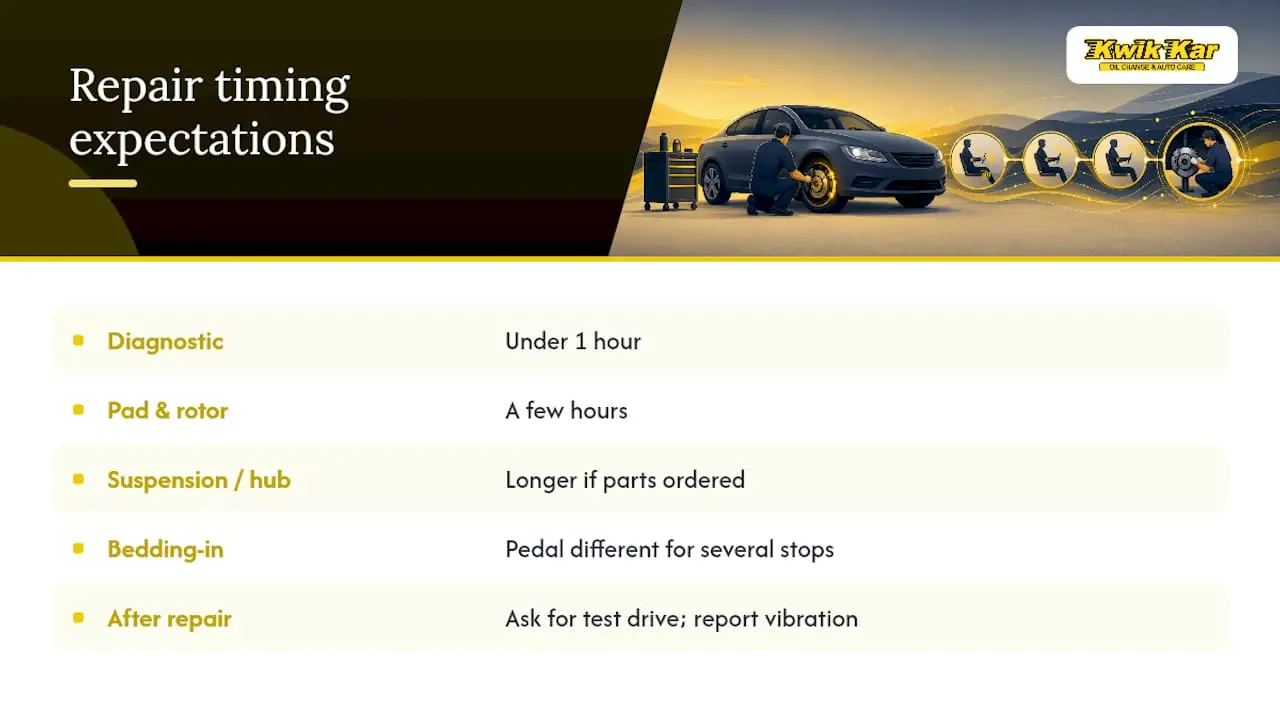
A diagnostic inspection typically takes under an hour. Straightforward pad and rotor work is often finished in a few hours, while suspension or hub repairs may take longer if parts need ordering. New pads and rotors need a short bedding-in period, so expect the pedal to feel slightly different for the first several stops. Ask for a brief test drive afterward, and flag the shop immediately if any vibration returns.
Our take on stopping repeat brake vibration
Riding the brakes on long downhill stretches is the single habit most likely to bring you back for the same repair. After any pad or rotor job, confirm proper bedding-in and insist on clean hub surfaces with correctly torqued lug nuts. Ask your shop to document thickness and runout measurements; that record makes a recurring problem easy to trace instead of a mystery each time.
— Kwik Kar
Book a brake inspection with Kwik Kar Oil Change & Auto Care
You don’t have to guess whether that shake is a $30 fix or a wheel bearing on borrowed time. Certified technicians measure rotor thickness and runout with precision tools used for OEM-level diagnosis, then explain what the numbers mean before any work begins.

Bring whatever you’ve gathered: notes on when the vibration shows up, your speed, whether it’s in the pedal or the steering wheel, plus any video or photos you captured. If you have recent brake service records, bring those too. Kwik Kar Oil Change & Auto Care’s ASE and RepairPal certification means your vehicle gets checked by technicians trained to catch what a quick look often misses, and pricing stays transparent from the first estimate. Schedule your brake inspection today and get a clear answer instead of another guess.
Sources
- Why Does My Car Vibrate or Shake When Braking? — AutoZone
- Why does my car shake when braking? — KBB
- Technical Service Bulletin — Brake vibration/pulsation (OEM/TSB)
FAQ
Is it safe to drive my car if it shakes when I brake?
Mild, stable vibration usually allows careful driving to a shop, but grinding, a brake warning light, strong pulling, or longer stopping distances mean you should stop driving and arrange a tow.
What are signs of needing new rotors?
Strong pedal pulsation, a shaking steering wheel at highway speed, visible grooving or blue discoloration on the rotor surface, and rotor thickness below the manufacturer’s minimum spec all point to replacement.
Why does my steering wheel shake when braking but not otherwise?
This pattern typically means front rotor thickness variation, a worn front wheel bearing, or loose front suspension components, since vibration through the wheel itself usually originates in the front end.
Can loose lug nuts cause my car to shake when braking?
Yes. Uneven lug torque after wheel service can distort a rotor or create wheel imbalance, which is why re-torquing lug nuts shortly after any tire or brake work reduces the chance of new vibration.
Is the shaking always caused by a warped rotor?
Not always. What feels like a “warped rotor” is often disc thickness variation, but worn pads, a sticking caliper, bad tires, or a failing wheel bearing can all produce a similar shake, which is why Kwik Kar Oil Change & Auto Care measures before recommending a repair.