




You’re driving through Fort Worth traffic, the car feels mostly normal, and then the battery light comes on and off for a second. Maybe it happens at a stoplight. Maybe it flickers when you accelerate onto I-30. Maybe it disappears the moment you turn the A/C down.
That kind of warning rattles people because it feels random. Random car problems are the worst kind.
The good news is that an intermittent battery light usually isn’t random at all. The timing matters. When it shows up, at idle, under acceleration, or when you’ve got the headlights and A/C running, gives real clues about what part of the charging system is struggling. That’s the piece a lot of generic advice misses.
I’ve seen drivers assume the battery itself must be bad because the battery symbol lit up. Sometimes that’s true. Often it isn’t. That light is really the car’s way of saying the charging system isn’t keeping voltage where it should.
Your Guide to That Flickering Battery Light
You pull up to a stoplight, the battery symbol flashes, and then it disappears before you can decide whether to panic. A few minutes later it stays off on the service road, then flickers again when the A/C, headlights, and blower are all working hard. That pattern matters.
A battery light that comes and goes usually means the charging system is dropping voltage under certain conditions, not all the time. That is why one driver sees it only at idle, another sees it during acceleration, and another only notices it at night with accessories on.
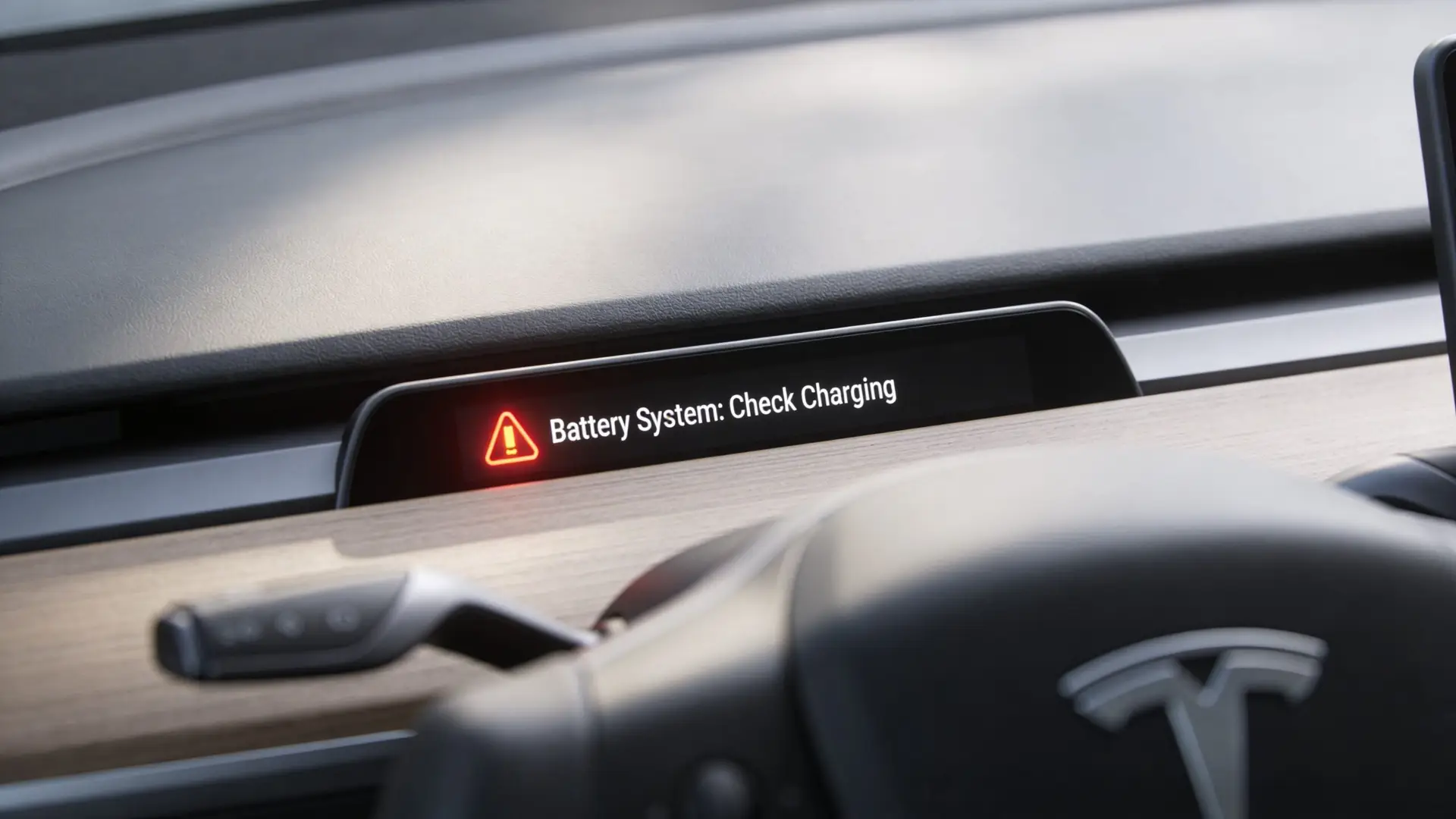
The practical question is whether you can keep driving. Sometimes you can make it home or to a shop. Sometimes the alternator quits charging enough to keep up, the battery carries the load by itself, and the car dies once that reserve is used up. I tell Fort Worth drivers to treat a flickering battery light like a low oil pressure warning's quieter cousin. The car may still run for a bit, but the margin for error gets smaller fast.
What the light is really telling you
That battery icon points to a charging problem first. The battery itself may be part of it, but plenty of intermittent cases come from the rest of the system.
Common causes include:
- A battery that is weak or internally failing, especially if voltage drops after the car sits
- An alternator with inconsistent output, which may show up first at idle or under load
- A serpentine belt that slips, especially on startup, in wet weather, or when the A/C compressor kicks on
- Loose or corroded battery terminals or grounds, which can interrupt current flow even if the parts test good
- A voltage regulator or wiring fault, which may act up only when engine speed or electrical demand changes
If you already suspect the alternator, this guide to alternator replacement cost and what the job usually involves can help you understand the repair side before you approve anything.
Why the timing matters
The timing is one of the best clues you have.
If the light shows up at idle, I start thinking about low alternator output at low RPM, a weak belt tensioner, or a poor connection that becomes obvious when system voltage dips slightly.
If it appears during acceleration, the problem can be belt slip, a connection that shifts with engine movement, or an alternator that cuts in and out as demand changes.
If it comes on with high electrical load, such as headlights, rear defroster, blower motor, heated seats, and A/C running together, the charging system may be producing power but not enough of it. That is a different failure pattern than a car that flickers with no accessories on.
Charging systems work a lot like water pressure in a house. A weak setup may seem fine with one faucet open. Turn on the shower, dishwasher, and washing machine, and the weakness shows up in a hurry.
That is why the best thing you can do right now is notice the pattern. The light's timing gives a technician a head start, and it can save you from replacing a battery when the problem lies with the alternator, belt, or wiring.
Understanding Your Car's Charging System
Your battery light is tied to a system, not just one part. That matters, because the same warning can point to very different faults depending on whether it shows up at idle, during acceleration, or when the headlights, blower motor, and rear defroster are all working at once.
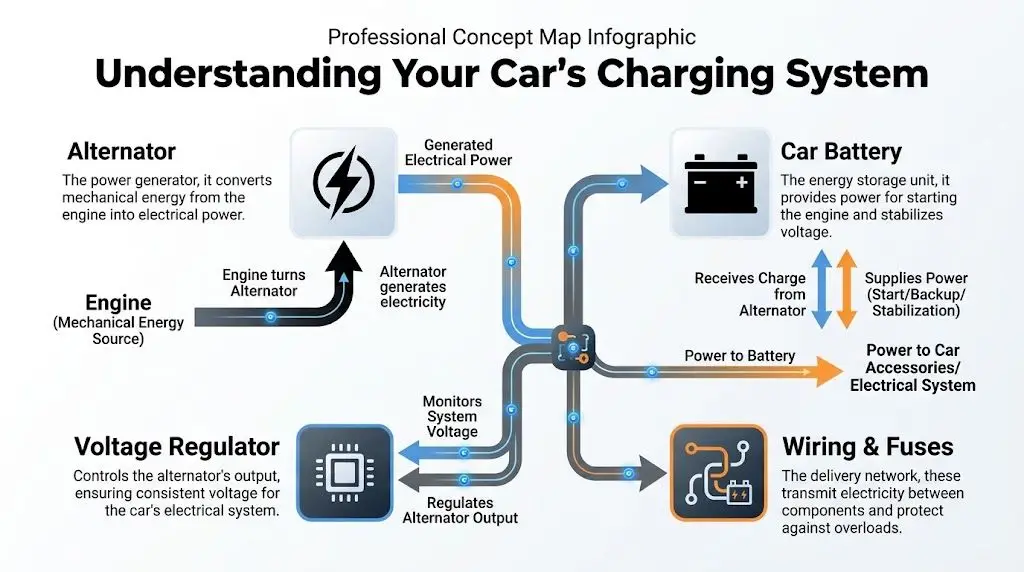
The charging system has four main players. The battery starts the engine and helps smooth out voltage. The alternator makes electrical power once the engine is running. The serpentine belt spins the alternator. The voltage regulator keeps output in the proper range so the car gets enough power without overcharging.
The battery isn't the main power source while driving
Once the engine is running, the alternator should carry most of the electrical load and recharge the battery at the same time.
That point clears up a lot of confusion. Drivers often replace the battery because the warning light has a battery symbol on it. In the shop, I see plenty of cases where the battery is only the messenger. Instead, the issue is weak alternator output, belt slip, or poor cable contact. If you want repair-side context before approving work, this overview of alternator replacement cost and what the job usually involves is a helpful reference.
Normal voltage gives context
A healthy battery at rest is usually in the mid-12-volt range. With the engine running, charging voltage should rise above battery voltage.
That difference is the whole job. The alternator has to produce enough power to run the vehicle and refill what the battery used to start the engine. If output drops too low, even for short periods, the warning light can flicker on and off.
Why one weak part affects the whole system
Charging problems are shared problems. One weak link can make another part look bad.
- Weak battery: It absorbs charge poorly and forces the alternator to work harder
- Slipping belt: Alternator speed falls off, especially at idle or when load increases
- Corroded terminal or ground: Voltage is produced but does not reach the system cleanly
- Bad regulator: Output rises and falls instead of staying steady
A good comparison is a house with decent water supply but a restriction in the line. Open one faucet and it seems fine. Turn on several fixtures and the weakness shows up fast. Car charging systems behave the same way under electrical load.
That is why context matters so much. If the light appears only at idle, I check low-speed alternator output and belt control first. If it shows up during acceleration, I start thinking about belt slip, engine movement affecting a connection, or an internal alternator fault that cuts in and out. If it appears with heavy electrical demand, the system may still be charging, just not strongly enough to keep up.
Top Reasons Your Battery Light Comes On and Off
A battery light that flickers on for a few seconds, then disappears, usually leaves drivers guessing. The useful clue is timing. I pay close attention to whether it shows up at idle, during acceleration, when the A/C and lights are on, or after a bump, because each pattern points in a different direction.
When it happens at idle
If the light comes on while you are stopped at a red light, then goes out when engine speed rises, low-RPM charging is one of the first things to check.
A weak alternator can do that. So can a serpentine belt that has gotten glazed, stretched, or loose enough to slip when the alternator is turning slowest. Morin Bros explains battery light behavior while driving and notes that belt wear and alternator age are common contributors. Around Fort Worth, summer heat is especially hard on rubber parts, so belts often show their age before drivers expect it.
Idle is a stress test for a marginal charging system. The engine is turning slower, the alternator has less speed to work with, and even a small drop in output can turn the warning light on.
When it happens during acceleration
This pattern throws people off.
Acceleration often improves alternator speed, but it can also expose faults that only show up when the engine shifts on its mounts, the belt is suddenly loaded harder, or an internal alternator problem cuts in and out under strain. I have seen cars that charge fine in the bay, then flicker the battery light only on a hard merge because the charging wire or ground moves just enough to break clean contact.
If the battery has also been going dead after sitting, read this guide on what causes a car battery to drain so you can separate a charging problem from a parasitic draw problem. They get mixed up all the time, but they are diagnosed differently.
A real-world example helps here. You pull onto the highway, the A/C is running, the blower is on high, your phone is plugged in, and the headlights are on. A charging system that looked acceptable in the driveway may stumble in that moment because demand and belt load changed at the same time.
When it happens with high electrical load
If the light appears when you switch on the headlights, rear defroster, seat heaters, or A/C blower, the alternator is often still working, just not strongly enough to carry the added load with much reserve.
That matters because a weak alternator does not always fail all at once. Sometimes it fades. The car may start and drive normally during the day, then show the warning light at night or during a hot Texas afternoon when the A/C is working hard. A failing voltage regulator can create the same pattern by letting system voltage dip and recover.
When bumps seem to trigger it
A flicker over potholes, rough pavement, or railroad tracks points me toward wiring and connections before I condemn the alternator.
Loose battery terminals are common. So are weak grounds, cracked cable ends, and charging wires that are broken inside the insulation but still make contact part of the time. The warning light comes on for a second because the circuit opens briefly, then it reconnects before the driver can get a second look.
When the battery is simply old
An aging battery can be the weak link even if the alternator is still doing its job. Older batteries lose reserve capacity, recover more slowly after starting, and get less tolerant of heat and stop-and-go driving.
That is why some intermittent battery light complaints show up late in the day instead of first thing in the morning. After a few short trips, hot underhood temps, and repeated restarts, the battery has less cushion. The charging system has to work harder to keep voltage stable, and any weakness becomes easier to spot.
A quick symptom-to-cause guide
| When the light appears | More likely causes | Why it fits |
|---|---|---|
| At idle | Weak alternator, slipping belt | Low alternator speed exposes weak output |
| During acceleration | Belt slip, shifting connection, internal alternator fault | Movement and changing load reveal intermittent faults |
| With A/C or lights on | Weak alternator, voltage regulator issue | Added electrical demand pushes a marginal system over the edge |
| After bumps | Loose terminal, bad ground, damaged wiring | Vibration interrupts current briefly |
| Randomly on an older battery | Aging battery, poor reserve capacity | Voltage stability gets worse as the battery heats up and works harder |
Safe Roadside Checks You Can Perform Yourself
Start with safety. Park somewhere secure, turn the engine off, remove the key, and let hot parts cool before you touch anything under the hood.
A quick visual check can catch obvious problems. It won’t replace proper testing, but it can tell you whether you’re looking at something simple like corrosion or something that needs tools.
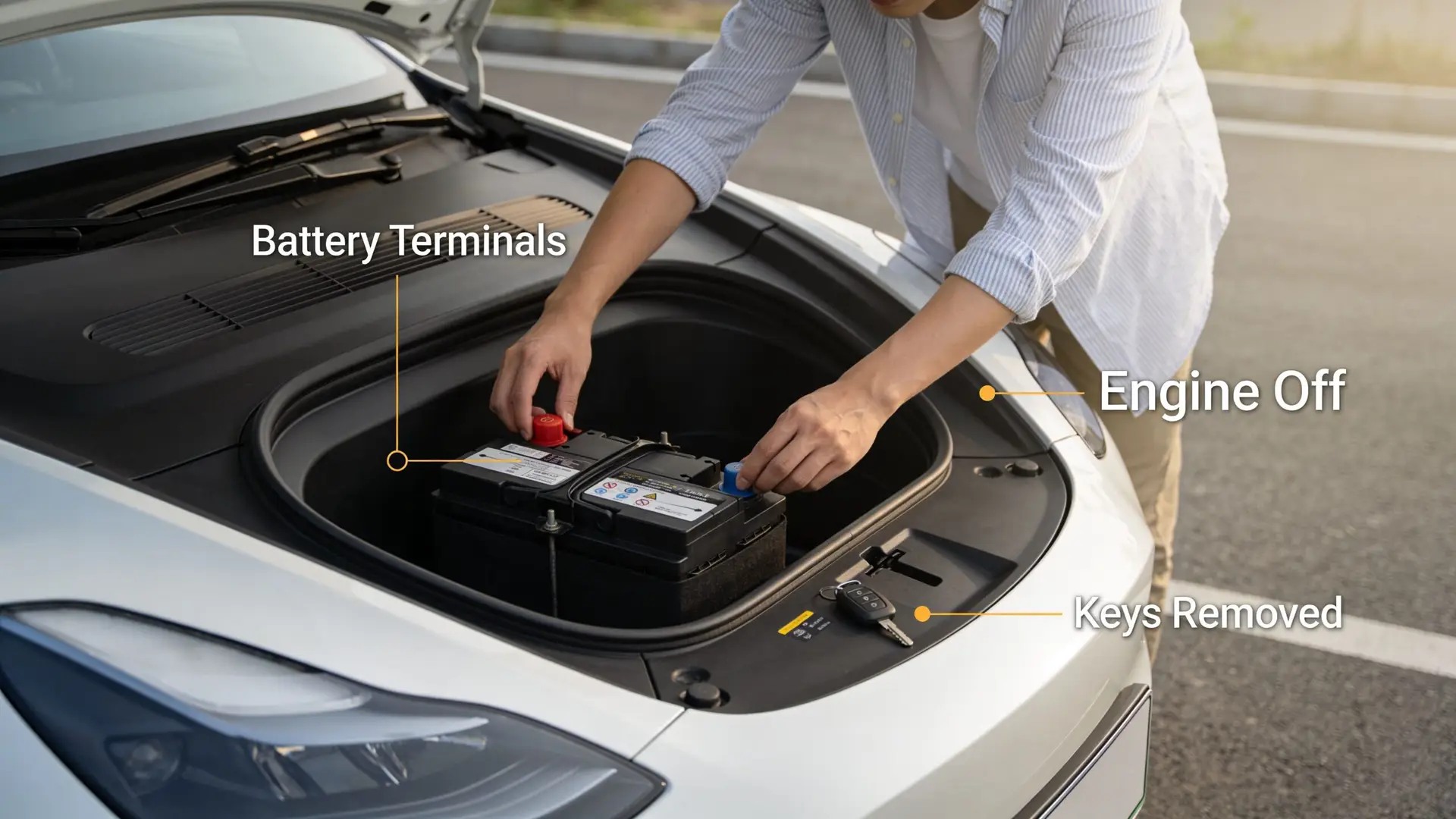
What to check first
Corroded or loose battery terminals can drop voltage by 1 to 2 volts, reduce effective battery power by 20 to 30%, and cleaning them resolves 25% of intermittent warning light cases in the verified Dobbs data (Dobbs Centers battery light causes).
Look for:
- Powdery buildup: White, blue, or green residue around the terminals
- Loose cable ends: A terminal that moves by hand is a problem
- Damaged insulation: Frayed or cracked battery cables
- Obvious belt wear: Cracks, missing ribs, glazing, or fraying on the serpentine belt
If you find heavy corrosion and need background before trying a temporary restart or roadside solution, this page on jumping a battery explains some of the basics and safety concerns.
What not to do
Don’t start disconnecting battery cables with the engine running. Don’t spray random chemicals around the battery. Don’t put your hands near a moving belt or fan.
If the light is accompanied by dim headlights, weak power windows, warning messages, or a hot electrical smell, stop with the DIY inspection and arrange professional help.
Here’s a visual walkthrough that can help you recognize the basics before you touch anything:
A roadside inspection is triage, not a diagnosis. If the light keeps returning, the car still needs charging-system testing.
How Our Technicians Diagnose the Problem
When a car comes in with a complaint that the battery light comes on and off, the first thing we want to know is the exact pattern. Idle, acceleration, A/C load, nighttime driving, after bumps, cold start, hot restart. Those details save time.
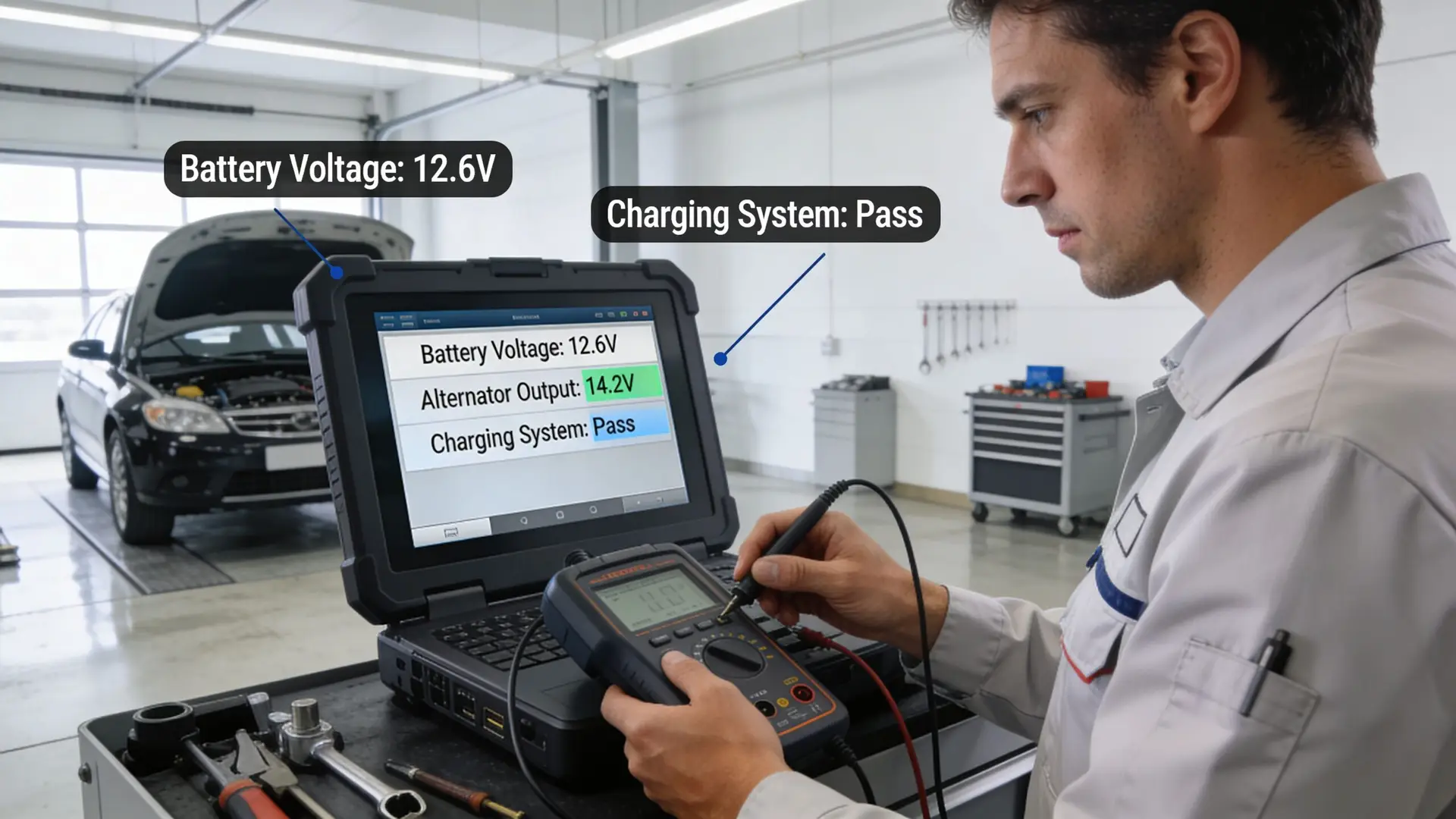
Step one is baseline voltage
We start with the battery’s resting condition, then check charging voltage with the engine running. A healthy charging system should hold stable output, not bounce around.
Then we test under load
Testing eliminates guesswork.
ASE-certified techs use tools like a Midtronics tester to confirm charging-system health. Verified data shows a healthy alternator should produce 13.8 to 14.4V and 90 to 150A. If output fluctuates by more than 0.5V or drops under load, that points to internal regulator or diode failure, which accounts for 60 to 70% of intermittent battery-light cases in that source (Midtronics battery warning light diagnostics).
That load test matters because many bad alternators pass a casual check. They’ll show decent voltage with no accessories on, then fall apart when we switch on headlights, blower motor, and A/C.
We also check the simple stuff that fools people
A lot of expensive parts get replaced unnecessarily because nobody checked the basics carefully.
We inspect:
- Battery terminals and cable fitment
- Ground connections from engine to chassis
- Serpentine belt condition and tension
- Charging wire integrity
- Voltage behavior at idle and raised RPM
In practical terms, a good diagnosis is about reproducing the symptom. If the customer says the light only flickers with A/C on at a stoplight, we test it in exactly that condition.
Why this saves money
A battery, alternator, and belt can all create overlapping symptoms. Replacing parts one at a time until the problem goes away is the expensive way to do it.
One option for that kind of charging-system check is Kwik Kar Oil Change and Auto Care, where technicians inspect battery health, charging output, and cable condition using dedicated test equipment rather than relying on a dashboard guess.
Common Repairs and Typical Cost Ranges
By the time a battery light starts flickering on and off, the repair itself is often simpler than the detective work. Cost depends less on the warning light alone and more on when it shows up. A light that appears only at idle points in a different direction than one that flashes during acceleration or with the headlights, blower motor, and rear defroster running.
That pattern matters because it changes what usually fixes the car.
What usually gets repaired
| Problem | When the Light Commonly Appears | Estimated Repair Cost (Parts & Labor) |
|---|---|---|
| Battery replacement | Random flicker after short trips, weak starts, poor reserve capacity | Varies by battery type and vehicle |
| Alternator replacement | Flicker at idle, under acceleration, or when electrical load is high | $400-800 parts and labor |
| Serpentine belt replacement | Light changes with RPM, squeal on startup, worse in wet weather | Varies by vehicle and belt path |
| Terminal cleaning or minor cable service | Flicker after bumps, intermittent power loss, visible corrosion | $50-100 |
| Belt tensioner or decoupler pulley service | Light appears at idle with A/C on, then improves off idle | Varies by engine layout and parts access |
A weak battery is usually the least complicated fix, but not always the cheapest mistake. I see drivers replace a battery because the car still starts, only to come back a week later with the same light because the alternator was dropping output at stoplights.
Alternator jobs usually land in the middle of the pack on cost, but labor can swing quite a bit. On some cars, it is right up top. On others, it is buried tight enough that access time becomes a big part of the bill.
Belts and cable repairs are often less expensive, and they can absolutely resolve the problem. If the warning shows up when the A/C compressor kicks on at idle, or right after hitting a bump, that is a strong clue to check belt grip, tension, and cable connection before hanging an alternator on it.
The trade-off drivers should know
The low quote is not always the smart quote. The smart repair is the one that matches the failure pattern.
A shop that works through charging complaints every day will usually price the repair after confirming the cause under the same conditions that trigger the light. That is one reason many modern auto repair shops build their process around documented testing and clear repair approval instead of guessing from the dash icon alone.
Good repair decisions start with measured voltage, amperage, and load testing under the conditions that make the light flicker.
Your Trusted Partner for Auto Care in Fort Worth
An intermittent battery light is one of those problems that gives people false confidence. The car restarts, the light goes away, and it’s tempting to put it off another week.
That’s risky, especially on newer vehicles. Verified data notes that modern vehicles from 2015 onward can have more complex charging systems, where an intermittent warning under load may involve issues such as worn decoupler pulleys rather than a basic alternator failure. That same verified guidance warns a neglected fault can drain the battery in 30 to 60 minutes, making professional load testing important (Southwest Muffler on intermittent charge warnings).
What matters in a repair shop
For this kind of problem, you want a shop that listens to the pattern, tests under the same conditions, and explains what failed in plain English.
That’s also why many modern auto repair shops rely on diagnostic workflows and customer communication tools that keep the process clear from inspection through repair approval.
A practical next step
If the light flickers at idle, during acceleration, or with the A/C running, schedule a charging-system inspection soon. If it’s paired with dim lights, repeated stalling, or multiple warning messages, treat it as urgent.
The right test today is cheaper than a tow truck later.
Frequently Asked Questions About Intermittent Battery Lights
Is it safe to drive if the light only blinks for a second
Not something I’d ignore. A brief flicker is often the early stage of a charging problem that’s only showing up under certain conditions.
My battery is new. Why is the light still on
Because the battery may not be the problem. The fault could be in the alternator, belt drive, wiring, terminals, ground path, or voltage regulation.
Does hot weather make this worse
Yes. Heat is hard on batteries and belts, and it exposes weak charging components faster. In Fort Worth, summer conditions often bring out problems that stayed hidden in mild weather.
If the light comes on only with A/C or headlights, what does that mean
Usually the charging system is struggling under higher electrical load. That often points toward alternator output, regulator behavior, or connection issues.
Can I just keep jump-starting it for a while
That’s a short-term emergency move, not a solution. If the charging system isn’t doing its job, the battery will keep draining.
If your battery light comes on and off, don’t wait for the car to make the decision for you in the middle of traffic. Kwik Kar Oil Change and Auto Care can inspect the battery, alternator, belt drive, and connections so you know exactly what failed and what needs to be repaired.