




Expect to pay roughly $800 to $1,900 for a full AC compressor replacement, including the compressor itself, labor, and refrigerant recharge, with prices potentially higher for European vehicles or systems with severe contamination. A trustworthy quote should always break out these pieces separately:
- Compressor unit (remanufactured or new)
- Labor to remove, replace, and test the system
- Refrigerant recovery, evacuation, and recharge
- Supporting parts like the receiver-drier or expansion device, when contamination or warranty terms require them
For comparison, general A/C repair averages land between $384 and $445, but that figure covers smaller fixes, not a compressor swap. Complexity, contamination, and your vehicle’s engine bay layout push the real number higher.
Key Takeaways
A quality AC compressor replacement combines the correct part, precise labor, and a recharge measured by exact refrigerant weight, not guesswork.
| Point | Details |
|---|---|
| Expect a wide cost range | Budget $800 to $1,900 for most vehicles, more for high-complexity or luxury models. |
| Demand diagnostics first | Pressure checks and leak detection confirm the compressor is actually the problem before replacement. |
| Insist on a system flush | Skipping the receiver-drier and expansion device replacement often causes early repeat failure. |
| Charge by weight, not feel | A scale-measured recharge protects the new compressor from over or undercharging damage. |
| Choose a certified shop | Kwik Kar Oil Change & Auto Care follows ASE and RepairPal-backed diagnostic and repair standards with itemized quotes. |
Table of Contents
- AC Compressor Replacement Cost: Parts, Labor, and Refrigerant Explained
- Why Do AC Compressor Replacement Quotes Vary So Much?
- What Should a Proper AC Compressor Diagnosis Include?
- Can You Replace a Car AC Compressor Yourself?
- How Do You Avoid Overpaying for a Compressor Repair?
- Get an Honest AC Compressor Quote From Kwik Kar Oil Change & Auto Care
- Timing the Repair: Comfort Now vs. Cost Later
- Sources
- FAQ
AC Compressor Replacement Cost: Parts, Labor, and Refrigerant Explained
A compressor replacement invoice usually has three major line items, and understanding each one helps you spot a fair quote versus a padded one.
Parts. A remanufactured compressor typically runs $200 to $600, while a new unit from the manufacturer can run $400 to $900 or more, depending on the vehicle. Remanufactured units carry a strong track record when they come from a reputable core rebuilder, and they’re the more budget-friendly choice for most daily drivers.
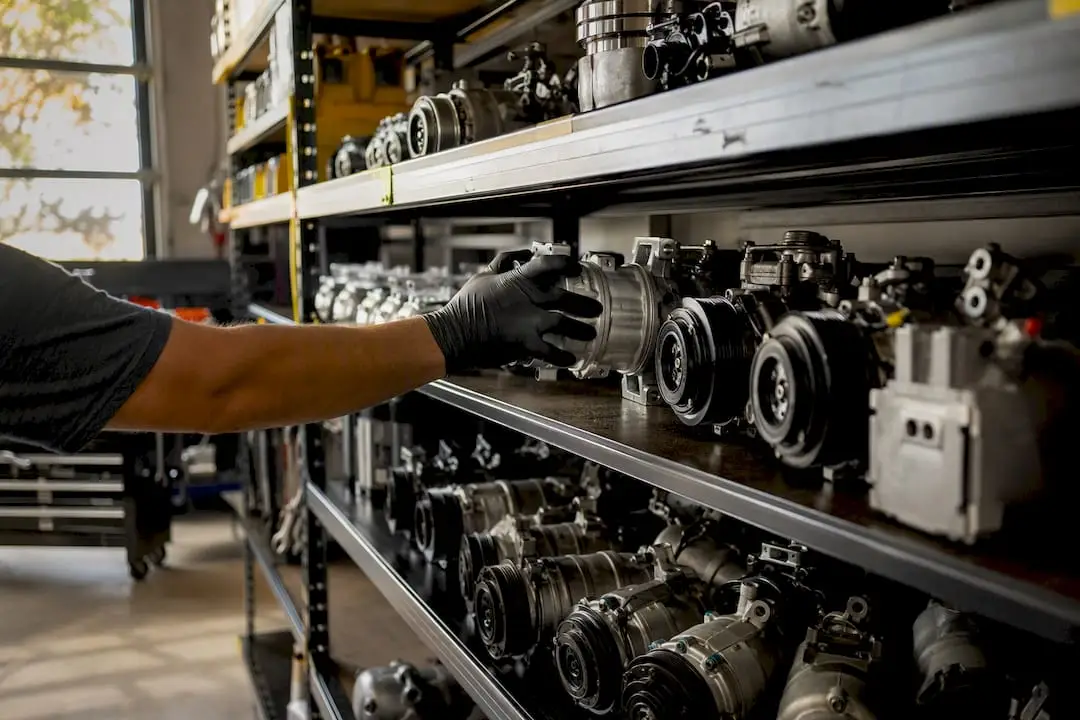
Labor. Most shops estimate two to four hours for a standard replacement, though a full teardown with a system flush can stretch that window. Multiply your shop’s hourly labor rate by that time, and you’ll see why labor often rivals the parts cost.
Refrigerant and recharge. Recovery, vacuum evacuation, and recharge fees generally add $100 to $250, with refrigerant price swings depending on whether your vehicle uses older R134a or newer R1234yf.
Supporting parts. The receiver-drier or accumulator ($40 to $150) and the expansion device or orifice tube ($30 to $120) are frequently replaced alongside the compressor. Skipping this is one of the most common reasons a “fixed” AC system fails again within months.
Here’s how those pieces typically stack up across three vehicle profiles:
- Economy compact car: $800 to $1,100 total, with straightforward access and lower labor time
- Mid-size sedan or SUV: $1,100 to $1,600, factoring in slightly more labor and often a larger refrigerant charge
- High-complexity vehicle (luxury or European import): $1,700 to $2,300+, driven by tighter engine bays, specialty parts, and sometimes dealer-only components
Why Do AC Compressor Replacement Quotes Vary So Much?
Two shops can quote wildly different numbers for what looks like the same job, and the gap usually comes down to five variables.
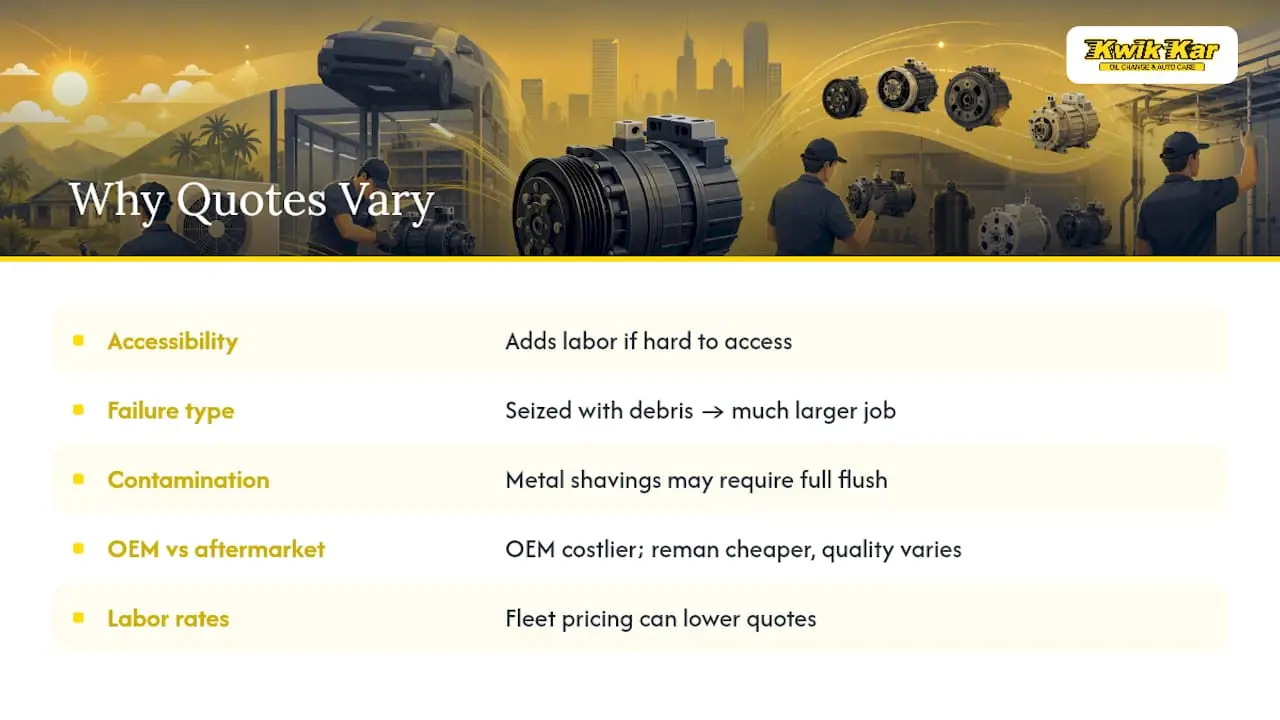
Accessibility. Some compressors sit right up front and take under an hour to swap. Others hide behind the engine, requiring removal of brackets, hoses, or even the radiator support, which adds labor hours fast.
Failure type. A seized compressor that’s shed metal debris into the lines is a much bigger job than a clutch that simply won’t engage. Compressor clutch issues can stem from a bad relay, a blown fuse, or low refrigerant pressure switches rather than the compressor itself, which is exactly why diagnosis has to come first.
Contamination scope. When a compressor fails internally, metal shavings and burnt oil travel through the entire system. That contamination may require a full flush, not just a part swap.
OEM vs aftermarket. OEM parts cost more upfront but often carry longer warranties and tighter tolerances. Aftermarket remanufactured units save money but vary more in quality between brands.
Labor rates and account type. Fleet accounts often negotiate volume pricing that retail customers won’t see quoted.
Pro Tip: Ask any shop quoting a compressor job whether the price includes a flush and new receiver-drier. If it doesn’t, and your old compressor failed internally, you’re likely buying a repeat repair.
What Should a Proper AC Compressor Diagnosis Include?
A rushed quote skips steps that protect you from paying for a replacement you don’t need; a detailed procedure for car aircon compressor replacement can clarify these essential diagnostic and hygiene steps for system health and longevity Car aircon compressor replacement Brisbane | MedAuto. Here’s the sequence a competent shop should follow:
- Pressure checks on the high and low sides to confirm whether the problem is mechanical, electrical, or simply low charge
- Electrical testing of the compressor clutch, relay, and related fuses, since clutch non-engagement often traces back to wiring, not the compressor
- Leak detection, using dye or an electronic sniffer, before anyone commits to a full teardown
- Refrigerant recovery using certified equipment, since venting refrigerant to atmosphere carries legal and environmental penalties
- Vacuum evacuation to pull moisture from the system before it’s sealed back up
- System flush to clear metal debris and burnt oil, paired with replacement of the receiver-drier and expansion device when contamination is present
- Recharge by exact weight, using a scale rather than gauge feel, since incorrect charge levels can damage a brand-new compressor within weeks
- Performance verification, checking vent temperature and system pressures against spec before the car leaves the lift
Time on the lift for an accessible vehicle runs about a couple of hours, though a flush or hard-to-reach compressor extends that window. If you’re waiting, ask the service writer for a realistic pickup time rather than a generic “later today.”
Can You Replace a Car AC Compressor Yourself?
A competent owner can run a few checks before ever booking an appointment: look for oily residue around fittings (a sign of a leak), listen for clutch engagement when the AC is switched on, and check fuses and relays tied to the AC circuit. That’s the extent of what’s realistic without a recovery machine and EPA 609 certification.
Refrigerant recovery and recharging by weight require equipment most driveways don’t have, and mishandling either step often makes the eventual professional repair more expensive, not less. Improper flushing leaves contaminants behind. The wrong oil spec attacks seals. Overcharging strains the new compressor immediately. If you’re not confident diagnosing the issue yourself, our primer on how automotive AC systems work is a good place to build that baseline knowledge before you call a shop.
How Do You Avoid Overpaying for a Compressor Repair?
A little vetting up front saves real money and protects the new part.
- Request a line-item estimate that separates diagnostics, parts, the flush, and the recharge, so you can see exactly what you’re paying for
- Ask whether the receiver-drier and expansion device will be replaced, especially if the old compressor failed internally, since skipping them often voids the new compressor’s warranty
- Confirm the recharge is measured by weight, not topped off by feel, and ask to see the scale reading if you have doubts
- Check the warranty terms for both parts and labor, including how many months or miles are covered
- Ask about financing if the repair runs into four figures. Many shops, including ours, offer flexible payment plans for larger jobs so you’re not forced into a rushed decision
Pro Tip: A shop that hesitates to show you the pre and post-repair pressure readings is a shop you should ask more questions before trusting with the job.
Get an Honest AC Compressor Quote From Kwik Kar Oil Change & Auto Care
You don’t have to guess whether a quote is fair or inflated. Kwik Kar Oil Change & Auto Care runs every AC compressor job through the same checklist covered above: pressure and electrical diagnostics, leak detection, full system flush, and a recharge measured by exact manufacturer-specified weight rather than guesswork. Our technicians are ASE-certified and RepairPal certified, which means the diagnostic and repair standards you just read about aren’t marketing copy here. They’re how every job gets done.

We also give you a documented, itemized estimate before any work starts, so you can see exactly what you’re paying for parts, labor, refrigerant, and any supporting components like the receiver-drier or expansion device. If a larger repair doesn’t fit your immediate budget, ask about our auto repair financing options. Visit our AC repair service page to request your itemized estimate, or stop by our Fort Worth shop and get answers the same day.
Timing the Repair: Comfort Now vs. Cost Later
Not every AC problem demands same-day surgery. If your compressor clutch is engaging fine and you’re just getting weak cooling, a diagnostic visit to rule out low refrigerant or a clogged condenser can save you from an unnecessary replacement. But once you hear grinding, see oil residue collecting around fittings, or notice the clutch cycling erratically, waiting usually turns a moderate repair into an expensive one, since compressor debris travels through the whole system.
For fleet managers, the smarter play is standardization. Picking one supplier for compressors, receiver-driers, and expansion devices across similar vehicle models cuts down on inconsistent quality and makes warranty tracking far simpler. Pair that with a seasonal AC pressure check, ideally before the first real heat wave, and you’ll catch slow leaks before they force a compressor into failure. Budgeting a modest annual line item for preventive AC checks costs far less than an emergency fleet-wide breakdown in July.
— Kwik Kar
Sources
- Signs of a bad A/C compressor — AutoZone DIY
- Procedures recharging AC units — TruTech Tools
- Car A/C repair costs — Kelley Blue Book (KBB)
FAQ
How much does an AC compressor replacement cost?
Most passenger vehicles run $800 to $1,900 total, including parts, labor, and refrigerant recharge, though complex or luxury vehicles can exceed $2,300.
Why is the AC compressor clutch not engaging?
A non-engaging clutch often points to a blown fuse, faulty relay, or low refrigerant pressure switch rather than a failed compressor, which is why diagnostic testing should always come before replacement.
How often should you recharge your car’s AC?
A properly sealed AC system shouldn’t need routine recharging. If you’re topping off refrigerant every year, that signals a leak that needs diagnosis, not just a recharge.
What does a car AC recharge cost separately from a compressor job?
A standalone AC recharge, without a compressor replacement, typically runs $100 to $250 depending on refrigerant type and system size.
Does Kwik Kar Oil Change & Auto Care offer itemized AC repair quotes?
Yes. Kwik Kar Oil Change & Auto Care provides itemized estimates separating diagnostics, parts, flush procedures, and refrigerant recharge before starting any AC compressor work.