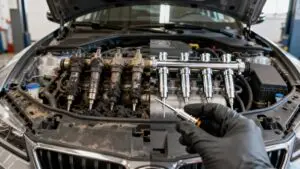





An oil life monitor is accurate at what it was built to do: estimate how hard your engine has worked since the last oil change and count that against a set limit. It is not a sensor that tests your oil. So you can generally trust it as a schedule, as long as you use the oil your manufacturer specifies, reset it after every service, and still check the dipstick.
That distinction explains most of the confusion. One dealer tells a driver to ignore the percentage and change oil every 5,000 miles. Another driver sees 60% left at 5,000 miles and wonders if the car is wrong. Both can be reasonable, and the sections below show why.
TL;DR
- The oil life percentage is a calculation from engine data such as revolutions, temperature, mileage and time. It does not directly test the oil’s condition.
- It does not measure oil level. A car can show 70% oil life and still be low on oil.
- Manufacturers design the estimate around the oil they specify, so the wrong oil or a missed reset makes the number less meaningful.
- Fort Worth heat, stop-and-go traffic and towing count as severe conditions. Follow the monitor, and have a technician look at the car if the number and the car’s behavior disagree.
- Check the dipstick regularly, whatever the screen says.
Table of Contents
- What does the oil life percentage actually measure?
- How accurate is it, really?
- Why did a dealer tell me not to trust it?
- What the percentage means when it gets low
- Does a good percentage mean the oil level is fine?
- How Fort Worth driving affects your oil
- A Fort Worth driver’s checklist for trusting the monitor
- What the monitor cannot tell you
- Questions to ask at your next oil change
- Get your oil life check done by Fort Worth technicians
- FAQ
- Sources
What does the oil life percentage actually measure?
The percentage is a running estimate of how much of the oil’s useful life has been used up. The car’s computer does not taste, weigh or chemically test the oil. It watches how the engine is operated and does the math.
NHTSA service documents show how one maker’s system works. A technical bulletin for International trucks says the monitor uses a software algorithm that looks at engine revolutions, engine temperatures, miles driven and hours operated to decide when oil should be changed. The principle is the same in passenger cars.
The General Motors version is described in more detail. GM’s monitor tracks three pathways: engine revolutions, mileage since the last reset, and time. Mileage is capped at 7,500 miles on GM powertrains from model year 2013 (the Volt excepted), and the time limit is one year. Whichever pathway runs out first sets the percentage. That is why a car that barely moves can still ask for oil.
Honda’s Maintenance Minder works along similar lines. Honda’s owner documentation for the 2023 Ridgeline says the system calculates remaining oil life from engine operating conditions and shows it as a percentage.
Three things follow from that:
- It is an estimate based on how the car is used, not a reading of the oil.
- It cannot see contamination, such as fuel dilution or coolant in the oil, unless the engine reports a related fault.
- It says nothing about how much oil is in the pan.
How accurate is it, really?
For normal driving, it is a good tool. Engineers built algorithm-based oil indicators as a fairly accurate and reliable way to estimate remaining oil life without sampling the oil. Automakers test their algorithms against the specified oil and their own engines, and the result is tuned to protect the engine, not to squeeze out the longest possible interval.
Its accuracy has limits, though, and they are predictable:
- It assumes the right oil. Oil-life estimates are built around the oils automakers recommend, so the oil you use needs to match what the monitor expects. A different viscosity or specification means the math no longer fits.
- It assumes you reset it. Honda’s manual warns that skipping the reset after service leads to incorrect maintenance intervals and possible serious mechanical problems. A monitor that was never reset is counting from the wrong starting line.
- It can only react to what its sensors see. GM’s documentation notes that if coolant temperature exceeds 260°F (126°C), the oil life goes to 0%. That is a protective rule, and it also tells you an overheating engine needs attention beyond an oil change.
- It does not track other services. AAA says maintenance reminders can account for normal versus severe driving, but they do not replace the owner’s manual for time- or mileage-based services.
Why two drivers get very different intervals
The monitor is supposed to give different answers for different driving. A highway commuter may see the percentage drop slowly. A driver who makes short hops, idles in traffic, tows or hauls may see it fall much faster. Neither is a malfunction. AAA lists short trips, stop-and-go driving, towing, heavy loads and extreme climates among the common severe conditions.
If you see 60% left at 5,000 miles, the car has probably been driven gently on longer trips. If your neighbor’s truck is at 15% at the same mileage, the monitor is probably doing its job.

Why did a dealer tell me not to trust it?
You may hear “change it every 5,000 miles no matter what.” That advice usually comes from caution or habit, and the monitor is not always wrong in disagreeing with it. The old three-month or 3,000-mile rule is also out of date. AAA’s 2024 guidance says the right interval depends on your vehicle’s make and model and should come from the service manual.
There are still good reasons to be skeptical of a number on a screen:
- The car is used or has a history you do not know, so you cannot tell whether the last reset was correct.
- A previous shop used a different oil than the one specified.
- The engine is burning or leaking oil, so the level has changed while the percentage looks healthy.
- The vehicle has sat for long periods, so time, not mileage, is the limiting factor.
In those cases a technician’s inspection is worth more than either the screen or a rule of thumb.
What the percentage means when it gets low
The numbers are not the same in every car, so read your own manual. Honda’s documentation for the Ridgeline says 15% means service is due soon and 5% means it is due now. Honda also says the system reports past-due status once the oil life has passed and the vehicle has been driven more than 10 miles. The Civic manual describes a negative distance appearing after that point.
Ford’s Intelligent Oil Life Monitor takes engine temperatures, idling, towing and other habits into account. Ford says its reminder shows “Past Due” if oil life stays at 0% for 14 days or the vehicle is driven more than 500 miles. Vehicles with a modem can also send service reminders with an estimated time and distance.
The practical reading: treat the low single digits as a deadline, not a goal. Running to 0% and beyond gives you no margin if you also tow, idle a lot, or drive in extreme heat.
| Reading on your dash | What it usually means | What to do |
|---|---|---|
| 50% or higher | Normal use so far | Keep driving, check the dipstick monthly |
| 15% to 30% | Service coming up | Plan an appointment this month |
| 5% or lower | Service due now | Book it this week |
| 0%, “past due” or negative miles | Oil is past its design life | Change it promptly and avoid long trips or towing until then |
These bands are a planning aid, not an official rule. The thresholds that matter are the ones in your manual.
Does a good percentage mean the oil level is fine?
No. The monitor is an estimate of oil life, not of oil quantity. A leak, a worn seal or an engine that consumes oil can leave you low while the screen still reads comfortably. Low oil can damage an engine quickly, so the dipstick remains the check that counts.
Ford’s owner manual describes a reliable method. Check the oil on level ground before starting the engine, or after warm-up with the engine off for 15 minutes. Wipe the dipstick, push it fully back in, pull it out again, read both sides and use the lower reading.

If you are adding oil between changes more than occasionally, bring the car in. That is a symptom to diagnose, not a habit to manage. Our guide to signs your car needs an oil change covers the other clues, such as dark or gritty oil, engine noise and warning lights.
How Fort Worth driving affects your oil
The monitor already adjusts for heat and traffic, which is useful for local drivers. Conditions around West Fort Worth that tend to make the estimate fall faster include:
- Summer heat. Long stretches of high temperatures raise engine operating temperature, especially in traffic with the A/C running.
- Stop-and-go traffic. Commutes along White Settlement Road, I-30 and Loop 820 mean a lot of idling, which a monitor counts as engine work even when the odometer barely moves.
- Short trips. Quick runs between Westover Hills, River Oaks and Westworth Village often never let the engine fully warm up.
- Towing and hauling. Pickup and SUV owners heading to Lake Worth or Benbrook with a boat or trailer put real load on the engine.
- Road trips. Highway miles are usually easy on oil, but a long trip on top of an already low percentage leaves little margin.
None of that means you need a shorter interval than the monitor says. It means you should expect the number to fall faster in these conditions and not be surprised when it does.
A Fort Worth driver’s checklist for trusting the monitor
- Use the specified oil. Match the viscosity and specification in your owner’s manual. If you are unsure which oil applies to your engine, our explainer on oil viscosity helps.
- Reset the monitor after each change. If a shop did not do it, do it yourself using the steps in our maintenance required light reset guide.
- Check the dipstick monthly. And before any long trip.
- Read the manual’s separate schedule. Time-based items such as brake fluid, coolant, transmission fluid and filters do not follow the oil percentage. See how service intervals are determined.
- Do not ignore other warnings. A check engine light, overheating or a pressure warning matters more than any percentage.
Luxury and performance cars often have more detailed service displays and tighter specifications. For examples of how major automakers’ oil-life systems calculate and signal service, this luxury car maintenance checklist is a handy companion.
What the monitor cannot tell you
The reasons to look beyond the number come down to what the system cannot sense:
- Oil quality problems. Fuel dilution, coolant contamination or sludge are not measured directly. A technician can spot some of these by looking at and smelling the oil during an inspection.
- Wear. Metal in the oil, a failing gasket or worn rings do not show up in the percentage.
- Filter condition. The oil filter is changed with the oil, but air, cabin and fuel filters follow their own schedules.
- Other maintenance. Tire rotation, brake inspection, belts and fluid exchanges are not triggered by oil life, although many cars bundle a reminder code with it.
This is why a good oil change is also an inspection. When we service your car, the oil change is a chance to look at the things the dashboard cannot see.
Our perspective: treat the monitor as a good schedule and an inspection as the second opinion
We see the oil life monitor as a helpful tool that works best when it is not the only thing watching your car. It does what it was designed to do: tracks how you drive and tells you when the oil has reached its limit. It cannot tell you whether the level is low, whether a seal is weeping, or whether something else is quietly wearing out.
That is why our technicians do more than drain and fill. Kwik Kar is a full-service repair shop with ASE-certified technicians and RepairPal certification, and we use digital vehicle inspections so you can see what we see. If the monitor says you have 40% left but a leak or a worn component shows up, you hear about it with the evidence in front of you, and you decide what to do.
Our advice is simple: follow your monitor and your manual, use the right oil, reset after service, and let a trained set of eyes check the car at each visit. That is the cheapest way to catch small problems before they become large ones.
Kwik Kar
Questions to ask at your next oil change
A good shop welcomes these:
- Which oil and viscosity are you putting in, and does it meet my manufacturer’s specification?
- Will you reset the oil life monitor, and can you show me it was reset?
- Did the inspection find any leaks, worn belts or hoses, or low fluids?
- Which other services are due by time or mileage, apart from the oil?
If the answer to the first question is “whatever we have on the shelf,” your monitor’s percentage will be harder to trust.
Get your oil life check done by Fort Worth technicians
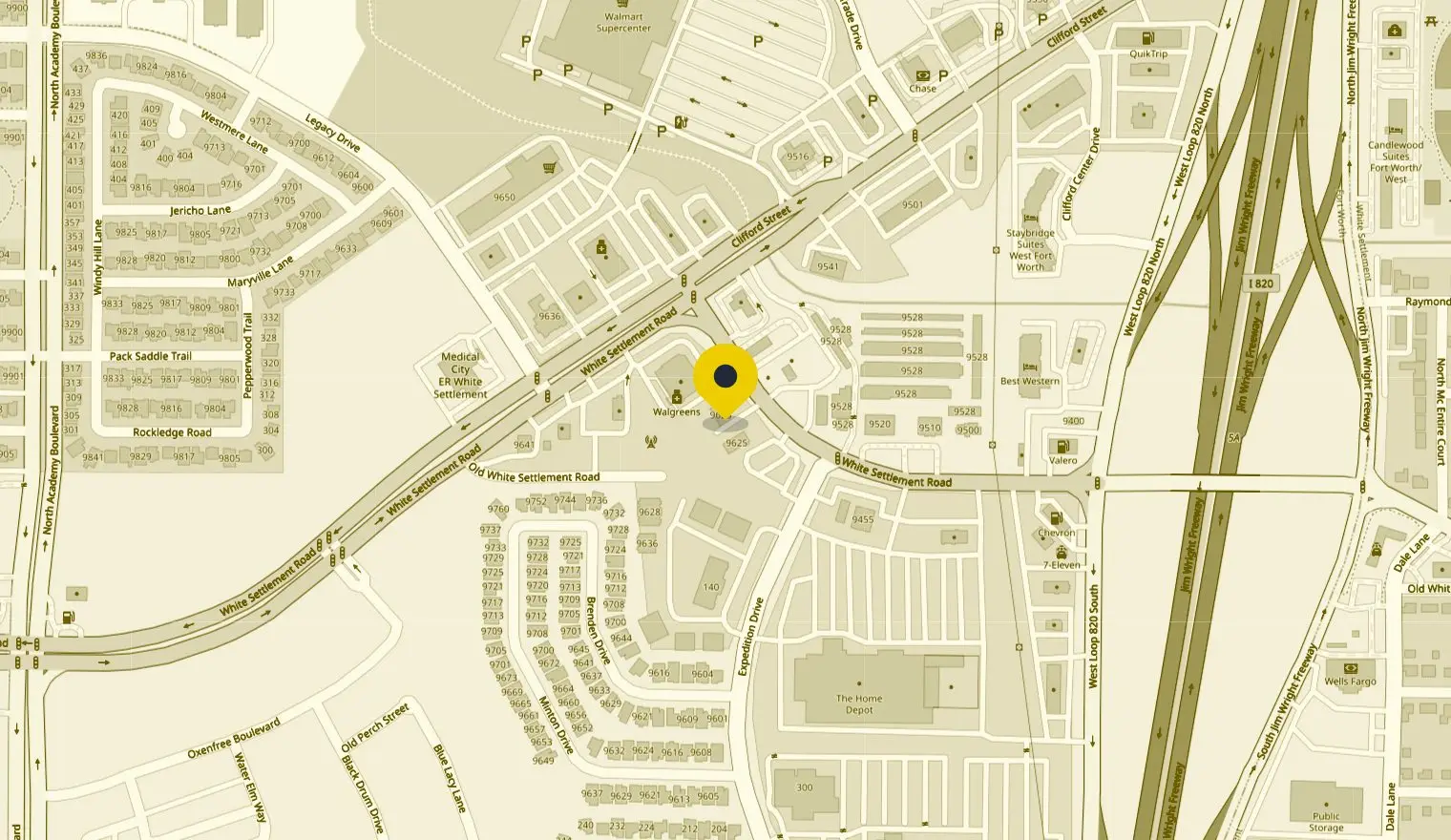
If your dashboard is showing a low percentage, a past-due message, or a number that does not match how the car feels, we can sort it out. Kwik Kar Oil Change & Auto Care is at 9613 White Settlement Rd, Fort Worth, TX 76108, serving drivers from White Settlement, Westworth Village, Westover Hills, River Oaks, Lake Worth and Benbrook. We handle oil changes, filters, fluid exchanges, engine diagnostics and the repairs that come after.
You can book on our schedule page or learn more at kwikkarwhitesettlement.com. Qualifying repairs carry our 24-month/24,000-mile warranty, and our team will explain what is covered before work begins.
FAQ
Should I go by the oil life percentage?
Yes, in most cases, provided you use the oil your manufacturer specifies and reset the monitor after each change. The percentage adapts to your actual driving, which a fixed mileage rule does not. Still check the dipstick regularly and follow your manual for items that run on time or mileage.
Is the oil life percentage the same as oil quality or oil level?
No. It is a calculation from engine data such as revolutions, temperature, mileage and time. It does not measure how much oil is in the engine, and it does not test the oil’s chemistry. Use the dipstick for level and a technician’s inspection for condition.
How accurate is the Ford oil life indicator?
Ford says its Intelligent Oil Life Monitor factors in engine temperatures, idling, towing and other driving habits to calculate remaining life. It works as intended with the specified oil and a proper reset. Ford’s reminder reports “Past Due” if oil life stays at 0% for 14 days or the vehicle goes more than 500 miles.
What happens if I forget to reset the monitor?
The system keeps counting from the old service, so its next reminder will be wrong. Honda’s manual warns this can cause incorrect maintenance intervals and serious mechanical problems. If you are unsure, have the shop confirm the reset or follow the reset steps for your model.
Can I go past 0% on the oil life monitor?
You should not plan to. At 0% the oil has reached the limit the manufacturer designed it for, and some systems show negative miles or a past-due message after that. If you drive in Fort Worth heat, tow, or idle often, change it as soon as you can.
Sources
- NHTSA technical service bulletin: oil life monitor description (International CV)
- NHTSA technical service bulletin: GM oil life monitor information
- Honda 2023 Ridgeline Maintenance Minder
- Honda 2020 CR-V Maintenance Minder
- Honda 2022 Civic Maintenance Minder
- AAA Exchange: Car Care Basics
- AAA Via: Answers to Common Questions About Oil Changes
- Underhood Service: How OEMs calculate oil life percentages
- HowStuffWorks: What is an oil life indicator?
- Ford owner manual: Engine oil check
- Ford: Oil Life Service Reminder FAQs