




A rough idle at stop usually traces to one of three problem areas: worn ignition components, an unmetered air leak, or dirty airflow/fuel parts. If your check engine light is flashing or you smell fuel, stop driving and arrange a tow. Otherwise, scan for codes first, then work through the checks below before booking a diagnostic visit.
TL;DR:
- Rough idle caused by a small vacuum leak or unmetered air becomes more noticeable at low RPM, where the engine’s compensation ability is limited.
- Worn spark plugs and ignition coils account for about 30 to 40 percent of rough idle cases with a stored trouble code, especially misfire-related ones.
- Visual checks for cracks in intake hoses, loose clamps, and emissions of hissing sounds help identify unmetered air leaks before costly repairs.
- Live data analysis, including fuel trim and misfire counters, guide diagnosis, with smoke or propane tests confirming vacuum leaks.
- Immediate towing is essential if the check engine light flashes, a strong fuel smell or leak appears, or if the engine experiences severe shaking or temperature rise.
Table of Contents
- Why Rough Idle at Stop Reveals Problems Your Engine Hides at Speed
- What Causes Rough Idle: Common Culprits by System
- Safe DIY Checks You Can Do Before Calling a Shop
- How a Shop Diagnoses an Engine That Idles Rough
- Our Approach to Rough Idle Diagnostics
- Urgent Warning Signs: When to Stop Driving Immediately
- Get Your Rough Idle Diagnosed the Right Way
- Sources
- FAQ
Why Rough Idle at Stop Reveals Problems Your Engine Hides at Speed
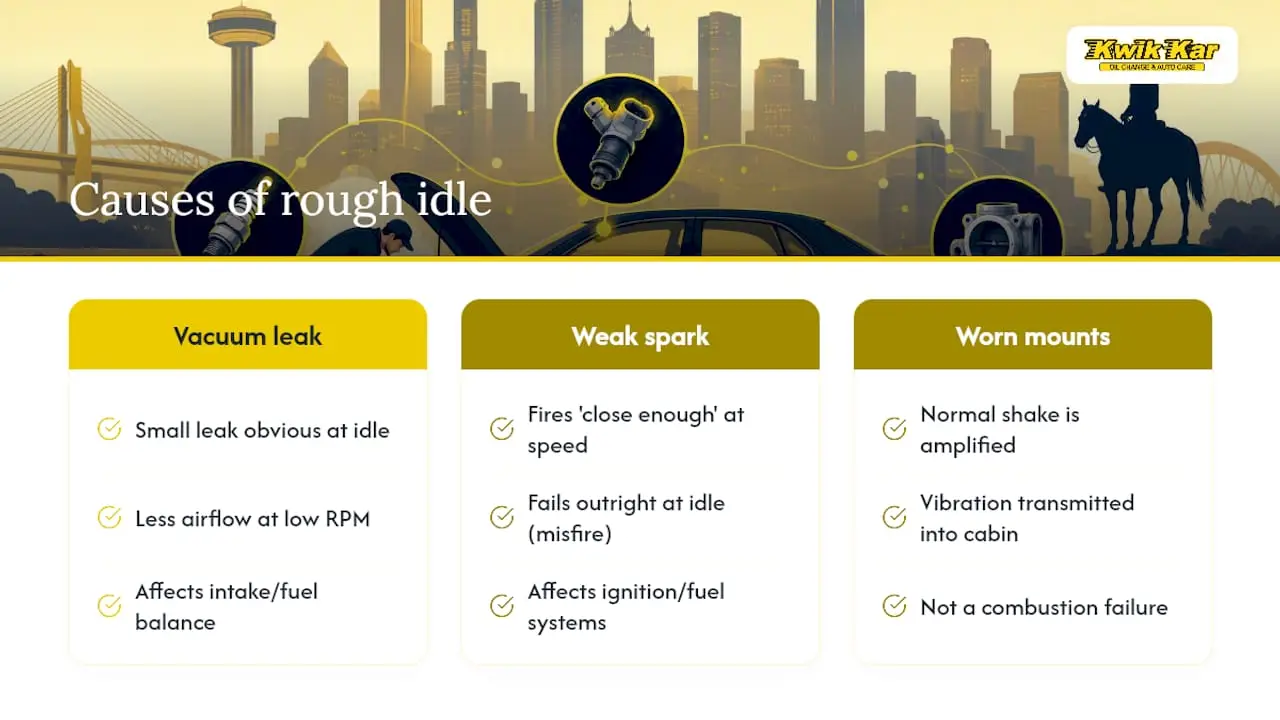
Your engine can run smoothly at 40 miles per hour and still shake like a wet dog at a red light. That’s not a contradiction. At idle, the engine spins at its lowest RPM with the least airflow moving through it, so small combustion imbalances that get smoothed out at higher speeds suddenly stand out.
The onboard computer also has less room to compensate at idle. Fuel trim adjustments that hide a minor issue during cruising can’t fully cover for the same issue when the engine is barely turning over. A vacuum leak too small to affect highway driving becomes obvious at a stop light, and a weak spark that fires “close enough” at speed misfires outright at idle.
It also helps to know the difference between a true misfire and vibration that’s simply being amplified. A misfire is a combustion event failing. Amplified vibration is what happens when normal engine shake travels into the cabin because worn mounts aren’t absorbing it anymore. Both feel like rough idle when stopped. Only one involves the fuel and ignition systems.
What Causes Rough Idle: Common Culprits by System
Rough idle troubleshooting goes faster when you organize causes by system instead of guessing at parts; a good diagnostic checklist can help diagnose the source first to stop car odour for good. Each system tends to leave its own fingerprint.
- Ignition faults: Worn spark plugs and failing ignition coils are behind a large share of rough-idle complaints tied to a check engine light. In fact, worn spark plugs alone account for roughly 30 to 40 percent of rough-idle cases where a code has been stored. Look for single-cylinder misfire codes and roughness that gets worse under load.
- Vacuum leaks and unmetered air: Cracked intake hoses, a failing PCV valve, or a leaking brake booster let extra air into the engine that the computer never measured. This produces a hissing sound near the intake and often triggers lean fuel-trim codes like P0171 or P0174, since the system is pumping in more fuel than the unaccounted air can balance.
- Airflow metering and idle control: A dirty throttle body, a contaminated mass airflow (MAF) sensor, or a stuck idle air control (IAC) valve causes the idle to hunt, surging up and down instead of holding steady. These often improve dramatically after cleaning and an ECM relearn, which is why a shop checks them before replacing anything expensive.
- Fuel delivery issues: A clogged injector or low fuel rail pressure tends to show up differently depending on temperature. You might notice it more on a cold start, or notice it fade once RPM climbs and the injector spends more time open.
- Mounts and mechanical wear: Engine mounts don’t cause misfires, but worn mounts do amplify normal vibration so it feels far worse than it should. If there are no codes and the live data looks clean, mounts are worth a look. Low compression or a head gasket issue is rarer but more serious, and usually comes with other warning signs like coolant loss or white exhaust smoke.
Safe DIY Checks You Can Do Before Calling a Shop
You don’t need a lift or a scan tool to gather useful clues. A few careful checks at home can point you toward the right system, or tell you it’s time to stop driving altogether.
- Let the engine cool before you look under the hood. Never reach near a moving belt, fan, or pulley while the engine runs.
- Inspect the intake boots and vacuum hoses visually. Look for cracks, soft spots, loose clamps, or a hose that’s popped off entirely near the throttle body.
- Pull the oil fill cap briefly with the engine idling. A noticeable change in idle quality when you do this can point to a PCV valve problem, since it alters the crankcase’s air balance.
- Compare idle in Park versus Drive, and with the A/C on versus off. A big difference between these states tells a technician a lot about where to focus.
- Check the battery terminals for corrosion or looseness. A weak or failing charging system can make an already rough idle feel worse, especially as electrical load increases.
Pro Tip: Write down exactly when the shaking happens: cold start only, after refueling, only with the A/C running. That single detail can cut a diagnostic session in half.
If any of these checks reveal a strong fuel smell, a hose spraying fluid, or shaking severe enough to rock the cabin, stop the checks and arrange a tow instead of continuing to drive.
How a Shop Diagnoses an Engine That Idles Rough
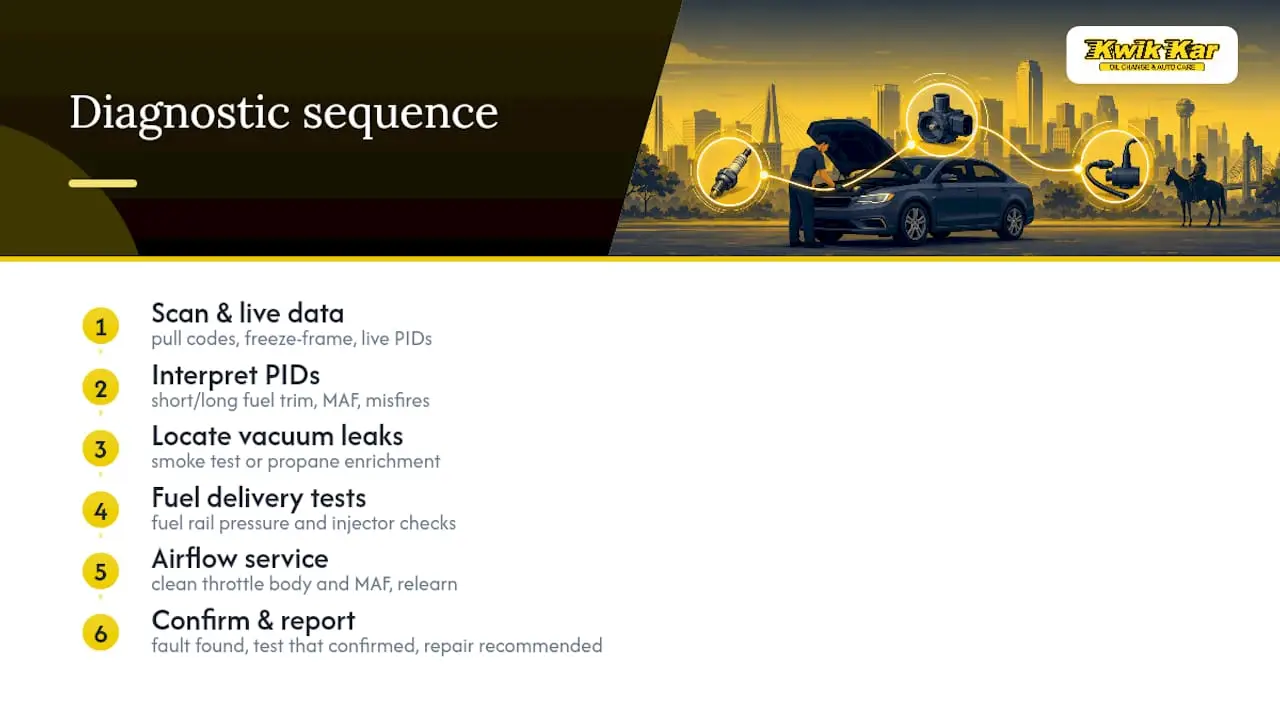
A proper diagnostic doesn’t start with swapping parts. It starts with a scan tool pulling stored trouble codes and freeze-frame data, followed by a look at live data streams. That means short-term and long-term fuel trim, MAF grams-per-second readings, and misfire counters per cylinder. Live PID data matters because a basic code reader alone often can’t distinguish between a vacuum leak, a fuel issue, and a sensor fault.
From there, a smoke test or propane enrichment test is the standard way to physically locate a vacuum leak that fuel trim data has already hinted at. If fuel delivery looks suspect, a fuel pressure test on the rail and individual injector contribution tests narrow down whether one injector or the whole fuel system is underperforming. Throttle body and MAF sensor cleaning, followed by a relearn procedure, often resolves airflow-related rough idle without further parts replacement. When none of that explains the symptom, a compression or leak-down test rules out or confirms a mechanical issue inside the engine itself. A clear diagnostic report should tell you three things: the fault found, the test that confirmed it, and the repair recommended.
Our Approach to Rough Idle Diagnostics
Rough idle at a stop is a common concern among drivers in Fort Worth, and the first step is always to scan for codes and pull live data before recommending any part. Certified technicians rely on that data, not guesswork, and provide a written estimate once the issue is identified.
If your check engine light is flashing, towing is recommended rather than driving. Otherwise, a same-day diagnostic appointment can usually provide answers.
Before you come in, jot down when the rough idle started, whether the light flashes or stays steady, whether it changes when the A/C kicks on, and whether you recently filled up with gas. That intake information speeds up the visit considerably. From there, expect a scan, a visual inspection, a short test drive, and targeted tests based on what we find, whether that’s a vacuum leak check or a look at ignition components.
— Kwik Kar
Urgent Warning Signs: When to Stop Driving Immediately
Some symptoms mean the conversation shifts from “troubleshoot it” to “stop the car.” Treat these as non-negotiable:
- A flashing check engine light signals an active misfire that can damage your catalytic converter within minutes. Stop and arrange a tow rather than continuing to drive.
- A strong fuel smell or a visible leak anywhere near the engine bay means fuel is escaping where it shouldn’t be. Shut the engine off.
- Heavy shaking, stalling, or a sudden loss of power at a stop are signs the problem has moved beyond a minor irritation.
- Rising temperature, white exhaust smoke, or dropping coolant or oil levels point toward a cooling or internal engine problem that gets worse the longer you drive.
If none of these apply and the car still drives safely, avoid high-speed or heavy-load trips and get it to a shop as soon as you reasonably can.
Get Your Rough Idle Diagnosed the Right Way
A rough idle rarely fixes itself, and guessing at parts gets expensive fast when the real problem is a $15 vacuum hose instead of a $400 sensor. A proper diagnostic before recommending any repair uses scan data and live fuel trim readings instead of trial-and-error part swapping, so you only pay for the fix your car actually needs.

Whether the shake started after a fill-up, only shows up with the A/C running, or has been getting worse for weeks, our technicians will scan for codes, check live data, and give you a written estimate before any work begins. That approach applies across everything we handle, from ignition and fuel system repairs to the preventive maintenance that helps catch small issues before they turn into a rough idle in the first place. Browse our full diagnostic and repair services or call ahead to schedule a visit at our Fort Worth shop this week.
Sources
- Check Engine Light & Rough Idle: Diagnosis Checklist – Steer
- Understanding and fixing a rough idle – Jerry
- Rough Idle: 9 Common Causes & How to Diagnose Each — Car Care Total
FAQ
Why does my engine idle rough but drive fine?
Idle exposes small problems that higher RPM masks, since airflow is lower and the computer has less room to compensate. A worn spark plug, a small vacuum leak, or a dirty throttle body can all feel fine at speed but rough at a stop.
Why does my car shake when idling at a stop light?
The most common causes are ignition issues like worn plugs or coils, vacuum leaks that let in unmetered air, or dirty airflow components like the MAF sensor or throttle body. Worn engine mounts can also amplify normal vibration without causing a true misfire.
Does a bad transmission cause rough idling?
A failing transmission is rarely the direct cause of rough idle, since idle problems almost always trace back to combustion, air intake, or fuel delivery. However, some vibration felt “at idle” while the car is in gear can actually come from a transmission or mount issue, which is why a technician checks Park versus Drive behavior separately.
How do I fix a rough idle?
The fix depends entirely on the cause, so start with a code scan and a check of live fuel trim data rather than replacing parts on a guess. Once the fault is confirmed, whether it’s a vacuum leak, a dirty throttle body, or worn spark plugs, the repair is usually straightforward for a certified technician using proper diagnostic tools.
Is it safe to keep driving with a rough idle?
It depends on the warning signs present. A steady check engine light with mild roughness is usually safe for a short drive to a shop, but a flashing light, fuel smell, stalling, or heavy shaking means you should stop and arrange a tow instead.