



Most brake squeal generally arises from common causes such as worn pad wear indicators, surface rust due to moisture, glazed or contaminated pads, and sticking calipers or hardware. A brief chirping noise after rain or washing the car often clears itself within a few normal braking applications. Constant squealing, especially paired with grinding, pedal vibration, pulling, or a dashboard warning light, means you need a brake inspection before you drive much further.
TL;DR:
- Brake squeal caused by rust from moisture typically clears after a few normal braking applications, but persistent squealing with grinding or warning lights requires urgent inspection.
- Worn brake pads with metal wear indicators produce high-pitched squeal during light stops, signaling the need for pads replacement before further brake damage occurs.
- Surface glazing from repeated light braking or contamination like oil or brake fluid causes weak stopping power and squeal, often necessitating pad or rotor replacement rather than just cleaning.
- Improper installation, such as missing shims or seized slide pins, can generate vibration-induced squeal, which usually appears soon after brake service if hardware wasn’t correctly reassembled.
- Environmental factors like cold temperatures, high humidity, or high heat cycling influence brake noise, but noise that persists regardless of temperature suggests mechanical issues like glazing or hardware failure.
Table of Contents
- What Causes Brake Squeal? Common Sounds and Symptoms
- How Do You Diagnose the Source of Brake Squeal Safely?
- How Do You Fix Squeaky Brakes Yourself?
- How Can You Prevent Brake Squeal From Coming Back?
- When Should You Get a Professional Brake Inspection?
- Does Weather Affect Brake Noise Beyond Just Moisture?
- Can Poor Installation Cause Brakes to Squeal?
- Do Anti-Squeal Sprays and Compounds Actually Work?
- How Kwik Kar Diagnoses and Fixes Squeaky Brakes
- Get Your Brakes Checked at Kwik Kar White Settlement
- Sources
- FAQ
What Causes Brake Squeal? Common Sounds and Symptoms
Brake squeal causes range from harmless to urgent, and the sound itself often tells you which category you’re in. Here’s how to read the clues.
-
Worn pads and wear-indicator squeal. Many brake pads include a small metal wear indicator tab in the backing plate that contacts the rotor when the friction material has worn down to a low level, producing a sharp, high-pitched squeal typically during light, low-speed stops to alert drivers to pad replacement needs. If you hear this, check pad thickness soon; the signs your brake pads are wearing out usually show up here first.
-
Moisture and surface rust. Rotors are bare cast iron, and they flash-rust within hours of sitting in humid air, after a rainstorm, or right after a wash. The first few stops of the day scrape that thin rust layer off, which produces a squeal or scrape that fades after normal braking clears the surface. This is one of the few brake noises that’s genuinely nothing to worry about, according to RAC Drive.
-
Glazed pads or rotors and contamination. Repeated light braking, or riding the brake pedal down long hills, cooks the pad surface until it turns smooth and shiny, almost mirror-like. Glazed pads lose bite and often squeal while delivering noticeably weaker stopping power. Oil, grease, or brake fluid contamination on the friction surface causes a similar glossy sheen. Once pads glaze over, cleaning rarely restores them; RAC Drive’s guidance notes replacement is usually the only fix.
-
Sticking calipers or slide pins. If a caliper slide pin seizes due to corrosion or lack of lubrication, the brake pad can drag on the rotor even without brake application, causing a near-constant squeal from one wheel and often resulting in that wheel running noticeably hotter after driving. Uneven pad wear is a telltale companion symptom, covered in our guide to uneven brake pad wear.
-
Missing or misseated shims and anti-rattle hardware. Behind every pad sits a thin metal shim and a set of clips designed to damp vibration. If a shim shifts, a clip breaks, or a previous repair skipped reinstalling hardware, you get a chirping or chattering noise under light pedal pressure that changes pitch as you vary brake force.
-
Debris trapped between pad and rotor. Small stones, brake dust clumps, or road grit can wedge into the pad-rotor interface. This usually sounds like an intermittent chirp or a metallic tick rather than a steady squeal, and it often clears on its own once the debris works loose.
-
Noise-prone pad compounds. Semi-metallic pads run cooler and last longer under heavy use, but their metal content makes them more prone to high-frequency vibration than ceramic formulations. Research into brake acoustics shows that friction noise at the contact interface can trigger mode-coupling instability, meaning two pads with identical friction ratings can behave completely differently on the same rotor. That’s part of why squeal sometimes feels unpredictable even after a proper repair.
-
New pad bedding-in noise. Fresh pads haven’t transferred an even friction layer onto the rotor yet, so a bit of squeal or light chatter for the first few hundred miles is normal and typically fades as the surfaces mate.
How Do You Diagnose the Source of Brake Squeal Safely?
A structured checklist beats guesswork, and a documented troubleshooting sequence that records exactly when and how the noise happens is the fastest way to narrow down the cause.
-
Note when the noise happens. Does it occur only on the first stop of the day, only after rain or a wash, only in reverse, only at low speed, or constantly regardless of conditions? Each pattern points toward a different cause.
-
Check for safety red flags first. Grinding metal, a pulsing or vibrating brake pedal, the car pulling to one side under braking, a lit brake or ABS warning light, or a burning smell all mean stop diagnosing and get the vehicle inspected. Pedal pulsation in particular often traces back to rotor issues; see our breakdown of why your car shakes when braking.
-
Do a safe visual check. Look through the wheel spokes at the rotor’s outer edge. A shiny, grooved, or bluish discolored surface suggests glazing or overheating. You can often estimate remaining pad thickness the same way; our rotor inspection guide walks through what to look for. Only use jack stands if you’re confident doing so safely, on level ground, with the wheels chocked.
-
Spin the wheel by hand if it’s raised. Feel for drag or resistance, which points to a sticking caliper. Compare the inner and outer pad thickness through the caliper opening; a big difference between the two usually means a slide pin is seized. Check for any clips or shims lying loose in the wheel well.
-
Make the call. If the noise only shows up after rain, on the first stop, or during break-in on new pads, it’s likely a nuisance you can monitor. If you found red flags, uneven pad wear, a hot wheel, or grinding, treat it as urgent and avoid long drives until a shop looks at it.
Pro Tip: Keep a quick note on your phone each time the squeal happens: speed, pedal pressure, weather, and which wheel. That fifteen seconds of data often lets a technician diagnose the cause in one visit instead of two.
How Do You Fix Squeaky Brakes Yourself?
Some brake squeal causes are simple fixes; others need a lift and the right tools. Here’s how to tell which is which.
- Surface rust: A few firm stops in a safe, empty area typically scrapes the rust off and clears the noise. If it doesn’t clear within a handful of stops, something else is going on.
- Cleaning rotors and hardware: Use brake cleaner spray on the rotor and caliper hardware, never WD-40 or general silicone lubricant on any friction surface. Applying the wrong product to a rotor or pad face can dangerously reduce stopping power, a warning RAC Drive states plainly.
- Lubrication points: Slide pins and the backing plate contact points take a high-temperature brake grease or anti-squeal paste, applied only to metal-to-metal or metal-to-shim contact points, never near the pad’s friction material or the rotor face.
- Replacing pads and shims: This is DIY-feasible for many owners, but follow your vehicle’s manual for torque specs on caliper bolts, and bed in new pads with a series of moderate stops from progressively higher speeds. Our DIY brake pad replacement guide covers the full sequence.
- Rotor machining vs. replacement: Deep grooves, hot spots, or a visible lip on the outer edge mean the rotor needs shop attention, either resurfacing or replacement depending on remaining thickness.
- Caliper rebuild or replacement: Uneven pad wear or a wheel that runs hot after driving points to a dragging caliper. Hydraulic components are safety-critical, so this repair is safer left to a shop with the right bleeding equipment.
Pro Tip: If you’re cleaning brake dust off wheels as part of the same job, a dedicated product with a short dwell time removes buildup without attacking your wheel finish. Something like Diamondbrite’s brake dust remover works in two to five minutes rather than sitting and etching the surface.
How Can You Prevent Brake Squeal From Coming Back?
A little routine maintenance goes a long way toward keeping brakes quiet without sacrificing stopping power.
- Have brakes visually inspected at least once a year, or sooner if you’re logging heavy mileage or towing regularly; our preventative maintenance service covers this as part of a broader checkup.
- Keep slide pins greased with high-temperature brake lubricant and swap out corroded clips, shims, or pins rather than reusing worn hardware.
- If quiet operation matters more to you than ultimate stopping power under hard use, ceramic pad compounds tend to run quieter than semi-metallic options, though they may wear rotors slightly differently over time.
- Bed in every new pad and rotor set with the manufacturer’s break-in procedure, typically a series of moderate stops from around 30 to 40 mph without coming to a complete stop, followed by a cool-down period before hard braking.
When Should You Get a Professional Brake Inspection?
Certain symptoms mean it’s time to stop troubleshooting at home and get the car looked at.
- Grinding or metal-on-metal noise
- A pulsing, vibrating, or soft brake pedal
- The car pulling noticeably to one side when braking
- Visible smoke or a burning smell near a wheel
- A lit brake or ABS warning light on the dashboard
A proper shop inspection measures remaining pad thickness at multiple points, tests caliper movement and slide pin function, checks rotor thickness and runout, inspects the wheel bearing for play, and confirms all shims and clips are present and correctly seated. A shop worth your trust will walk you through what it found, give you a written estimate before starting work, and explain the reasoning behind each recommendation rather than just listing part numbers. That’s the standard our brake service page describes for every visit.
Does Weather Affect Brake Noise Beyond Just Moisture?
Temperature swings change how brake components behave, not just how much rust forms. Cold mornings mean pad material is stiffer and hasn’t reached its working temperature range, which can produce a brief squeal on the first few stops that disappears as the brakes warm up. This is separate from rust-related squeal and tends to happen even on dry days once temperatures drop.
On the other end, sustained heat from mountain driving, towing, or stop-and-go traffic in high heat can push pad and rotor temperatures well past their normal operating range. That heat cycling accelerates glazing and can warp thin rotors, both of which produce noise. Humidity plays a role too: even without visible rain, high ambient moisture accelerates the same surface oxidation that causes post-wash squeal, so drivers in humid climates may notice more frequent, brief morning squeal than those in dry regions.
None of these environmental patterns are dangerous on their own. The distinction that matters is whether the noise fades within a few stops, which points to a temperature or humidity effect, or persists regardless of how warmed up the brakes are, which points to a mechanical cause like glazing or hardware wear.
Can Poor Installation Cause Brakes to Squeal?
A brake job done without attention to detail is one of the more common, and preventable, brake squeal causes. Skipping the anti-squeal shim during a pad swap, forgetting to lubricate slide pins before reassembly, or overtightening caliper bracket bolts can all introduce vibration that wasn’t present before the repair.
Mismatched hardware causes similar problems. Reusing old clips with new pads, or installing pads that don’t precisely match the caliper’s design tolerances, changes how the pad seats against the rotor and can introduce chatter that wasn’t there with the original parts. Research on brake acoustics backs this up structurally: squeal is fundamentally a dynamic instability tied to modal coupling between the pad, rotor, and caliper. Even small changes to how those parts fit together, like an improperly seated shim or an unevenly torqued bracket, can shift those frequencies enough to trigger noise that wasn’t there before.
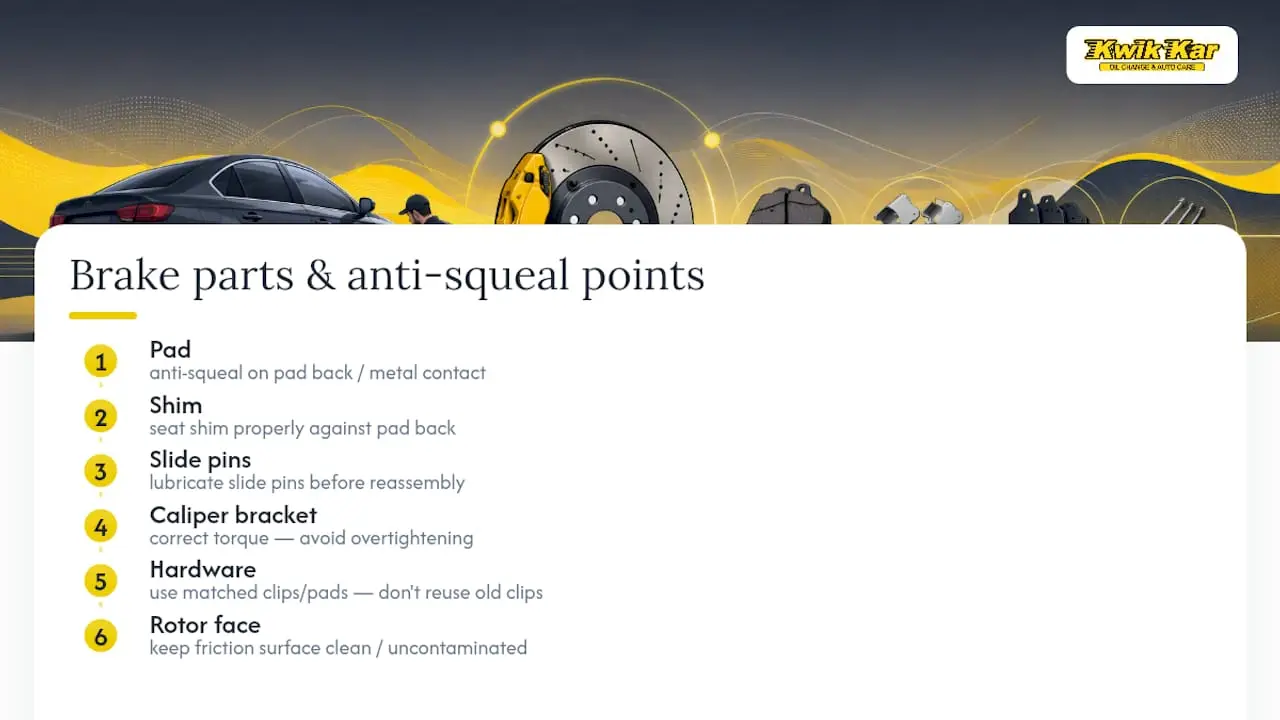
For this reason, a squeal occurring soon after a brake job, regardless of who performed it, merits further inspection and should not simply be dismissed as normal break-in noise.
Do Anti-Squeal Sprays and Compounds Actually Work?
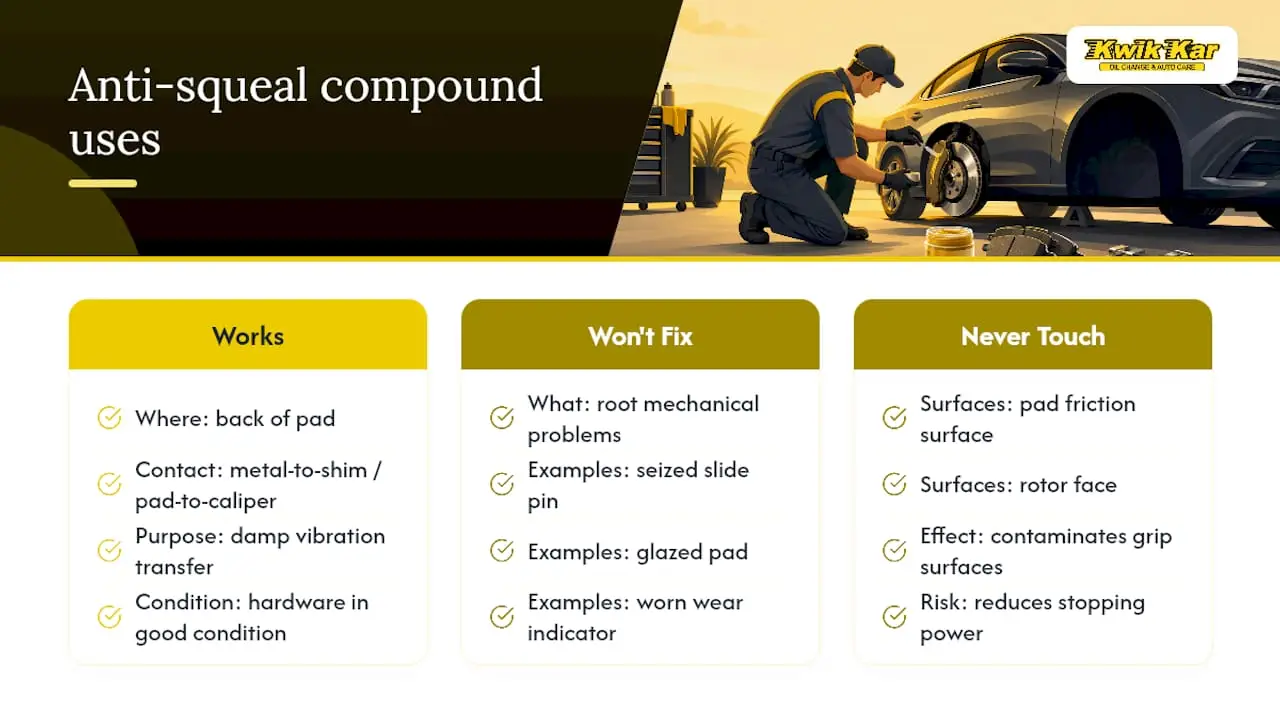
Brake-specific anti-squeal compounds do work, but only when applied correctly and to the right cause. These high-temperature pastes are designed for the metal-to-shim or pad-to-caliper contact points on the back of the pad, where they damp vibration before it transfers into an audible squeal. Applied there, on hardware that’s otherwise in good condition, they’re a legitimate and inexpensive fix for chatter caused by minor vibration.
What they can’t do is fix a root mechanical problem. A seized slide pin, a glazed pad, or a genuinely worn wear indicator will keep squealing no matter how much anti-squeal paste you apply, because the compound addresses vibration transfer, not the underlying cause. Just as important is what these products are never meant to touch: the pad’s friction surface or the rotor face. Applying grease or paste there doesn’t quiet anything; it contaminates the surfaces that are supposed to grip each other, which can seriously reduce stopping power. Treat anti-squeal compound as a finishing touch on a proper repair, not a substitute for one.
How Kwik Kar Diagnoses and Fixes Squeaky Brakes
Squeaky brakes deserve more than a guess, which is why technicians often measure pad thickness, test caliper and slide pin movement, and check rotor condition before recommending anything. A straightforward explanation of what’s actually causing the noise and a transparent estimate before any work begins can help you decide on repairs. If you’ve noticed a squeal that isn’t clearing up on its own, scheduling a brake inspection sooner rather than later keeps a minor fix from becoming a bigger repair.
— Kwik Kar
Get Your Brakes Checked at Kwik Kar White Settlement
A quick inspection now costs a lot less than waiting until a squeal turns into grinding. Kwik Kar Oil Change & Auto Care offers full brake inspections, pad and rotor replacement, and hardware service, backed by certified technicians who explain what they find in plain language before any work starts.
If the noise you’re hearing matches any of the urgent symptoms covered above, don’t wait on it. Visit our brake repair and service page to see what’s included in a full inspection, or check current savings on auto service in Fort Worth before you book. Scheduling an appointment takes a few minutes and gets a certified technician looking at your brakes instead of you guessing at the cause.
Sources
- Squeaky brakes: causes and solutions | RAC Drive
- Experimental investigation on brake squeal unpredictability: Role of the friction noise
- Experimental and computational investigation of brake squeal (case study) — Ohio State University
- Build a DIY squeal troubleshooting checklist
FAQ
How Do I Get My Brakes to Stop Squealing?
Start by identifying the cause: clean rust off with a few firm stops, replace glazed or worn pads, lubricate seized slide pins with brake-specific grease, and apply anti-squeal paste only to the back-of-pad contact points. If the squeal persists after basic cleaning and checks, have a technician inspect the hardware and rotors.
Is It Okay to Drive With Squealing Brakes?
Brief squeal from moisture, dust, or new pad break-in is generally fine to drive on. Persistent squealing accompanied by grinding, pedal vibration, pulling to one side, or a warning light is a safety concern that needs prompt inspection.
How Much Will It Cost to Fix Squeaky Brakes?
Cost depends entirely on the cause, ranging from a simple cleaning and lubrication job to full pad, rotor, or caliper replacement. A shop inspection is the only reliable way to get an accurate, written estimate for your specific vehicle.
Can You Spray WD-40 on Brakes to Stop Squeaking?
No. WD-40, silicone spray, and general-purpose lubricants should never touch a rotor or pad friction surface, since they can dangerously reduce stopping power. Use only brake-specific anti-squeal compound, and only on the back-of-pad hardware contact points.
Does Kwik Kar Inspect Brakes Before Recommending a Repair?
Yes. Kwik Kar Oil Change & Auto Care’s certified technicians measure pad thickness, test caliper and slide pin function, and check rotor condition, then walk you through the findings and a written estimate before any repair begins.