

Price matching is a policy where an auto shop agrees to match a competitor’s lower advertised price for an identical service or part. The role of price matching at auto shops is more nuanced than most drivers realize. It is not a universal guarantee, and the rules vary widely from shop to shop. Understanding how it works, when shops decline it, and what you should ask before requesting it can save you money and frustration.
How does price matching work at auto shops?
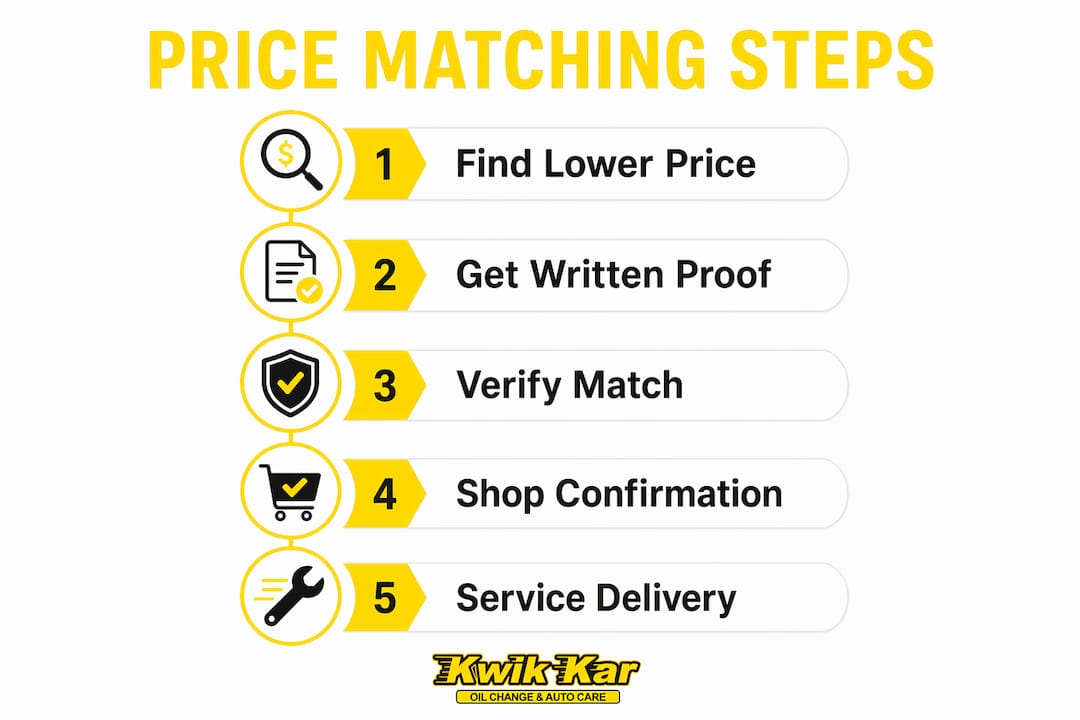
Price matching in auto repair follows a clear five-step process: find a lower price, secure written proof, confirm the service or part is identical, check the shop’s policy, and request the match before any work begins. Each step matters. Skip one, and the shop has every reason to decline.
The verification step is where most requests fall apart. Shops require proof that the competing quote covers the same make, model, part brand, condition, and warranty terms. A quote for a generic oil filter does not match a quote for an OEM filter. A brake job that excludes rotor resurfacing is not the same as one that includes it.
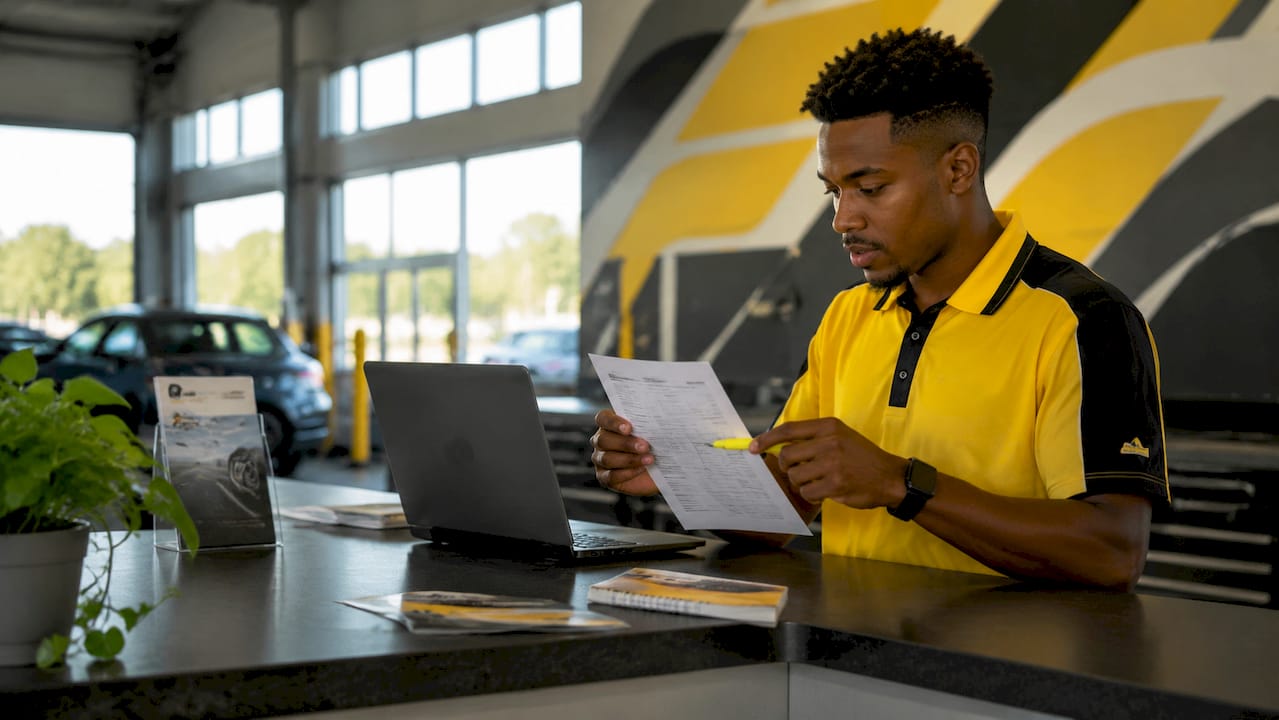
Pro Tip: Always request a written, itemized estimate from the competing shop before you walk into your preferred shop. A verbal quote or a screenshot of a website price rarely satisfies a shop’s verification requirements.
Timing is critical. Price matching must happen before purchase. Retroactive price adjustments are rare in auto repair, unlike retail stores where post-purchase price protection is common. Once the technician starts work, your window for negotiating the price has effectively closed. Common exclusions include labor-heavy services, diagnostic fees, and any work involving shop-specific warranty obligations.
- Find a lower advertised price from a local shop for the same service or part.
- Get a written, itemized estimate from that competitor.
- Confirm the scope matches exactly: same part brand, same labor scope, same warranty.
- Ask your preferred shop about their price match policy before the appointment.
- Request the adjustment at the time of estimate, not after the work is done.
Benefits and challenges of price matching for car owners and shops
Price matching benefits drivers in two concrete ways: it reduces out-of-pocket costs and it forces shops to be transparent about what they charge. When a shop knows you have a competing quote in hand, they are more likely to explain their pricing clearly rather than defend it vaguely.
The challenges are real, though. Shops frequently decline price matching on labor-heavy services because labor costs are tied to technician certification, shop equipment, and legal liability. A RepairPal-certified shop like Kwik Kar Oil Change & Auto Care carries overhead that a non-certified shop does not. Matching a lower labor rate from a shop with fewer credentials is not always possible without cutting corners.
- Cost savings: A verified price match on parts can meaningfully reduce your repair bill, especially on high-cost items like batteries, brake pads, or filters.
- Transparency: Requesting a match opens a conversation about what each quote actually includes.
- Trust building: Shops that engage honestly with your price concerns build longer-term relationships.
- Decline risk: Shops may view frequent price match requests as a signal that you prioritize price over quality, which affects how they prioritize your service.
- Goodwill, not policy: Many shops offer price matches as a one-time gesture, not a standing commitment.
Pro Tip: Frame your price match request as a question, not a demand. Ask “Can you help me understand the difference between these two quotes?” rather than “You need to match this price.” Shops respond better to curiosity than pressure.
Quality shops focus on long-term relationships. They would rather explain why their price is fair than simply undercut a competitor. That approach builds loyalty, and loyalty is worth more to a shop than a single discounted transaction.
Understanding auto shop pricing strategies beyond price matching
Parts markup is not a profit grab. Shops mark up parts to cover inventory costs, warranty obligations, and the administrative overhead of sourcing, stocking, and guaranteeing those parts. A shop that sells you a part at cost has no margin to replace it if it fails under warranty. The markup is the warranty.
Transparent, itemized communication makes price matching less relevant. When a shop explains exactly what you are paying for, the price becomes easier to accept. Drivers who receive a detailed breakdown of parts, labor hours, and warranty terms rarely feel the need to shop around aggressively.
The table below shows how pricing factors differ between shops that compete on price alone and shops that compete on quality and transparency.
| Pricing factor | Price-focused shop | Quality-focused shop |
|---|---|---|
| Parts sourcing | Generic or aftermarket | OEM or name-brand with warranty |
| Labor rate | Lower, fewer certifications | Higher, certified technicians |
| Estimate format | Single total price | Itemized by part and labor |
| Warranty coverage | Limited or none | Parts and labor guaranteed |
| Price match policy | Often advertised | Case-by-case, goodwill basis |
Certified labor costs more because it is worth more. A technician with ASE certification or a shop with RepairPal certification has met verified standards. That credential protects you legally and practically if something goes wrong after the repair. Understanding why mechanics charge what they do helps you evaluate quotes more accurately.
Ask two questions before accepting any estimate: What brand is this part, and what warranty comes with it? Those answers tell you more about value than the total price does.
How can drivers use price matching effectively?
The most effective approach to price matching starts before you contact any shop. Gather at least two written, itemized estimates for the exact service you need. Line them up side by side and compare every line item, not just the total.
Itemized estimate comparison reveals what cheaper quotes are actually missing. A brake job quoted at $180 may exclude rotor inspection. A transmission fluid service quoted at $90 may use a lower-grade fluid. Roughly 60% of cheaper competitor quotes involve missing labor, lower part quality, or a narrower service scope. That number explains why so many “deals” turn into return visits.
- Collect written, itemized estimates from at least two shops before requesting a match.
- Compare line by line: part brand, labor hours, warranty terms, and service scope.
- Ask the shop you prefer to walk through the differences with you.
- Verify the shop’s price match policy before your appointment, not during it.
- Accept that labor rates may not be matchable if certification levels differ.
- Remember that paying slightly more for a warranted repair is cheaper than paying twice for the same job.
Pro Tip: Bring your itemized competitor estimate to the appointment and ask the service advisor to compare it with their quote on paper. Professional shops compare estimates line-by-line with customers as a standard practice. If a shop refuses to do this, that tells you something important about how they operate.
A good shop will not just match a price. They will explain why their price is what it is. That conversation is where you learn whether the lower quote is genuinely competitive or just incomplete.
Common misconceptions about price matching at auto shops
The biggest myth is that all auto shops offer price matching as a standard policy. Most do not. Price matching in auto repair is a discretionary gesture, not a consumer right. Shops that advertise price matching typically apply strict conditions that eliminate most requests.
Retroactive price adjustments almost never happen in auto repair. Once a part is installed, the shop has absorbed the cost of labor, parts, and warranty exposure. Asking for a refund after the fact is asking the shop to absorb a loss they cannot recover.
- Myth: A cheaper quote always means a better deal. Reality: missing labor or inferior parts account for most price gaps between shops.
- Myth: You can negotiate price after the work is done. Reality: price matching must happen before purchase in virtually every shop policy.
- Myth: All shops use the same parts. Reality: part brand and grade vary significantly, and that variation drives most price differences.
- Myth: Asking for a price match will not affect your relationship with the shop. Reality: shops track frequent price match requests and may deprioritize customers who consistently push for discounts.
Chasing the lowest price without understanding scope is like comparing a full oil change with a drain-and-fill. The numbers look similar until something goes wrong. Knowing what a car repair estimate should include protects you from misleading comparisons before you commit.
Key Takeaways
Price matching at auto shops works best when drivers arrive prepared with itemized competitor estimates and a clear understanding of what each quote actually covers.
| Point | Details |
|---|---|
| Request before work starts | Price matching must happen before purchase; retroactive adjustments are rare in auto repair. |
| Itemize every estimate | Line-by-line comparison reveals missing labor, inferior parts, or narrower service scope. |
| Verify identical scope | Same part brand, warranty, and labor scope are required for a valid price match request. |
| Quality carries a cost | Certified technicians and warranted parts cost more and reduce the risk of repeat repairs. |
| Transparency beats discounting | Shops that explain pricing clearly build more trust than shops that simply match a number. |
Why price transparency matters more than price matching
At Kwik Kar Oil Change & Auto Care, we have had thousands of conversations about price. What I have learned is that drivers do not actually want the lowest price. They want to feel confident they are not being overcharged. Those are two very different things.
Price matching is a tool, not a strategy. When a customer brings in a competitor’s quote, the most valuable thing we can do is sit down and compare it line by line. Nine times out of ten, the difference in price reflects a difference in scope or part quality, not a difference in fairness. That conversation builds more trust than any discount ever could.
The auto repair industry is moving away from price wars and toward what I would call an experience standard. Transparent communication is what makes price matching irrelevant for most of our long-term customers. They already know what they are paying for and why. That confidence is worth more than saving $20 on a brake job.
My honest advice: come prepared, ask questions, and choose the shop that explains its pricing clearly. A shop that welcomes your questions is a shop that stands behind its work. Finding a trustworthy mechanic is ultimately about that standard, not the lowest number on a quote.
— Kwik Kar
Fair pricing and honest service at Kwik Kar Oil Change & Auto Care
Kwik Kar Oil Change & Auto Care is built on transparent pricing and dependable service for Fort Worth drivers. Our certified technicians use quality parts and provide itemized estimates so you always know what you are paying for before work begins.
Whether you need a routine oil change and tire rotation or a more involved repair, we walk you through every line of your estimate. Our RepairPal certification means our pricing meets verified industry standards, not just our own. If you have a competitor’s quote, bring it in. We will compare it with you honestly and explain every difference. That is the kind of fair auto repair pricing every driver deserves.
FAQ
What is price matching at an auto shop?
Price matching is when a shop agrees to match a competitor’s lower price for an identical service or part. The request must be made before work begins, and the competing quote must cover the same scope, part brand, and warranty terms.
Why do some auto shops refuse to match prices?
Shops decline price matching when labor costs, technician certifications, or warranty obligations make a lower price unsustainable. Many shops offer matches as a goodwill gesture rather than a standing policy.
How do I know if a competitor’s quote is truly comparable?
Request a written, itemized estimate from the competitor and compare it line by line with your preferred shop’s quote. Roughly 60% of cheaper quotes are missing labor, use lower-grade parts, or cover a narrower scope of work.
Can I get a price match after the repair is done?
Retroactive price adjustments are rare in auto repair. Unlike retail, shops absorb labor and parts costs the moment work begins, which makes post-purchase refunds impractical in most cases.
Does asking for a price match hurt my relationship with the shop?
Asking respectfully and with documentation does not damage the relationship. Frequent or aggressive price match demands, however, can signal to shops that you are a price-focused customer, which may affect how they prioritize your service.