



You back out of a parking spot, turn the wheel, and hear that familiar groan or whine. The car still moves, but the steering doesn't feel quite right. That's usually the moment people start wondering about their power steering fluid level.
In the shop, this is one of the most common maintenance questions we hear because it sits right at the line between a simple check and a bigger repair. Sometimes the fix is as basic as topping off the reservoir with the correct fluid. Sometimes the fluid is warning you about a leak, contamination, or air getting into the system. Knowing how to read those clues matters.
Why Your Power Steering Fluid Level Matters

Hydraulic power steering works because pressurized fluid helps move the steering components for you. When the fluid level drops, the system can pull in air, lose pressure, and make the wheel harder to turn smoothly. That's why a low reservoir never stays a “small thing” for long.
The check itself is easy. The consequences of ignoring it usually aren't. Inadequate power steering fluid contributes to approximately 12% of steering-related complaints in vehicles over 50,000 miles, according to Kelley Blue Book's power steering guide.
What the fluid is really doing
The fluid isn't just sitting in the reservoir. It's carrying hydraulic force through the system, lubricating internal parts, and helping the pump operate the way it should. If the level is wrong, every turn of the wheel puts extra strain on parts that were designed to work with full fluid pressure.
That's why a quick glance under the hood can save a lot of trouble later. If the reservoir is low, the system is telling you something.
Practical rule: A power steering fluid level check is cheap insurance. It takes only a few minutes and can catch a problem before the pump or rack starts paying the price.
Why drivers miss the warning
Power steering issues often start subtly. A little noise on cold mornings. A wheel that feels heavier while parking. Maybe a damp spot near a hose that looks too small to matter.
Those early clues are easy to dismiss, especially if the car still drives normally at speed. But low fluid rarely fixes itself. If the level keeps dropping, there's usually a reason, and finding that reason early is what prevents a minor service visit from turning into a repair order.
Signs Your Power Steering Fluid Is Low

Most drivers notice the problem before they ever open the hood. The car gives you warning signs. You just need to know how to read them.
Low power steering fluid levels trigger symptoms in 18% of vehicles over 100,000 miles, including high-pitched whining from air ingress and steering effort increasing by 50-70%, based on Sun Devil Auto's power steering fluid overview.
Listen for the sound
A low fluid condition usually makes itself known during low-speed turns.
- Whining while turning: This often means the pump is pulling air along with fluid.
- Groaning in parking lots: Tight turns put the most demand on the system, so that's where low fluid often shows up first.
- Squealing that seems belt-related: Sometimes the noise isn't fluid at all. If the drive belt is slipping or worn, it can affect steering assist on belt-driven systems. This guide on what a serpentine belt does helps explain why that matters.
Pay attention to steering feel
Noise gets attention fast, but steering feel is just as important. A healthy system should feel smooth and predictable. If you need more effort than usual, especially at low speed, the system may not be building pressure the way it should.
Watch for these changes:
- Heavier steering during parking
- A wheel that feels jerky instead of smooth
- Delayed assist when you first start turning
- Resistance that seems worse after repeated turns
If the wheel suddenly feels heavier and the sound changes at the same time, stop treating it like a minor annoyance. That combination usually means the system needs attention soon.
Look under the vehicle
You don't need a lift to catch obvious clues. Check the ground where you normally park, then look around the pump, hoses, and reservoir area. Wet, oily residue is often a stronger clue than the reservoir reading by itself.
A steadily dropping power steering fluid level, especially when paired with noise or stiffness, points to a leak or air entering the system. A top-off may restore function temporarily, but it won't solve the cause.
How to Check Your Power Steering Fluid Level
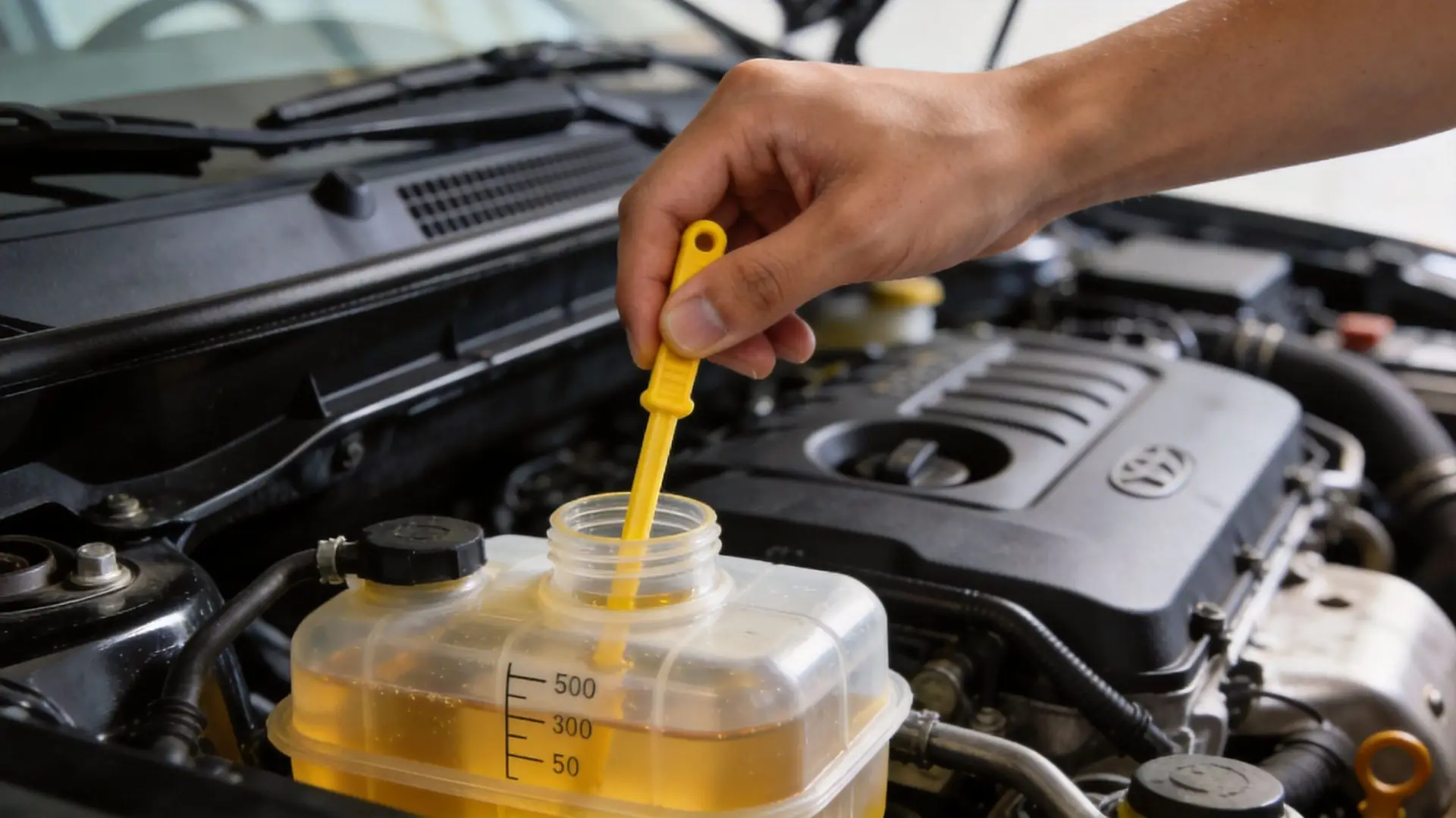
Checking the power steering fluid level is straightforward if you do it under the right conditions. The biggest mistake people make is reading the reservoir at the wrong temperature, then adding fluid based on a false low or false full.
Start with the car on level ground. Open the hood and find the power steering reservoir. On many vehicles it's labeled on the cap, and on others it uses a steering wheel symbol. Some reservoirs are translucent with MIN and MAX lines on the side. Others use a cap with a dipstick attached.
Read the level at the right temperature
This part is more significant than many realize. Fluid expands as it heats up, so the same reservoir can show different readings depending on whether the car is cold or recently driven.
For optimal accuracy, technicians follow a protocol: if a vehicle has not been driven for at least 8 hours, use the cold reading on the dipstick; otherwise, use the hot level reading, as fluid expands when heated during engine operation, according to NHTSA procedures.
That means you shouldn't just pop the cap after a quick trip and assume the mark tells the full story. Read the stick or reservoir against the correct HOT or COLD range.
What to do during the check
Use a clean rag before you touch anything. Dirt dropped into the reservoir can create its own problems.
A reliable routine looks like this:
- Wipe the cap and reservoir area first. You don't want grit falling into the fluid.
- Remove the cap or dipstick carefully. Check whether the markings show HOT, COLD, MIN, MAX, or ADD.
- Wipe the dipstick clean and reinsert it if needed. Then pull it back out for a true reading.
- Look at the fluid itself, not just the line. Condition matters as much as level.
Here's a quick visual refresher if you want to see the process on a vehicle:
Interpret what you find
Checking the fluid level becomes useful instead of routine at this point.
- Fluid is between the marks: Good. The level itself is acceptable, so if you still have steering issues, the cause may be elsewhere.
- Fluid is low but looks clean: A careful top-up may be reasonable, but you still need to watch whether it drops again.
- Fluid looks dark or dirty: That usually points to age, contamination, or wear in the system.
- Fluid has bubbles or foam: Air is getting into the fluid, often from low level, overfilling, or a leak on the suction side.
- Fluid seems to rise and fall oddly: Don't guess. Aeration can make the level look inconsistent.
A clean level check tells you more than “full” or “low.” It tells you whether the system is stable, contaminated, or likely pulling in air.
One more practical note. Some newer vehicles use electric power steering and don't have a fluid reservoir at all. If you can't find one, check your owner's manual before assuming something is missing.
Choosing and Adding the Right Fluid
If the level is low, don't pour in the first bottle on the shelf. Using the wrong fluid can create seal problems, noise, or poor steering feel. The cap and the owner's manual should always guide the final choice.
Before opening the reservoir, clean the area around it. If you like to keep the engine bay clean so leaks and seepage are easier to spot, these SwiftJet car care tips are useful for doing that safely.
Power steering fluid types at a glance
| Fluid Type | Common Use Cases | Key Consideration |
|---|---|---|
| Power steering fluid labeled for specific vehicle requirements | Many modern hydraulic systems | Match the vehicle requirement exactly before adding |
| Universal power steering fluid | Some vehicles that allow universal formulations | “Universal” doesn't mean safe for every system |
| ATF | Some older vehicles designed for it | Only use it if the manufacturer specifically calls for it |
| Synthetic OEM-style fluid | Vehicles that specify a synthetic formulation | Mixing with the wrong fluid can create performance problems |
What works and what doesn't
What works is simple. Match the specification, use a clean funnel, and add small amounts. Recheck after each small addition so you don't overfill.
What doesn't work is guessing based on color, bottle shape, or what another car in the driveway uses. Power steering systems can be picky about fluid chemistry, and “close enough” can become expensive.
A careful top-up usually goes like this:
- Use the correct fluid first: Confirm the exact requirement from the cap or manual.
- Add slowly: Pour a little at a time rather than filling to the top in one shot.
- Stop at the proper mark: Don't fill above the line. Overfilling can cause spillage and aeration when the fluid heats up.
- Recheck after cycling the steering if appropriate: If the level changes unexpectedly, there may be air in the system rather than a simple low condition.
If you're unsure which fluid belongs in the car, pause there. A wrong top-off causes more problems than a delayed one.
Common Causes of Low Fluid and When to Call Kwik Kar
You back out of the driveway, turn the wheel, and hear a groan that was not there last week. Then you check the reservoir and find the level low again. Power steering fluid usually does not drop without a reason, so the primary task is figuring out what the system is trying to tell you.
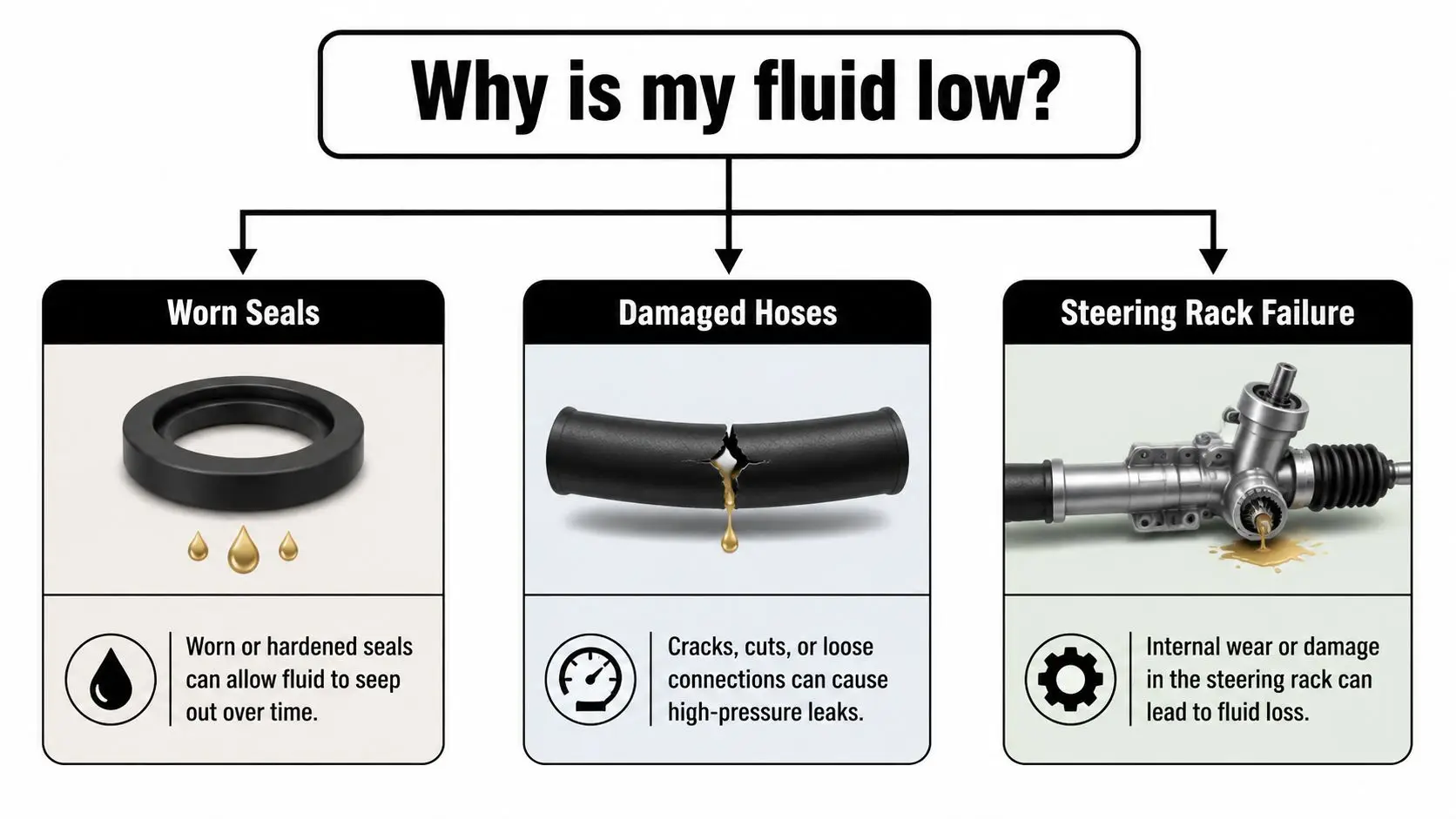
A low reading can come from something minor, like a slow seep at a hose connection, or from wear in the pump or steering rack. The difference matters. A careful top-up may buy you time if the fluid is clean and the drop was slight, but repeated loss means the system needs inspection before air, noise, and poor lubrication turn a small leak into a larger repair.
The usual causes
In the shop, these are the problems we see most often:
- Aging hoses: Rubber gets hard with heat and age, then starts to seep or crack.
- Worn seals: Pump seals and rack seals can leak slowly enough that the only clue is a reservoir that keeps falling.
- Loose fittings or clamps: A connection can leak without leaving a large puddle on the ground.
- Pump or rack wear: Internal wear can reduce pressure and create noise, stiffness, or fluid loss around the component body.
The pattern matters as much as the level. If the reservoir drops once and then holds steady, monitor it. If you top it off and it drops again, that is a problem to diagnose, not a fluid habit to live with.
What bubbles, foam, and color changes mean
Fluid condition gives you useful clues. Clear or lightly tinted fluid with no noise may point to a simple low condition. Dark fluid, a burnt smell, or visible contamination points to heat, age, or internal wear.
Foam and tiny bubbles deserve extra attention. Aerated fluid does not build pressure the same way solid fluid does, so the steering can feel jerky, noisy, or inconsistent. That air can get in because the level got too low, because a fitting or seal is pulling air into the system, or because the reservoir was overfilled and churned the fluid.
If the fluid still looks bubbly after the car has sat, stop adding fluid until you know why.
When a DIY top-up is enough and when it isn't
A small one-time drop, clean fluid, and normal steering behavior usually support a careful top-up and a recheck over the next several days. That is the reasonable DIY side of this job.
Professional service is the better call if:
- The level keeps falling: Repeated loss almost always means a leak or another system fault.
- The wheel feels heavy or makes noise: The pump may be starving for fluid or losing pressure.
- The fluid is dark, burnt-looking, or foamy: The issue is no longer just low level.
- You see wet spots near the pump, hoses, or steering rack: If you are trying to identify what is under the car, this guide to fluid leaking from your car can help you sort out what you are seeing.
For Fort Worth drivers, Kwik Kar Oil Change and Auto Care can inspect the reservoir, look for visible leaks, and check whether the car needs a simple top-off, fluid service, or leak diagnosis. That is the fundamental consideration. If the system is just a little low once, DIY may be fine. If the level keeps dropping or the fluid condition looks wrong, get it checked before the pump or rack pays the price.
Proactive Maintenance for Long-Term Reliability
Power steering problems usually don't arrive without warning. The car gets noisier, the wheel gets heavier, or the reservoir starts dropping. The drivers who avoid bigger repairs are the ones who check early and pay attention to what the fluid is telling them.
A smart routine is simple:
- Check the reservoir regularly: Consistency helps you catch changes before they become failures.
- Use the correct fluid only: Compatibility matters.
- Treat repeated low readings as a problem to diagnose: Don't make topping off your long-term plan.
- Keep up with broader service habits: A good preventive maintenance checklist template helps you track the small items that protect the expensive ones.
A healthy power steering system depends on more than fluid alone. But checking the power steering fluid level is one of the easiest ways to stay ahead of trouble.
If your steering feels heavier than usual, the reservoir keeps reading low, or the fluid looks contaminated, schedule a visit with Kwik Kar Oil Change and Auto Care. We can inspect the system, explain what the fluid is telling you, and help you decide whether the car needs a top-up, a flush, or leak repair.