




Most windshield wiper problems trace back to three things: worn blades, a blown fuse, or frozen linkage. Streaking or chattering usually means it’s time for new blades. If the wipers won’t move at all, a fuse swap solves the problem more often than you’d think. A burned-out motor or a deeper electrical fault, though, is a job for a shop.
Before you decide, run through this:
- Look at the blade edges for cracking, splitting, or a bent frame.
- Swap the wiper fuse for a spare of the same rating and retest.
- Clear any ice or debris jamming the arms, then try the switch again.
- If the arms still won’t budge, stop. Continued attempts can burn out the motor, and a certified shop with ASE-certified technicians and RepairPal fair-price estimates, like Kwik Kar Oil Change & Auto Care, can diagnose it properly.
Key Takeaways
Most wiper failures resolve with a blade swap or fuse check, while motor and linkage faults need a certified shop’s diagnostic process to fix correctly the first time.
| Point | Details |
|---|---|
| Start with the cheap fix | Check blades and swap the fuse before assuming a motor problem. |
| Never force ice-jammed wipers | Running the motor against ice or snow is a leading cause of burnout. |
| Know your cost range | Blade replacement runs $53 to $122 depending on parts and labor rates. |
| Stop at the cowl panel | Motor and linkage work carries real damage risk if attempted without proper tools. |
| Book a certified shop when stuck | Kwik Kar Oil Change & Auto Care offers ASE-certified diagnostics and RepairPal-aligned pricing for wiper repairs. |
Table of Contents
- How to Diagnose Common Windshield Wiper Problems
- DIY Fixes: Step-by-Step Instructions for 4 Common Repairs
- How Do You Choose the Right Replacement Wiper Blades?
- Wiper Motor and Linkage: Repair Versus Replacement
- What Do Windshield Wiper Repairs Typically Cost?
- When Should You Call a Professional for Wiper Repair?
- Why Choose a Certified Shop for Wiper Repair?
- A Shop’s Honest Take on DIY Wiper Repair
- How Kwik Kar Can Help With Your Wiper Repair
- Sources
- FAQ
How to Diagnose Common Windshield Wiper Problems
Diagnosing a wiper issue is mostly a process of elimination, and doing it in the right order saves you from replacing parts you didn’t need to touch. Work through these checks before you assume the worst:
- Inspect the blades visually for tears, warping, or a rubber edge that’s gone hard and glassy.
- Try moving the arms by hand with the car off. Stiff or frozen linkage points to ice, debris, or a seized pivot.
- Check the wiper fuse in the panel against your owner’s manual diagram.
- Turn the wipers on and listen. A humming motor with no blade movement suggests a linkage problem, not an electrical one.
- Inspect the connectors behind the cowl panel for corrosion or a loose plug.
The symptoms usually sort themselves into clear categories. Streaking or skipping almost always means blade wear, not a mechanical fault. No movement at all points to the fuse, the switch, the motor, or the linkage, roughly in that order of likelihood. Intermittent movement, where the wipers work sometimes and stall other times, usually means a loose connector, a failing relay, or worn motor brushes.
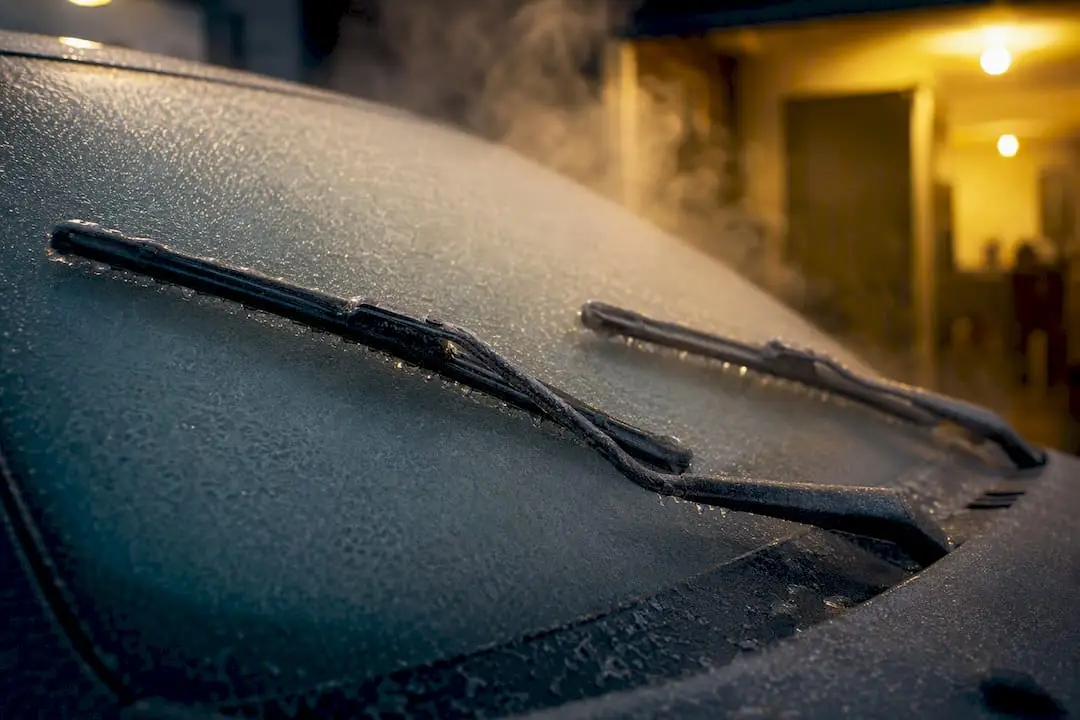
Never run wipers against a windshield covered in ice or packed snow — following a seasonal car maintenance checklist for every season helps prevent this kind of damage. Forcing the motor against that resistance is one of the most common ways owners burn it out, since the motor keeps drawing power against a jam it can’t overcome. If you need to access electrical connectors for a closer look, disconnect the battery first.
DIY Fixes: Step-by-Step Instructions for 4 Common Repairs
Four repairs sit comfortably within reach of most vehicle owners with basic tools: a flat screwdriver, needle-nose pliers, a couple of spare fuses, electrical contact cleaner, and a small socket set.
1. Replace the wiper blades (Easy, 10 minutes). Lift the arm away from the glass, press the small release tab where the blade meets the arm, and slide the old blade out. Snap the new one into place until it clicks.
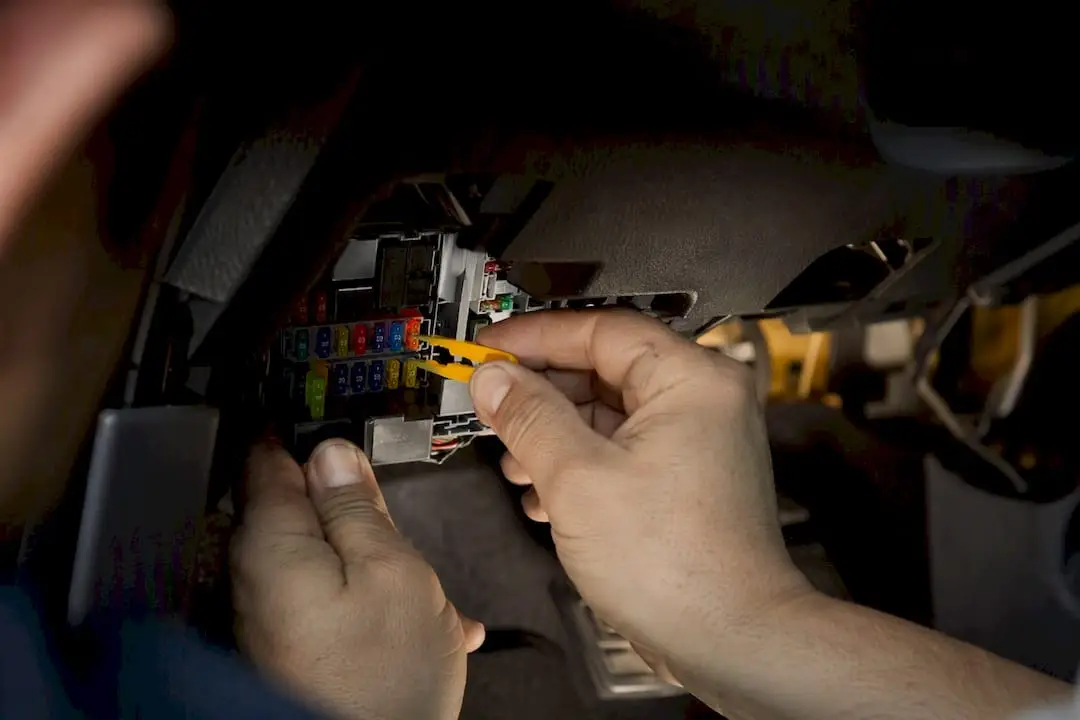
2. Check and swap the wiper fuse (Easy, 5 minutes). Pull the fuse box cover, match the wiper fuse to your manual’s diagram, and pull it with the plastic fuse puller. If the metal strip inside is broken, replace it with one of the same amperage.
3. Free frozen wiper arms (Easy to moderate, 15 minutes). Pour lukewarm water over the arms and windshield base to melt the ice, then gently work the arms by hand before testing the switch. Never chip at ice with a scraper near the pivot points.
4. Inspect and clean electrical connectors (Moderate, 20 minutes). With the battery disconnected, unplug the connector behind the cowl, spray it with electrical contact cleaner, and reseat it firmly.
Pro Tip: Before testing power at the motor connector, check your manual for the correct pin. Touching the wrong terminal can trip a body control module fault on newer vehicles, turning a simple fix into an expensive one.
How Do You Choose the Right Replacement Wiper Blades?
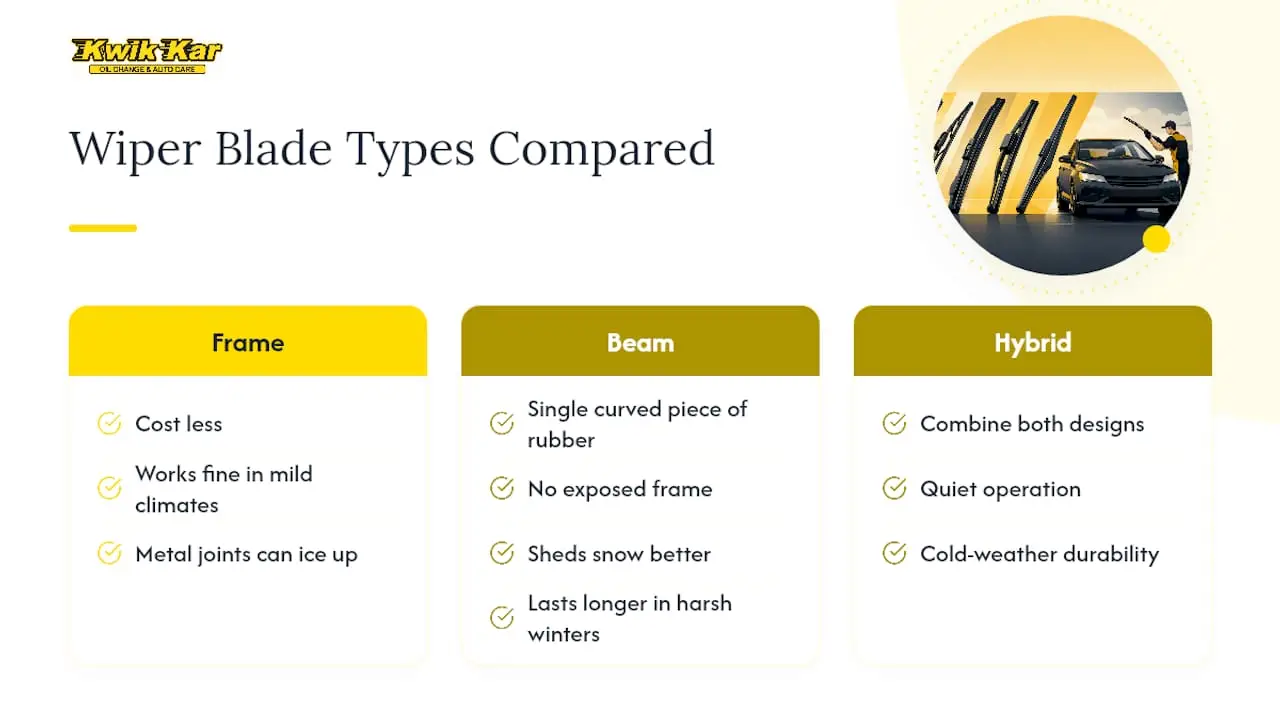
Conventional frame blades cost less and work fine in mild climates, but their metal joints can ice up. Beam blades use a single curved piece of rubber with no exposed frame, which sheds snow better and lasts longer in harsh winters. Hybrid blades combine both designs for drivers who want quiet operation and cold-weather durability.
Confirm the correct size using your owner’s manual, an online fit lookup by year, make, and model, or an in-store fit guide. Getting this wrong is the most common blade-buying mistake, and it’s easily avoided.
When installing, raise the arm gently and support it. Don’t let it snap back against bare glass. Make sure the adapter clip seats fully, then test the sweep dry, without washer fluid, to confirm it tracks smoothly before driving.
Wiper Motor and Linkage: Repair Versus Replacement
Deciding between a repair and a full swap comes down to what’s actually failing.
- Linkage issues (a loose pivot, a worn bushing, a bent arm) are often repairable with individual parts.
- Motor issues (intermittent operation, grinding noises, slowed movement, or failure to return to the park position) usually point to internal wear that signals a failing wiper motor and typically means the whole motor needs replacing rather than repairing.
A shop tackling this will generally:
- Run electrical tests on the circuit before touching any hardware.
- Bench-test the motor to confirm it’s the actual point of failure.
- Replace worn linkage joints rather than the entire assembly when possible.
- Verify the wipers return correctly to the park position after reassembly.
DIY attempts on motor or linkage systems carry real risk. Forcing a jammed motor, over-tightening a linkage arm, or misjudging the park position can crack the windshield trim or damage the body control module tied to the wiper circuit on newer vehicles. If the fix requires removing the cowl panel or accessing the motor mount, that’s usually the line where DIY should stop.
What Do Windshield Wiper Repairs Typically Cost?
Blade replacement is the cheapest fix by far. RepairPal estimates $99 to $122 total for a shop-installed pair, split between $34 to $50 in labor and $65 to $72 in parts. Kelley Blue Book puts the number lower, at $53 to $64, a gap that mostly comes down to blade brand and regional labor rates.
- Blade swap: 10 to 20 minutes DIY; same-day if a shop does it during another visit.
- Fuse, relay, or switch repair: 15 to 45 minutes, often diagnosed and fixed in one shop visit.
- Motor or linkage repair: 1 to 3 hours of shop labor, since it usually requires removing cowl panels.
Costs climb with vehicle make and model, whether the shop uses OEM or aftermarket parts, and whether the technician finds a related issue, like corroded wiring, once the cowl comes off.
When Should You Call a Professional for Wiper Repair?
Call a shop when the wipers still don’t move after a fuse and switch check, when you smell burning near the cowl, when the same fuse keeps blowing, or when the symptoms point to something electrical beyond a simple swap.
- Ask what diagnostic steps they’ll run before quoting a repair.
- Ask whether they use OEM or aftermarket parts and what warranty backs the work.
- Confirm the technician holds ASE certification for electrical systems.
Expect a diagnostic fee, generally resolved within an hour for straightforward electrical checks, and a longer visit if motor or linkage work is involved. A shop worth trusting will walk you through findings before starting repairs, not after.
Why Choose a Certified Shop for Wiper Repair?
A shop backed by ASE certification and RepairPal fair-price standards inspects the whole circuit, not just the part you asked about, which catches the connector corrosion or relay wear that causes repeat failures.
A quality inspection checks the fuse, relay, switch, motor, and linkage together, because a failure in one often masks a weakness in another. Fixing only the symptom you noticed is how the same wiper problem comes back three months later.
- ASE-certified technicians trained on modern electrical systems.
- Transparent, RepairPal-aligned pricing before work begins.
- Quality parts backed by warranty coverage.
A Shop’s Honest Take on DIY Wiper Repair
Blades, fuses, and freeing frozen arms are genuinely safe DIY territory, and we’d rather you save the money. Where it gets risky is anything past the switch: motor and linkage faults hide behind symptoms that look identical from the driver’s seat. A proper diagnostic tool sorts that out in minutes and stops you from replacing a $60 part when a $15 fuse was the actual problem.
How Kwik Kar Can Help With Your Wiper Repair
If your wipers have moved past a fuse swap and into “something’s actually wrong” territory, that’s exactly where a certified shop earns its keep. Kwik Kar Oil Change & Auto Care handles everything from straightforward wiper blade replacement to full electrical diagnostics and motor or linkage repair, using ASE-certified technicians and RepairPal-aligned pricing so you know the cost before any wrench touches your car.

Every repair comes with a clear estimate and parts backed by warranty, so you’re not gambling on whether the fix holds through the next storm. If a bigger repair comes up during inspection, Kwik Kar Oil Change & Auto Care also offers financing options for larger repairs so cost doesn’t force a rushed decision. Bring your car in for a fair-price estimate and let a certified technician sort the fuse from the motor before you spend a dime on parts you don’t need.
Sources
- Why Won’t My Windshield Wipers Work? | The Family Handyman
- Windshield Wiper Blade Replacement Costs | Kelley Blue Book
- Signs your wiper motor is failing: symptoms & fixes
Check your vehicle’s service manual for model-specific torque specs and connector locations before starting any repair.
FAQ
Can AutoZone fix my windshield wipers?
AutoZone stores typically install wiper blades for free with purchase, but they don’t perform motor, linkage, or electrical repairs. For anything beyond a blade swap, you’ll need a repair shop.
How do you fix windshield wipers that stopped working?
Check the fuse first, since electrical faults cause most no-movement failures, then inspect the switch and connectors. If the arms still won’t move, the motor or linkage likely needs professional attention.
Can you fix a windshield wiper yourself?
Yes, for blade replacement, fuse swaps, and freeing frozen arms, all of which take 5 to 20 minutes with basic tools. Motor and linkage repairs carry more risk and are better left to a certified shop like Kwik Kar Oil Change & Auto Care.
How much does it cost to get wiper blades fixed?
Wiper blade replacement typically costs $53 to $122 depending on whether you choose economy or premium blades and where you have them installed. DIY replacement costs only the price of the blades themselves.