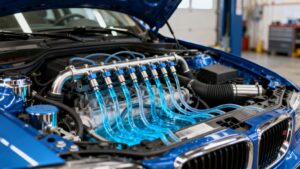
So, how often should you really be changing your spark plugs? The honest answer is it depends, but a good rule of thumb is somewhere between 30,000 and 100,000 miles. That’s a huge range, I know. The reason for the massive gap comes down to one thing: the type of metal your spark plugs are made from.
Your Quick Guide to Spark Plug Replacement
Think of a spark plug as the tiny, powerful heart of your engine's ignition. Its one job is to create a bolt of lightning—a spark—that ignites the fuel and air mixture, pushing the pistons and making your car go. It does this thousands of times every single minute you're on the road.
Over time, all that hard work takes a toll. The little electrode tip that creates the spark slowly wears away, kind of like the lead on a pencil after writing for a while. As it erodes, the gap the electricity needs to jump gets wider. A wider gap means a weaker spark, and a weak spark is bad news for your engine's performance.
A weak spark is like trying to start a campfire with a damp match. You might get a flame eventually, but it’s going to sputter, struggle, and waste a lot of effort. In the same way, worn plugs make your whole ignition system work overtime, which tanks your fuel economy and puts unnecessary strain on your engine.
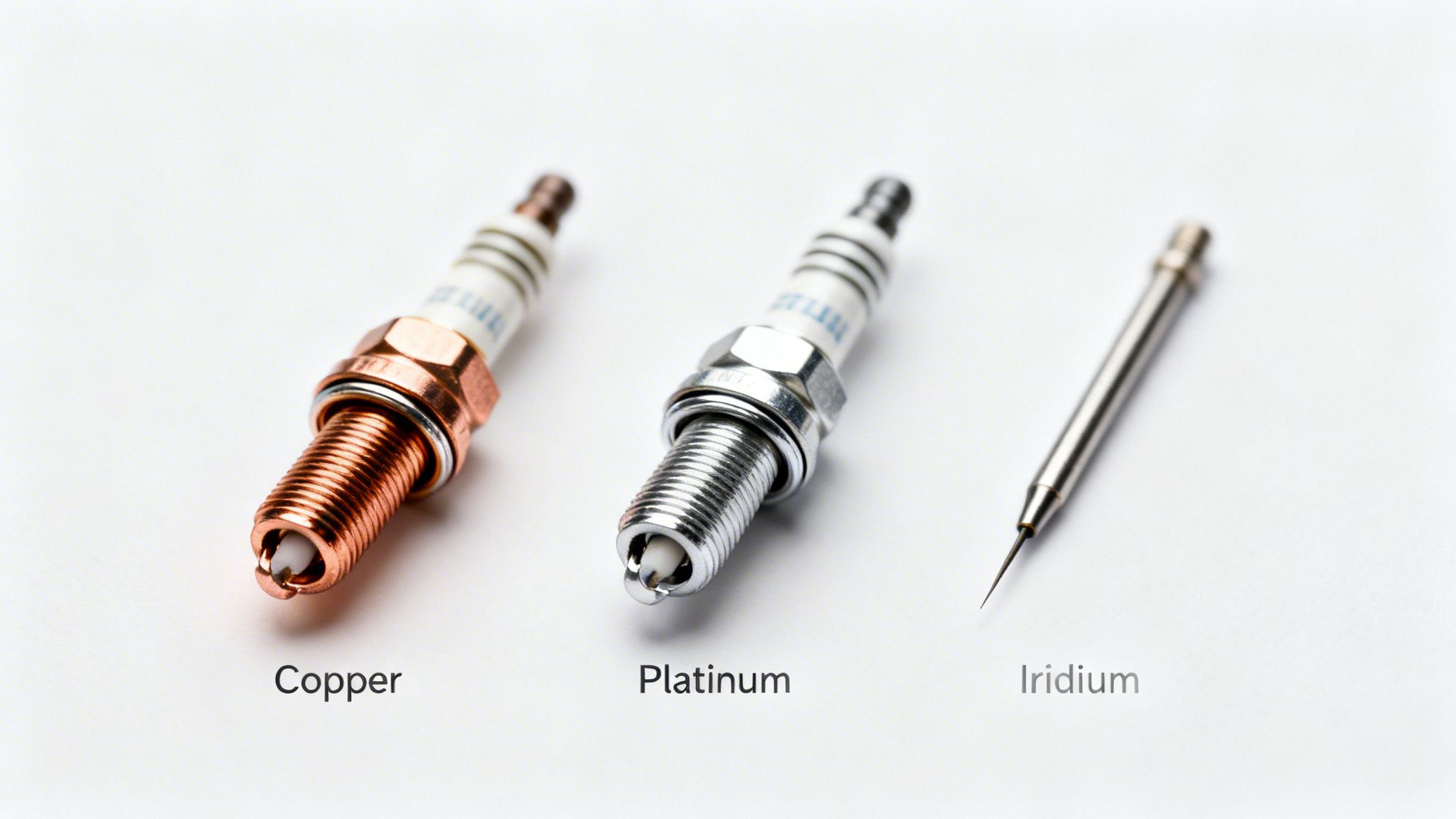
Knowing what your spark plugs are made of—copper, platinum, or iridium—is the first step to figuring out a realistic replacement schedule. Each material handles the intense heat and electrical pressure inside the engine differently.
Spark Plug Replacement Intervals at a Glance
To make it simple, here’s a quick reference guide that breaks down the average lifespan for the three most common types of spark plugs. Think of this as a starting point for your maintenance plan.
| Spark Plug Type | Average Lifespan (Miles) | Best For |
|---|---|---|
| Copper | 20,000 – 40,000 | Older vehicles and high-performance engines |
| Platinum | 60,000 – 80,000 | Modern commuter cars needing reliable ignition |
| Iridium | 80,000 – 120,000 | Vehicles requiring maximum longevity and power |
While these mileage numbers are a solid baseline, they assume ideal driving conditions. The reality is, your driving habits and your car's specific engine can change the timeline. The rest of this guide will walk you through the clear warning signs your car gives you when it's time for new plugs, no matter what the odometer says.
Understanding Different Spark Plug Types
Not all spark plugs are created equal, and knowing the difference is the first step in understanding your car’s maintenance schedule. I like to think of them like running shoes: some are built for a quick sprint (copper), while others are designed to go the distance in a marathon (iridium). The material right at the tip of the central electrode is what really dictates performance, lifespan, and, of course, cost.
Picking the right type isn’t about just grabbing the most expensive one off the shelf. It’s about matching the plug to your engine’s specific design and your driving habits. Sticking the wrong plug in there can lead to all sorts of headaches, like poor performance, lousy fuel efficiency, and even engine damage down the road.
The Workhorse: Copper Plugs
Copper spark plugs have a solid copper core, but the business end—that little center electrode—is actually made of a nickel alloy. Copper is a fantastic conductor, which means it can deliver a really strong, hot spark with less voltage. This is why it’s long been a favorite for older vehicles and high-performance or turbocharged engines that need every ounce of power they can get.
The catch? That nickel alloy is a relatively soft metal, and it wears down pretty quickly in the harsh environment of an engine cylinder. This erosion is why copper plugs have the shortest lifespan, usually needing a swap every 20,000 to 40,000 miles. They’re the most affordable option upfront, but you’ll be changing them more often.
The Reliable All-Rounder: Platinum Plugs
To solve the short lifespan of copper plugs, engineers started adding a tiny disc of platinum to the tip of the electrode. Platinum is a much harder, more durable metal that resists erosion way better than nickel alloy ever could.
This simple upgrade makes a huge difference, pushing the replacement interval all the way out to 60,000 miles or more. You'll see "single platinum" plugs, which have the platinum disc on just the center electrode, and "double platinum" plugs, which have it on both the center and side electrodes. The double platinum version is ideal for many modern "waste spark" ignition systems. For most daily drivers, these plugs hit a great sweet spot between longevity and performance.
The material at the core of the plug dictates the entire replacement timeline. The jump from basic copper to a premium material like iridium can be the difference between changing your plugs every two years versus once a decade. That fundamentally changes your car’s long-term maintenance costs.
The Long-Distance Runner: Iridium Plugs
Now we get to the top-tier stuff. Iridium is one of the hardest and densest precious metals on Earth, making it incredibly resistant to heat and wear. Iridium spark plugs feature an extremely fine-wire center electrode, which means they need even less voltage to create a focused, efficient, and consistent spark.
Because iridium erodes so slowly, these plugs boast the longest lifespan by far, often lasting between 80,000 and 120,000 miles. Sure, they have a higher upfront cost, but for modern vehicles designed for maximum efficiency and reliability, they are often what the manufacturer requires. As more car owners look to maximize performance and stretch out their service intervals, these advanced plugs are becoming more and more common. You can read more about the global automotive spark plug market trends to see how things are shifting.
7 Telltale Signs Your Spark Plugs Are Failing
Your car has its own way of telling you when something’s not right, and failing spark plugs have some pretty distinct symptoms. Think of a healthy spark plug as the drummer in your engine's band, keeping a crisp, steady beat. When that rhythm starts to fall apart, you'll feel it in how your car performs.
Learning to spot these signs is the first step toward replacing spark plugs before a small annoyance turns into a major headache. These issues usually start small but get worse over time, so paying attention to your daily drive is key.
1. Rough Idling
Does your car feel shaky or vibrate more than it should when you're stopped at a light? That’s a classic sign of a worn-out spark plug. A healthy engine should idle smoothly, but a weak spark disrupts the combustion cycle, making the engine feel like it's sputtering.
2. Trouble Starting Your Car
If your car suddenly takes a few extra cranks to start or won't turn over on the first try, your spark plugs could be the culprits. They deliver that initial spark needed to get things moving. When they're worn or covered in grime, they just can't generate enough juice to ignite the fuel mixture quickly.
3. Poor Acceleration and Engine Hesitation
When you hit the gas, you expect an immediate, smooth response. If your car hesitates, stumbles, or just feels sluggish when you try to accelerate, failing spark plugs are a very likely cause. This power lag happens because the engine isn't firing correctly on all cylinders, robbing it of the force needed to get going.
4. Engine Misfiring
An engine misfire feels like a sudden jerk or stutter while you’re driving, sometimes with a popping sound from the exhaust. It’s what happens when a cylinder fails to ignite its fuel-air mixture at precisely the right moment. This is one of the most direct signs that a spark plug has gone bad.
5. Decreased Fuel Economy
Finding yourself at the gas station more often, even though your driving habits haven't changed? Worn spark plugs lead to an incomplete fuel burn. This forces your engine to work harder—and use more gas—to produce the same amount of power, causing a noticeable drop in your MPG.
A drop of even a few miles per gallon can add up quickly over a year. Think of it as a hidden tax on your daily commute, all because a tiny component isn't doing its job efficiently. Ignoring it means you're literally burning money.
6. "Check Engine" Light Comes On
The dreaded check engine light can signal a whole host of problems, but a misfiring cylinder from a bad spark plug is a very common trigger. If that light pops up on your dashboard, it’s your car’s way of screaming for a professional diagnosis. You can learn more about the common reasons for a check engine light to better understand what might be going on under the hood.
7. Strange Engine Noises
Listen to your engine. Are you hearing unusual sounds like rattling, pinging, or knocking, especially when you accelerate? While other issues can cause these noises, they often go hand-in-hand with the performance problems caused by failing spark plugs.
How Your Driving Habits Affect Spark Plug Life
The mileage recommendation you find in your owner's manual is a fantastic starting point, but let's be honest—it's based on "normal" driving conditions. The thing is, very few of us actually drive in a perfectly normal world. Real-world conditions, especially the tough ones, can seriously shorten the lifespan of even the best spark plugs out there.
Think of a 100,000-mile iridium spark plug like a marathon runner. They're built for incredible endurance, but they perform best on a clear, flat course. If you suddenly make that runner constantly sprint, stop, and carry a heavy backpack, there's no way they're lasting the full 26.2 miles. It’s the exact same story for your spark plugs when they're faced with demanding driving habits.
What Are Severe Driving Conditions?
"Severe" doesn't have to mean you're off-roading or taking your car to the racetrack. For your engine, it often just describes the common daily grind. These conditions force your ignition system to work much harder, leading to faster wear and tear on your spark plugs.
Conditions that can cut your spark plug life short include:
- Constant Stop-and-Go Traffic: City driving, with all its frequent acceleration and braking, is way harder on an engine than smooth, steady highway cruising.
- Frequent Short Trips: If most of your drives are just a few miles, your engine probably isn't reaching its optimal operating temperature. This can lead to carbon buildup on the plug electrodes, which messes with their ability to create a clean spark.
- Towing or Hauling Heavy Loads: Making your engine work overtime to pull a trailer or carry heavy gear puts a huge amount of stress on the entire ignition system.
- Driving in Extreme Temperatures: Both intense heat and freezing cold can mess with engine performance and put extra strain on components like your spark plugs.
Understanding how these factors play a role is a key part of our guide to car maintenance by mileage, as it helps you stay ahead of potential problems. For most modern cars, especially from trusted brands, spark plugs might last around 80,000 miles under ideal circumstances. But if you throw in severe conditions like constant traffic or towing, that lifespan can drop dramatically. Things like frequent short trips, poor fuel quality, or heavy loads often mean you'll need a swap much sooner, sometimes cutting the replacement interval in half.
Think about it this way: a spark plug in a car that spends most of its time on the highway could easily hit its 100,000-mile rating. But that exact same plug in a city delivery vehicle might start showing signs of failure at just 70,000 miles because of the constant stress from all the stop-start cycles.
Ultimately, knowing when to replace your spark plugs means looking beyond the number on the box. You have to think about how you actually use your vehicle. If your daily drive involves any of these tough conditions, it's a smart move to have your plugs inspected more often and plan for an earlier replacement. It's the best way to maintain peak engine health and avoid getting stranded by an unexpected breakdown.
A Visual Guide to Inspecting Your Spark Plugs
For those of us who like to get our hands dirty, popping the hood and pulling a spark plug can tell you a fascinating story about what’s going on inside your engine. The condition of that little electrode tip is a direct window into the combustion chamber. Knowing what you're looking at can help you decide if it’s time for a replacement and even catch other potential engine issues before they get serious.
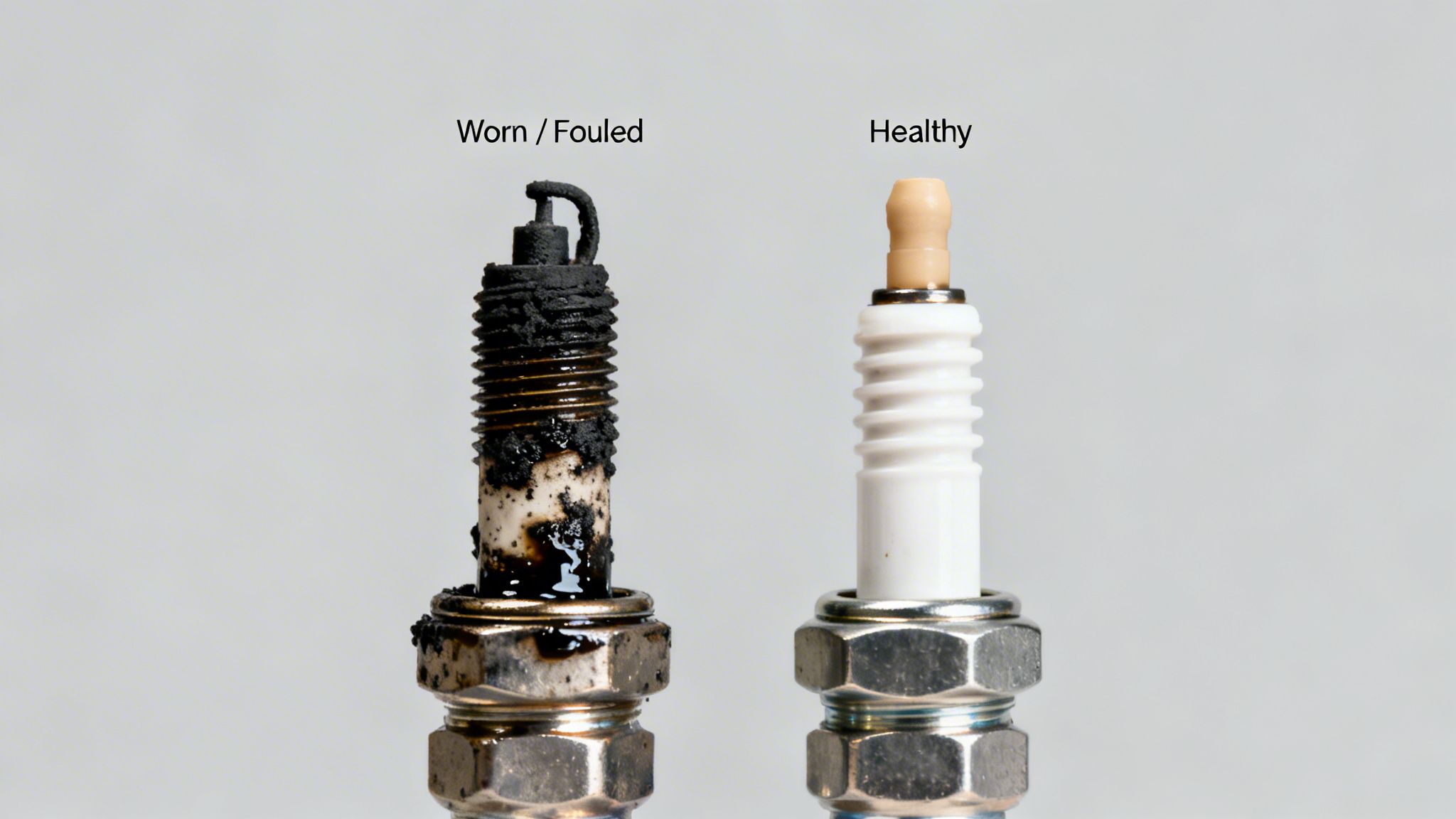
A healthy, happy spark plug should have a light tan or grayish-brown deposit on its insulator tip with very little wear on the electrode. That color is the gold standard—it tells you the engine is running efficiently with the right air-fuel mixture and at the correct temperature. It’s what you hope to see every time.
Of course, anything that looks different is a clue. Each visual sign points to a specific condition inside your engine, and learning to interpret them is a skill mechanics build over years. But understanding the basics can help you know what your technician is looking for.
What to Look For on a Worn Spark Plug
When you pull a plug, you’re basically a detective. The gunk, the color, and the wear on the tip are all pieces of evidence that point to different problems.
Here are some of the most common signs that something is off:
- Black, Sooty Deposits: A dry, black, soot-covered electrode is a classic sign of a rich fuel mixture. This usually means the engine is getting too much gas and not enough air, which could be from a clogged air filter or even just too much idling.
- Oily Residue: If the plug is coated in a black, greasy oil, that's a red flag. It’s a strong signal that oil is leaking into the combustion chamber, likely from worn piston rings or valve seals.
- White, Blistered Insulator: A chalky white or blistered look means your engine is running way too hot. This kind of overheating can be caused by using the wrong type of spark plug (an incorrect heat range), a lean fuel mixture, or problems with your car's cooling system.
The image below gives a great overview of how different driving habits can really speed up spark plug wear.
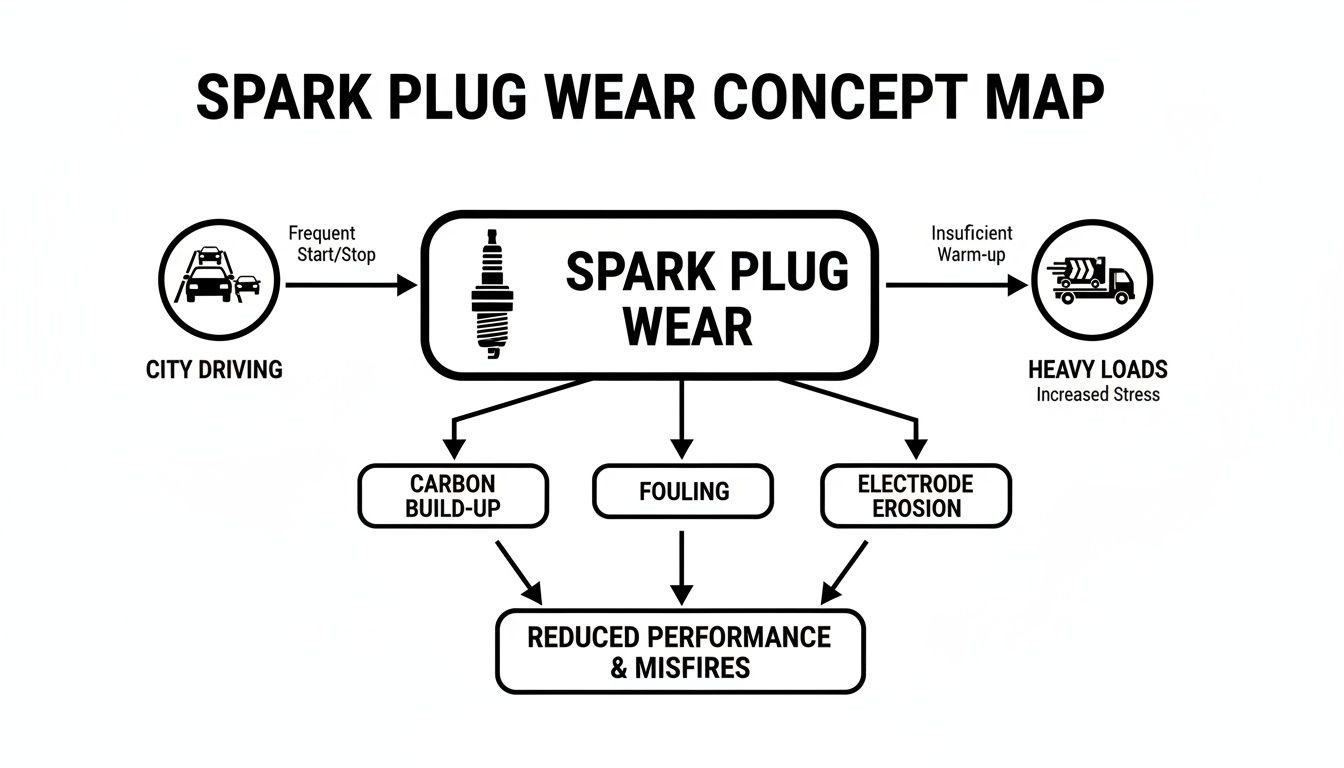
As you can see, things like frequent short trips, hauling heavy loads, and sitting in stop-and-go traffic all take a toll, causing your plugs to degrade and leading to performance problems a lot sooner than you might expect.
While checking your own plugs is a great diagnostic skill to have, it's important to remember that these signs can be subtle. A professional technician can interpret wear patterns with precision, making sure you’re not just swapping out plugs but also fixing any underlying issues before they turn into major headaches.
When to Trust a Professional for Spark Plug Replacement
Knowing when to roll up your sleeves and when to hand the keys to a pro is one of the smartest things you can learn as a car owner. While some jobs are perfect for a Saturday afternoon in the driveway, spark plug replacement has gotten surprisingly tricky on modern cars. What used to be a simple task can now mean digging deep into a crowded engine bay, removing other parts just to get access, and needing some very specific tools.
Deciding to call a mechanic often comes down to weighing the risks. A simple mistake, like over-tightening a spark plug, can crack the porcelain insulator or, even worse, strip the threads in the cylinder head. That’s a mistake that can easily turn a small job into a repair costing thousands of dollars. Using the wrong type of plug or failing to gap it correctly can also cause all sorts of performance headaches and potentially damage your engine.
Key Reasons to Visit a Mechanic
Bringing your car to a certified technician isn't just about saving time; it's about making sure the job is done right the first time. A professional has the experience to sidestep common mistakes and ensure everything is put back together exactly as it should be.
It's probably time to head to the shop if you find yourself in any of these situations:
- The Check Engine Light Is On: That little light is your car’s way of saying something is wrong, and it needs a proper diagnosis. A technician can pull the error codes to see if bad spark plugs are the real problem or just a symptom of something bigger.
- Specialized Tools Are Required: A lot of newer engines require specific tools like a calibrated torque wrench, swivel sockets, and long extensions just to reach the plugs. Without them, you risk damaging the plugs or the engine.
- You Want Guaranteed Results: A professional repair comes with peace of mind. The work is backed by the shop's expertise, so you know the correct, high-quality plugs are installed exactly to the manufacturer's specifications.
Trusting a professional at a shop like Kwik Kar ensures your vehicle gets the correct parts installed with precision. This not only restores performance and fuel efficiency but also prevents costly mistakes that can sideline your car for days.
Ultimately, professional service is about protecting your vehicle's long-term health and keeping it reliable. It’s a critical piece of a good maintenance plan, just like everything else included in a full tune-up. To see what else is involved, you can learn more about what a car tune-up includes in our detailed guide.
Answering Your Spark Plug Questions
Even after diving into the details, you probably have a few practical questions. Let's tackle some of the most common things we hear from drivers about spark plug service.
How Much Will Spark Plug Replacement Cost Me?
The price tag can swing quite a bit, usually landing somewhere between $150 and $500. What causes the big range? It really boils down to your vehicle. The type of plugs it needs is a big factor—premium iridium plugs cost more upfront than standard copper ones.
Your car's engine design also plays a huge role. On some engines, the plugs are right on top and easy to get to, which keeps labor time short. On others, a mechanic might have to remove the whole intake manifold just to reach them, adding a few hours to the job.
Can I Just Replace My Own Spark Plugs?
If you’ve got the right tools and a good bit of mechanical experience, it's doable. But for most modern cars, I’d pump the brakes on making this a weekend DIY project. It’s surprisingly easy to make a costly mistake.
For instance, over-tightening a spark plug can strip the threads in the engine's cylinder head, a repair that can run into the thousands. Using the wrong type of plug or setting an incorrect gap can also lead to misfires and long-term engine damage. If you’re not 100% confident, letting a pro handle it is the smart, safe bet.
Expert Tip: A torque wrench isn't optional—it's essential. Every new spark plug needs to be tightened to the exact spec from the manufacturer. This single step prevents damage to both the plug and your engine head and is something no professional technician would ever skip.
Do I Really Need to Replace All the Spark Plugs at Once?
Yes, without a doubt. Think of it like changing the tires on your car; you wouldn't just replace one. Spark plugs all wear down at roughly the same rate.
If you only swap out one or two, you’ll create an imbalance where some cylinders fire strong and others fire weak. This leads to a rough idle, hesitant acceleration, and puts extra strain on your whole ignition system. For a smooth, healthy engine, always replace them as a full set.
What Happens If I Wait Too Long to Replace My Plugs?
Putting off this job is just asking for trouble, and it almost always costs more in the long run. At first, you'll just notice the annoying stuff: your gas mileage will tank, the car will feel sluggish when you try to accelerate, and it might shudder at stoplights.
But if you keep ignoring it, those worn-out plugs can cause real damage. They can overheat and ruin expensive ignition coils or even send unburned fuel into your exhaust, which can destroy your catalytic converter. A simple maintenance task can quickly snowball into a multi-thousand-dollar repair bill.
If your car is showing any of these signs or is just due for a check-up, don't let a small issue turn into a major headache. The certified technicians at Kwik Kar Oil Change and Auto Care have the right tools and expertise to inspect your plugs and get the job done right. We'll make sure your engine is running at its best. Schedule your appointment today at https://www.kwikkarwhitesettlement.com for professional auto care you can trust in Fort Worth.