A synthetic oil change service is a lot more than just a routine fluid swap. It’s a premium maintenance step where we replace your engine's old, tired oil with a high-performance, man-made lubricant.
Unlike conventional oil, which is basically just refined crude oil from the ground, synthetic oil is engineered in a lab. Scientists break it down and rebuild it molecule by molecule for superior performance, better engine protection, and a longer life between services. This makes it the go-to choice for modern engines and tough driving conditions.
Why Your Car Needs a Synthetic Oil Change Service
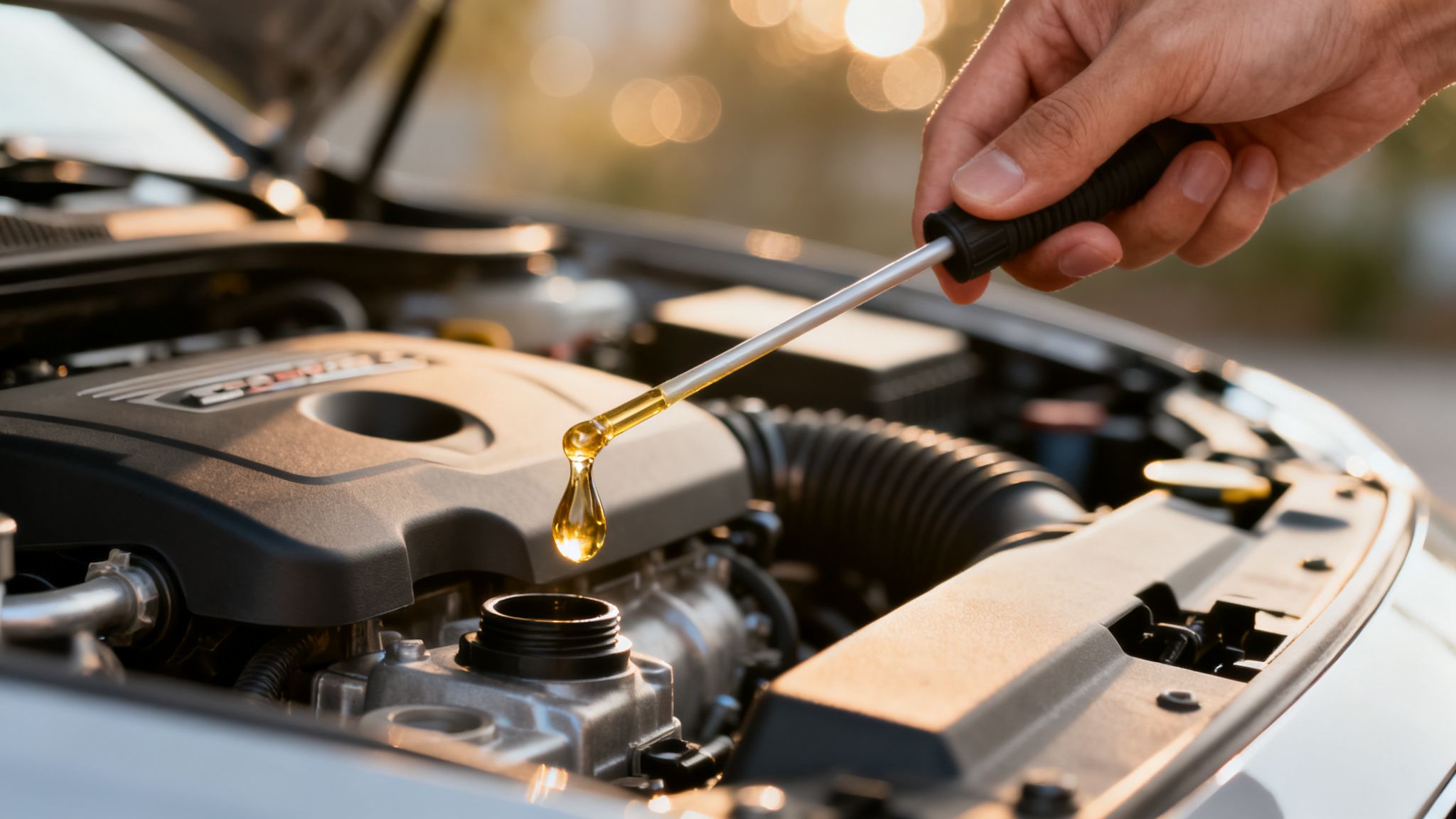
Think of your engine as a team of world-class athletes, and its oil is the water keeping them hydrated and performing at their peak. Conventional oil is like plain old tap water—it gets the job done, sure. A synthetic oil change, on the other hand, is like giving your engine a perfectly balanced electrolyte drink designed for endurance athletes. It’s just built for a higher purpose.
The word 'synthetic' really just means the oil’s molecular structure is incredibly uniform and precisely controlled. Imagine a jar filled with jagged, uneven rocks (that’s conventional oil) versus a jar filled with perfectly smooth, identical marbles (that’s synthetic). The marbles glide past each other with almost zero friction, which is exactly what happens inside your engine.
This engineered consistency translates directly into some powerful, real-world benefits for your car.
The Core Advantages for Drivers
When you opt for a synthetic oil change, you're not just checking a box on your maintenance list; you're making a strategic investment in your vehicle's health and longevity. The advantages become clear pretty quickly:
- Superior Engine Protection: Synthetic oil is a champion at resisting breakdown under high heat and flows smoothly even in frigid weather. This drastically reduces engine wear, especially during those critical first few moments after startup.
- Longer Service Intervals: Because it degrades so much slower than conventional oil, you can go a lot longer between oil changes—often 7,500 to 15,000 miles. That means fewer trips to the shop and more time back in your day.
- Enhanced Engine Cleanliness: Synthetics are packed with powerful detergents that actively clean out the sludge and deposits that older, lesser oils can leave behind. A cleaner engine is a more efficient engine.
- Improved Performance: By cutting down on friction, synthetic oil allows your engine to operate with less effort. Over time, this can lead to better horsepower and even a slight bump in your fuel economy.
For anyone new to taking care of a car, getting a handle on these basic maintenance needs is a huge first step. You can learn more about fundamental upkeep in our guide to car maintenance for beginners.
The Science Behind Superior Engine Protection
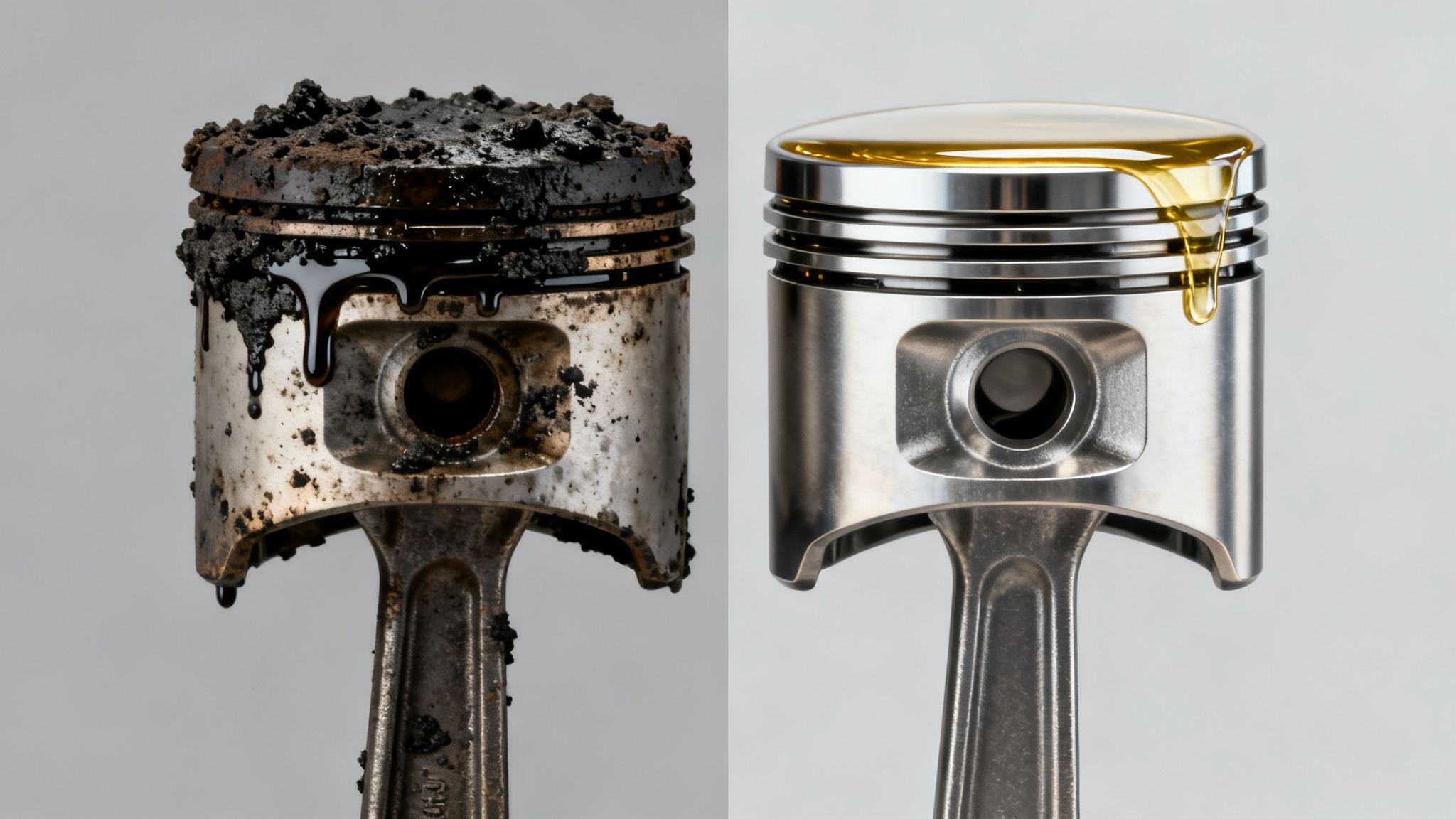
To really get why a synthetic oil change service is such a game-changer, we have to look at what's happening at a microscopic level. Think of conventional oil, which is refined from crude oil. Its molecules are all different shapes and sizes—kind of like a bag of jagged, mismatched rocks. When those molecules grind against each other, they create friction and wear inside your engine.
Synthetic oil, on the other hand, is built from the ground up in a lab. Scientists engineer the molecules to be incredibly pure and uniform, almost perfectly identical. This molecular consistency is the secret sauce. Imagine trying to drive on a rough cobblestone road versus a brand-new, perfectly smooth racetrack. That’s the difference your engine's moving parts feel. They glide effortlessly with synthetic oil, which drastically cuts down on internal friction.
This fundamental difference is what gives synthetic oil its edge in three critical areas.
Unmatched Thermal Stability
Heat is one of the biggest enemies of engine oil. When things get hot, conventional oil starts to break down. Its molecules can't take the stress, causing the oil to lose its thickness (viscosity) and burn off. What’s left behind is that nasty sludge and carbon buildup that chokes your engine's performance.
Synthetic oil is engineered to handle extreme heat. Its molecular bonds are way stronger and more resilient, so they resist breaking down far better than conventional oil. This means your engine stays protected, even during a scorching Fort Worth summer or a long haul on the highway.
Because of its superior thermal stability and purity, synthetic oil significantly reduces the formation of sludge and engine deposits, keeping critical engine components cleaner and functioning more efficiently for longer.
Superior Performance in Cold Weather
Cold starts are incredibly tough on an engine. When your car sits overnight, the oil settles down into the pan. On a chilly morning, conventional oil thickens up like cold molasses, and it struggles to get moving when you turn the key. Those first few seconds without proper lubrication are a major cause of long-term engine wear.
By contrast, synthetic oil is designed to stay fluid even when the temperature drops. It starts flowing almost instantly, lubricating vital engine parts within seconds and providing immediate protection right when your engine needs it most.
Enhanced Purity and Cleanliness
Since synthetic oil is built molecule by molecule, it starts out much cleaner than conventional oil. It doesn't have all the impurities found in crude oil—like sulfur, wax, and other gunk that eventually turns into engine sludge. This shift toward high-purity oils is really changing the game in auto care.
The premium engine oil market, led by synthetics, was valued at over $42.5 billion in 2025 and is expected to hit $44.8 billion in 2026, all because modern engines demand better protection. You can learn more about how these advanced lubricants are setting new standards for vehicle maintenance in this market analysis.
Alright, let's move beyond the lab coat explanations and talk about what synthetic oil actually does for your car on the road. Knowing the science is one thing, but seeing the real-world results is what really matters. Opting for a synthetic oil change service isn't just checking a box on your maintenance list—it's a genuine upgrade for your vehicle.
These benefits aren't just theoretical. They translate into a healthier engine, fewer trips to the shop, and a little more peace of mind every time you turn the key. From protecting your engine's most important parts to saving you money over the long haul, the value is pretty clear. Let's break down what you can expect when you make the switch.
Extend Your Engine's Lifespan
The biggest win here is easily the long-term health of your engine. Synthetic oil creates a powerful, slippery barrier that drastically cuts down on the metal-on-metal friction that grinds away at pistons, bearings, and other critical parts. This isn't just a minor improvement; it’s the best defense you have against what makes an engine old.
Over thousands of miles, that superior protection means less wear and tear, a much cleaner engine on the inside, and a lower chance of getting hit with a massive repair bill. You're basically giving your engine an anti-aging treatment with every oil change.
Enjoy Longer Service Intervals
Let's be honest, nobody enjoys spending their Saturday at the auto shop. Synthetic oil's tough, engineered structure means it holds up way longer than old-school conventional oil.
While you might be used to changing conventional oil every 3,000 to 5,000 miles, a good synthetic can easily stretch that to 7,500, 10,000, or even 15,000 miles, all depending on your car and how you drive.
Fewer oil changes per year is a simple win-win. It saves you time, it saves you money, and it makes your whole maintenance schedule a lot less of a hassle.
Improve Your Fuel Economy
While synthetic oil won't magically solve high gas prices, it definitely helps. Its smooth, uniform molecules create less internal drag, letting your engine spin more freely. That means more of the fuel you burn is turned into power, not wasted fighting against its own friction.
This boost in efficiency means your engine isn't working as hard to get the job done, which can lead to a noticeable bump in your miles per gallon. Think of it as a small but steady return on your investment every single time you fill up.
This move toward better lubricants is a huge shift in the auto world. The global market for synthetic lubricants was valued at $12.0 billion back in 2018 and is expected to hit $18.8 billion by 2026. That growth is all thanks to drivers and manufacturers demanding more efficient, durable engines. You can dig into the data and learn about the growth of synthetic lubricants to see the industry-wide trend for yourself.
Gain All-Weather Performance and Peace of Mind
Finally, synthetic oil gives you unmatched reliability when the weather gets extreme.
- Scorching Texas Summers: It holds up to intense heat without breaking down, keeping your engine protected when the asphalt is hot enough to cook on.
- Unexpected Cold Snaps: On those chilly mornings, it stays fluid and flows right away, giving your engine instant lubrication when it's most vulnerable.
That kind of reliability gives you the confidence to know your car will perform its best, whether you're stuck in rush hour traffic on I-30 or heading out for a winter road trip.
Is a Synthetic Oil Service Right for Your Vehicle?
So, should you make the switch to a synthetic oil change service? It's a common question, and the answer usually comes down to your specific car and how you drive it. While just about any vehicle can get a boost from synthetic oil, the upgrade is a total no-brainer for certain types of cars.
Modern engines, especially those with turbochargers or gasoline direct injection (GDI) systems, are built to work hard. They run hotter and under more pressure than older engines ever did. For these vehicles, synthetic oil isn't just a nice-to-have—it’s often what the manufacturer requires to keep things running smoothly and prevent early wear and tear. Its ability to handle intense heat is crucial for protecting those high-tech parts.
This flowchart can help you visualize whether an oil service upgrade is the right move for your car.
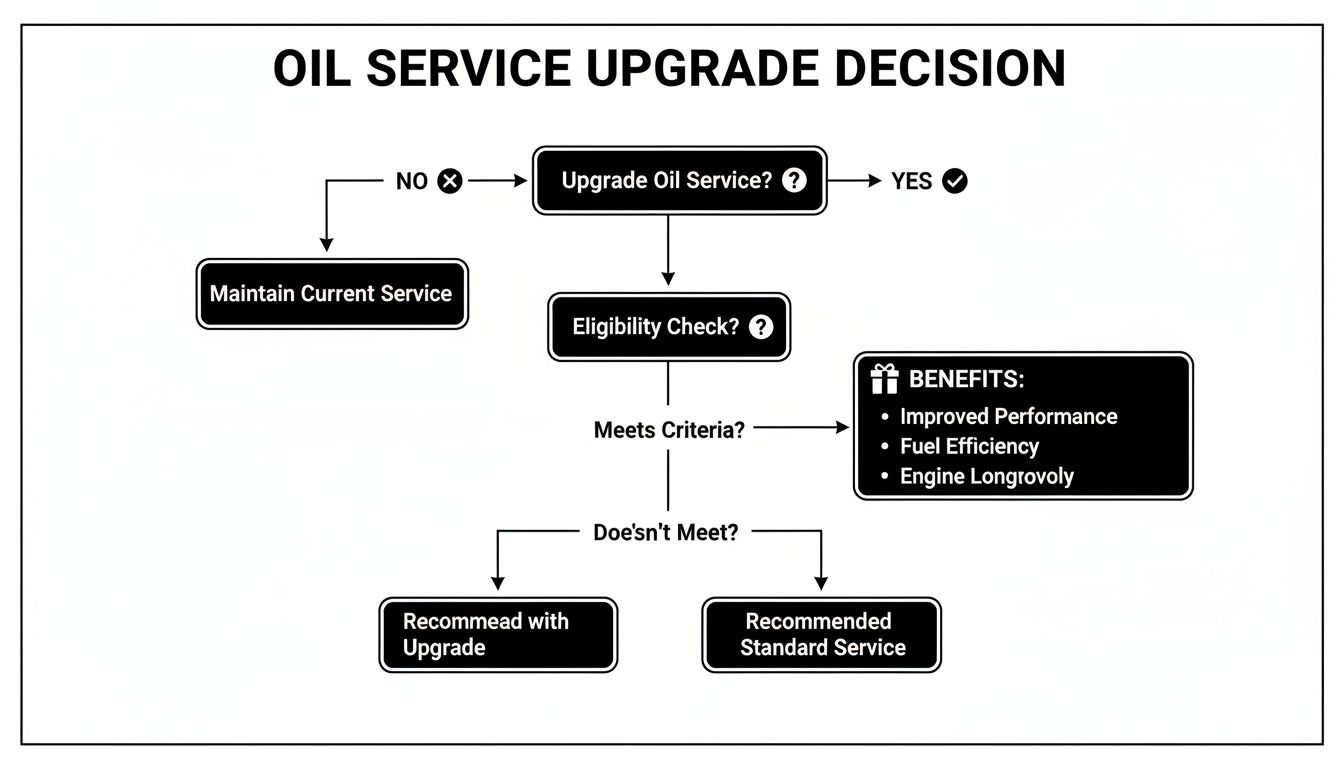
As you can see, the decision really boils down to your car's age, engine type, and your daily driving habits. Getting it right leads directly to better performance and protection.
Who Benefits Most From Synthetic Oil?
Beyond the high-performance crowd, a few other types of vehicles stand to gain a whole lot from switching. If your car or truck falls into one of these categories, think of synthetic oil as a smart investment in its future.
- High-Mileage Vehicles: Once a car crosses the 75,000-mile mark, years of conventional oil can leave behind sludge and other gunk. Synthetic oils are packed with powerful detergents that actively clean out those harmful deposits, which can help restore engine health and protect aging components. If you're looking for more ways to care for an older engine, check out our article on the best oil for high-mileage engines.
- Heavy-Duty Use: Do you spend a lot of time towing a boat, hauling heavy loads for work, or just sitting in stop-and-go Fort Worth traffic? All that puts a ton of stress on your engine. Synthetic oil holds up much better under that kind of heat and strain, giving you an extra layer of protection when you need it most.
When in doubt, the best thing you can do is pop open your owner's manual. It will tell you exactly what the manufacturer recommends for your car's specific make and model. A quick check gives you the confidence to make the right choice, one that aligns with both your car's engineering and your life on the road.
What to Expect From a Professional Oil Change Service
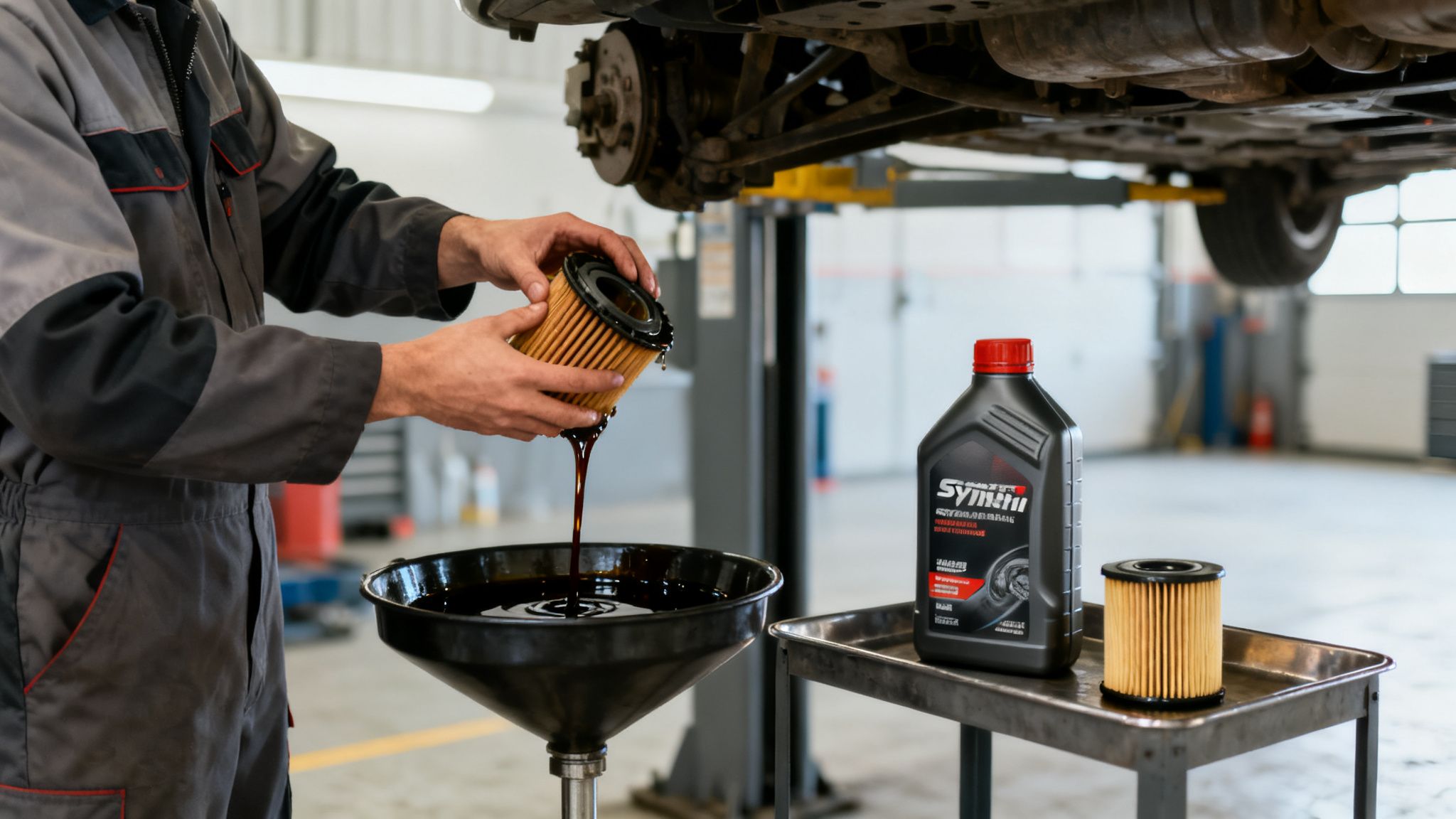
Getting a professional synthetic oil change service isn't just about swapping old fluid for new. It's a full-on health check for your engine, handled by technicians who know exactly what they’re looking for. It’s way more than a simple "drain and fill"—it’s a systematic process designed to give your engine the best care possible. Knowing what goes on behind the garage door helps take the mystery out of the whole thing.
The process actually starts with a quick chat. A good mechanic will ask about your car's history, how you drive, and if you’ve noticed anything unusual. This isn't small talk; it's how they tailor the service to your car’s specific needs and pick the right grade of synthetic oil for peak performance. Understanding these standards is a key part of the modern automotive industry.
The Core Service Steps
Once you’ve talked it over, the real work begins. The service follows a few key steps to make sure everything is done right, protecting your engine from the get-go.
- Draining the Old Oil: First, your car is safely lifted. The technician then removes the drain plug, letting all the old, gunky oil flow out. This stuff is full of dirt, tiny metal shavings, and worn-out additives that you definitely don't want circulating in your engine.
- Replacing the Oil Filter: While the oil is draining, the old filter comes off. This little part is a big deal—it’s what catches all those nasty contaminants. A fresh, high-quality filter goes on in its place, making sure your new synthetic oil stays clean for as long as possible.
- Adding Premium Synthetic Oil: After the drain plug is back in, the technician fills the engine with the exact amount of premium synthetic oil your car’s manufacturer recommends. They don't eyeball it, either. Getting this just right is critical because too much or too little oil can cause serious engine trouble.
The real value of a professional service lies in the details. Certified technicians use calibrated equipment to add the precise volume of oil, preventing the engine damage that can result from overfilling or underfilling.
Final Checks and Inspection
The job isn't done just because the new oil is in. The final stage is a multi-point inspection that adds a whole other layer of value and safety.
This complimentary check-up usually includes:
- Fluid Level Inspection: A pro will check and top off other essential fluids, like your windshield washer fluid, power steering fluid, and coolant.
- Tire Pressure Check: They’ll also make sure your tires are properly inflated. This is huge for your safety, fuel economy, and making your tires last longer.
- Visual Inspection: They'll give important parts like belts, hoses, and air filters a quick look-over for any signs of wear and tear.
This thorough approach means you drive away with more than just fresh oil—you leave with the confidence that your vehicle is in great shape. To see how this service pairs perfectly with other routine work, you can learn more about combining an oil change and tire rotation.
Still Have Questions About Synthetic Oil?
If you're thinking about making the jump to a synthetic oil change, it's natural to have a few questions. Getting straight answers is the best way to feel good about what’s going into your engine. Let’s tackle some of the most common things drivers ask.
How Often Do I Need a Synthetic Oil Change?
This is easily one of the biggest perks of going synthetic: you get to go a lot longer between service appointments. While you’re used to seeing that 3,000 to 5,000-mile sticker on your windshield with conventional oil, synthetic oil can often stretch that interval to 7,500 or even 15,000 miles.
But hold on—it's not a hard-and-fast rule. The perfect schedule for your car really depends on a few things:
- Your Owner’s Manual: This is your bible. Your car's manufacturer knows what its engine needs, so always start there.
- The Specific Oil: Not all synthetics are created equal. Some are specifically designed for extended drain intervals, while others aren't.
- How You Drive: Are you constantly in Fort Worth stop-and-go traffic? Do you tow a boat on the weekends or drive in extreme heat? Harsher conditions mean you'll lean closer to that 7,500-mile mark.
Can I Switch from Conventional to Synthetic Oil?
Absolutely. Not only is it perfectly safe, but it's one of the best things you can do for your engine's long-term health. Modern synthetic oils are completely compatible with conventional oils and all the seals and gaskets in both older and newer engines.
You don't need any special "flush" or complicated procedure, either. When you come in for a synthetic oil change service, the new oil will actually go to work cleaning out the gunk and deposits that conventional oil may have left behind. It’s like giving your engine a fresh start.
This isn't just a local trend; it's a huge shift happening worldwide. The synthetic lubricants market was valued at $18.6 billion in 2023 and is expected to hit $26.71 billion by 2032. Why? Because everyone from car makers to everyday drivers is realizing the benefits for fuel economy and engine protection. You can read more about this expanding market on SkyQuestt.com.
Is a Synthetic Oil Service Worth the Higher Cost?
For the vast majority of drivers, the answer is a definite yes. It's true that the upfront cost is higher—a synthetic oil change usually runs between $65 and $125—but it's a classic case of investing a little more now to save a lot more later.
The sticker price might be higher, but it's often cancelled out by long-term savings. You’re paying for fewer oil changes over the life of your car, and you’re getting superior protection that can help you steer clear of thousands of dollars in potential engine repairs.
Think of it this way: you get longer intervals between visits, a potential boost in fuel economy, and the invaluable peace of mind that comes from knowing your engine is protected by the best stuff out there.
Ready to give your engine the protection and performance it deserves? Our certified technicians at Kwik Kar Oil Change and Auto Care are right here in Fort Worth, ready to deliver a professional, straightforward synthetic oil change. Schedule your appointment online or just swing by today—we'll help keep your vehicle running like new. https://www.kwikkarwhitesettlement.com