




DSG transmission service is one of the most important maintenance procedures you can do for your vehicle. It replaces the specialized transmission fluid and filter, inspects critical components, and keeps the hydraulic systems that control your clutch engagement working exactly as designed. Skip it long enough, and what starts as a subtle shudder can turn into a mechatronic unit failure costing $2,000–$3,500 to replace.
Here is what DSG service protects and what it involves:
- Fluid replacement: Old fluid is drained and replaced with OEM-specified DSG fluid that cools, lubricates, and maintains hydraulic pressure for clutch engagement.
- Filter replacement: The internal transmission filter is swapped out to restore clean hydraulic flow and prevent pressure drops.
- Temperature-controlled fill: Fluid is added at a precise 35–45 °C window to ensure accurate fill levels, not by guesswork.
- System inspection: Technicians check for leaks, fault codes, and early signs of clutch or mechatronic wear.
Most DSG transmissions need regular service, though heavy driving conditions can require shorter intervals. Done on schedule, DSG service extends transmission life, preserves shift quality, and prevents the kind of internal damage that no fluid change can undo.
How a DSG transmission works and why it needs specialized care
DSG stands for “Direkt-Schalt-Getriebe,” which translates from German as direct-shift gearbox. Volkswagen developed it as a dual-clutch transmission that effectively combines two electronically controlled manual gearboxes into one unit, giving you the efficiency of a manual with the convenience of an automatic.
The key to understanding DSG service needs lies in the mechatronic unit. This electro-hydraulic control module manages clutch engagement and gear selection by reading inputs like vehicle speed, throttle position, and brake pressure. It pre-selects the next gear before the shift happens, which is why DSG transmissions can complete a full gear change in around 200 milliseconds. That speed and precision depend entirely on clean, properly pressurized fluid.
Most DSG transmissions use a wet clutch design, meaning the clutch packs are bathed in transmission fluid. That fluid does three jobs simultaneously: it lubricates the clutch surfaces, cools the heat generated during engagement cycles, and acts as the hydraulic medium that actuates the clutch valves. When the fluid degrades, all three functions suffer at once.
“A DSG service is not just swapping fluid because a schedule says so. That fluid is doing multiple jobs at once: cooling, lubricating, and supporting the hydraulic control that makes the shifts clean. As it ages, it picks up fine material from normal wear and can lose some of its ability to behave consistently when hot.” — Portland Motor Works
What exactly happens during a DSG transmission service
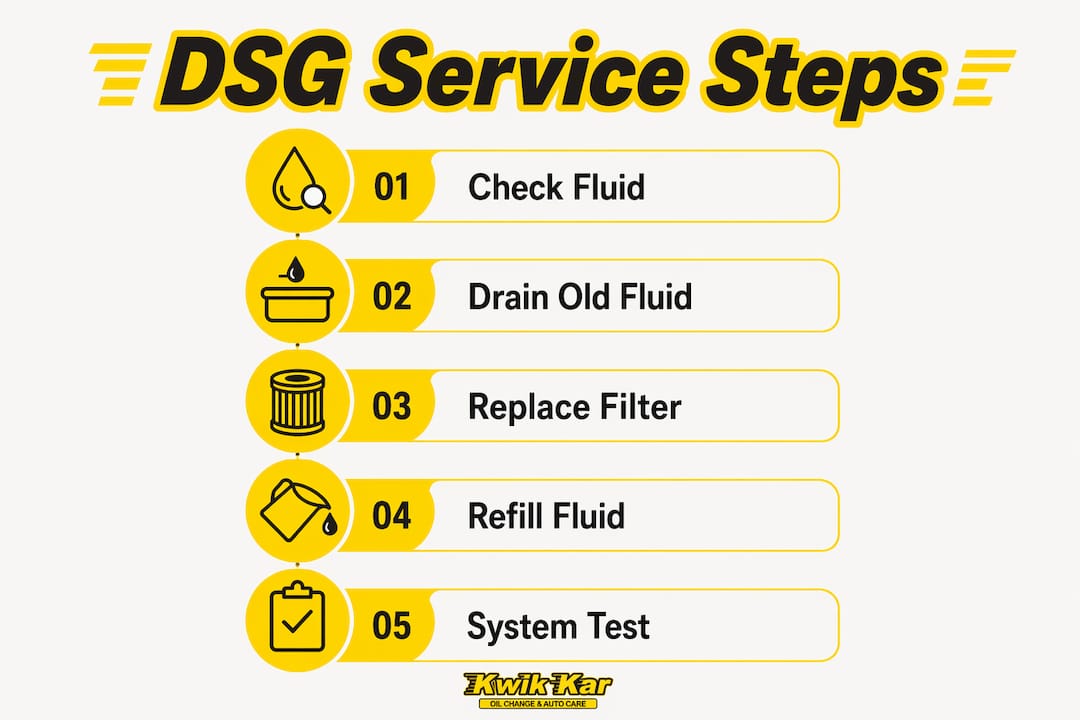
A proper DSG service goes well beyond a basic drain and refill. The full procedure involves several precise steps, and skipping any one of them reduces the effectiveness of the entire job.
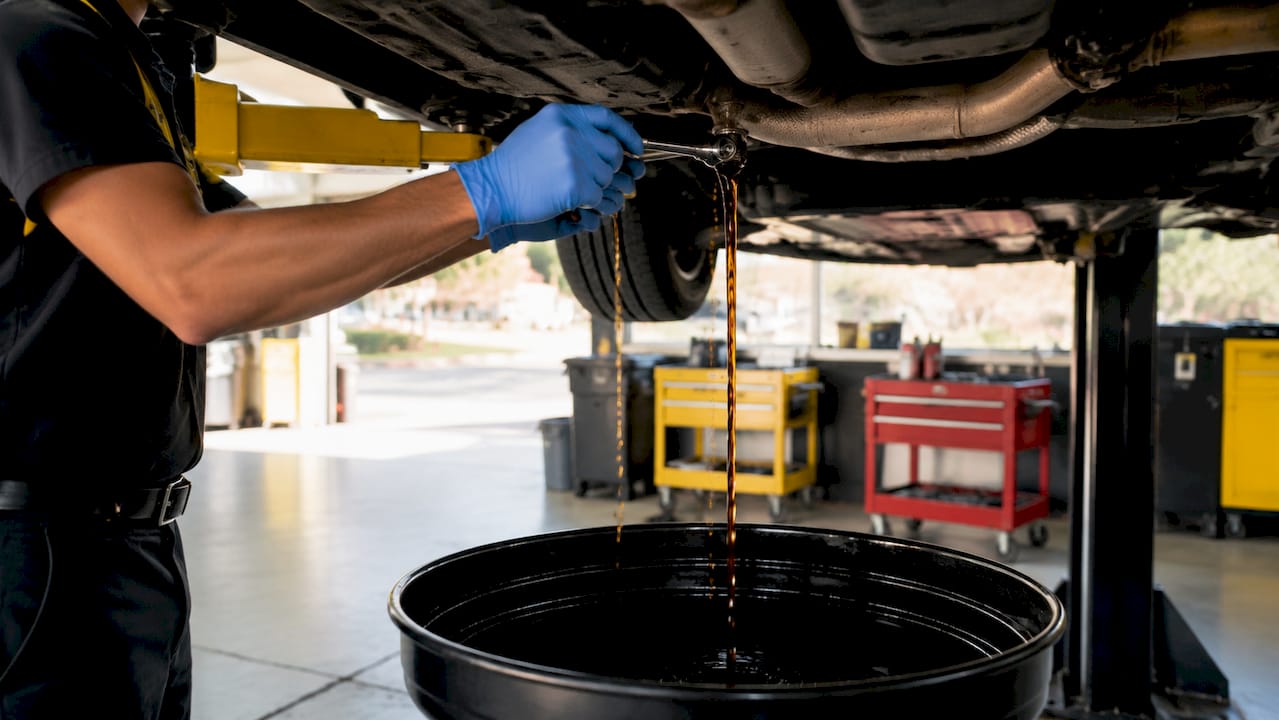
- Drain the old fluid through the transmission’s designated drain port, removing contaminated oil along with the fine particulate matter clutch wear deposits over time.
- Replace the oil filter and O-rings to restore full hydraulic flow. The filter must be replaced during every service; leaving a loaded filter in place while adding fresh fluid is an incomplete job.
- Refill with OEM-spec fluid at the correct volume. The DQ250 six-speed requires 4–5 liters of approved DCT fluid; the larger DL501 takes 7–8 liters. These fluids are not interchangeable between models.
- Set fluid level at the correct temperature. After filling, the vehicle must be started and the fluid brought to 35–45 °C as measured by a diagnostic scan tool. Excess fluid drains before the final plug is reinstalled.
- Check for fault codes and leaks using VW-compatible diagnostic software to confirm the system is operating cleanly after service.
Using the wrong fluid is one of the most damaging mistakes an owner can make. DSG transmissions are sensitive to fluid specification because the gearbox was engineered around that fluid’s exact viscosity and friction properties. The wrong oil can cause hesitation, harsh engagement, and long-term clutch damage.
Pro Tip: Before agreeing to any DSG service, ask the shop which transmission code your vehicle has, whether the filter is being replaced, and whether fluid level is set using temperature-controlled equipment. If they cannot answer all three, find a different shop.
When should you service your DSG transmission?
Most DSG transmissions require service every 40,000 miles for reliable long-term performance. Newer models like the DQ381 may suggest longer factory intervals, but experts agree 40,000 miles is the optimum for reliability. Heavy driving conditions may require shorter intervals.
| DSG Transmission | Clutch Type | Recommended Interval |
|---|---|---|
| DQ250 | Wet clutch | 40,000 miles |
| DQ200 (7-speed) | Dry clutch | 40,000 miles |
| DQ381 | Wet clutch | 40,000 miles |
| DL501 (longitudinal) | Wet clutch | 40,000 miles |
Your actual driving conditions matter as much as the odometer. Towing, stop-and-go traffic, track driving, or hot climates all generate more thermal stress on the fluid, accelerating degradation. Under those conditions, shortening the interval to 25,000–30,000 miles is the right call. A mileage-based maintenance approach that accounts for how you actually drive will always outperform a fixed schedule that ignores real-world use.
Warning signs your DSG transmission needs service now
Your DSG will usually tell you something is wrong before it fails completely. The challenge is recognizing those early signals before they become expensive problems.
- Clutch shudder on takeoff: A vibration or shaking feeling when pulling away from a stop, as though you’re driving over rumble strips. Old fluid makes clutch engagement less consistent at low speeds where the clutches do the most controlled slipping.
- Hesitation or delayed shifts: A noticeable pause when accelerating or changing gears, often caused by degraded hydraulic pressure in the mechatronic unit.
- Harsh or jerky gear changes: Shifts that feel abrupt or mechanical rather than smooth, pointing to pressure control problems or fluid that has lost its hydraulic properties.
- Unusual noises: Whining, clunking, or grinding during acceleration or deceleration can indicate internal wear that is already progressing.
- Dashboard warning lights: A transmission or gearbox warning light should never be ignored. It may signal a stored fault code that a technician needs to read and address.
What makes DSG symptoms tricky is that several drivability issues commonly blamed on the engine or fuel system actually stem from DSG mechatronic problems caused by degraded fluid. A car that feels like it has an engine hesitation may simply need a transmission service. Getting the right diagnosis early saves you from paying for repairs that do not address the actual cause.
You can also review the signs of transmission problems that commonly appear before a full failure, which helps you decide how urgently to act.
What happens when you skip DSG transmission maintenance
Neglecting DSG service does not just mean rougher shifts. It sets off a chain of internal damage that gets progressively harder and more expensive to reverse.
- Clutch pack wear: Degraded fluid loses its ability to lubricate and cool the clutch surfaces, causing accelerated friction material wear.
- Mechatronic unit stress: As fluid loses its hydraulic properties, the mechatronic unit works harder to compensate, accelerating electronic and hydraulic wear inside the control module.
- Seal leaks and overheating: Old fluid breaks down the sealing properties of O-rings and gaskets, leading to leaks that reduce fluid volume and cause overheating.
- Inconsistent shifting: The gearbox begins operating outside its designed parameters, causing erratic behavior that worsens with every drive cycle.
“Missing a service does not automatically mean a repair will follow, but it does remove one of the main opportunities to protect the gearbox. Once a transmission starts operating with degraded fluid or hidden faults, wear can spread to other components.” — Mechalex
The financial gap between service and repair is stark. A routine DSG service typically costs several hundred dollars at a dealership. A mechatronic unit replacement can cost several thousand dollars, or somewhat less with a specialist rebuild. Worn clutch packs add further labor and parts costs on top of that. The benefits of regular fluid changes extend well beyond smooth shifts; they are what keep the repair conversation from happening at all.
How certified technicians diagnose and perform DSG service properly
A certified technician approaches DSG service as a diagnostic procedure, not just a fluid swap. Before touching the drain plug, they connect VW-compatible diagnostic equipment to read the transmission fluid temperature, check for stored fault codes, and assess whether the gearbox needs service or has already developed a fault that service alone cannot fix.
The service itself follows a controlled sequence: drain the old fluid, inspect and replace the filter and O-rings, refill with the correct OEM-spec fluid, bring the transmission to operating temperature, and verify the fill level using the scan tool before sealing the system. After service, a second scan confirms no new fault codes were introduced and that the transmission is responding correctly.
“Certified technicians use specialty tools to measure transmission fluid temperature and check for stored fault codes before and after service. This ensures fluid is changed at the right temperature and the system is free of errors, optimizing performance.” — Mechalex
The distinction between service and repair matters here. A DSG service prevents problems; a gearbox repair addresses faults that have already developed. A technician who recommends a service when a repair is clearly needed is not helping you. Honest diagnosis means knowing which situation you are actually in.
Pro Tip: Choose a service center with OEM-compatible diagnostic tools and technicians who can identify your specific DSG transmission code. The DQ250, DQ200, and DL501 each have different fluid specs and service procedures. A shop that treats them all the same is not equipped for the job.
Kwik Kar Oil Change & Auto Care employs RepairPal-certified technicians who follow manufacturer-specified procedures and use quality parts on every service.
Signs it is time for a DSG fluid replacement
Fluid condition is the clearest indicator of where your DSG stands. Fresh DSG fluid is typically a clean amber or light red color with a consistent viscosity. Fluid that has degraded turns darker, may smell burnt, and often carries fine metallic particles from normal clutch wear.
You do not need to wait for a warning light to check. If your car is approaching 40,000 miles since the last service, or if you have been driving in heavy traffic, towing, or in high heat regularly, the fluid has likely degraded enough to affect shift quality even if nothing feels dramatically wrong yet.
The replacement process itself requires draining through the transmission’s drain port, removing and replacing the filter, and refilling with the correct fluid volume at the right temperature. A transmission fluid and filter change done at the proper temperature window is what separates a complete service from a partial one. Fluid that is filled cold will read a false level; overfilling or underfilling by even a small margin causes shift quality problems and premature clutch wear.
How DSG service differs from standard transmission service
A conventional automatic transmission uses a torque converter and a simpler hydraulic circuit. Its fluid still needs changing, but the service procedure is more forgiving. You drain, refill, and check the level with a dipstick at operating temperature. Many shops handle it without specialized equipment.
DSG service is a different category of work entirely. There is no torque converter. The clutch packs operate in fluid on six-speed wet-clutch models, and the mechatronic unit controls shift logic through hydraulic solenoids and electronic sensors. The fill procedure requires a scan tool to monitor fluid temperature in real time. The fluid specification is transmission-specific, not a universal automatic transmission fluid. And the filter replacement is part of the service, not optional.
General repair shops that service conventional automatics regularly may not have the VW-compatible diagnostic tools, the correct fluid specifications, or the temperature measurement equipment that DSG service requires. That gap in equipment and experience is why owners sometimes report underwhelming results after a DSG service at a general shop. The job was done, but not completely. Understanding what a full transmission service involves helps you ask the right questions before you hand over your keys.
Kwik Kar Oil Change & Auto Care keeps your DSG running right
Your DSG transmission is one of the most sophisticated components in your vehicle, and it deserves service from technicians who understand exactly what it needs. Kwik Kar Oil Change & Auto Care in Fort Worth brings RepairPal-certified expertise, transparent pricing, and a thorough service process to every appointment, so you leave knowing the job was done correctly, not just quickly.
Whether your vehicle is approaching its 40,000-mile service interval or you have been noticing hesitation and rough shifts, the certified team at Kwik Kar Oil Change & Auto Care will diagnose your transmission accurately and perform the complete service your DSG requires. No guesswork on fluid specs, no skipped filters, no shortcuts on the temperature-controlled fill procedure. For drivers who want to prevent costly auto repairs before they start, this is where to bring your car. Schedule your DSG transmission service with Kwik Kar Oil Change & Auto Care today.
Key Takeaways
Regular DSG transmission service, done at the correct interval with OEM-spec fluid and a replaced filter, is the single most effective way to prevent mechatronic failure and extend transmission life.
| Point | Details |
|---|---|
| Service interval | Most DSG transmissions need service every 40,000 miles; heavy use shortens that to 25,000–30,000 miles. |
| Full service scope | A complete DSG service includes fluid drain, filter replacement, O-ring replacement, and temperature-controlled refill at 35–45 °C. |
| Cost of neglect | Skipping service risks mechatronic unit failure costing $2,000–$3,500 to replace at a dealership. |
| Early warning signs | Clutch shudder, hesitation, harsh shifts, and warning lights all signal that service is overdue. |
| Kwik Kar Oil Change & Auto Care | RepairPal-certified technicians perform complete DSG service with correct fluid specs and diagnostic equipment in Fort Worth. |
FAQ
Does DSG service make a noticeable difference?
Yes. A well-executed DSG service typically restores shift smoothness and can resolve shudder or hesitation caused by degraded fluid. It also allows technicians to detect early clutch wear that might otherwise go unnoticed.
What is done during a DSG service?
A complete DSG service drains the old transmission fluid, replaces the oil filter and O-rings, refills with OEM-specified DSG fluid, and sets the fluid level at a precise temperature of 35–45 °C using diagnostic equipment.
What happens if you don’t service your DSG?
Degraded fluid causes clutch engagement to become inconsistent, accelerates mechatronic unit wear, and can lead to permanent internal damage. Repairs for mechatronic failure run $2,000–$3,500 at a dealership, far more than a routine service.
How often should a DSG transmission be serviced?
Most DSG transmissions should be serviced every 40,000 miles for optimal reliability. Heavy-use scenarios like towing, track driving, or frequent stop-and-go traffic may require shorter intervals, closer to 25,000–30,000 miles.