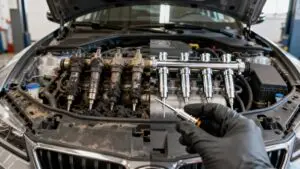





A drain-and-refill is the right call for routine maintenance, and a full flush is only necessary when the fluid is dark, burnt-smelling, or after pump or rack work. Most drivers can safely extract and replace reservoir fluid themselves in under an hour with basic tools. Call a shop if you spot metallic particles, milky fluid, or steering noise that won’t quit after bleeding.
TL;DR:
- A drain-and-refill replaces about 25 to 40 percent of power steering fluid and is suitable for routine maintenance when fluid is merely dark or slightly burnt-smelling.
- A full flush removes more than 95 percent of the fluid and is necessary only if the fluid is black, has a burnt odor, or debris is visible in the reservoir.
- DIY materials for a drain-and-refill cost little and can be completed in 30 to 60 minutes, but a professional full flush is more expensive and better for severe contamination or recent pump replacements.
- Symptoms like persistent whining, milky fluid, or metal particles indicate pump failure or internal damage and cannot be fixed with fluid replacement alone.
- Electric power steering systems do not have fluid and require different diagnostics; replacing hydraulic fluid won’t improve unresponsive or heavy steering on EPS vehicles.
Table of Contents
- Tools and Materials for a Power Steering Fluid Change
- How Do You Change Power Steering Fluid Yourself?
- Full Flush or Drain-and-Fill: Which One Do You Need?
- What Does a Power Steering Fluid Change Cost?
- Signs Your Power Steering Needs More Than a Fluid Change
- Kwik Kar’s Take: When DIY Makes Sense and When to Call Us
- Book a Power Steering Fluid Service at Kwik Kar
- Sources
- FAQ
Tools and Materials for a Power Steering Fluid Change
Before you start, gather everything within reach so you’re not hunting for a funnel with your hands covered in fluid. A basic power steering fluid change takes only a handful of items, most of which you may already own.
- Fluid extractor or turkey baster to pull old fluid from the reservoir
- Funnel sized to fit your reservoir neck without spilling
- Catch pan to capture used fluid safely
- Nitrile gloves and rags because power steering fluid stains and irritates skin
- Small hand pump as an alternative extraction tool for tight engine bays
- Jack and stands only if your reservoir sits somewhere that needs extra clearance
Most passenger vehicle reservoirs hold well under a quart, so a single quart of the correct fluid usually covers a full drain-and-refill with some left over. Confirm the exact spec before you buy anything. Check your owner’s manual first, then look at the markings molded into the reservoir cap. Some manufacturers even specify automatic transmission fluid instead of dedicated power steering fluid, which is exactly the kind of detail a manufacturer service reference will confirm for your model. Work on a level surface with a cool engine, and dispose of used fluid through a recycling center or auto parts store rather than a household drain.
How Do You Change Power Steering Fluid Yourself?
A basic drain-and-refill is the safest starting point for most DIYers, and it’s the same method you’ll repeat as routine upkeep. Here’s the sequence that keeps your pump protected the whole way through.
- Park on level ground and set the parking brake. Pop the hood once the engine has cooled.
- Locate the reservoir and check the cold fill line. Look closely at the fluid’s color and give it a sniff. Fresh fluid is usually light amber; dark or burnt-smelling fluid tells you something’s overdue.
- Extract the old fluid from the reservoir using your baster or extractor, capturing everything in the catch pan below.
- Refill slowly with the correct fluid up to the cold mark, then start the engine and turn the wheel lock-to-lock a few times to circulate the new fluid and push out trapped air.
- Recheck the level after a few steering cycles and again after a short test drive around the block. If the fluid looks dirty again quickly, repeat the extract-and-refill cycle.
Pro Tip: Never let the reservoir run dry while cycling the wheel, even for a few seconds. An empty reservoir lets air into the pump, and cavitation can cause damage that costs far more than the fluid you were trying to save.
If you have a second person around, have them turn the wheel slowly while you watch fluid level from the engine bay. That small bit of teamwork prevents most of the mistakes DIYers make on their first attempt. Stop immediately and call a shop if you see metal flecks settling at the bottom of the reservoir, if the fluid looks milky instead of amber, or if whining persists after a proper bleed. Those are signs pointing toward pump wear or a bigger problem than fluid alone can fix.
Full Flush or Drain-and-Fill: Which One Do You Need?
The two procedures aren’t interchangeable, and the gap between them is bigger than most people assume. A single drain-and-fill through the reservoir replaces roughly 25 to 40 percent of the fluid in the system, because a large portion stays trapped in the pump, hoses, and steering rack. A full flush pushes fluid through the entire system under pressure and replaces about 95 percent or more.
That difference matters when you’re deciding which one your car actually needs. Reach for a full flush when:
- Fluid looks black or has a distinct burnt odor, not just slightly darker than new
- You just replaced the power steering pump or steering rack and need the new components running on clean fluid
- You spot visible debris or sediment in the reservoir
For everything short of that, a drain-and-fill does the job, and you can approach flush-level cleanliness through repeated extract-and-refill cycles spaced a few days apart. The limitation is patience. Getting close to a true flush this way can take three or four cycles, and each one still leaves some old fluid behind. A rushed, aggressive one-pass flush attempt at home carries real risk. Running the reservoir dry during the process starves the pump of fluid and can cause cavitation damage that turns a simple fluid swap into an expensive repair.
What Does a Power Steering Fluid Change Cost?
DIY materials run cheap. A quart of the correct fluid, a basic extractor, and a funnel typically add up to a low double-digit dollar total, and you’ll have leftover fluid for future top-offs.
Shop pricing runs higher because you’re paying for labor, equipment, and a technician who checks the whole system while they’re in there. KBB’s cost guide lists typical ranges for a full flush and offers a localized lookup tool if you want a number specific to your area and vehicle. A basic reservoir drain-and-fill at a shop usually costs less than a full flush, and the price climbs with vehicle type and whether any parts get replaced along the way.
- DIY drain-and-refill: 30 to 60 minutes, low-cost materials
- Shop drain-and-fill: usually under an hour of shop time
- Shop full flush: longer appointment, higher cost than a simple drain-and-fill
Ignoring fluid problems gets expensive fast once a component fails. Related repairs range from hoses at $100 to $400 up to pumps at $400 to $800 with labor included, and rack replacement runs well beyond that. A cheap fluid service now is the reason those bigger bills stay avoidable.
Signs Your Power Steering Needs More Than a Fluid Change
Not every symptom clears up with fresh fluid, and knowing the difference saves you a wasted afternoon. A slight whine on cold mornings or fluid that’s simply darker than it should be often responds well to a straightforward change. Metal shavings in the reservoir, fluid that’s turned milky, or a sudden loss of power assist point toward pump or seal failure instead, and no amount of fresh fluid fixes that.
One distinction trips up a lot of drivers: hydraulic and electric power steering are not the same system. Hydraulic systems rely on fluid and show classic symptoms like whining, leaks, and darkened fluid. Electric power steering (EPS) has no fluid reservoir at all, so if your steering feels heavy or unresponsive on a car with EPS, fluid service won’t help. That’s an electronic diagnostic issue.
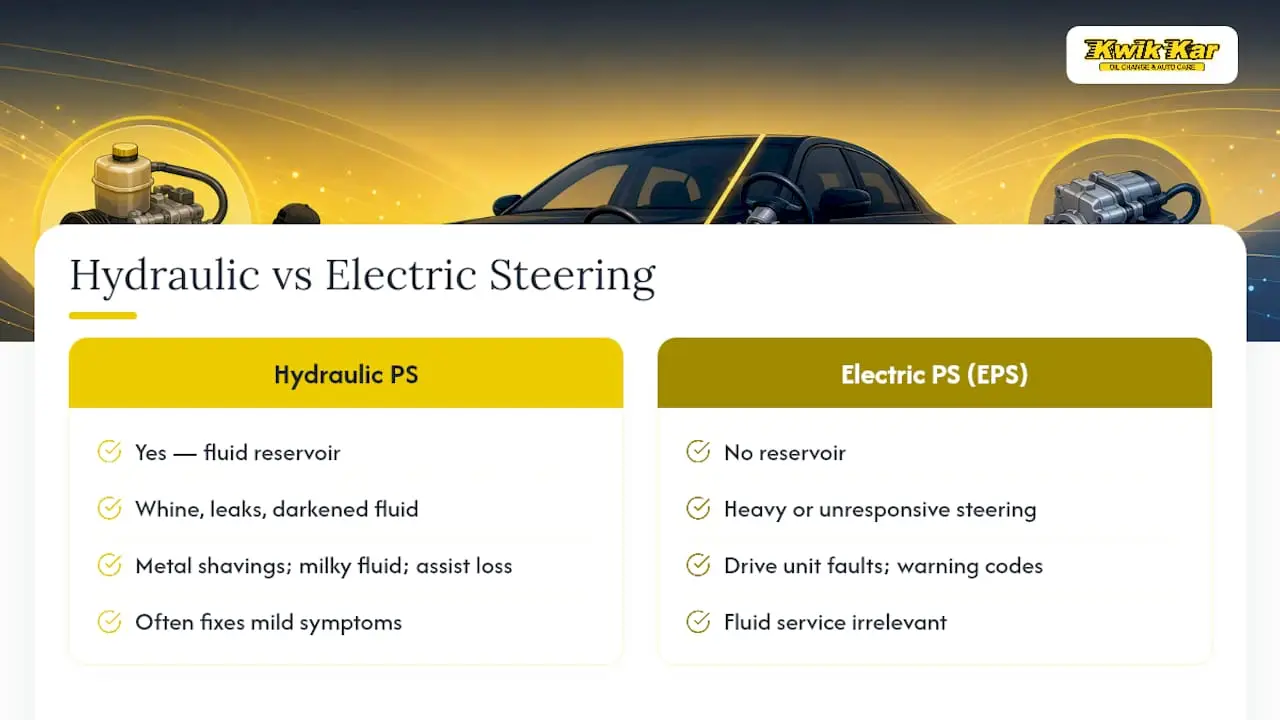
A quick visual check catches most problems early: look under the car for drips near the pump or rack, inspect hose connections for weeping fluid, and feel for resistance or grinding as you turn the wheel lock-to-lock with the engine off.
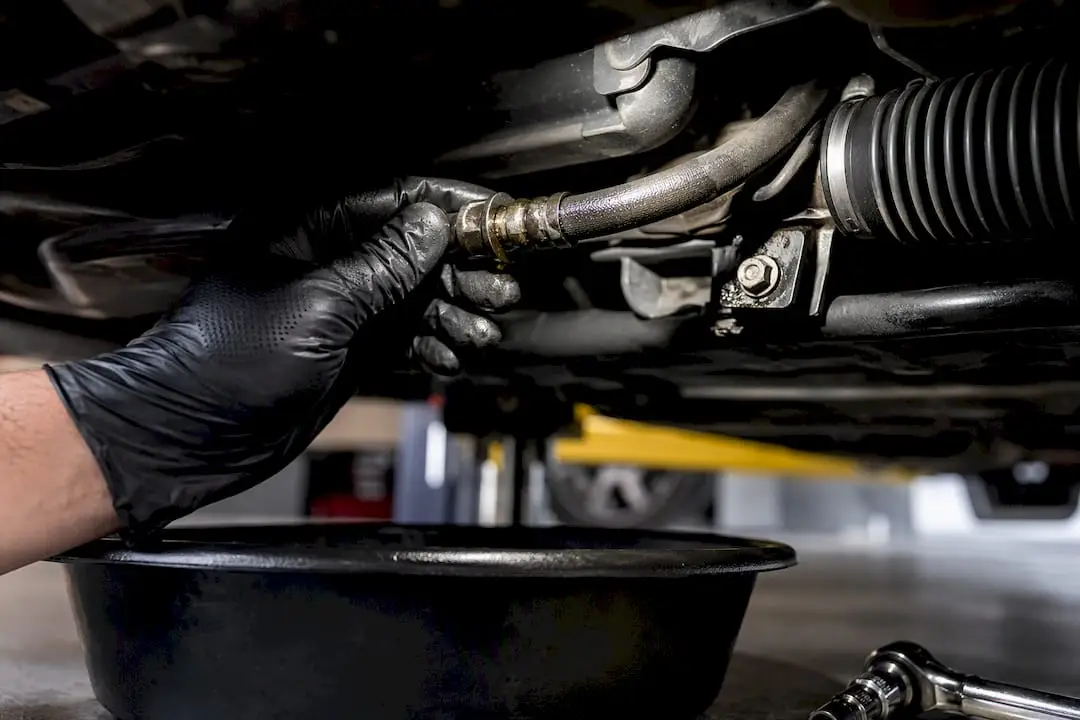
Pro Tip: If your steering wheel shudders or you hear a growling noise specifically when turning at low speed, note when it happens before you bring the car in. That detail helps a technician pinpoint pump versus rack issues faster during diagnosis.
When symptoms point toward component failure rather than dirty fluid, or if your dashboard throws a warning light, it’s time for a code scan and a professional look rather than another bottle of fluid.
Kwik Kar’s Take: When DIY Makes Sense and When to Call Us
We’d rather see you save money on a straightforward drain-and-refill than pay shop labor for something you can safely do in your driveway. If you’re comfortable following the steps above and you’ve confirmed the correct fluid spec, go ahead and do it yourself. Where we draw the line is anything involving contamination, suspected pump wear, or a full flush, because getting a pressurized flush wrong risks damage that costs far more than the visit itself.
Our certified technicians handle fluid exchange with transparent pricing and no surprise add-ons. A standard inspection includes a fluid condition check, a leak inspection around the pump and hoses, a belt check, and a straightforward recommendation on whether you need a top-off, a full flush, or something more involved.
— Kwik Kar
Book a Power Steering Fluid Service at Kwik Kar
If your steering fluid has gone dark, your car just had pump or rack work done, or you’d prefer to have a professional technician handle the flush, local automotive care providers can assist. They perform a full fluid exchange and inspection in one visit, with transparent pricing explained before any work starts, and technicians experienced in identifying issues beyond the reservoir itself.

Beyond power steering, our team also handles the preventative maintenance that keeps small fluid issues from becoming expensive repairs down the road. Ready to get it checked? Visit our services page to see everything we cover and schedule your appointment with a technician who will walk you through exactly what your car needs.
Sources
This article draws on shop-side cost data from KBB’s power steering flush cost guide, DIY procedure guidance from AMSOIL and VehicleBar, symptom analysis from Motoppi, fluid volume comparisons from Mechanics Stack Exchange, and manufacturer fluid specifications from Ford’s owner manual content.
- Power Steering Fluid Flush Costs — KBB
- Power steering fluid symptoms & failure — Motoppi
- How to check power steering fluid (and when to change it) — AMSOIL blog
FAQ
Do I Really Need to Change My Power Steering Fluid?
Yes. Power steering fluid breaks down over time and picks up heat and contamination that wear on your pump and seals. Most guides recommend a drain-and-refill every 30,000 to 60,000 miles for most passenger vehicles as low-cost preventive maintenance.
Can I Just Refill My Power Steering Fluid?
Topping off a low reservoir is fine for a minor drop, but it’s not a substitute for replacing old fluid on schedule. If the fluid already looks dark or smells burnt, adding more on top of it does nothing to remove the degraded fluid causing the problem.
Can Autozone Change My Power Steering Fluid?
Auto parts retailers primarily sell the fluid and extraction tools rather than perform the service themselves. A drain-and-refill is straightforward enough to do at home with a baster and funnel, or you can book it at a shop like Kwik Kar Oil Change & Auto Care if you’d rather leave it to a certified technician.
How Long Should You Change Power Steering Fluid?
A DIY drain-and-refill typically takes 30 to 60 minutes, including time to cycle the steering wheel and recheck the level. A shop appointment for the same service usually finishes in under an hour, while a full flush takes longer since it clears closer to 95 percent of the system’s fluid.