




A transmission fluid service usually costs $150 to $400, and specialty vehicles can climb past $500. What you pay depends mostly on the type of service and the transmission in your vehicle.
If you're reading this because your car has started shifting a little harder, you're overdue on maintenance, or a shop gave you a quote that felt all over the map, you're not alone. Fort Worth drivers see a wide spread in pricing because a simple drain-and-fill is not the same job as a full fluid exchange, and a basic sedan is not the same as a CVT crossover, a half-ton truck, or a European dual-clutch transmission.
As an ASE-certified technician, I tell customers the same thing every day. The smartest way to shop for transmission service is to understand what you're being charged for before you approve the work. Once you know that, it's much easier to tell the difference between fair pricing and an upsell.
The Average Cost of a Transmission Fluid Change
You pull into a Fort Worth shop for a transmission service and get quoted one number. Then you call another shop and hear something completely different. That happens all the time, and it usually comes down to what service is being quoted and what vehicle is in the bay.
A standard transmission fluid change typically costs $150 to $175, while a flush often runs $165 to $290. Broader repair-data averages land around $232 to $290, but real vehicle examples show how wide the spread can be. A Honda Civic may cost $118 to $146, while a Ford F-150 can run $294 to $378. Specialty services can go much higher. Analysts at CarParts compiled these transmission fluid price ranges and vehicle examples, including VW and Audi DSG services reaching $500 to $800 and a 2020 Chevrolet Corvette C8 quote at $1,300.
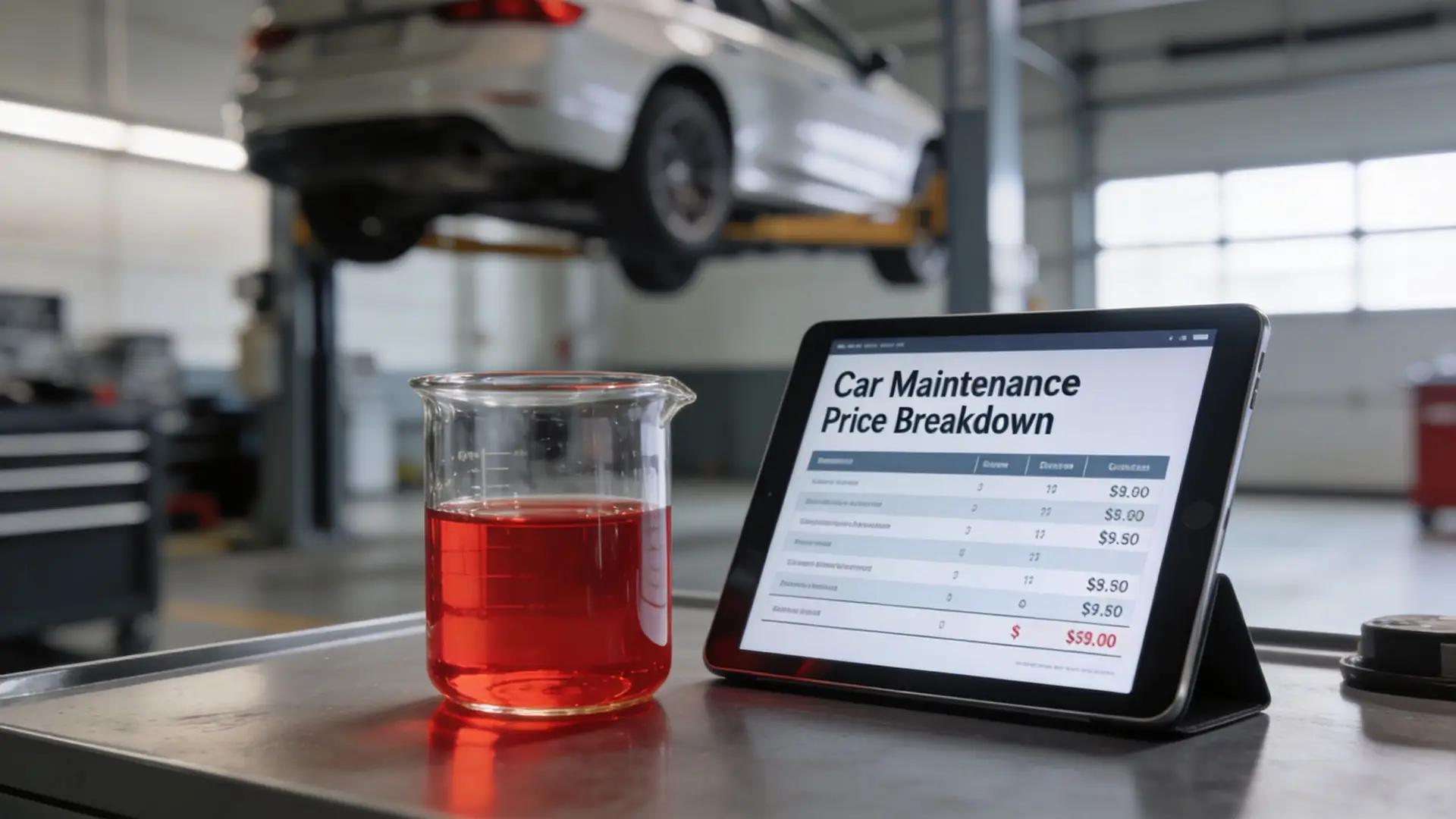
That is why national averages only get you so far. They give you a ballpark, not a real estimate for your car, your transmission, and your service type.
What a normal price range looks like
For a straightforward, everyday vehicle, these are the numbers many drivers are likely to see:
| Vehicle or service type | Typical cost |
|---|---|
| Standard drain-and-fill | $150 to $175 |
| Transmission flush | $165 to $290 |
| Broader average repair-data range | $232 to $290 |
| Honda Civic example | $118 to $146 |
| Ford F-150 example | $294 to $378 |
At Kwik Kar, that difference matters because Fort Worth drivers bring in everything from commuter sedans to work trucks that tow in Texas heat. A compact car with common fluid and easy access is usually on the lower end. A truck, CVT crossover, or performance model can land much higher, even before any extra parts are added.
The quote should also tell you what is included. Fluid alone is one price. Fluid plus a filter, pan gasket, or added labor is another.
Practical rule: If one shop is much cheaper than another, ask whether both estimates cover the same service and the same fluid specification.
Why the average can feel misleading
Averages flatten out real differences. They do not show whether your vehicle needs 4 quarts or 12, whether the transmission has a serviceable filter, or whether the manufacturer requires a specific fluid that costs a lot more than basic ATF.
That is where local context helps. In Fort Worth, many drivers own trucks, SUVs, and higher-mileage vehicles that see heat, stop-and-go traffic, and heavier loads. Those vehicles often need more fluid, more labor, or a more careful service approach than a generic national article suggests.
The smart move is to use the average as a starting point, then compare it against a clear line-by-line estimate from a local shop that will explain what you are paying for.
What Drives Your Transmission Service Price Up or Down
The biggest price drivers are your transmission type, fluid specification, fluid volume, and labor time. Specialized synthetic fluids for CVTs and performance cars can cost over $20 per quart, and real-world examples include $299 for a 2017 Nissan Rogue CVT and $617 for a 2019 Dodge Challenger, according to RepairPal transmission fluid change estimates.
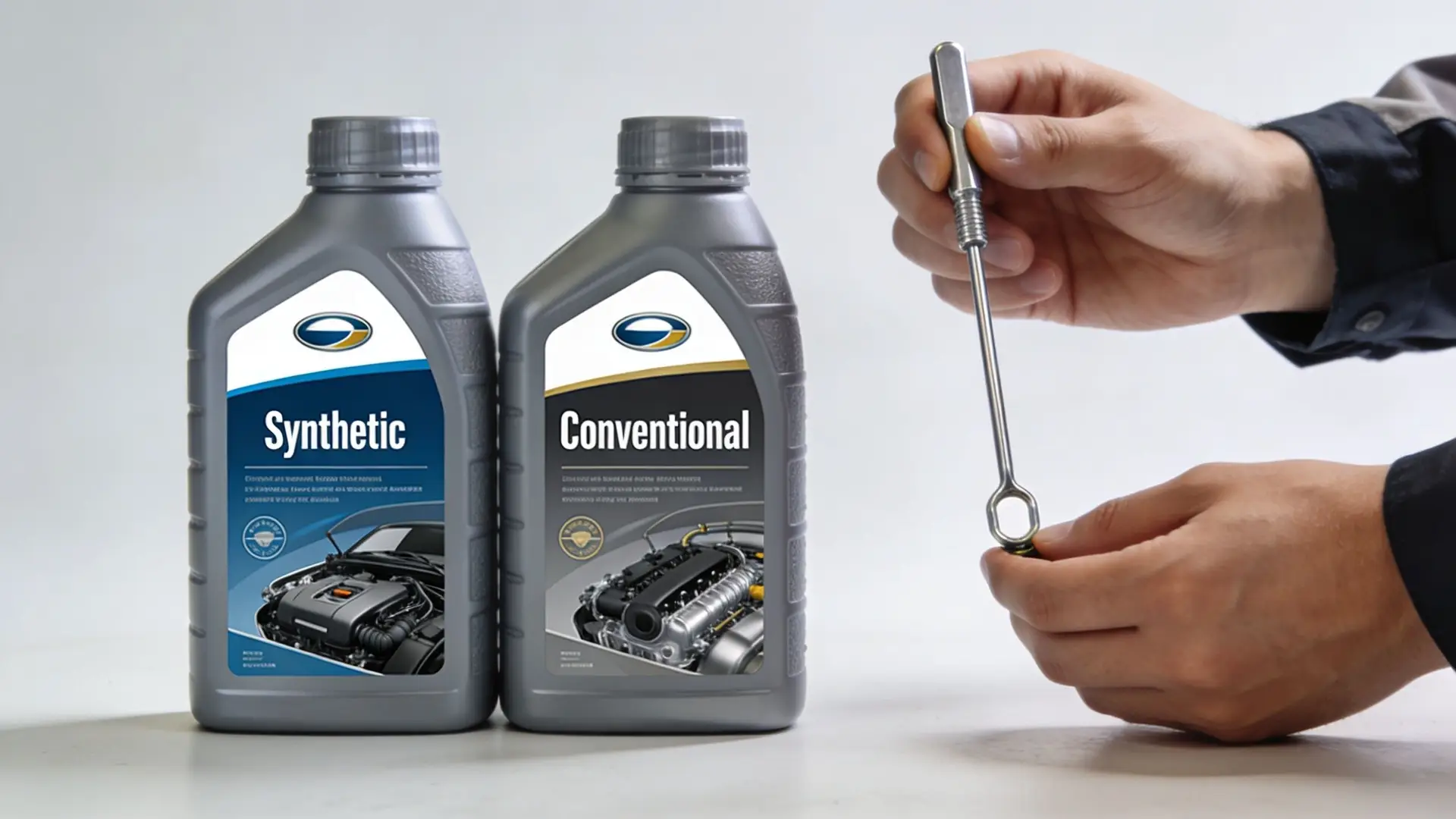
A transmission service bill is a lot like a grocery receipt. The total doesn't come from one thing. It comes from several smaller decisions that add up.
Your vehicle sets the starting point
A small sedan with a basic automatic is usually the easiest job. The pan is accessible, the fluid spec is common, and the capacity is manageable.
A truck, SUV, or performance model changes that. It may hold more fluid, require more disassembly, or use a fluid that has to match a tight manufacturer spec. That's one reason a compact car and a pickup can have such different estimates even when both need "a transmission fluid change."
Transmission type matters more than most drivers think
Not all transmissions use the same fluid or service method.
- Traditional automatic: Usually the most familiar service. These often have the widest pricing range because some get a simple drain-and-fill while others also need a filter and pan service.
- CVT: These are picky. The wrong fluid can create shift complaints fast, which is why shops have to match the exact specification.
- Dual-clutch or performance transmission: These often use premium fluid and more involved procedures, which pushes labor and parts upward.
If you want a plain-language overview of what a shop is doing during service, this guide on what a transmission service includes breaks it down well.
Fluid cost can outrun labor on some cars
Customers often assume labor is the whole story. Sometimes it is. Sometimes the fluid itself is the expensive part.
Modern transmissions often need specific synthetic ATF, and some units take a surprising amount of it. If your vehicle uses a premium CVT fluid or a specialty performance fluid, that line item alone can change the quote from "reasonable" to "why is this so high?"
Below is a useful visual if you want to see how service methods and parts of the job affect pricing in practice.
A low quote isn't always a better quote. Sometimes it only means less fluid gets replaced, the filter gets skipped, or the wrong service is being compared.
Labor isn't just shop time
Labor covers more than turning bolts. On many late-model vehicles, the technician has to verify fluid temperature, check fill level correctly, inspect fluid condition, and sometimes reset service information or road test the vehicle.
That's where a careful shop earns its price. A rushed transmission service can leave a vehicle underfilled, overfilled, or filled with the wrong spec. All three create trouble later, and none save money in the long run.
Transmission Flush vs Fluid Change Which Service Do You Need
A drain-and-fill costs $80 to $250 and typically replaces only 30 to 40 percent of the old fluid. A full flush costs $125 to $400 and replaces nearly 100 percent. Letting contaminated fluid stay in the system can contribute to wear that eventually leads to a $4,000 to $6,000 transmission rebuild, based on the service comparison published by Rohnert Park Transmission.
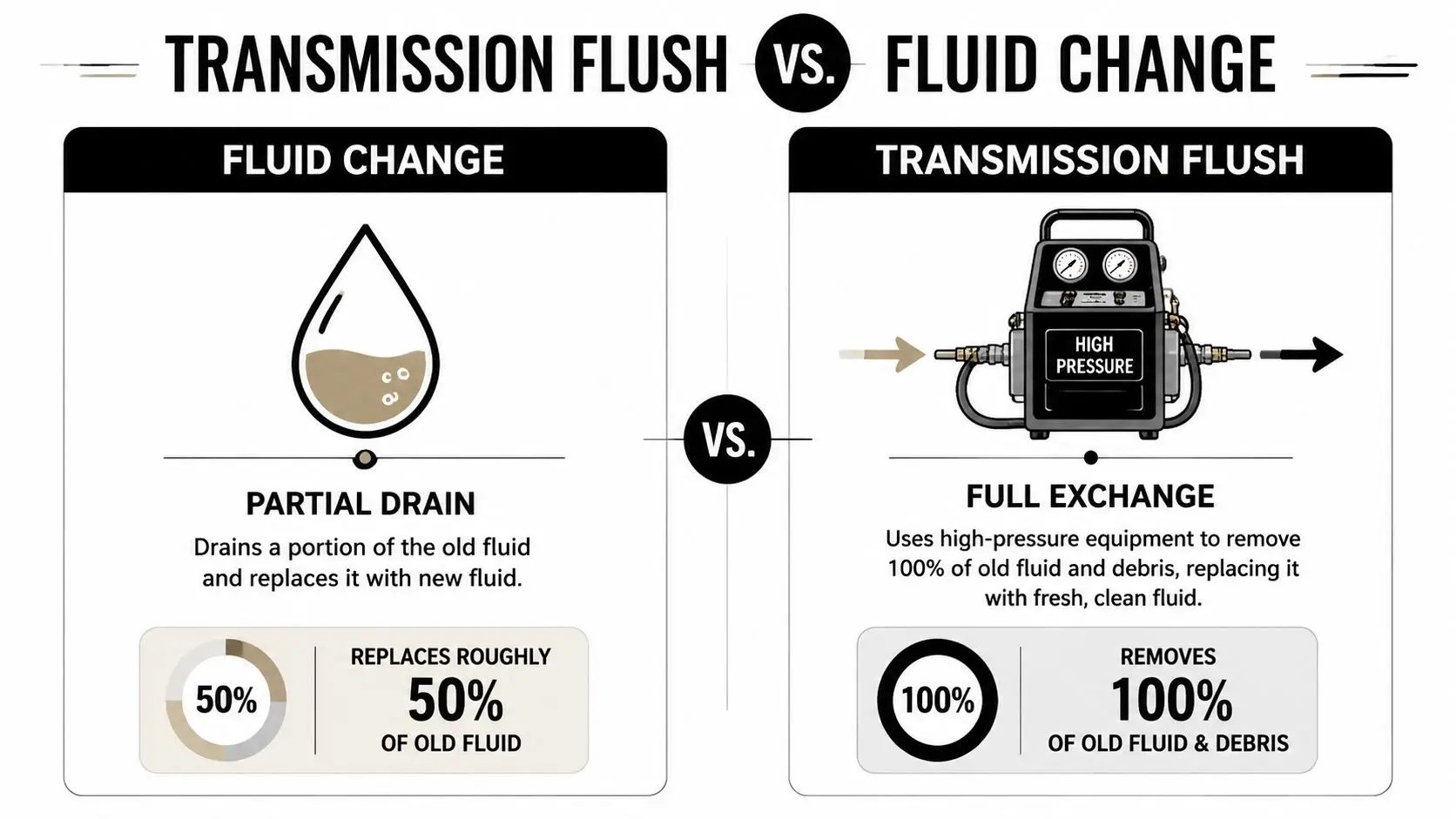
This is the part that confuses many vehicle owners. Drivers often hear "fluid change" and "flush" used as if they are interchangeable terms. They are not.
A drain-and-fill is the cheaper partial service
Think of a drain-and-fill like draining part of a bathtub and refilling it with clean water. You improve the fluid condition, but you haven't fully cleared out what stayed behind in the converter, cooler, and passages.
That can be fine for some vehicles and some maintenance situations. It is often the lower upfront price, and on certain older vehicles a conservative approach makes sense. But the customer should know it is a partial refresh, not a complete reset.
A flush is the more complete service
A proper flush or fluid exchange removes far more old fluid from the system. That's the main value. You're not mixing a little fresh fluid into a lot of worn fluid. You're replacing nearly all of it.
For many drivers, especially those keeping a vehicle long term, that extra cost is easier to justify when you compare it with the repair bill for a neglected transmission. If you want a broader maintenance analogy, boat owners think about cooling systems the same way. These essential engine flushing tips for saltwater boaters show the same principle: contamination left behind keeps doing damage.
| Service | What it does | Best for |
|---|---|---|
| Drain-and-fill | Replaces part of the old fluid | Light maintenance, selective cases |
| Flush or exchange | Replaces nearly all fluid in the system | Drivers who want fuller fluid renewal |
Shop advice: Ask the technician what percentage of old fluid the service is expected to remove on your exact transmission.
Which one makes more financial sense
If your fluid is overdue but the transmission is still operating normally, a more complete service often gives the better long-term result. If the vehicle has a complicated history, very high mileage, or questionable prior maintenance, the right answer depends on inspection and fluid condition.
That's why blanket advice doesn't work. The right shop should look at what you're driving, how it shifts now, and whether the fluid shows age or contamination before recommending a service.
If you want a plain explanation of how fluid exchanges fit into broader maintenance, this page on flushing automotive fluids is a helpful starting point.
DIY Savings vs Professional Service in Fort Worth
For a high-mileage vehicle, a DIY transmission fluid change may cost $40 to $100 for fluid, while professional service often lands at $80 to $250. The reason many drivers still choose a shop is simple: using the wrong fluid or making a filling mistake can contribute to a $4,000+ rebuild, according to Kelley Blue Book's transmission fluid service guidance.
If you're comfortable changing engine oil, it's tempting to think transmission service is just the same job with a different bottle. It isn't. On older vehicles with a dipstick and straightforward pan, DIY can work for someone careful and well-prepared. On late-model automatics and CVTs, the margin for error is much smaller.
Where DIY can make sense
DIY usually works best when all of these are true:
- You know the exact fluid spec: Not "universal ATF," not "close enough." The exact fluid.
- Your vehicle has a simple service procedure: Some older designs are much more forgiving than newer sealed units.
- You can verify the final level correctly: Many transmissions require a specific temperature range and process.
For comfort on longer drives after maintenance, a few drivers also ask about seating fatigue and daily usability. These ergonomic tweaks for any vehicle drive are useful if you're spending a lot of time behind the wheel.
Why professional service often saves money anyway
A shop doesn't just sell fluid. It sells procedure, inspection, and accountability. That matters most on high-mileage Fort Worth vehicles, where heat and age already put extra stress on the transmission.
Here is the practical comparison I give customers:
| Aspect | DIY (Do-It-Yourself) | Professional Service (e.g., Kwik Kar) |
|---|---|---|
| Upfront cost | Lower if the job is simple | Higher, but includes labor and inspection |
| Fluid selection | Easy to get wrong | Correct spec is matched to the vehicle |
| Fill verification | Can be difficult on sealed units | Completed with the proper process |
| Risk level | Higher | Lower |
| Convenience | Time-consuming and messy | Faster and more predictable |
If the transmission doesn't have a forgiving fill procedure, DIY savings can disappear with one mistake.
Fort Worth reality for older and high-mileage cars
A lot of local vehicles are kept for the long haul. That's smart, but it also means service choices matter more. On a high-mileage car, you don't want guesses. You want the right fluid, the right level, and a technician who notices early signs of wear before they become a tow bill.
If you want to compare transmission service with related maintenance and see how shops bundle common fluid work, this resource on oil change and transmission service planning is worth reading.
Telltale Signs Your Transmission Fluid Needs Attention
Most drivers don't check transmission fluid until the car starts acting different. By then, the vehicle has already been trying to warn you.
The easiest way to think about it is by using your senses. What you hear, feel, see, and smell tells you a lot.
What you may feel while driving
Pay attention to how the vehicle shifts in normal traffic.
- Delayed engagement: You shift into drive or reverse and the vehicle takes too long to move.
- Hard or jerky shifts: The transmission changes gears with a thump or a jolt.
- Slipping: The engine revs, but the car doesn't accelerate the way it should.
These symptoms don't automatically mean the fluid is the only problem, but they do mean the transmission deserves attention soon.
What you may hear or smell
Bad fluid often changes how a transmission sounds.
- Whining or humming: A transmission low on fluid or running worn fluid may start making a steady whine.
- Clunking during shifts: Internal parts may be struggling to engage smoothly.
- Burning smell: Old fluid loses its protective quality and can develop a scorched odor.
Burnt-smelling fluid is a sign to stop guessing and have the transmission inspected.
What you may see
Visual clues matter too.
- Red or brown spots under the vehicle: Fresh transmission fluid is usually reddish. Older fluid often darkens.
- Dirty-looking fluid on the dipstick: If your vehicle has a transmission dipstick, fluid that looks dark or smells burnt needs professional attention.
- Warning light: Some transmission problems trigger a check engine light even before drivability gets much worse.
Don't wait for every symptom to show up at once. If the car is shifting oddly and you also notice fluid spots where you park, that's enough reason to schedule a service check.
Smart Tips and Answers to Your Top Questions
The best way to control transmission costs is to stay ahead of the problem. Once a transmission starts slipping badly or overheating, fluid service may no longer be the full answer.
Simple ways to keep the bill reasonable
- Follow the owner's manual: Your vehicle's service schedule is still the first place to look.
- Ask what service is being quoted: Drain-and-fill, flush, filter service, and gasket replacement are not the same line item.
- Handle small symptoms early: Rough shifts and leaks are cheaper to diagnose now than after major wear sets in.
Common questions drivers ask
How often should transmission fluid be changed?
It depends on the vehicle and how you drive it. Check the factory maintenance schedule and factor in local heat, towing, stop-and-go traffic, and mileage.
Can a fluid change fix a slipping transmission?
Sometimes fluid service helps if worn or low fluid is the cause. If internal damage is already present, fresh fluid won't reverse that.
Does fluid color matter?
Yes. Clean fluid usually looks much healthier than old, overheated fluid. Color alone doesn't diagnose everything, but dark or burnt-smelling fluid is a warning sign.
Should I choose the cheapest quote?
Only if you're sure you're comparing the same service, fluid, and parts. A lower quote can be fair. It can also mean corners are being cut.
If you want the straight answer to how much it cost to change transmission fluid, start with this range: most drivers spend somewhere in the $150 to $400 window, and special transmissions can go much higher. Notable savings come from choosing the right service before the transmission gives you a much bigger bill.
If you'd like an honest quote and a clear recommendation based on your vehicle, schedule service with Kwik Kar Oil Change and Auto Care. Our ASE-certified team on White Settlement Road helps Fort Worth drivers understand exactly what their transmission needs, what it doesn't, and what the service will cost before the work starts.