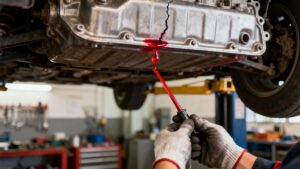
Think of a professional fuel system flush as a much-needed detox for your car's engine. This isn't about dumping a bottle of cleaner into your gas tank and hoping for the best. It's a comprehensive service using specialized equipment to meticulously remove gunk and deposits from your fuel lines, injectors, and valves. The whole point is to restore your engine's performance and improve your fuel efficiency.
Decoding the Fuel System Flush Process
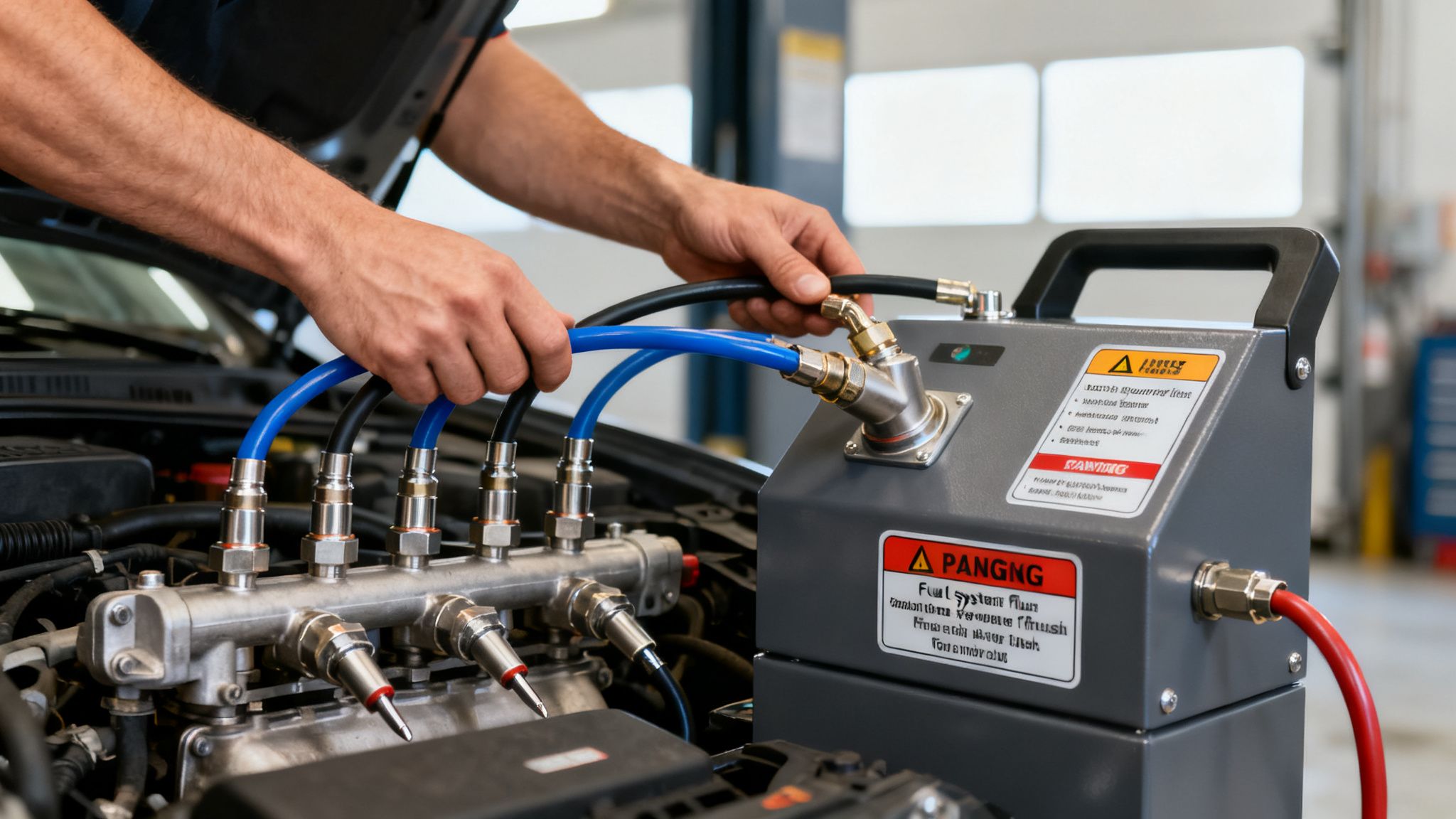
Your car's fuel system works a lot like its own circulatory system. Gas is pumped from the tank, sent through the lines, and then sprayed through tiny, precise nozzles—the fuel injectors—to create combustion. But over thousands of miles, the gasoline itself, along with the byproducts of combustion, can leave behind nasty carbon deposits.
This buildup is like plaque in an artery, slowly clogging up the system and choking off the fuel flow. When that happens, your engine can't get the precise air-fuel mixture it was designed for, which is when you start noticing a whole range of performance problems. That's where a professional fuel system flush comes in.
How the Service Actually Works
When you bring your vehicle to a shop like Kwik Kar for a flush, our technicians don't just add a chemical to your tank. Instead, they hook up a specialized machine directly to your engine’s fuel rail, completely bypassing the gas tank. This machine then pumps a highly concentrated cleaning solution through the fuel lines and injectors under pressure.
This isn't a gentle rinse. The process is designed to aggressively dissolve and blast away stubborn carbon, varnish, and other gunk that a simple bottled additive could never touch. The goal is to get your fuel injectors spraying in their original, cone-shaped mist pattern for perfect combustion.
It's no wonder this service is becoming more popular. The global fuel system cleaner market was valued at a massive USD 2.96 billion in 2023 and is expected to hit USD 4.74 billion by 2032. That's a clear sign that drivers everywhere are realizing proactive maintenance is key to engine longevity. For Fort Worth drivers putting serious miles on their trucks or family SUVs, this kind of service is practically essential. You can dig into more market insights over on skyquestt.com.
For a quick overview, this table breaks down the essentials of the service.
Fuel System Flush at a Glance
| Aspect | Quick Answer |
|---|---|
| What Is It? | A deep-cleaning service that removes carbon deposits from the entire fuel system. |
| Why Is It Needed? | To restore lost performance, improve fuel economy, and reduce harmful emissions. |
| How Often? | Typically recommended every 30,000 to 45,000 miles, or if you notice symptoms. |
| Key Benefit | Restores the fuel injector's spray pattern for optimal engine efficiency. |
| Is it a DIY Job? | Not recommended. Professional equipment and solutions are needed for best results. |
This snapshot gives you the core idea, but the real benefits are what you'll feel behind the wheel.
The Primary Benefits of a Clean System
At the end of the day, a fuel system flush is all about getting your engine running like it did when it was new. The biggest improvements you'll notice are:
- Restored Fuel Economy: When your injectors can deliver a fine, even mist of fuel, it burns more completely. That means you squeeze more miles out of every single gallon.
- Smoother Engine Performance: Clearing out those clogs can finally put an end to that annoying rough idle, hesitation when you accelerate, or engine stumbling.
- Improved Acceleration: A clean system means your engine gets the fuel it demands the instant you step on the gas, bringing back that lost pep and power.
- Lower Emissions: A more efficient burn means fewer unburned hydrocarbons escape out the tailpipe, helping your vehicle run cleaner and pass emissions tests.
Key Signs Your Vehicle Needs a Fuel System Flush

Your car has ways of telling you something’s wrong, usually through subtle shifts in how it drives. A clogged-up fuel system is no exception, and it often sends out clear warning signs long before a major problem hits. If you learn to spot these symptoms early, a fuel system flush can solve the issue before it turns into a much more expensive repair.
Think about it this way: your engine can't run properly without a clean, steady supply of fuel. It's like trying to run a marathon while breathing through a coffee straw. You'd feel sluggish, weak, and out of breath—and that’s exactly how your car feels when carbon deposits and gunk start choking off the fuel flow.
Poor Fuel Economy
One of the first and easiest things to track is a noticeable dip in your miles per gallon (MPG). If you suddenly feel like you’re on a first-name basis with the gas station attendant, a dirty fuel system is a likely culprit.
When fuel injectors get clogged, they can't deliver that fine, atomized mist of fuel your engine is designed for. Instead of a clean spray, the fuel might just drip or stream into the cylinder. This leads to an incomplete burn, which wastes gas and forces you to pay more at the pump just to get through your daily commute. A professional flush gets those injectors clean, restoring that perfect spray pattern and boosting your fuel efficiency.
Rough Idling and Stalling
Does your car shake, shudder, or vibrate while you’re stopped at a red light? That rough idle is a classic sign of an imbalanced fuel-to-air ratio. Clogged injectors don't deliver fuel evenly, which can cause some cylinders to misfire or work harder than others.
This imbalance is what creates those vibrations you feel through the steering wheel and your seat. If it gets bad enough, the engine can be starved of fuel to the point where it just stalls out completely. A fuel system flush ensures every cylinder gets the consistent fuel supply it needs, which smooths out your idle and prevents those surprise shutdowns.
An engine's smooth operation depends on perfect timing and balance. When fuel delivery becomes erratic due to blockages, it disrupts this delicate harmony, leading to the shakes and stumbles that signal a need for service.
Sluggish Acceleration and Hesitation
Another tell-tale sign is a real lack of get-up-and-go when you hit the gas pedal. If your car hesitates or feels like it's dragging its feet when you try to merge onto the highway, it's struggling to get the fuel it needs, when it needs it.
That delay happens because the restricted fuel flow just can't keep up with the engine's demand for more power. The engine essentially "hiccups" while it waits for fuel, and that's the frustrating lag you feel. A good, thorough cleaning clears out those blockages, bringing back the crisp, immediate response you expect when you accelerate.
If any of this sounds familiar, it’s a strong sign your vehicle is overdue for a fuel system cleaning. Here's a quick checklist to help you connect the dots:
- Frequent Fuel Stops: Are you filling up the tank more often, even though your driving routine hasn't changed?
- Shaky Stops: Does your car vibrate or feel unstable when idling at a stoplight?
- Delayed Response: Do you notice a lag between pressing the accelerator and your car actually picking up speed?
- Failed Emissions Test: High levels of unburned hydrocarbons on an emissions report can point directly to a dirty fuel system.
Paying attention to these signs lets you stay ahead of the game and take care of your car's health before a small problem becomes a big one.
Real-World Benefits of a Professional Fuel System Service
A professional fuel system flush isn't just about fixing a problem—it’s about getting tangible, real-world benefits you can feel behind the wheel and see in your wallet. It's a smart investment in your car's immediate performance and its long-term health, turning a technical tune-up into practical advantages for your daily Fort Worth commute.
The first thing most drivers notice is a jump in fuel efficiency. When your fuel injectors get gunked up with carbon deposits, they can't spray that fine, even mist of fuel the engine needs for a clean burn. This forces your engine to gulp down more gas to get the job done, and you'll see your MPG take a hit. A good flush cleans out those injectors, making sure every last drop of fuel is used effectively. That means fewer trips to the gas station.
Better Performance and a Longer Engine Life
Beyond just saving on gas, a clean fuel system makes your car feel better to drive. By clearing out the deposits that were starving your engine of fuel, a flush brings back that crisp, instant throttle response. That annoying hesitation when you step on the gas pedal? Gone. In its place, you get smooth, confident acceleration.
This kind of preventative care also does wonders for your engine's longevity.
- Reduced Engine Strain: When each cylinder gets the right amount of fuel consistently, it prevents the uneven wear and strain that can lead to expensive component failures down the road.
- Protection for Critical Parts: A clean system is good for more than just the injectors. It also protects vital and expensive parts like the catalytic converter, which can get wrecked by unburned fuel coming from a dirty system.
Think of it as protecting your car’s most critical component from unnecessary wear and tear. You can learn more about how a clean system is essential for your vehicle's overall health in our detailed guide.
Lower Emissions and Easier Inspections
A cleaner burn isn't just about performance—it's also about being a more responsible driver. A properly working fuel system drastically cuts down on the harmful pollutants your car spews out. For drivers here in Texas, that has a very real advantage when it's time for the annual state inspection.
A fuel system flush helps ensure your vehicle passes emissions testing by minimizing the unburned hydrocarbons that exit your tailpipe. It’s a smart step to avoid the headache and expense of a failed inspection.
This push for cleaner-running vehicles is happening everywhere. In fact, strict regulations like the U.S. EPA's Tier 3 rules are helping drive the fuel system cleaner market, which hit a massive USD 3.7 billion in 2024. For Fort Worth drivers, especially those with slightly older cars, a professional flush can restore efficiency, potentially saving 3-5 MPG and keeping your car running cleaner for years to come.
Fuel System Flush vs. Fuel Injector Cleaning
It’s a question we hear all the time: "Isn't a fuel system flush the same as an injector cleaning?" While both services aim to get your engine running better, they're actually quite different in what they do and how effective they are. Figuring out which one your car needs is key to solving performance problems without wasting money.
Think of it like this: a fuel injector cleaning is like spot-treating a stain on a carpet. It’s focused on just one part of the problem—the injectors themselves, which are the tiny nozzles that spray fuel into your engine. It can certainly help, but it doesn't do anything about the gunk that might be building up in the fuel lines, filter, or even the gas tank.
A fuel system flush, on the other hand, is the deep clean for the whole room. It’s a comprehensive treatment designed to clear out the entire fuel delivery path, from the tank all the way to where the magic happens in the combustion chamber. This approach gets rid of all the nasty carbon deposits, varnish, and sediment that choke off performance.
Comparing The Scope Of Each Service
To really see the difference, let’s break down what each service actually covers. While a targeted cleaning has its place, only a full flush can get to the root of the problem and restore your engine's peak efficiency. If you want to learn more about the specific symptoms of dirty injectors, we have some great info on the benefits of fuel injector cleaning you can check out.
As this graphic shows, a complete flush creates a chain reaction of positive benefits, starting right at the gas pump.
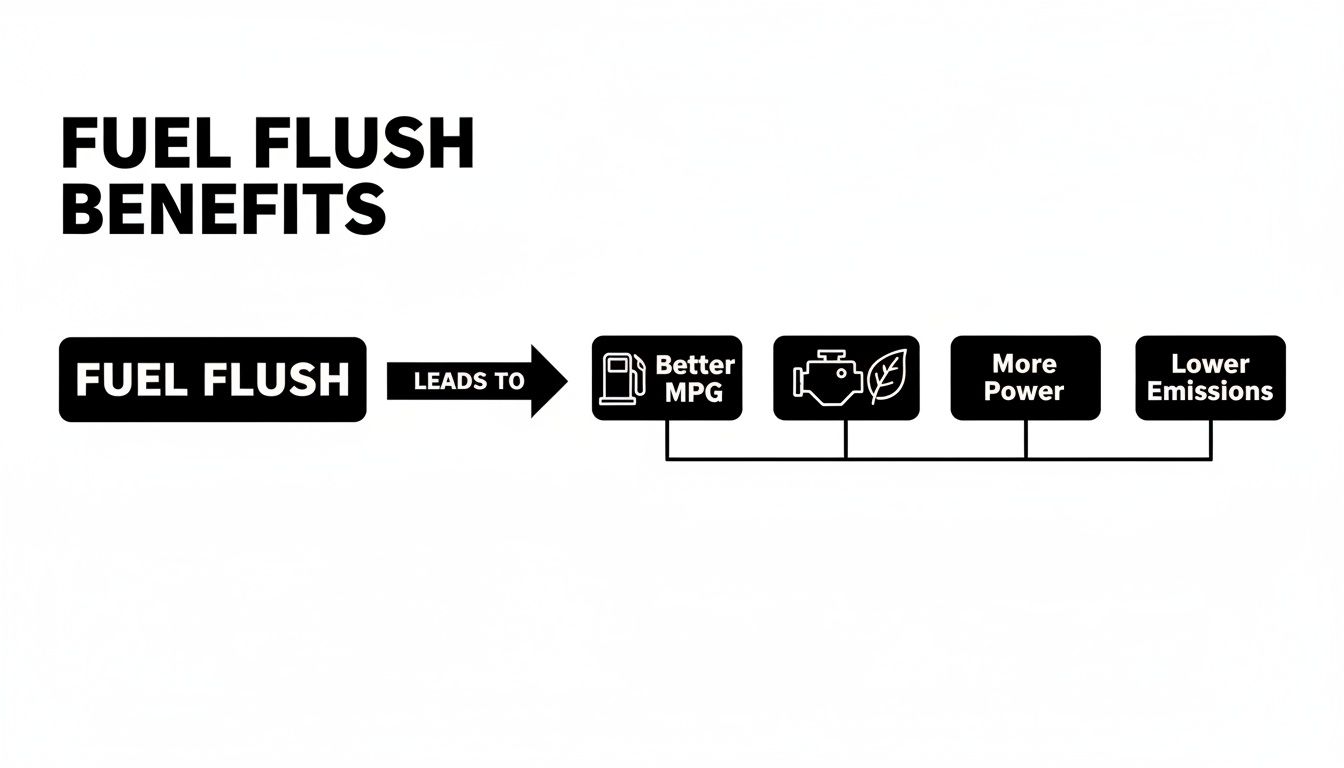
You can see how a clean system directly leads to better gas mileage. That improved efficiency, in turn, helps restore lost engine power and, as a bonus, reduces harmful emissions.
Our Pro Tip: When you're trying to decide, let the symptoms be your guide. If you’re dealing with a bunch of issues at once—like poor MPG, a rough idle, and hesitation when you accelerate—a comprehensive fuel system flush is almost always the smarter, more effective fix.
To lay it all out, here's a direct, side-by-side comparison to help you see exactly what you get with each service.
Comparing Fuel System Flush and Fuel Injector Cleaning
This table offers a direct comparison to help you understand the scope and benefits of each service, clarifying which is right for your vehicle's specific needs.
| Feature | Fuel System Flush | Fuel Injector Cleaning |
|---|---|---|
| Scope of Service | Cleans the entire fuel path: lines, rails, injectors. | Primarily focuses on cleaning the fuel injectors. |
| Primary Goal | To restore total system efficiency and performance. | To improve the injector's spray pattern. |
| Effectiveness | Addresses root causes of poor performance system-wide. | Addresses a single component's condition. |
| Best For | Vehicles with multiple symptoms or high mileage. | A targeted approach for specific injector issues. |
When you look at it this way, it's clear that a fuel system flush offers a much more thorough and lasting solution. It doesn't just clean the injectors; it makes sure they receive a clean supply of fuel, which stops them from getting clogged right up again.
How Often Should You Schedule a Fuel System Flush
Figuring out the right time for a fuel system flush isn't a one-size-fits-all situation. While some maintenance tasks have a pretty rigid schedule, this service really depends on your specific vehicle and, just as importantly, how you drive it. The ideal timing is a mix of your car's age, its mileage, and your daily driving habits.
Think about the difference between a daily commute filled with Fort Worth stop-and-go traffic versus long, steady highway cruising. That city driving is much harder on your fuel system, leading to gunk and deposits building up a lot faster. On the same token, older, higher-mileage vehicles are naturally more likely to develop the kinds of clogs this service is designed to clear out.
Finding Your Service Sweet Spot
A good rule of thumb for most cars and trucks is to schedule a professional fuel system flush about every 30,000 miles. This interval usually strikes a great balance, acting as a powerful preventative measure to keep your engine running efficiently without over-servicing. But remember, this is just a general guideline.
The single best source of information is always your vehicle's owner's manual. Car manufacturers provide specific maintenance schedules tailored to your engine, and it’s always the smartest place to start.
Beyond what the manual says, the most reliable advice comes from a certified technician who can actually look at your vehicle and assess its condition. Here at Kwik Kar, we can help you put together a maintenance plan that makes sense for your car's unique needs and your driving style.
Why Proactive Maintenance Matters
Staying ahead of fuel system problems is more than just good practice—it's a smart financial move. The automotive fuel system market is projected to hit USD 87.7 billion by 2033, a number that really highlights how crucial these complex components are.
For Fort Worth drivers with high-mileage vehicles, an unclean system is one of the leading causes of engine misfires, which can easily lead to repair bills anywhere from $500 to $1,000. By investing in a timely fuel system flush, you're not just restoring performance. You're actively preventing expensive breakdowns and potentially adding thousands of miles to your engine's life. You can explore more about these automotive market trends to see why this is so important.
Why Choose Kwik Kar for Your Fort Worth Fuel Service
Choosing the right auto shop is just as critical as picking the right service for your car. At Kwik Kar Oil Change & Auto Care, we blend deep technical expertise with a genuine commitment to honesty, making us the go-to choice for a Fort Worth fuel system flush. Our team isn't just a group of mechanics; they're ASE-certified technicians who truly understand the complex inner workings of today's engines.
We believe in doing the job right the first time, every time. That means using the right diagnostic tools to accurately pinpoint the problem and only using premium-grade cleaning solutions that we know will deliver real, noticeable results. You’ll never have to worry about us pushing services you don’t need or using high-pressure sales tactics.
Our Commitment to Transparent Service
Our goal has always been to build lasting relationships with our customers through straightforward, honest communication. We give you upfront pricing and take the time to explain exactly what your vehicle needs and why, so you can make confident, informed decisions about your car’s health. This honest approach is what the best in the automotive service industry strive for, and it’s a standard we live by every day.
At Kwik Kar, you get more than just a repair—you get a partner dedicated to maintaining your vehicle's performance and helping it last longer. We make sure every single service is done with meticulous care and attention to detail.
Ready to get your car’s performance back on track? Find out more about our professional fuel system service in Fort Worth and schedule your appointment today to see the Kwik Kar difference for yourself.
Your Top Questions About Fuel System Flushes
Even after hearing all the good things a fuel system flush can do, you probably still have a few questions. That’s perfectly normal. We’ve put together some straightforward answers to the questions we hear most often to help you feel confident about what’s best for your car.
One of the first things on everyone's mind is cost. The price for a professional fuel system flush can shift a bit depending on your car's make and model, but it’s a surprisingly affordable bit of preventative care. Think of it as an investment that pays you back, both in better gas mileage and by helping you sidestep huge repair bills for things like a fried catalytic converter or damaged engine parts.
Can I Just Use a Bottled Additive Instead?
It's tempting to just grab a bottle of fuel system cleaner off the shelf at the auto parts store, but it's crucial to know what you're actually getting. Those additives are basically a light dusting compared to the deep, thorough cleaning of a professional service. While they might help with some very minor gunk, they just don't have the muscle to break down the stubborn, baked-on carbon deposits that are really killing your car's performance.
A professional fuel system flush is a whole different ballgame. We use specialized equipment to push a powerful, concentrated cleaning solution through your entire system under pressure. It's the only way to really blast out the tough grime clogging up your fuel injectors and lines.
Here’s a good way to think about it: using a bottled additive is like trying to clean a greasy oven with a garden hose. A professional flush is like calling in a crew with a high-pressure steam cleaner. It’s a completely different level of cleaning power designed for a much tougher job.
Is a Fuel System Flush Safe for My Older Car?
Yes, absolutely. In fact, older and high-mileage cars are often the perfect candidates for this service. After tens of thousands of miles on the road, it’s a near-guarantee that carbon has built up inside the engine, slowly but surely robbing it of the power and efficiency it had when it was new.
A professional flush can safely turn back the clock on an aging engine, helping it run smoother and last longer. It’s one of the most effective ways to breathe new life into a car that's been with you for years. Clearing out all that accumulated gunk can bring back a surprising amount of its original get-up-and-go and make it a more reliable ride all around.
Ready to get your vehicle’s performance and efficiency back on track? Trust the certified experts at Kwik Kar Oil Change and Auto Care for a professional fuel system flush that actually works. Schedule your appointment online today!