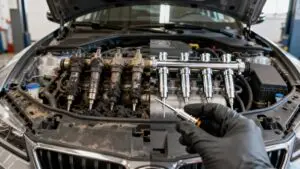




A burning oil smell after you drive usually means oil is reaching a hot part of the engine, most often the exhaust manifold, and vaporizing. It can also mean oil is burning inside the engine. Check the dipstick first. If the level is low, or you see smoke or an oil pressure light, stop driving. Our technicians at 9613 White Settlement Rd in Fort Worth can find the source with an engine diagnostic so you fix the right part the first time.
TL;DR
- Oil on a hot exhaust manifold gives an acrid, nose-wrinkling smell, and even a small drop can smell strong.
- Check the dipstick first. A low level plus a smell means the oil is going somewhere, and the engine needs attention.
- Stop driving if the oil pressure light comes on, smoke comes from under the hood, or the level is very low.
- Common causes are a leaking valve cover gasket, a loose filter or oil cap after a recent oil change, a bad seal, or oil burning inside the engine.
- Repair costs range from a few dollars for a cap to thousands for internal engine wear, so early diagnosis matters.
Table of Contents
- Why does a car smell like burning oil after driving?
- The most common causes
- What to check first
- Can you keep driving?
- What does it cost to fix?
- Finding the source before you spend money
- Our perspective
- Get it checked in West Fort Worth
- FAQ
- Sources
Why does a car smell like burning oil after driving?
Engine oil is meant to stay inside the engine. When it escapes onto a hot surface, it burns off. Exhaust parts can reach roughly 800 to 1,400 degrees Fahrenheit in normal operation, so a few drops are enough to make a smell you notice right away.
Popular Mechanics describes the smell as acrid and earthier than cooking oil. It also notes that a leaky valve cover may leave no puddle on the ground, because the oil drizzles onto the exhaust and vaporizes at once. No spot on your driveway does not mean no leak.
The most common causes
Castrol lists the usual leak sources: worn valve cover gaskets, oil pan gaskets, failed crankshaft seals, loose or cross-threaded oil filters, loose filler caps and overfilled oil. Rubber and cork gaskets harden, shrink and crack as they cycle through heat.
That last point matters in Fort Worth, where summer heat plus long stop-and-go stretches on I-30 and Highway 183 keep engine bays hot for hours.
| Likely cause | What you notice | Typical clue |
|---|---|---|
| Valve cover gasket | Smell after the engine is hot, sometimes in the cabin | Oil residue on top of the engine, little on the ground |
| Oil pan gasket | Drips under the car, smell at stops | Wet, dirty oil film along the bottom of the engine |
| Crankshaft or cam seal | Oil near the front or rear of the engine | Oil sling around pulleys or bell housing |
| Loose filter, drain plug or cap | Smell soon after an oil change | Fresh oil around the filter or cap |
| Overfilled oil | Smell and pressure-related leaks | Dipstick reads above the full mark |
| Burning oil inside the engine | Low oil level with no drips, blue-gray exhaust smoke | Oil level keeps dropping |
AutoZone adds overfilled oil and an overheating engine to the list. Overfilling forces oil into places it should not go, and overheating breaks old or thin oil down faster.
What to check first
These quick checks take a few minutes and tell you how urgent the problem is.
- Check the dipstick. Park on level ground with the engine off and cooled. AllData’s editor advises checking the oil level first, and checking it every two weeks and before a road trip.
- Look for drips or wet spots under the car after it has sat. AARP’s guidance notes wet spots can indicate a leak.
- Note when the smell is strongest. A smell strongest right after shutdown points to an external leak. A steady smell inside the cabin can mean a leak near the fresh-air intake or oil burning in the cylinders, according to The Motor Guy.
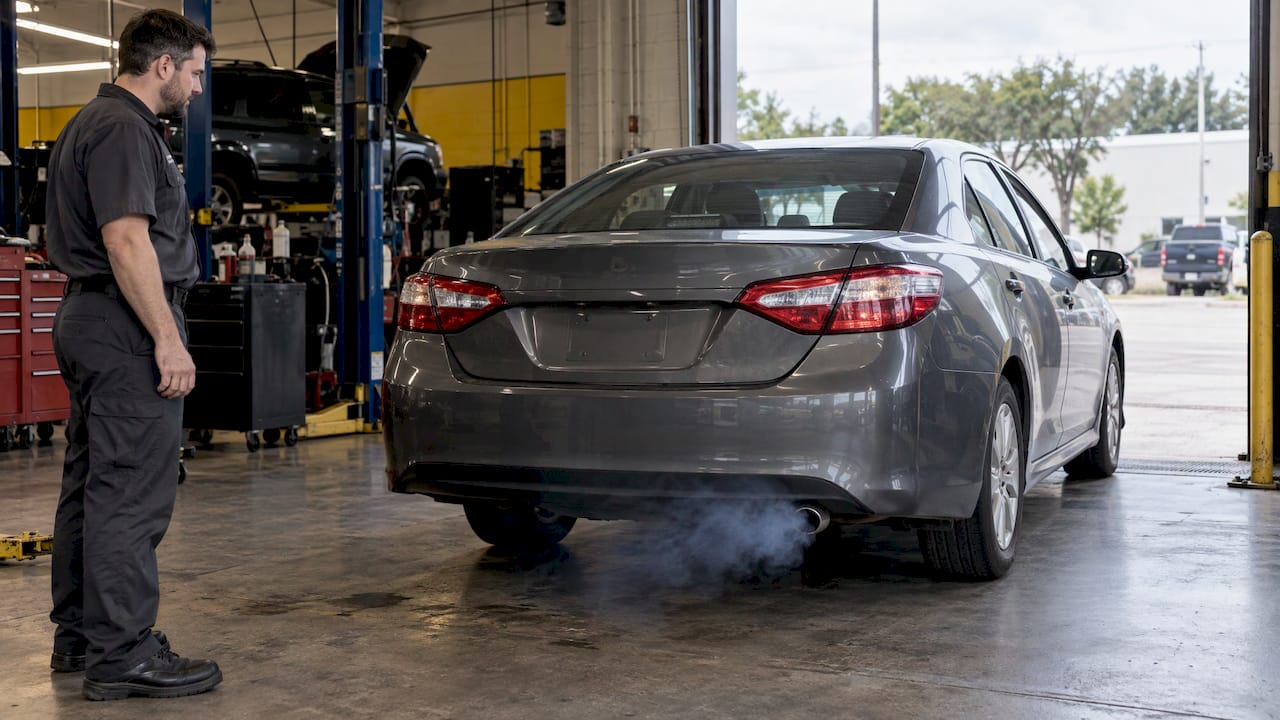
- Watch the exhaust. Blue-gray smoke suggests oil is burning internally. Our guide to what each exhaust smoke color means helps you read it.
- Think about your last service. A burnt oil smell shortly after an oil change can come from a loose drain plug, a poorly installed filter or a loose fill cap.
If the oil level is fine and you find no leak, AllData says to check transmission fluid, since it can blow onto the exhaust and smell like burning oil.
Leaking oil or burning oil?
Castrol explains the difference: a leak leaves drips or residue outside the engine, while burning oil lowers the level without visible drips and may show blue-gray smoke. A car can do both at once. Splash guards under the engine can hide small leaks from a quick look, and a leak at the valve cover can run all the way down to the oil pan, so the highest wet point is usually the real source. Our page on oil spots under your car shows what different spots mean.
Smoke patterns that point to internal burning
Drivway notes that blue smoke on a cold start that clears in a minute or two points to worn valve stem seals. Blue smoke under acceleration points to worn piston rings or cylinder wear. A burnt-oil smell without visible smoke can come from a PCV valve fault (the part that vents crankcase pressure) or an undiscovered leak. If your car goes through oil quickly, see why a car burns oil fast.
Can you keep driving?
A small leak with a healthy oil level is different from a smell with a dropping level. Stop driving in these cases:
- The oil pressure light comes on. Mazda’s owner’s manual says to stop on level ground, shut the engine off, wait five minutes, then check the level. If the light stays on with a normal level, stop the engine and have the vehicle towed. Other makes follow the same logic, so check your own manual. More on this in our oil pressure light guide.
- You see smoke coming from under the hood. AllData says to pull over immediately and have the vehicle towed.
- The dipstick shows very low oil. Top it off with the correct oil before moving the car, and have the cause found.
Oil on a hot exhaust is also a fire risk, which is another reason not to put this off. AARP’s guide flags the fire risk of a burning-oil smell.
If you cleaned up a spill in your driveway or garage, absorb fresh oil first and then treat the stain. This guide on cleaning grease spills from concrete walks through blotting and extraction.
What does it cost to fix?
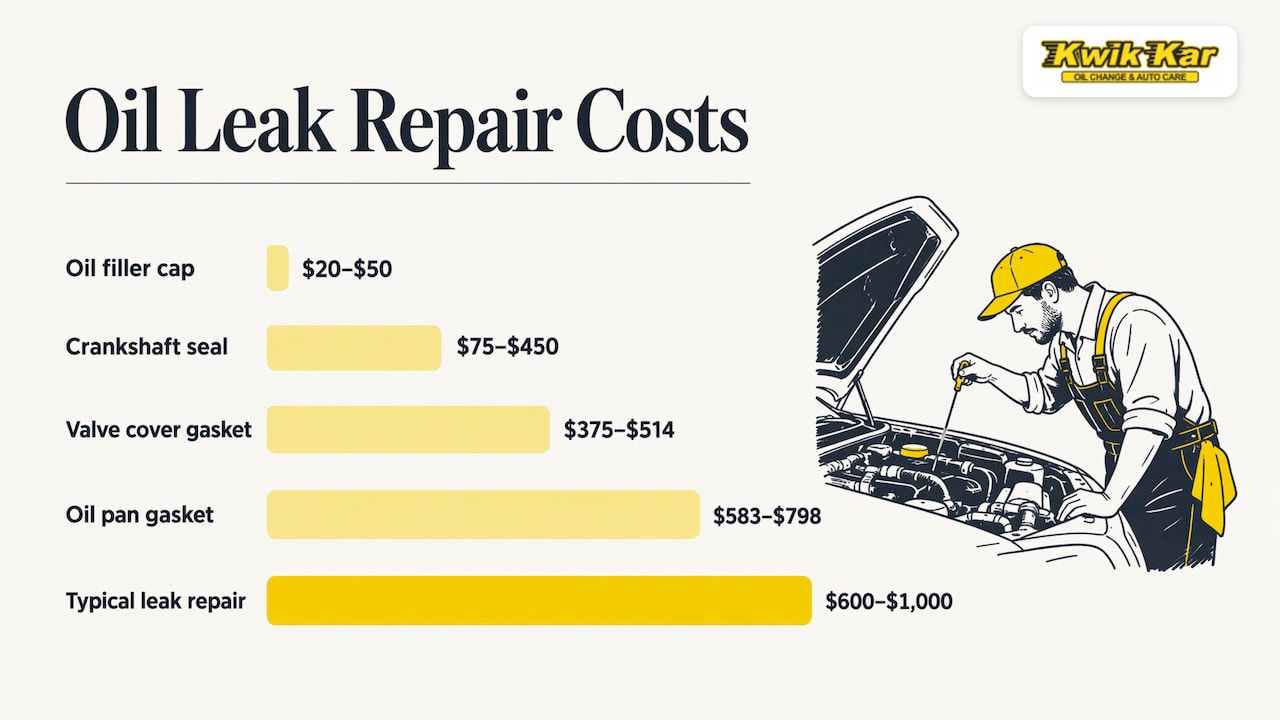
Costs depend on the source, and published figures vary by region and shop. As a rough guide, Castrol’s U.S. table lists an oil filler cap at $20 to $50, an oil filter at $50 to $140, a valve cover gasket at $375 to $514, an oil pan gasket at $583 to $798 and a crankshaft seal at $75 to $450. It puts diagnosis at about $100 and typical overall oil leak repair at $600 to $1,000.
Internal burning costs more. Drivway cites $50 to $200 for a PCV valve, $900 to $1,800 for valve stem seals, and $2,000 to $5,000 or more for piston rings or an engine rebuild. These are national estimates from 2026, not Kwik Kar prices. For a deeper look, read our oil leak repair cost guide and the page on oil pan gasket leaks.
The pattern is clear: a cheap cause found early stays cheap. Castrol warns that an active leak can turn a $200 repair into a $5,000 engine replacement.
Finding the source before you spend money
Smells are easy to chase in the wrong direction. Working through the source first, as this piece on diagnosing the source of a car odor suggests, keeps you from masking the problem instead of fixing it. For oil, that means finding the leak or the burn, not covering the smell.
Our perspective
A burning oil smell is a symptom, not a diagnosis. The same smell can come from a $20 cap or an engine problem, and guessing is what gets expensive.
At Kwik Kar we approach it as full-service mechanical repair, not just an oil change. Our ASE-certified technicians use professional diagnostic equipment and digital vehicle inspections, so you can see what we see before approving work. We are RepairPal certified, and qualifying repairs carry a 24-month/24,000-mile warranty.
If the smell began after a recent oil change, tell us. We would rather re-check a filter or cap than have you drive around worried.
Kwik Kar
Get it checked in West Fort Worth
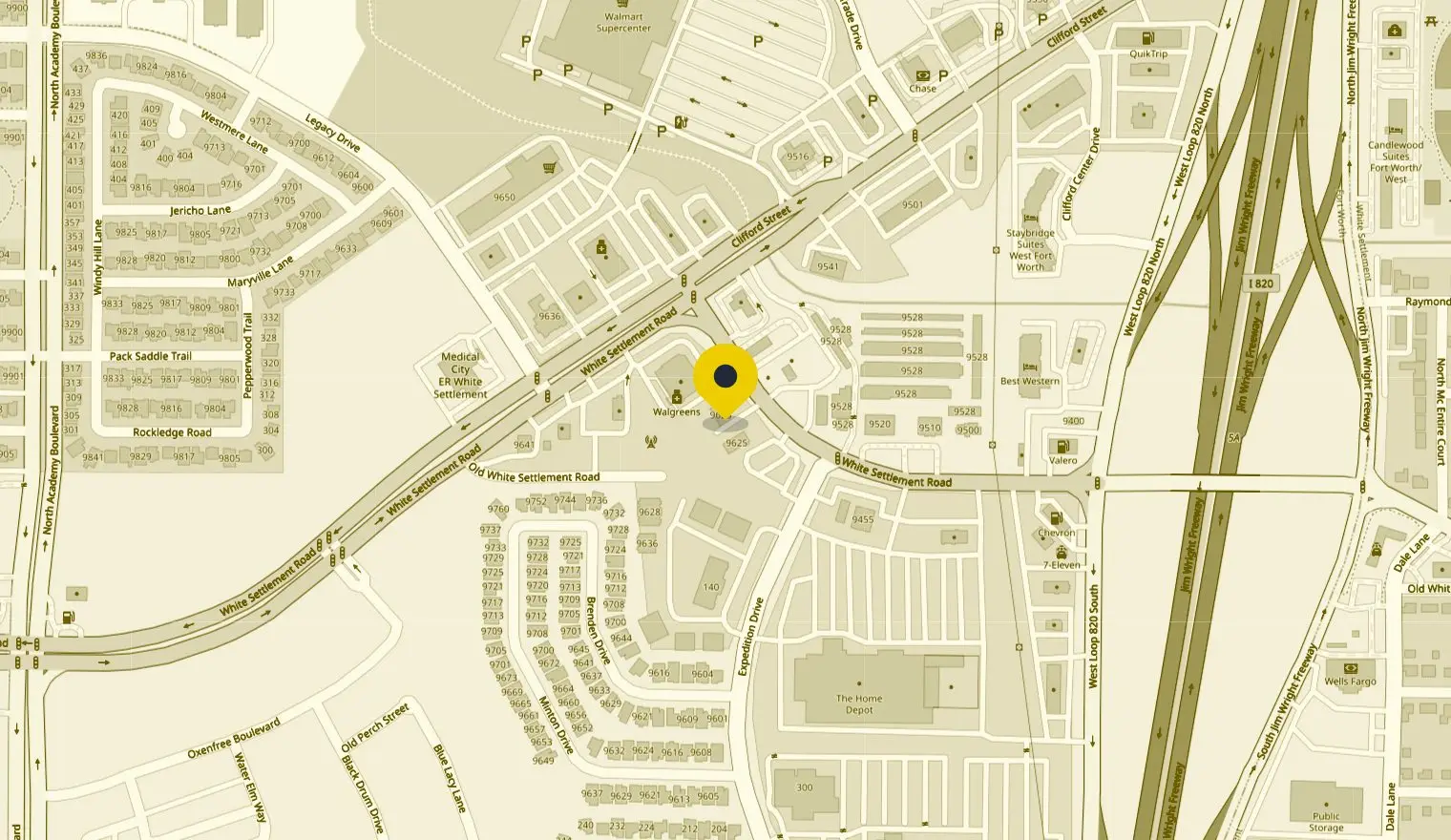
We are at 9613 White Settlement Rd, Fort Worth, TX 76108, serving drivers from White Settlement, Westworth Village, Westover Hills, River Oaks, Lake Worth and Benbrook. Our engine diagnostic and repair services cover leaks, gaskets, seals and more, and you can schedule a visit online. Pickup, SUV and rideshare drivers who log long highway or stop-and-go hours should not wait on this one. Fleet managers can ask about fleet maintenance.

Visit our website for the full list of services.
FAQ
Is it safe to drive if my car smells like burning oil?
Only if the dipstick shows a safe level and there is no smoke or oil pressure light. Even then, get it checked soon, since oil on a hot exhaust is a fire risk. If the light comes on or smoke appears, pull over and call for a tow.
Why does my car smell like burning oil after an oil change?
A loose drain plug, a poorly seated filter or a loose fill cap can let oil reach the exhaust. AllData lists these as common causes. Spilled oil during the change can also burn off for a day or two. If it persists, have the engine inspected.
Why do I smell burning oil inside the cabin?
Oil vapors from a leak near the exhaust can be drawn in through the fresh-air intake, especially at highway speed. The Motor Guy describes a valve cover leak doing exactly this. A smell that stays constant can also mean oil burning in the cylinders.
How much does it cost to fix a burning oil smell?
It ranges from about $20 for a filler cap to several thousand dollars for internal engine wear, with diagnosis around $100 in Castrol’s U.S. figures. A proper diagnosis tells you which end of that range applies.
Sources
- Auto Diagnosis: What’s That Smell?, Popular Mechanics
- How to fix an oil leak: causes and repair costs, Castrol USA
- Why Does My Car Smell Like Burning Oil, AutoZone
- Use Your Senses: What’s that Smell?, AllData
- 7 Car Smells You Should Never Ignore, AARP
- Car Smells Like Burning Oil: Causes, Fixes, and Costs, The Motor Guy
- Why is my car burning oil? Causes and repair costs, Drivway
- Warning/Indicator Lights and Warning Sounds, Mazda USA
- Grease spill cleanup on concrete
- Diagnosing the source of car odor